One AI account, the context resets. You think it’s your AI, but it’s actually just a platform rented to you.
Written by: Sanqing, Foresight News
The author subscribes to four AI services monthly: Gemini, Claude, Grok, and Manus. Each subscription has its reasons; Gemini is preferred for its convenience with Google services and allows sharing among multiple users; Claude stands out in coding logic and long text reasoning, becoming the first choice after ChatGPT "no longer speaks human language"; Grok is used for efficiently obtaining first-hand information on X and running scheduled tasks for organizing tweets; Manus executes tasks on a virtual machine, with a complete built-in toolchain, making it accurate and steady for complex tasks.
The four tools each perform their functions, but this also means four bills, four contexts, four operational habits… This fragmented state is becoming a new hidden cost for AI users.
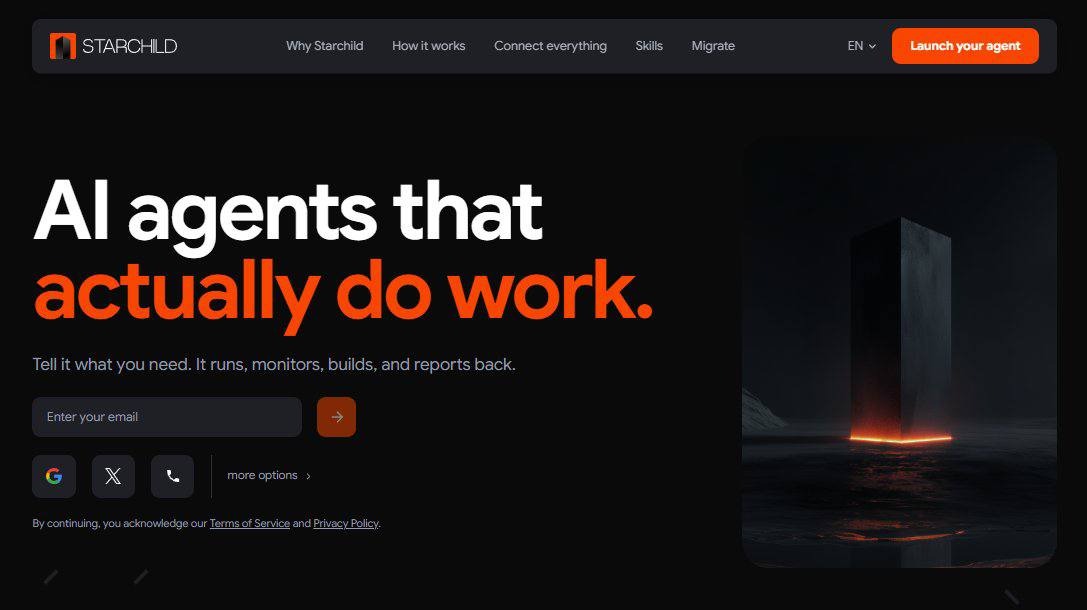
The personal AI proxy platform Starchild is attempting to break this situation, continuously launching core updates such as Agent migration systems, skill markets, multi-Agent collaboration, and multi-channel push, incorporating the core capabilities of multiple tools into a single account. Its positioning is also reflected in the official slogan: "Starchild gives you your own AI agents that can actually do work," creating Agents that truly belong to the user and can execute various tasks.
There are two layers of costs that never appear in subscription confirmation emails
Gemini AI Pro $20 + Claude Pro $20 + SuperGrok $30, totaling $70 for three subscriptions, the billing is clear.
Although Manus's entry-level package is also $20 (including 4000 credits), the credit-based billing model makes actual costs difficult to predict. A moderately complex in-depth research task can consume 500 to 900 credits; heavy usage often means the monthly quota is insufficient, and additional top-ups are the norm. With four bills combined, AI costs can reach around $100 per month.
The true costs for heavy AI users in China are far from just managing these few cold, hard numbers.
The hidden costs of maintaining "compliance access," such as overseas credit card application thresholds, network environment maintenance, and stable overseas phone numbers, all incur real expenses, yet none appear in any subscription confirmation email.
OpenAI began systematically rescinding API access for users in China, causing numerous keys to become invalid overnight. Anthropic is also tightening access controls for Claude; some users are required to complete identity verification when logging in, and accounts that fail this check face functionality downgrades or direct bans.
There are many "Claude accounts" and "API intermediaries" available on second-hand platforms, starting from a few dozen yuan per month. However, purchased Claude accounts carry ban risks, along with difficulties in upholding rights; intermediaries may also be using distilled or trimmed unofficial versions, resulting in a discernible quality gap from the official model outputs; the number pool is always at risk of being banned, meaning users bear all uncertainties on behalf of illegal operations.
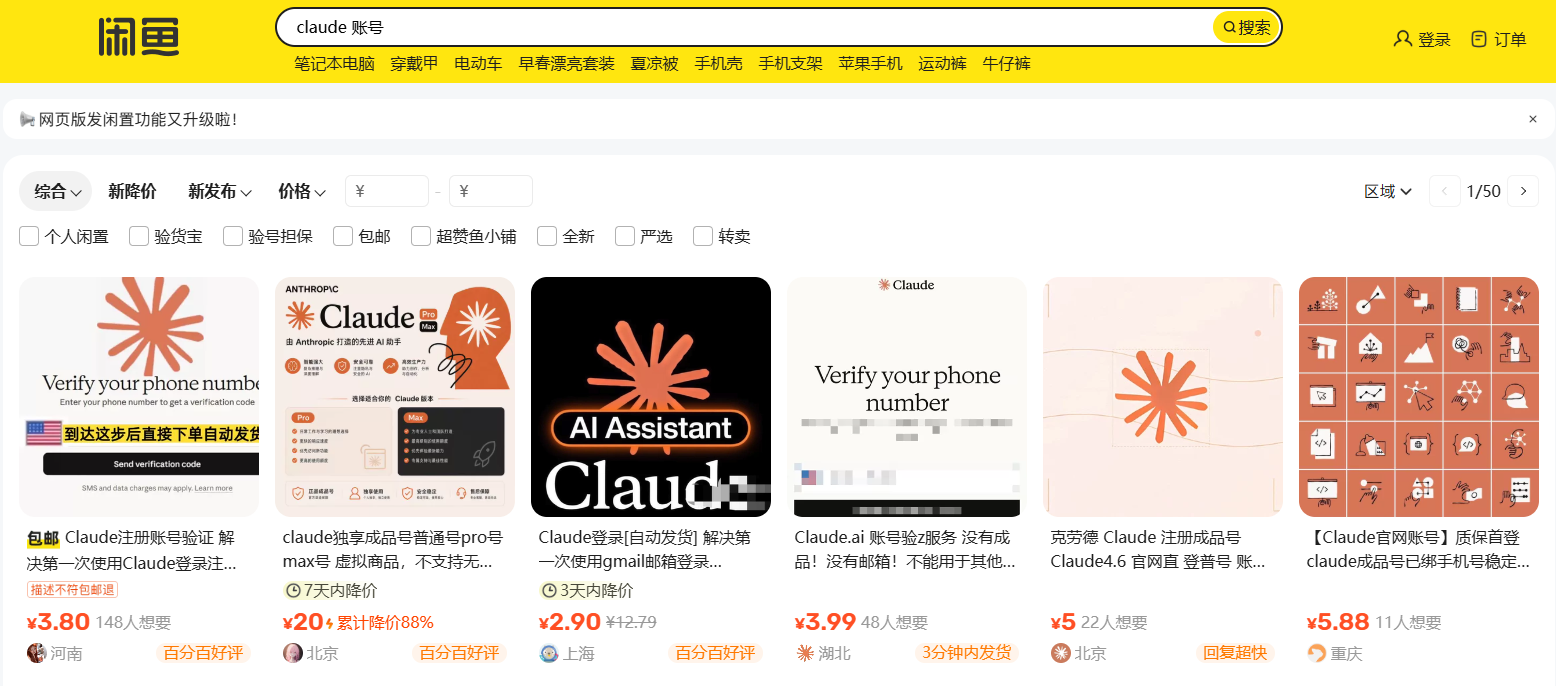
Search results for "Claude account" on second-hand platform
The hardest to quantify is the training account. The writing style, project context, and long-term memory established over months in Claude are completely unknown to Grok; the tweet organization logic and scheduled task rules configured in Grok are inaccessible when Manus executes tasks; the Google workflow built up in Gemini is also opaque to the other three.
Once encountering account bans or switching platforms, the meticulously built System Prompt, the tacit understanding established in long conversations, and even the finely-tuned dedicated model state can all be irrevocably lost. Time is the hidden unit of measurement for this layer, while the mental toll cannot be quantified by bills.
Accessing official APIs, stability becomes the product itself
In the Chinese AI community, purchasing cheap APIs through grey market "intermediaries" is an accepted compromise, but it often comes with extremely high ban risks and model dilution issues.
Starchild directly supports the official APIs of 16 AI providers, totaling 47 models. Prices come from the official upstream, avoiding intermediaries and allowing for consumption-based billing. Subscription packages are also available; the Pro plan at $199 allows use of $900 worth of official Tokens within 30 days, with a daily limit of $30.
In comparison, the minimum for Claude intermediaries on second-hand platforms is a few dozen yuan per month, but the calls might be to distilled versions, and the number pool is always at risk of being banned, putting all uncertainties on the users.
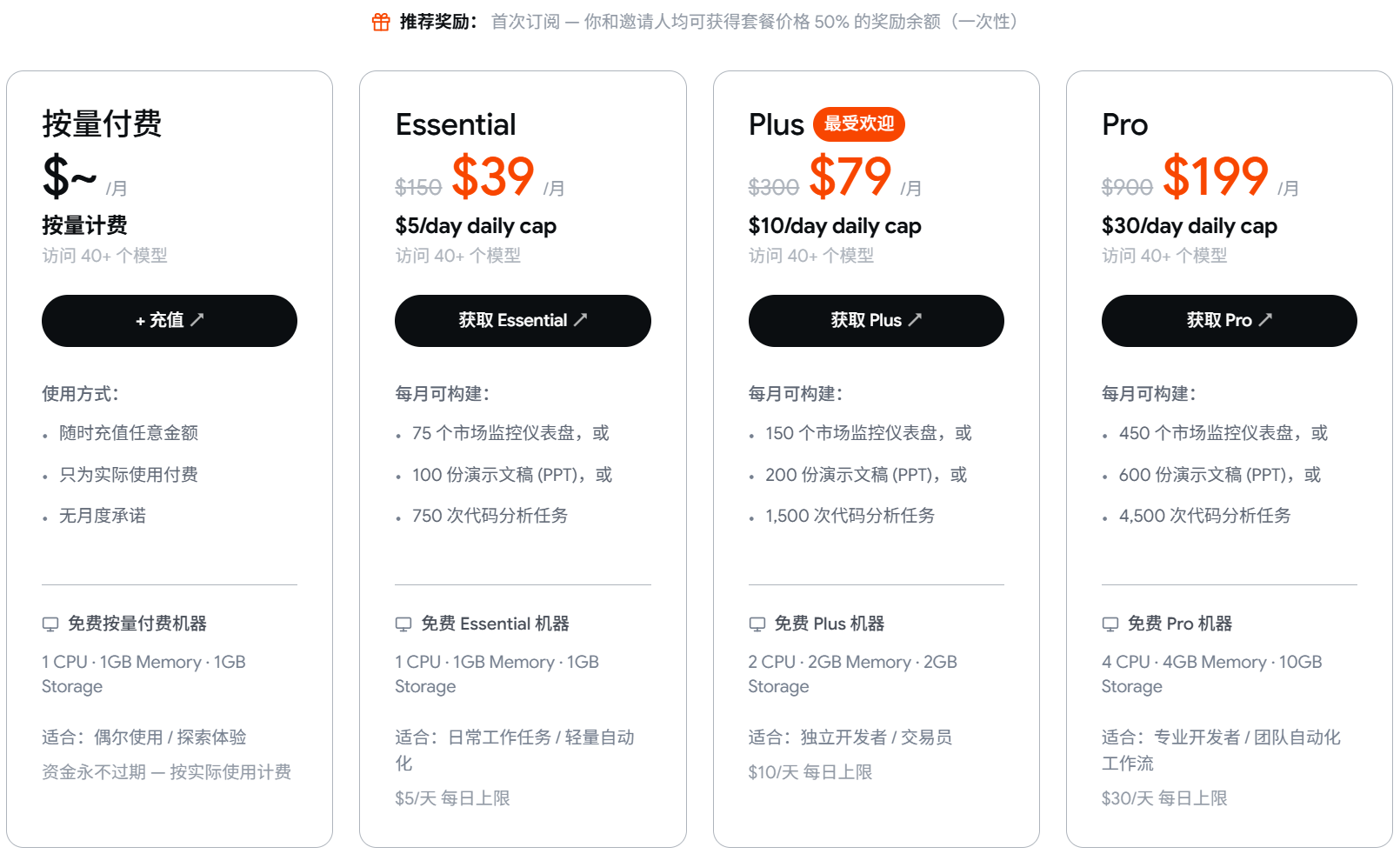
Starchild package pricing
First-time subscribers also have an invitation reward mechanism, where both parties can receive a reward of 50% of the subscription price. Two common fault scenarios for Chinese users, "intermediary account being banned" and "quota being forcibly reclaimed," are completely eliminated at the source by directly connecting to compliant official interfaces.
Moreover, Starchild has achieved three-channel coverage on the payment end: Stripe credit card, WeChat Pay, and multi-chain USDC (supporting Ethereum, Base, Arbitrum, etc.). There’s no need to go through the hassle of applying for an overseas credit card; novice users can complete subscriptions via WeChat QR code.
Registration also supports Web2 users logging in through regular social accounts like Google, X, Discord, GitHub, and phone numbers, while Web3 users can directly connect their wallets for use.
Migration, backup, expansion, the Agent state should not be controlled by platforms
At the end of 2024, Cursor adjusted the usage limit rules for the Pro package, prompting numerous developers to complain on Reddit and consider migrating to other tools.
Many only then realized an awkward reality: the finely-tuned Agent rules, project contexts, and personal coding habits established in one tool cannot be taken away.
Claude Projects is more extreme in this regard; it is deeply bound to the account, and once access privileges are limited due to KYC or regional controls, all accumulated context and workflow statuses inside cannot be exported with no official migration paths available.
The greatest cost of platform migration is not re-binding a credit card, but the effort required to "cultivate" a new Agent from scratch.
Starchild's migration system directly addresses this vulnerability. The Agent states accumulated in Claude Code, Cursor, or even those deployed on local or VPS systems like OpenClaw, including memories, identity settings, scheduled tasks, etc., can all be packaged using a standard prompt. By simply using an 8-digit CODE along with the Download Token, seamless import can be completed on the Starchild end. After completing the migration, Starchild will also grant a $10 credit.
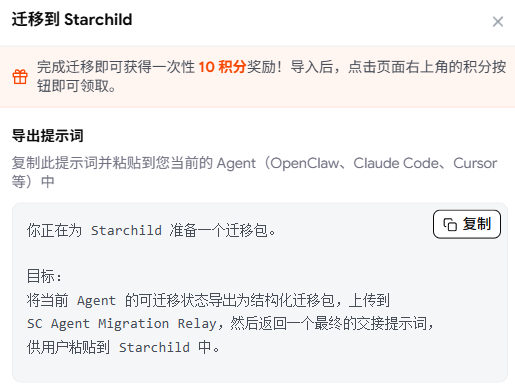
Starchild migration feature
Starchild also offers backup functionality, supporting full state snapshots of Agents, including workspace files, .env files, session databases, Agent profiles, user settings, and scheduled task configurations, all packaged and saved to the cloud. Each user has five backup slots, with SHA-256 integrity checks. Restoration can be done in its entirety or through precise file recovery via differential comparison.
This process addresses not only the troubles of "changing platforms" but also clarifies a stance in terms of product values: the historical state of Agents is the private asset of users, not a retention tool used by the platform to monopolize. Their existence should not be confined by the platform's boundaries.
Not only can the "past" be carried away, but the "future" can also be expanded at will. The skill market currently offers 60 official skills and 91 community skills, covering common tools like Hyperliquid, Coingecko, Polymarket, and can be installed and used with one click. The MCP protocol also supports Agents to interface with any third-party tools. Users can also package their workflows as skills for public release, with community skills now exceeding 1.5 times the number of official offerings.
Running persistently, triggered regularly, Agents don’t need to be manually awakened
Product capabilities must ultimately be validated in real usage scenarios.
Starchild's philosophy is "thin harness, fat skills." Agents run in independent containers, with dedicated CPU, memory, and storage resources. Users can view load status in real-time and can back up or restart at any time. The core layer is responsible for identity, memory, routing, and push channels while maintaining simplicity; the skills layer is responsible for extending capabilities, loading whatever tasks require.
Although Manus also relies on virtual machines to execute tasks, the Agent state is destroyed upon task completion, with no persistent state to review and no resource panel. The phrase "Your own AI Agent" finds its most direct product annotation on this monitoring panel.
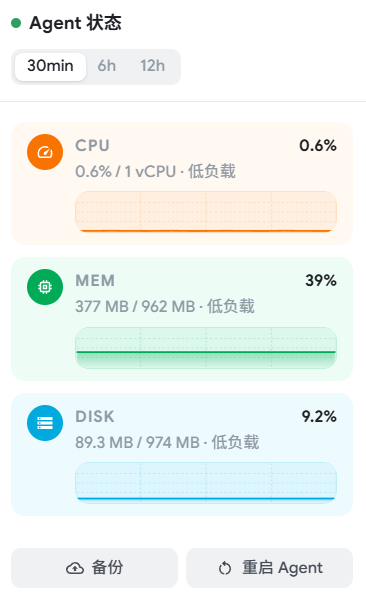
Starchild Agent status panel
Users can configure trigger conditions once, such as when a certain token falls below a key price or a large-scale liquidation occurs on-chain, and receive direct WeChat notifications of order book depth and liquidation zone distribution. Some users have also set up monitoring panels that scan thousands of altcoin pools, filtering ambush signals and unusual movement alerts in real-time, allowing Agents to run continuously in the background and automatically push messages upon triggering conditions, without needing human monitoring.
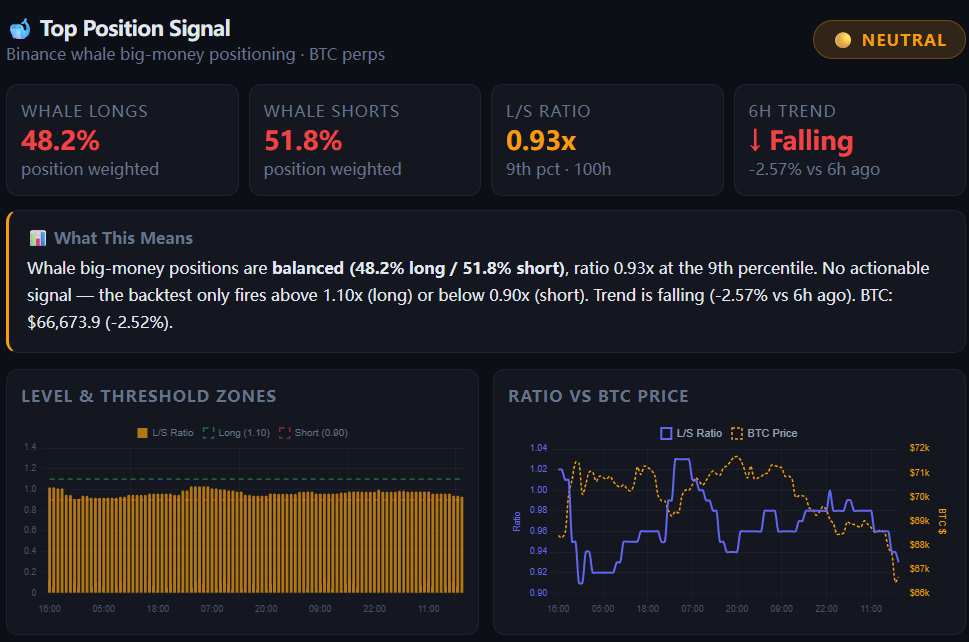
Starchild user-created Binance whale position panel
If you are a developer, when you first tell the Agent that you prefer to develop using Python + FastAPI, that the database must be PostgreSQL, that type annotations should be strict, and to refuse any any generics… months later, when you start a new conversation, these constraints remain effective.
For domestic users, this is currently one of the lowest barriers to entry for accessing Vibe Coding, eliminating the need for additional subscriptions to Claude Code, hassle over overseas credit cards, and frustrations navigating complex network environments. WOO team member Ben Yorke demonstrated Starchild's cold start speed, from zero to login and completely configured Agent in less than 20 seconds.

Tweet by Ben Yorke
For instance, an independent consultant doing content research requires a lot of time for information retrieval every morning. After configuring the Agent, by 8 AM when you just wake up and freshen up, summaries from multiple research channels are already arranged by relevance, discreetly sent to your WeChat.
Others use it for completely different tasks. Anita built a tool on Starchild for automated auditing of brand website GEO scores; by entering a URL, a comprehensive multi-dimensional report is generated with one click, without writing a single line of code. The $30 minimum subscription supports 40 build tasks and 400 focus tasks, encompassing Vibe Coding, transaction automation, and information monitoring all within this limit.
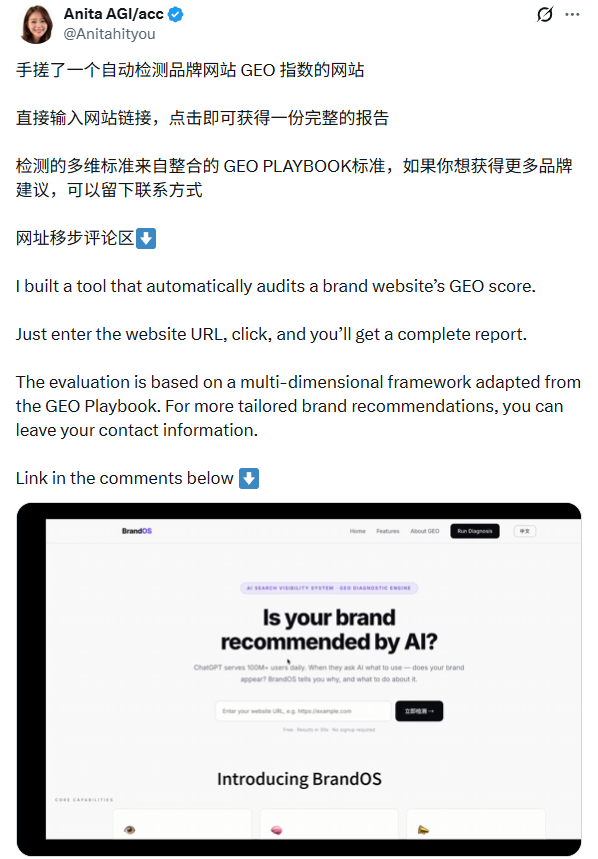
Tweet by Anita
Set it once, and it runs round-the-clock. Agents are no longer puppets waiting for you to give commands.
The first week and the third month represent two different products
The notion of "the more you use, the stronger it gets" has long been an unfulfilled promise in the field of AI tools.
ChatGPT and Claude introduced long-term memory long ago; they can remember preferences, writing styles, and research directions. But memory only solves the "reintroducing oneself" issue.
Since the launch of OpenAI's memory feature, users have complained that it would arbitrarily summarize information, often inaccurately, requiring users to navigate around to correct it. Additionally, installed GPTs can only be used within ChatGPT, and workflows need to be rewritten when switching conversations; cross-tool task connections must still be done manually each time.
Starchild accumulates not just a list of preferences, but the entire work state. It includes not only user preferences and writing styles but also installed skills, configured scheduled tasks, cross-session workflows, and up to five recoverable backup snapshots, with each node selectable for restoration.
Currently, the skill market has launched 68 official skills and 126 community skills, covering on-chain trading (Hyperliquid, OKX, WOOFi, etc.), market data (CoinGlass, DefiLlama, DeBank, Polymarket, etc.), and content tools (charts, slideshows, videos, image generation, etc.).
One-click installation takes effect immediately, and users can also package their workflows as skills for public release. Starchild also supports Web2 applications like Gmail, Google Calendar, Reddit, LinkedIn, and can connect to over 1000 third-party tools via the Composio gateway.
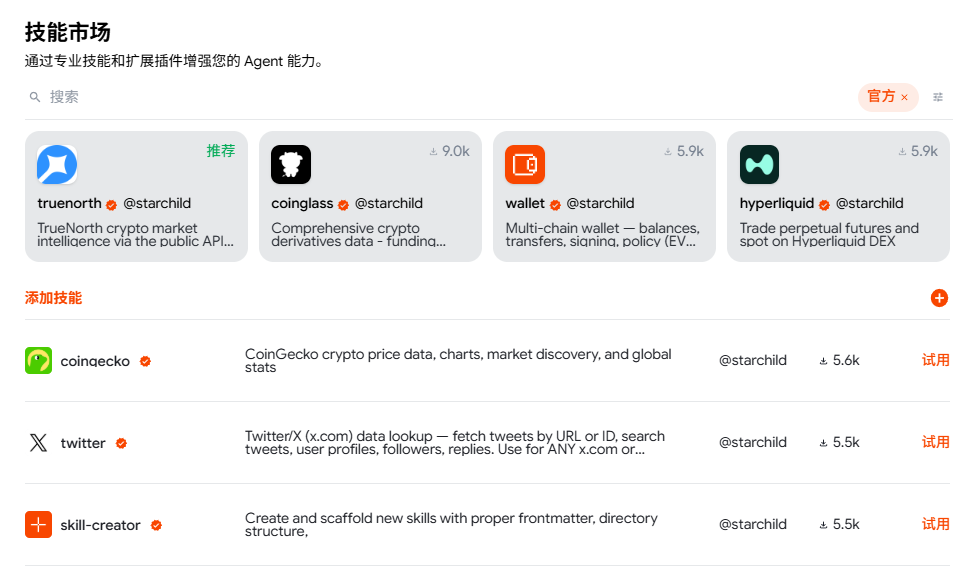
Starchild skill market
This means that the same product presents entirely different value densities among users with varying lengths of use.
In the first week, the experience may not differ significantly from Claude; by the first month, Agents begin to proactively invoke skills chains, market monitoring is triggered automatically, and information aggregation runs on demand; by the third month, users realize: what Starchild has accumulated is not just a list of preferences, but an entire workflow perfectly replicated within a single Agent. Currently, there are 2160 Agents operational on the platform, having processed over 62,000 queries.
This is a digital asset unique to users in the AI era. Once this bond is formed, the replacement cost is no longer merely twenty dollars.
The deeper the accumulation, the harder to leave
Mainstream giants are all trying to solve the pain point of "context forgetting," with features like OpenAI's Memory and Anthropic's Projects, yet they all share a common structural feature: locked in the cloud, deeply tied to a single account, making migration difficult.
Claude's Projects, Skills, and memories are all deeply tied to accounts, and once access privileges are restricted, all accumulated states within cannot be exported; GPTs are also confined within ChatGPT, with cross-tool task chains needing to be manually stitched together each time. The deeper users engage, the tighter the lock.
Starchild, on the other hand, allows for backups, and capability expansion is returned to individuals and communities through an open skill market. Additionally, dual-track payments via WeChat and USDC directly clear basic barriers; this combination bears particularly specific significance for Chinese users: a product that can simultaneously address payment, network, and migration pain points naturally possesses a high retention moat.
Starchild is also developing cross-platform Agent collaboration tools, allowing users’ Agents to work directly alongside Agents on platforms like Claude Code, OpenClaw, and Hermes. Choosing Starchild does not mean cutting ties with other platforms.
An Agent that has been used for three months understands your working methods better than any conversation you've had with ChatGPT in the same timeframe. It knows your holding logic, your coding style, your content preferences, and has dozens of scheduled tasks running. This is an "Agent OS" unique to you.
The highest form of user retention is never achieved through a closed ecosystem that prevents them from leaving, but rather through understanding them in a way that makes them reluctant to depart.
免责声明:本文章仅代表作者个人观点,不代表本平台的立场和观点。本文章仅供信息分享,不构成对任何人的任何投资建议。用户与作者之间的任何争议,与本平台无关。如网页中刊载的文章或图片涉及侵权,请提供相关的权利证明和身份证明发送邮件到support@aicoin.com,本平台相关工作人员将会进行核查。


