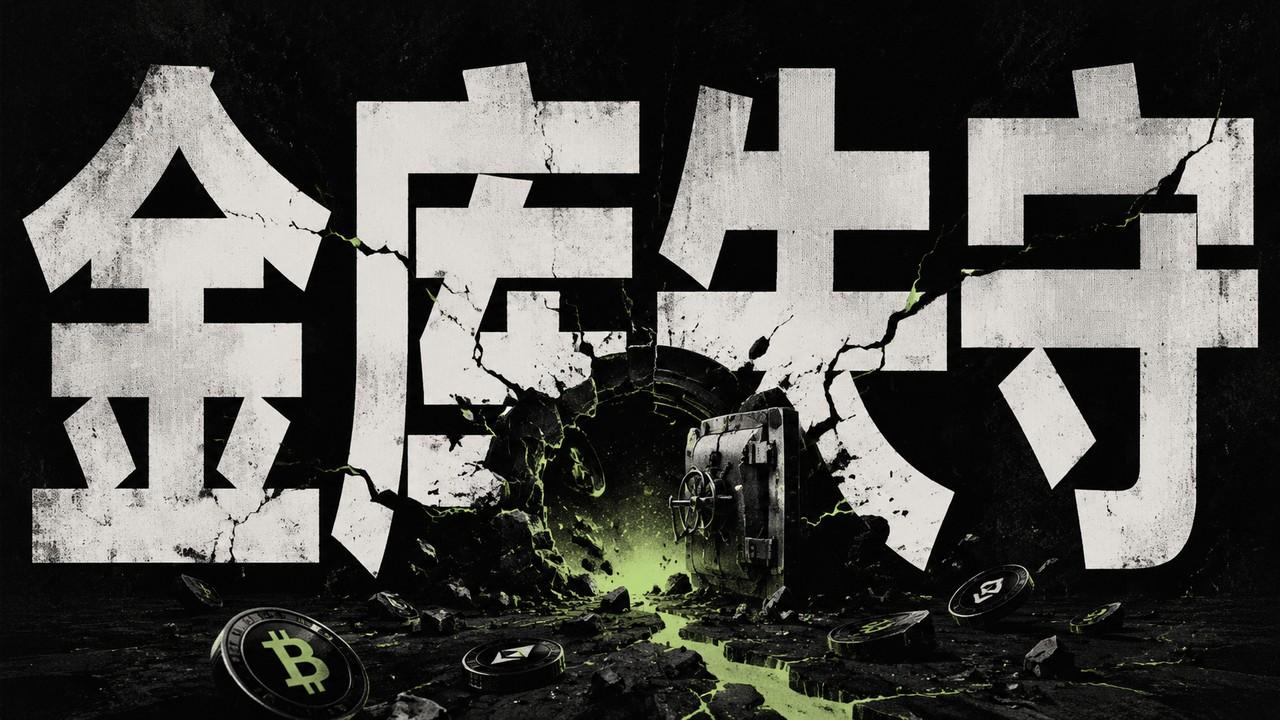
As of May 15, 2026, the interest rate futures market has suddenly become glaring: the probability of the Federal Reserve raising interest rates in January next year has been pushed to over 50%, and rate hikes are no longer considered a “tail risk,” but instead have been rewritten into the main scenario assumptions. The catalyst comes from beyond the battlefield - the Iran war has pushed international oil prices back above approximately $100 per barrel, reigniting concerns about mid-term inflation and rigidity, and the market begins to question the previously dominant narrative that “inflation has been suppressed.” Mike Riddle from Fidelity had already bet on rising prices through U.S.-U.K. inflation swaps before the outbreak of the conflict and has profited in this round of rising oil prices. He is skeptical of the optimistic consensus that inflation pressures are easing, highlighting the cracks in the macro narrative. Meanwhile, global stock markets are being driven up by funds, but State Street's Tim Graf warns: the upward momentum has shown signs of fatigue. If one were to look for a trigger for a correction, then the movements in the interest rate market and the expectations of “inflation remaining above target for a long time, forcing central banks to tighten again” are the most cautionary candidates. Under such a shadow of interest rates, how Bitcoin, which has maintained a high positive correlation with U.S. stocks, especially tech stocks, in previous rounds of volatility, is repriced in a climate of warming rate hike expectations and divergent inflation expectations, becomes the core issue that the crypto market cannot avoid.
Hike Probability Exceeds 50%: Interest Rate Market Rewrite Script in Advance
Interest rate futures are essentially a centralized pricing tool for the market’s expectations of the future path of federal funds rates, and since May 2026, the draft of this “final script” has been repeatedly revised. With significant increases in rate hike expectations, as of May 15, the probability of an interest rate hike in January next year given by interest rate futures has surpassed 50%, transforming rate hikes from an “extreme scenario” into a necessary option to include in the baseline scenario. The meaning of this change is not simply “another rate hike,” but rather a repricing of the notion of “rates sustaining at high levels for a longer time”: higher nominal rates elevate the risk-free return, and in the context of rekindled inflation expectations, higher real rates are also implied.
When discount rates are raised overall, the valuation logic of traditional risk assets tightens accordingly. Whether it is long-duration assets like tech stocks that rely on future cash flows, or other risk assets that have had a high correlation with them during previous rounds of volatility, higher nominal and real rates will compress valuation space, amplifying any slight variations in profit expectations, and naturally increase volatility risk. The question is, even though global stock markets have shown signs of fatigue after a prolonged rise, they still receive support from funds, resulting in a significant misalignment in expectations between the index curve and the interest rate futures curve. State Street’s macro strategy team has pointed out that if there is any reason sufficient to trigger a market correction, it is likely to stem from the interest rate market itself - one side is the continuous adjustments in rate futures pricing for tightening policies, while the stock market continues to advance in the narrative of “risk assets still holding up.” This tension will ultimately need to be released through one side compromising to the other, with the current focus being which side—rate futures curve or stock market risk preference—will yield first.
Iran War Pushes Oil Prices Above $100, Inflation Hedge Bets Win at the Starting Line
The tug-of-war between interest rate curves and the stock market is just the first act of the macro narrative. After the outbreak of the Iran war, oil prices were directly pushed above approximately $100 per barrel, which is not merely a “technical rebound” in commodities, but ignites a flame on the powder keg of inflation expectations. Rising energy and transportation costs will transmit layer by layer through the supply chain to broader price levels, reigniting the market's concern over “mid-term inflation rising again, and being stickier.” In other words, while the interest rate futures are revising the rate hike path upward, the curve of inflation expectations is also being forcibly pulled upward by the war and oil prices.
In this expectation repricing, not all institutions are aligned with the mainstream narrative of “price pressures easing.” Mike Riddle, a portfolio manager at Fidelity International, was already skeptical of this optimistic story before the Iran war. He chose to bet on rising inflation through buying U.S. and U.K. inflation swap contracts and was among the first to profit after oil prices rose. One is the broad market that only starts to revise inflation expectations after oil prices cross the $100 mark, and the other is the minority that had already set up inflation hedges before the flames of war ignited. This time lag alone reflects the most concrete manifestation of macro divergence. For the crypto market, this means that two opposing funding logics are simultaneously in effect: a portion of funds will repackage Bitcoin as a “hedge against long-term inflation uncertainty,” while another portion will choose to compress exposure to high-volatility assets, including Bitcoin and Ethereum, due to higher rate hike expectations and rising risk-free rates. Which of these logics prevails will directly determine the next stage of pricing center and liquidity focus.
Bitcoin and Ethereum Under the Shadow of Rising Rates
As risk-free rates continue to rise, Bitcoin and Ethereum first face the hard constraint of an elevated discount rate for “non-yielding assets.” Interest rate futures are already heating up for a potential rate hike in January next year. Higher risk-free returns denominated in dollars directly weaken the relative attractiveness of holding high-volatility, non-cash flow assets. Any asset that relies on future appreciation as its main source of return must accept valuation compression in the face of higher real yields. For crypto funds, this means that what could originally be traded within the “T+0 liquidity + high volatility premium” may have some portions reallocated to interest rate products and dollar-denominated assets, causing the weight of Bitcoin and Ethereum in portfolios to be passively reduced, with the price center accordingly shifting downward.
The real complexity lies in the fact that the narrative around Bitcoin is not singular. In past macro volatility rounds, it has shown a high correlation with U.S. stocks, especially tech stocks, displaying high beta characteristics that allow it to enjoy valuation expansion during periods of liquidity easing, but it also becomes the first to get hit during rate repricing and stock market corrections. State Street's strategy team has warned: if factors are strong enough to trigger a stock market correction, they are likely to stem from the interest rate market and the expectations of prolonged inflation above target, forcing central banks to tighten further. Once this scenario materializes, Bitcoin and Ethereum are likely to be viewed as “another type of risk asset” in the short term, pressured alongside stock indices. However, the market has not fully convinced itself that inflation has been suppressed. The Iran war has driven oil prices higher and reignited inflation expectations, leaving a gap in the story of “Bitcoin hedging against mid-term inflation uncertainty”: after the stock market corrects due to rate fluctuations, as long as inflation expectations remain stubbornly high, some funds will have the motivation to withdraw from traditional assets and once again regard Bitcoin as a safe-haven alternative, while Ethereum is often seen more as a high beta asset when risk preferences recover. In an environment of rate and inflation misalignment, both may follow a path of “briefly being discounted together, then diverging in pricing.”
Dollar Spread Narrows, On-Chain Capital May Flow Back to Dollar Assets from Altcoins
With interest rate futures having pushed the probability of a rate hike in January next year to over 50%, the story of the dollar has turned back into “holding it also earns interest.” As long as the Federal Reserve is forced to continue raising rates or maintaining high rates, the interest rate advantage of the dollar relative to other currencies will be magnified, and the yield of short-term dollar money market instruments and short bonds will rise, presenting risk-averse funds with a straightforward question: to continue holding high-volatility on-chain assets or to swap that for dollar assets and cash-based tools that can lock in rates. Rising interest rates elevate the threshold for so-called “risk-free returns,” meaning any risk positions remaining on-chain must offer higher expected returns to persuade funds not to seek the more secure dollar yields on the surface.
During such a period of narrowing spreads, the internal hierarchy migration in the crypto market often unfolds along the same chain: the first to be abandoned are the weakest altcoins in terms of liquidity and fundamentals, followed by high beta Ethereum, and only then does it come to the systematic reduction of Bitcoin positions. Historical tightening macro cycles have repeatedly verified that high-risk altcoin assets often encounter sell-offs before mainstream currencies. When the relative attractiveness of dollar assets is elevated by rising rates, such “de-leveraging from the outer circle to the inner circle” is more easily triggered. Some funds will exit from altcoins and long-tail assets and flow back into mainstream tokens like Bitcoin and Ethereum with better liquidity, while others will simply cash in and convert into dollar-denominated on-chain assets or OTC U.S. bonds and money market products to earn that more certain yield spread. Correspondingly, institutions have begun to systematically increase their hedging positions both on-chain and off-chain: futures shorts covering spot longs, options protecting against downward volatility, and yield strategies locking in basis and rates. These operations may lower the short-term elasticity of Bitcoin and Ethereum on paper, but they also cause the overall market risk preference to gradually shift downwards amidst apparent calm, as the process of funds being drawn away from altcoin sectors and being siphoned back into dollar spreads may reveal the direction of this round of interest rate repricing even earlier than price movements themselves.
Interest Rates as New Guideline: Choices for Bulls and Bears in the Crypto Market
The Iran war has pushed oil prices back over approximately $100 per barrel, inflation expectations have been ignited, and some institutions, like Mike Riddle, have profited from early bets through inflation swaps. The interest rate futures market has raised the probability of a rate hike in January to over 50% under this narrative framework. State Street’s strategy team repeatedly warns that movements in interest rates and persistently high inflation pose true risks hanging over global stock markets. In this chain, oil prices, inflation, interest rates, stock markets, and Bitcoin are all tied together by the same invisible hand. The crypto market must now choose between two paths: one is for interest rates to continue rising, risk-free returns to increase, and global stock markets to correct at high levels, causing Bitcoin and Ethereum, in high correlation with U.S. stocks, to be passively devalued alongside risk assets, with funds further being siphoned away by dollar spreads; the other path is that inflation proves to be far more stubborn than consensus suggests, remaining above target for a longer period, traditional assets’ real returns being eroded, and Bitcoin once again being viewed by some funds as a hedge against long-term inflation, leading to renewed buying on dips while price fluctuations are accompanied by a slow “institutionalization” of the positioning. For traders, this means that interest rate futures curves and inflation expectations data are no longer mere noise in the macro backdrop, but core variables that need to be explicitly incorporated into risk control and positioning frameworks: whether going long or short, one must reassess the correlation and drawdown tolerance of Bitcoin, Ethereum, and the stock market under different interest rate and inflation scenarios, because in the upcoming quarters, the real battleground for both bulls and bears will be the paths of interest rates and inflation themselves.
Join our community to discuss and become stronger together!
Official Telegram group: https://t.me/aicoincn
AiCoin Chinese Twitter: https://x.com/AiCoinzh
OKX Benefit Group: https://aicoin.com/link/chat?cid=l61eM4owQ
Binance Benefit Group: https://aicoin.com/link/chat?cid=ynr7d1P6Z
免责声明:本文章仅代表作者个人观点,不代表本平台的立场和观点。本文章仅供信息分享,不构成对任何人的任何投资建议。用户与作者之间的任何争议,与本平台无关。如网页中刊载的文章或图片涉及侵权,请提供相关的权利证明和身份证明发送邮件到support@aicoin.com,本平台相关工作人员将会进行核查。