On May 26, 2026, almost conflicting signals appeared on the same timeline: on one hand, U.S. and Israeli fighter jets attacked Iranian vessels, with multiple media outlets repeatedly emphasizing the fragility of the ceasefire and the safety of the Hormuz Strait; on the other hand, Trump publicly proclaimed that U.S.-Iran negotiations had "made progress," and between fighter jets and microphones, the U.S.-Iran situation was interpreted by the markets as a classic "combination of hitting and talking" in a high-uncertainty phase. At the macro level, capital made its choice in advance—U.S. 2-year Treasury yields fell about 7 basis points to around 4.05%, 10-year yields also dropped about 7 basis points to around 4.49%, and 30-year yields retreated about 5 basis points to around 5.02%. Under the dual impact of an overall decline in the interest rate curve and rising geopolitical premiums, risk asset discount rates and risk premiums were recalculated, while the crypto fear and greed index only scored 34, falling into the "fear" range, suggesting that overall risk appetite was compressed, whether traditional or on-chain. In such a day of declining interest rates yet difficult risk appetite, several key "fault lines" stacked up on-chain: RWA represented by Ondo Finance announced the unexpected passing of founder Nathan Allman, with longtime president Ian De Bode taking over as CEO, and the market began to reapply governance discounts to protocols "transporting U.S. Treasury yields on-chain"; Kelp DAO announced the completion of the rsETH recovery plan, with the last batch of about 20,374 rsETH transferred to the adapter, partially filling the trust gap between LSD and blue-chip DeFi; meanwhile, an ESPORTS address previously sold about 22.73 million tokens for approximately 987,000 USDT, then continued to transfer out about 35.13 million tokens within about three hours, revealing the systematic shortfall of long-tail assets in the context of fragile liquidity; additionally, Hyperliquid launched a market for normalized results based on off-chain events, where validators provided data via automated news source software and were responsible for settlements, turning news flows like U.S.-Iran conflicts and macro data directly into tradable on-chain contract tools. Under the intertwining impacts of geopolitics, interest rates, and on-chain governance, the flow of funds and risk premium structures among BTC, ETH, quality DeFi, and long-tail tokens were compelled to rearrange on this day.
U.S.-Iran Strikes and Negotiations Pressure U.S. Treasury Yields
On May 26, U.S. and Israeli fighter jets launched strikes against Iranian vessels, while at the same time, Trump released an optimistic statement in public that "U.S.-Iran negotiations have made progress," placing both "maximum pressure + diplomatic mediation" on the table. For traders, this is not simply about "hitting" or "talking," but rather a combination that could reverse at any moment: the Strait of Hormuz, as one of the world's most critical oil transportation routes, could see oil prices and geopolitical risk premiums immediately reassessed if any incidents occur; conversely, if negotiations do indeed breakthrough, it could quickly push back against the war premium. This directional swinging was directly reflected in asset prices on May 26—some reports indicated that amidst a slight increase in oil prices and a decline in S&P futures, U.S. 2-year Treasury yields fell about 7 basis points to around 4.05%, 10-year yields dropped about 7 basis points to around 4.49%, and 30-year yields fell about 5 basis points to around 5.02%, with risk capital beginning to price for "worse geopolitics + looser interest rate paths" simultaneously.
From the perspective of discount rates, the synchronous decline of risk-free rates and term premiums theoretically lifts all long-duration assets: the most sensitive growth stocks in the Nasdaq, as well as BTC and ETH, regarded as high-beta tech assets, should all benefit from a lower discount rate according to models. However, on the other hand, the military strikes near Hormuz pushed risk premiums up, with investors demanding higher compensation for geopolitical black swan risks, offsetting some of the interest rate advantages. The on-chain world is not exempt—protocols like Ondo Finance that tokenize U.S. Treasury or short-bond yields see their product returns generally lowered as U.S. Treasury yields decline, with "on-chain U.S. Treasury yields" becoming an anchor point that crypto funds must reprice on this day: on one hand, the lower benchmark yields diminish the relative advantages of these products, leading some funds to flow from "on-chain Treasuries" to higher-risk assets like BTC and ETH; on the other hand, geopolitical uncertainty drives conservative funds to continue treating such yield products as safe havens, making macro rates transmitted through RWA protocols reflect a complex pattern of interest rate benefits against rising risk premiums.
Fear Index at 34 and the Dual Nature of BTC
By May 26, the crypto fear and greed index had stopped at 34, officially labeled as "fear" rather than "extreme fear," setting a subtle tone for the market on that day: sentiment had clearly contracted, but it wasn’t yet at a breaking point for a one-sided selloff. This index itself is a weighted product of volatility, trading volume, social media discussion levels, and market shares of mainstream coins, and in the overlapping environment of U.S.-Israeli fighter jets attacking Iranian vessels, Trump hinting at negotiations, and synchronous declines in U.S. Treasury yields, 34 more resembles a state of hesitation "ready to drop a level at any moment"—the market acknowledges that both macro and geopolitical pressures are in play, yet also does not dare to completely abandon risk assets.
Against this emotional backdrop, BTC's dual identity has been scrutinized under a microscope. On one hand, the risks of sanctions and uncertainty around Strait security make some funds willing to treat BTC as "digital gold" to hedge against tail risks in sovereign credit and settlement systems; on the other hand, from the perspective of high beta and leveraged market structure, it remains a typical high-volatility tech asset: if the geopolitical headlines are interpreted as favorable for negotiations, or liquidity and risk appetite deteriorate again, BTC and ETH are often the first to be cut back to free up U.S. cash and on-chain U.S. dollar assets. This tug-of-war between risk aversion and speculation leads funds to prefer consolidating positions in the most liquid "blue chips" like BTC and ETH during panic but without a complete collapse, while systematically compressing exposure to high-volatility DeFi protocols and long-tail tokens, locking the entire on-chain risk appetite within a narrow and tense range.
The Passing of Ondo's Founder and RWA Trust
Just as macro rates and geopolitical risks elevated panic emotions, a critical piece of the RWA puzzle was unexpectedly removed. On May 26, Ondo Finance announced that founder Nathan Allman had passed away unexpectedly, and Ian De Bode, who has long served as president, would take over as CEO, responsible for subsequent strategies and operations. For a protocol carrying a large amount of on-chain U.S. Treasury and short-term bond yields, this is not just a management change, but a reality pressure test regarding "who truly controls these offline assets." The RWA model essentially packages "risk-free rate + issuer credit + compliance risk" into on-chain coupons; users are not merely buying pure Treasury bonds, but the reliability of the entire custodial and governance chain; when the founder suddenly exits, the market naturally amplifies questions about team stability, custodial arrangements, and emergency mechanisms for sudden events.
This fracture in trust coincides with the sensitive timing of interest rate repricing. Geopolitical and negotiation expectations pressured U.S. 2-year, 10-year, and 30-year Treasury yields to drop about 5-7 basis points each on the day, while the nominal coupon on on-chain Treasury products declines. However, the sudden change in Ondo's governance raised its unique "protocol risk premium." In an environment of risk aversion with a fear and greed index of only 34, funds originally intending to position into RWA for relatively stable yield spreads are likely to opt to pause increases, diverting back to BTC, ETH, or the most liquid DeFi blue chips, reverting some "interest rate trades" back into "liquidity and exit opportunities." This abrupt personnel change essentially presented the question of "who will back on-chain U.S. Treasury yields" upfront, forcing funds to reprice between returns and trust.
Kelp's Restoration Conclusion and ESPORTS Sell-Off
When the RWA side was forced to increase "governance discounts" due to personnel changes, the LSD leverage artery managed to complete a trust restoration at the same time. Kelp DAO announced it had completed the rsETH recovery plan implementation phase, with the last batch of about 20,374 rsETH transferred to the adapter address, with a single source stating that Aave and Kelp had collectively supplemented about 116,000 rsETH to the adapter over the past two weeks, effectively restoring relevant functions. As a liquid staking asset of ETH, rsETH is one of the core collateral in lending, perpetual contracts, and yield aggregation strategies, which means that in the environment of U.S.-Iran "talking and fighting together," U.S. Treasury yields recede while risk premiums are repriced, one potential breakpoint on the DeFi leverage chain was quickly mended, reducing systemic risk due to panic discounting of collateral that could lead to cascading liquidations, and facilitating capital to maintain relatively smooth rebalancing between BTC/ETH and leading DeFi.
In stark contrast is the fragile reality of long-tail assets at the other end of the chain. The ESPORTS-related sell-off address had previously sold about 22.73 million tokens for approximately 987,000 USDT and, within about three hours, continued to transfer out about 35.13 million tokens. In an environment where liquidity is already thin and the fear index is only 34, such concentrated sell pressure from teams or early holders itself will be viewed by the market as "the price gate has opened." Reports have mentioned that similar projects have seen prices drop by more than 90% in a short time during sustained sell-offs, though this is not a foregone conclusion for the current event, it is sufficient to reinforce a pricing outcome: even in a high-uncertainty macro and geopolitical phase, funds are more willing to add ETH, LST, and synthetic longs of leading DeFi, concentrating the risks on the volatility of blue-chip collateral, rather than taking on any long-tail token sell orders that may evolve into "pivotal downturns."
Hyperliquid Launches Event Prediction
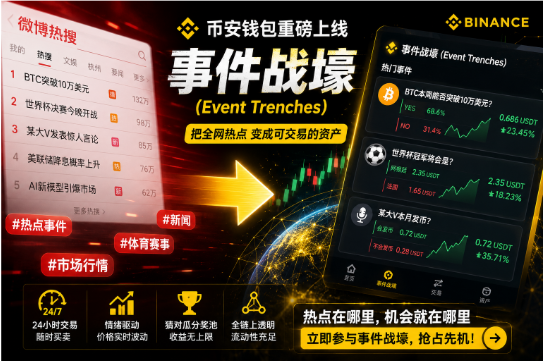
As funds withdraw from long-tail tokens and flow back into ETH and blue-chip collateral, Hyperliquid announced the launch of a market for normalized results based on off-chain events, bringing "news trading" around election results, U.S.-Iran conflict developments, U.S. inflation, and non-farm data directly on-chain, which were initially taking place in over-the-counter and centralized platforms. The outcomes of these types of contracts are no longer reliant on subjective judgments but will be determined by validators grasping official results via automated news source software, managing market deployment and settlements, attempting to break up discrete events like "whether fighting occurs in Hormuz" or "whether the Federal Reserve will rate-cut at a certain meeting" into accurately bettable binary or multi-state assets. Once outcome rules are standardized, geopolitical and macro risks shift from a vague emotional factor to curve nodes that can be sold in segments.
However, this design also partially transfers previously centralized geopolitical and policy expectations around BTC and ETH prices to a brand new systemic risk layer: whether the oracle accurately captures news, how validators govern during controversial events, and the rules of rollback and compensation in extreme situations, could all potentially rebound on the entire event curve at critical moments. For BTC and ETH, the added event contracts signify a "purer" vehicle for macro trading, allowing some previous capital that hedged war risks by going long on "digital gold" or took short positions on high-beta assets to trade directly on "ceasefire achievements" or "interest rate paths" themselves. If these prediction markets ultimately reach scale, interoperating with RWA U.S. Treasury yield tokens, LSTs, and other assets to form a continuous on-chain macro trading curve, then every time similar U.S.-Iran interactions and abrupt changes in interest rate expectations unfold, the flow of funds and price responses in the crypto market will evolve from the current one-dimensional risk switch to a multi-layered game of back-and-forth position switching among different factors and contracts.
Finding the Trading Mainline Between Geopolitical and Project Risks
In this overlapping environment of "parallel hitting and talking + falling interest rates + panicked emotions," the simultaneous release of both strike and negotiation signals from the U.S.-Iran, declining U.S. medium-long term Treasury yields, slight increases in oil prices, and a crypto fear index of only 34, coupled with Ondo's governance center "changing leadership," Kelp's rsETH restoration conclusion, and the ESPORTS significant sell-off, have rewritten the macro discount rates, risk premiums, protocol credits, and funding behaviors simultaneously. Along this chain, the core variables determining the pricing of BTC, ETH, and DeFi have clearly converged into three categories: first, the discount rates and risk premium paths corresponding to U.S. Treasury yields and oil prices; second, the governance resilience of RWA and LSD protocols following founder changes and security events; third, the positional migration of large on-chain players and project parties between blue-chip and long-tail assets. For trading and allocation, the short-term mainline is to "first watch liquidity and governance transparency": BTC, ETH, leading LSTs, and RWA with clear custodial structures are more likely to attract risk budgets, while high-leverage, high-concentration long-tail tokens will continue to face pressure during panic cycles. Looking ahead, what truly needs to be monitored is not the emotions themselves, but several quantifiable scales: whether U.S.-Iran negotiations effectively mitigate Hormuz risks, the resonance direction of U.S. Treasury yields and inflation expectations, the grounding details of governance for protocols like Ondo, the recovery speed of Kelp's rsETH secondary liquidity, and whether event markets like Hyperliquid can settle sufficient authentic depth; these combinations of variables will form the main coordinate system for the next stage of cryptocurrency asset pricing.
Join our community, let's discuss together, and become stronger together!
On-chain Telegram community: https://t.me/AiCoinWhaleData
On-chain community: https://www.aicoin.com/link/chat?cid=N6OVMor5g
AiCoin on-chain Twitter: https://x.com/aicoinwhaledata
Exclusive Hyperliquid benefits from AiCoin: https://app.hyperliquid.xyz/join/AICOIN88
Exclusive Aster benefits from AiCoin: https://www.asterdex.com/zh-CN/referral/9C50e2
免责声明:本文章仅代表作者个人观点,不代表本平台的立场和观点。本文章仅供信息分享,不构成对任何人的任何投资建议。用户与作者之间的任何争议,与本平台无关。如网页中刊载的文章或图片涉及侵权,请提供相关的权利证明和身份证明发送邮件到support@aicoin.com,本平台相关工作人员将会进行核查。