In early June 2026, the funding game surrounding Bitcoin and AI suddenly became clear: on one hand, Michael Saylor pointed out that approximately $400 billion had been injected into AI infrastructure globally over the past six months, while Bitcoin ETFs had seen approximately $4 billion in net outflows since May 14. He interpreted this correction as a phase of capital rotation from Bitcoin to AI; on the other hand, Bitcoin-related companies were actively embedding themselves into this AI feast—Genius Group, which holds a treasury of Bitcoin, announced the launch of the AI treasury portfolio named AGI Infinity Portfolio, initially investing in the Destiny Tech100 and Fundrise Innovation Fund, thereby gaining indirect exposure to unlisted AI companies like Anthropic, SpaceX, and OpenAI; meanwhile, Bernstein began coverage of Bitcoin mining companies TeraWulf and Cipher, giving them an "outperform" rating and specific price targets, directly referring to them as AI's "power landlords," emphasizing their electricity and space resources as part of AI infrastructure. The treasury bets of Genius Group, the revaluation of mining companies as AI foundations, and Saylor's explanation of capital rotation interweaved within the same time frame, outlining a new pattern not merely of "crypto liquidity flowing into AI stocks," but a simultaneous competition for capital and business integration: the Bitcoin ecosystem is being drained of liquidity by AI, while also striving to become a part of this AI capital cycle through treasury investments and power output.
Is capital rotating from Bitcoin to AI?
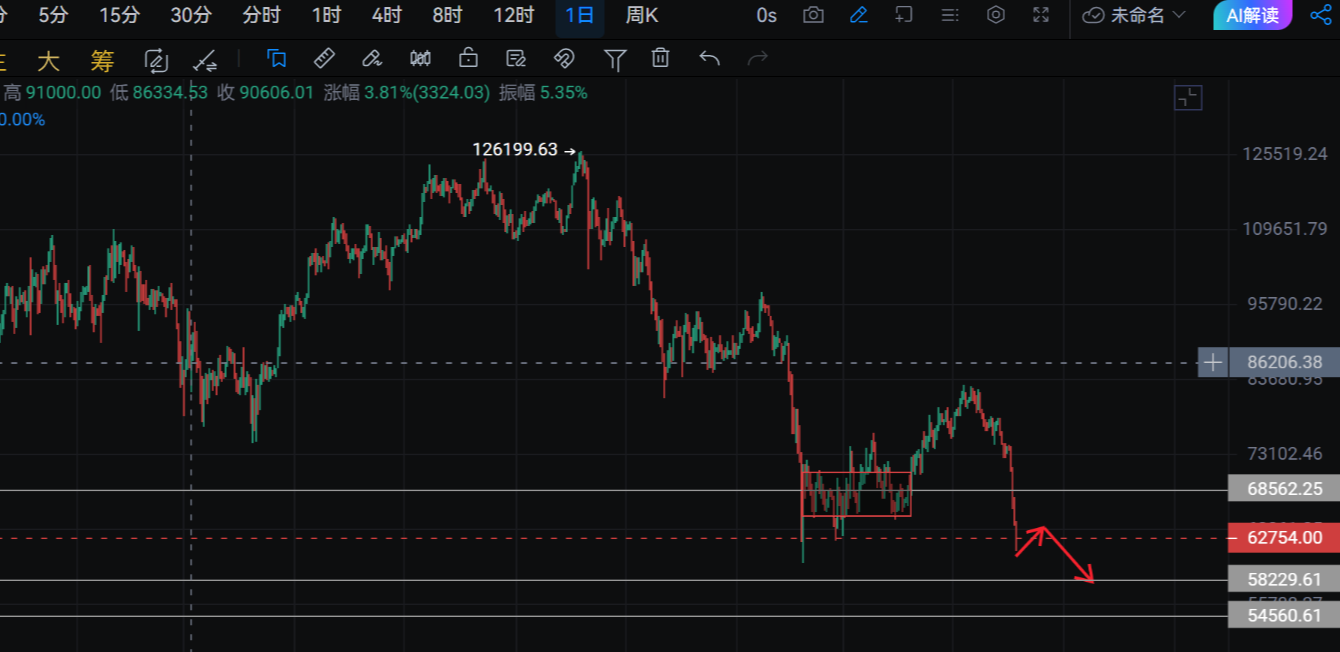
Around June 4, 2026, Michael Saylor effectively mapped out a capital flow direction for this round of "liquidity migration." He emphasized that approximately $400 billion had been funneled into AI infrastructure in the past six months, pointing out that since May 14, Bitcoin ETFs had seen about $4 billion in net outflows, boldly stating that this $4 billion was merely a small part "sucked away" from that $400 billion—capital shifted from passive holdings of on-chain assets to the underlying AI infrastructure composed of data centers, electricity, and chips. In his narrative, the recent pressure on Bitcoin prices is due to ETFs acting as cash machines—not because investors have lost faith in such assets, but to catch the next AI train.
When placing these two figures together, the logic of capital repricing becomes clear: on one side, there’s a new narrative track amounting to as much as $400 billion, and on the other side, a redemption pressure of $4 billion. Even a tiny misalignment can magnify into a wave in the Bitcoin market. The key question is whether this is a declaration of the "tide going out" for old assets or a typical cyclical preference switch. Saylor's answer is the latter—he insists that there is no fundamental problem with Bitcoin itself, but it has been momentarily marginalized by short-term AI enthusiasm. This explanation, on one hand, calms holder sentiment to a certain extent, but it inevitably carries bias due to his position as one of the largest public holders—when he says "it's just a rotation," listeners need to interpret this both as market observation and self-defense, reading these two meanings together.
Mining companies transforming into AI power landlords
While Saylor was explaining to the market that "it's just a capital rotation," Wall Street had already penned a specific list of target assets for this rotation. In early June, Bernstein began to cover Bitcoin mining companies TeraWulf and Cipher for the first time, both companies receiving "outperform" ratings, with target prices of $36 and $32, respectively. For traditional finance, which had been accustomed to pricing mining companies using hash rate curves and Bitcoin prices, such initial coverage and pricing feel more like a declaration of a new narrative's starting point.
In that research report, Bernstein no longer viewed them as mere "mining factories," but adopted a more contemporary metaphor—AI's "power landlords." The so-called "landlords" do not aim to run large model businesses themselves, but to control foundational resources like electricity and space, connecting the power grid to parks, building standardized infrastructures for substation, cooling, and security, and then renting this "powered factory" to AI occupants needing high-density computing power. Behind this metaphor is a shift in valuation frameworks: analysts began incorporating electricity resources, site expansion capabilities, and long-term power contracts related to AI into their models, no longer merely focused on total network hash rate share and the price elasticity of the next halving cycle; this is also regarded as a crucial note of traditional finance's perspective of re-evaluating crypto-related enterprises through the lens of AI infrastructure.
Genius treasury betting on unlisted AI
As mining companies set up "factories" for AI on the power side, Genius Group chose to rewrite its story on the balance sheet. As a company that has already included Bitcoin in its treasury, it announced in early June 2026 the launch of the AI treasury portfolio named AGI Infinity Portfolio, essentially placing a new basket targeting "unlisted AI" alongside its existing BTC positions, forming a dual asset allocation approach of digital currency and AI equity assets: continuing to bet on Bitcoin as a kind of "core reserve" while using the AI treasury to hedge against the structural changes in capital rotating from crypto to the AI track.
The specific path is not to directly pursue primary equity in Anthropic, SpaceX, or OpenAI, but to bridge through funds. In the initial investments, Genius Group bought 10,000 shares of Destiny Tech100 and 800 shares of Fundrise Innovation Fund, whose underlying holdings provide it indirect exposure to unlisted AI companies like Anthropic, SpaceX, and OpenAI. For retail investors, such structured products somewhat fill the channel gap for participating in AI "unicorns"—without needing to secure private placement quotas, they can share some of the valuation increase bonuses in the secondary market or quasi-public fund frameworks. However, the layered design also brings limitations: investors obtain fund shares instead of underlying equity, and the actual exposure to the companies is diluted throughout the entire portfolio, with information disclosure rhythm and valuation metrics dominated by fund managers. Coupled with the fee structure and potential liquidity discounts, this "indirect access" channel resembles a compromise method of participation rather than a ticket equivalent to directly holding shares in leading AI companies.
Competition and symbiosis: Bitcoin faces the AI test
From a funding perspective, Bitcoin and AI are competing for the same pool of high-risk capital in the short term: during the past six months, the approximately $400 billion referred to by Michael Saylor has been flooding into AI infrastructure, while Bitcoin ETFs have recorded approximately $4 billion in net outflows since May 14, with price pressures visibly increasing. Saylor chooses to explain this as a "migration of funds from Bitcoin to AI," rather than a deterioration of Bitcoin's fundamentals, yet he is also one of the world's largest public Bitcoin holders, making this soothing interpretation difficult to entirely separate from his holding stance. For the same group of investors with high risk tolerance willing to bet on long-term technological curves, Bitcoin and AI infrastructure currently seem like two chips balanced on a scale; whichever narrative updates more compellingly, and promises excess returns, temporarily holds the upper hand in liquidity.
However, at the business level, Bitcoin-related companies are actively creating a symbiosis with AI. Mining companies TeraWulf and Cipher are described by Bernstein as AI's "power landlords," with the logic shifting from simply betting on Bitcoin prices to leasing their electricity and space resources to AI infrastructure, essentially gaining long-term returns from computing and electro-mechanical assets. Treasury companies are making similar moves on the asset side; Genius Group holds Bitcoin while channeling funds through AGI Infinity Portfolio into Destiny Tech100 and Fundrise Innovation Fund, thereby indirectly securing exposure to unlisted AI companies like OpenAI, Anthropic, and SpaceX. Bernstein rebranding mining companies with the term "power landlords," and Genius Group rewriting fund usage for AI treasuries both suggest a change: the market is beginning to price "Bitcoin + AI options" assets separately, splitting the risk premium formerly relying solely on Bitcoin prices into complex considerations of power contracts, AI-related cash flows, and technological growth. Whether the AI narrative will continue to dilute the valuation of pure Bitcoin assets or give the entire Bitcoin ecosystem an additional layer of AI infrastructure options depends on whether these symbiotic attempts can genuinely be seen as quantifiable and sustainable long-term business models by the capital markets.
Where will the next round of capital rotation point?
Standing at this watershed moment in June 2026, the capital relationship between Bitcoin and AI is no longer a simple give-and-take but a complex chess game of competition and symbiosis: on one hand, there is the massive wave of approximately $400 billion attributed to "AI infrastructure financing" by Michael Saylor over the past six months, and on the other hand, about $4 billion in net outflows from Bitcoin ETFs since May 14 creating price pressures; at the same time, mining companies have been tagged as "AI power landlords" by Bernstein, while Genius Group bundles its Bitcoin treasury with AI exposures like Destiny Tech100 and Fundrise Innovation Fund via AGI Infinity Portfolio, actively positioning itself at the intersection of Bitcoin and AI. Looking ahead, if AI infrastructure enters a "digestive period after a construction peak," one possible path is: capital repeatedly rebalancing between high-growth but highly uncertain AI-related stocks, funds, and more mature assets; Bitcoin, treasury stocks that hold Bitcoin, and mining companies viewed as AI power foundations may be treated as chips on different risk levels, repeatedly disassembled and reorganized, rather than simply being "replaced" or "crowded out" by AI. In this process, Saylor's statement about funds "rotating to AI rather than questioning Bitcoin itself" serves both to buy time for his massive Bitcoin holdings and as a narrative that needs to be constantly calibrated with ETF flow data and financial reports; Bernstein's packaging of TeraWulf and Cipher as "AI power landlords" hints at a new dimension in pricing electricity and space resources, albeit with promotional undertones. For investors attempting to capture the direction of the next round of funding, what’s more important is not to side with any grand narrative but to break down Saylor's and Bernstein's arguments back to verifiable capital flow numbers, business model assumptions, and their respective interest structures; real capital rotation will ultimately only be reflected in these specific data that can be revisited.
Join our community, let's discuss, and become stronger together!
AiCoin exclusive Hyperliquid benefits: https://app.hyperliquid.xyz/join/AICOIN88
AiCoin exclusive Aster benefits: https://www.asterdex.com/zh-CN/referral/9C50e2
On-chain Telegram community: https://t.me/AiCoinWhaleData
On-chain community: https://www.aicoin.com/link/chat?cid=N6OVMor5g
AiCoin on-chain Twitter: https://x.com/aicoinwhaledata
免责声明:本文章仅代表作者个人观点,不代表本平台的立场和观点。本文章仅供信息分享,不构成对任何人的任何投资建议。用户与作者之间的任何争议,与本平台无关。如网页中刊载的文章或图片涉及侵权,请提供相关的权利证明和身份证明发送邮件到support@aicoin.com,本平台相关工作人员将会进行核查。