This article is authored by Tiger Research. As institutional investors enter the on-chain lending market, DeFi is bidding farewell to the single shared fund pool structure and moving towards a new structure with risk isolation and specialization in the operational layer.
Key Points Summary
- The Lehman crisis and the Kelp DAO incident exposed the same type of structural flaws: a single shared fund pool structure amplifies the risk of a single asset, leading to a systemic crisis. The traditional financial response is to separate each functional layer of the financial system.
- The DeFi ecosystem is evolving in the same direction, building a modular architecture centered on risk isolation.
- This shift has accelerated as RWA assets begin to flow on-chain.
- In a modular architecture, the operational layer's ability to effectively manage products becomes a key differentiator.
1. Lessons from the Lehman Crisis
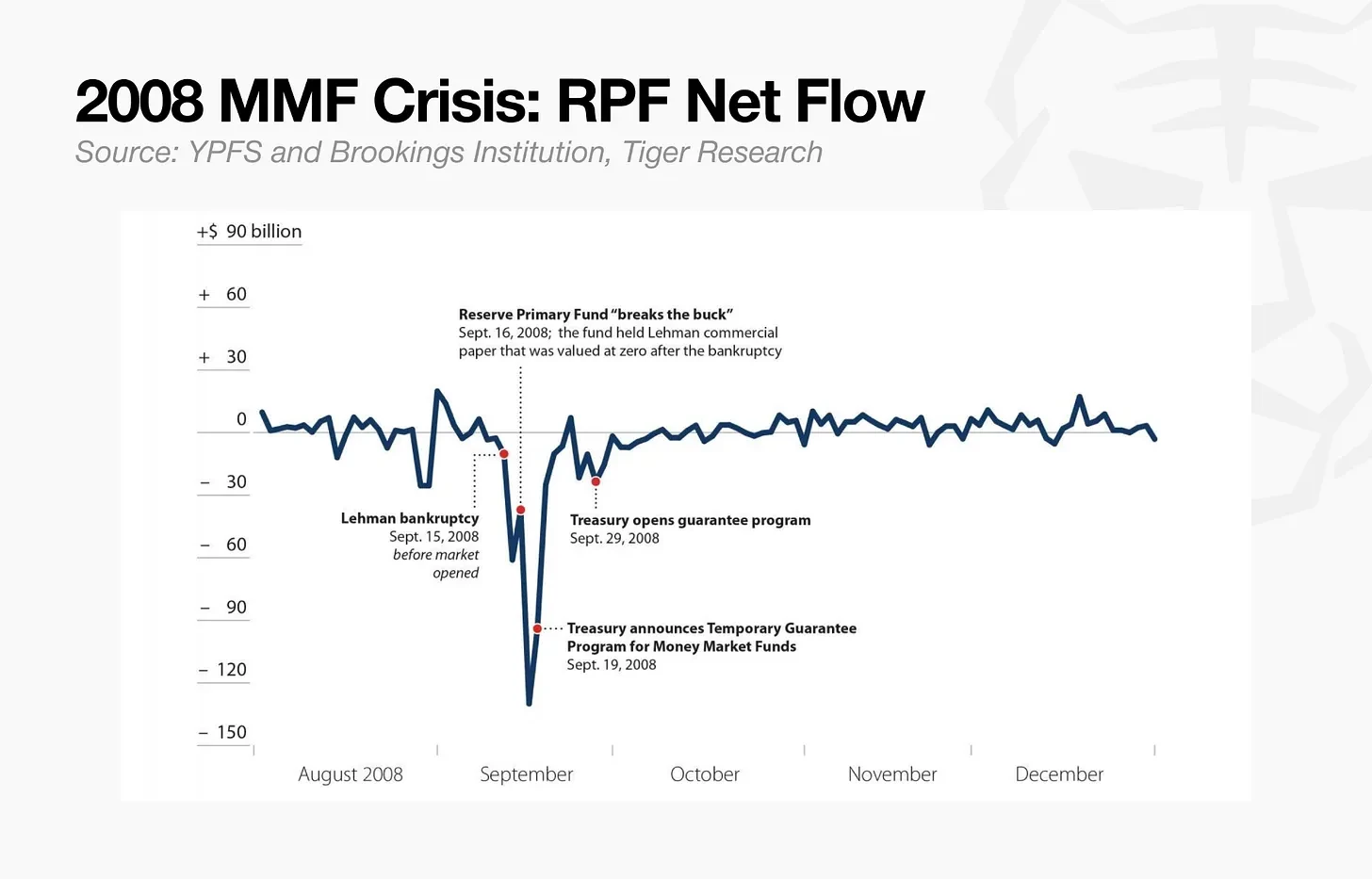
In September 2008, the collapse of Lehman Brothers triggered an unprecedented crisis, the world's third-largest money market fund—the Reserve Primary Fund (RPF) suspended all redemptions within a day.
At that time, RPF's investment in Lehman Brothers' debt accounted for only 1.2% of its total managed assets. The bankruptcy of Lehman Brothers rendered this 1.2% of debt unrecoverable, and the total asset value of the fund fell from its nominal value of 100% to 98.8%. This was enough to break the fundamental principle that the money market fund industry maintains a fixed net asset value of $1 per share. The fund's share price dropped below $1 to $0.97.
As principal losses became evident, panic spread almost immediately. People feared that delay would lead to larger losses, triggering an unprecedented bank run, with redemption requests amounting to $40 billion in just two days. Unable to withstand such immense pressure, the fund froze its assets and halted all withdrawals.
The Lehman Brothers bankruptcy forced a comprehensive restructuring of traditional capital markets. In the money market fund sector, risk-tiered liquidity buffers and redemption restriction guidelines underwent thorough reform. In the hedge fund sector, the industry learned from Lehman Brothers the lesson of the risks associated with concentrated custody of client assets by a single prime broker.
The result was that assets and credit were no longer concentrated in a single intermediary but were structurally adjusted. Separating the execution infrastructure from risk management and diversifying risk exposure across multiple prime brokers became the global standard for risk isolation. It is on the basis of such institutional safeguards that separate infrastructure from risk to contain contagion that the asset management industry was able to rebuild operational trust and restore growth.
2. How Traditional Capital Markets Addressed the Problem
In 2014, the U.S. Securities and Exchange Commission restructured the money market fund (MMF) framework. Funds are classified according to their capital nature, with different standards applicable to each type. This move aims to prevent the run or bankruptcy of one type of fund from spreading to others or to the entire system, with each type of fund having its specific buffering mechanism.
The core concept of traditional financial risk control methods is separation. Power is decentralized to avoid risk concentration at any single point, and independent verification mechanisms are introduced at every stage of fund flow.
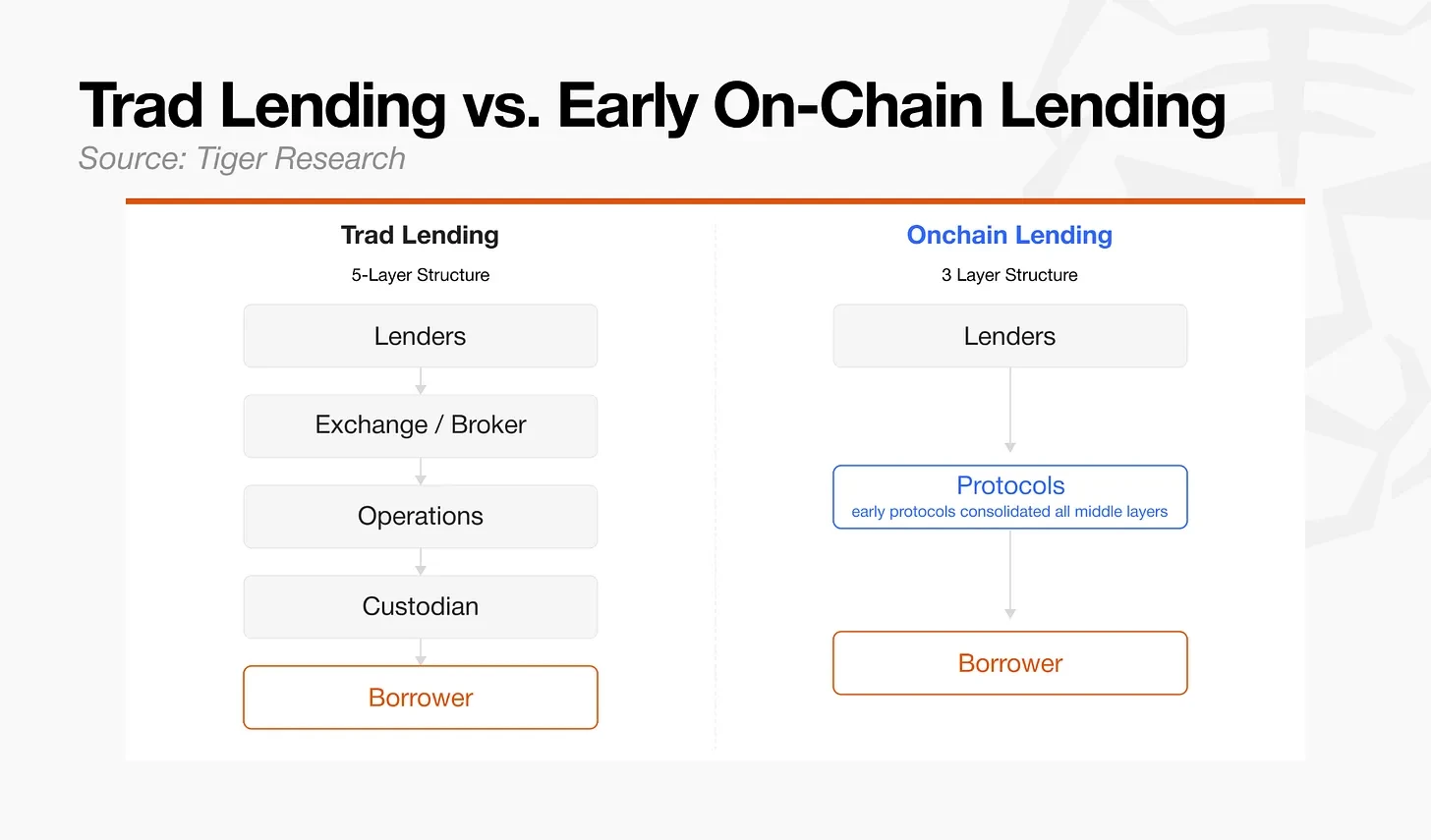
The prime brokerage business in capital markets best exemplifies this principle. Investment decision-making power lies with the hedge funds, while risk supervision is exercised by the brokers. These two functions are deliberately separated. In traditional lending markets, the same logic applies: credit assessment, underwriting, collateral management, and custody are all handled by different independent entities.
However, when asset management and lending began to migrate to DeFi, the multi-layered intermediary structure built by traditional finance was compressed into a single layer. Early DeFi protocols focused on eliminating the intermediaries needed for such separation, directly encoding relevant mechanisms into smart contracts and automating processes previously handled by multiple participants.
3. From Shared Pools to Modular Architecture
Early DeFi practices that compressed all lending mechanisms into a single smart contract reduced intermediary costs but also concentrated all risks within a single protocol. Since credit assessments, underwriting, and collateral management operated within the same codebase rather than as independent functions, a default or liquidation failure of a single asset could directly lead to liquidity paralysis throughout the entire system.
This potential contagion risk forced protocol governance entities to conservatively set risk parameters. Assets with shorter historical records or higher volatility, as well as any assets outside of Bitcoin and Ethereum, were structurally excluded from collateral eligibility. Compressing functions into a single contract ended up reducing capital efficiency: asset diversity was limited, and market access was restricted.
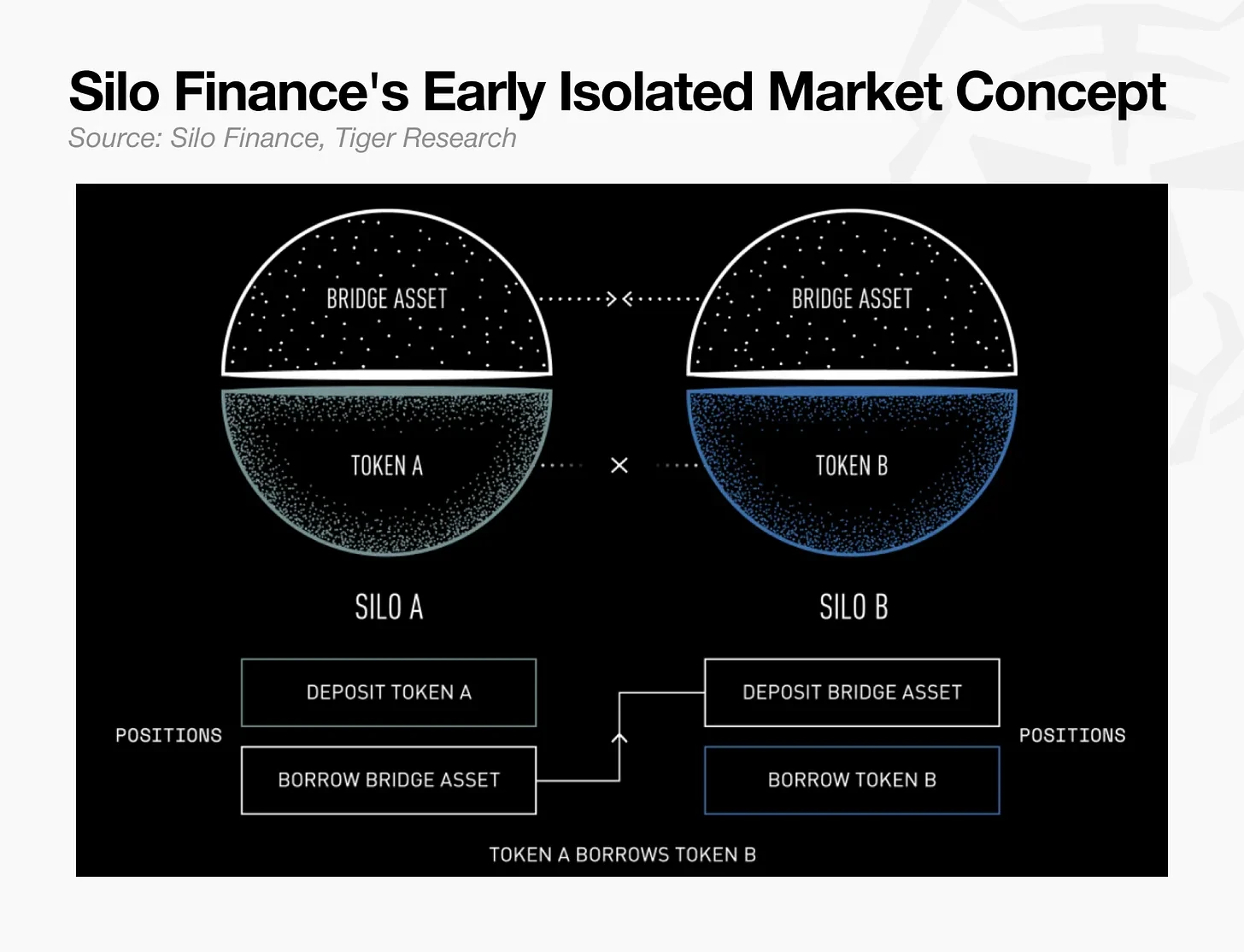
Silo Finance solved the risk concentration issue of a unified asset pool by introducing independent loan pools for each asset. By confining price manipulation or value plummets within a single collateral pool and preventing risks from spreading to other asset pools, Silo demonstrated that it is possible to lower governance approval thresholds and more quickly explore new lending markets. This architecture indicates that large single asset pools can be divided, risks can be isolated at the market level, while also laying the groundwork for subsequent layered modular structures.
The modular system pioneered by Silo has become a foundational standard for on-chain lending, as RWA assets, including tokenized government bonds and private credit, begin to flow onto the chain in large quantities. Each type of RWA has fundamental differences in trading hours, oracle reliability, regulatory requirements such as KYC and AML, and settlement procedures. Early shared fund pool models required the use of a single uniform parameter set to manage such diverse assets, which is clearly impractical.
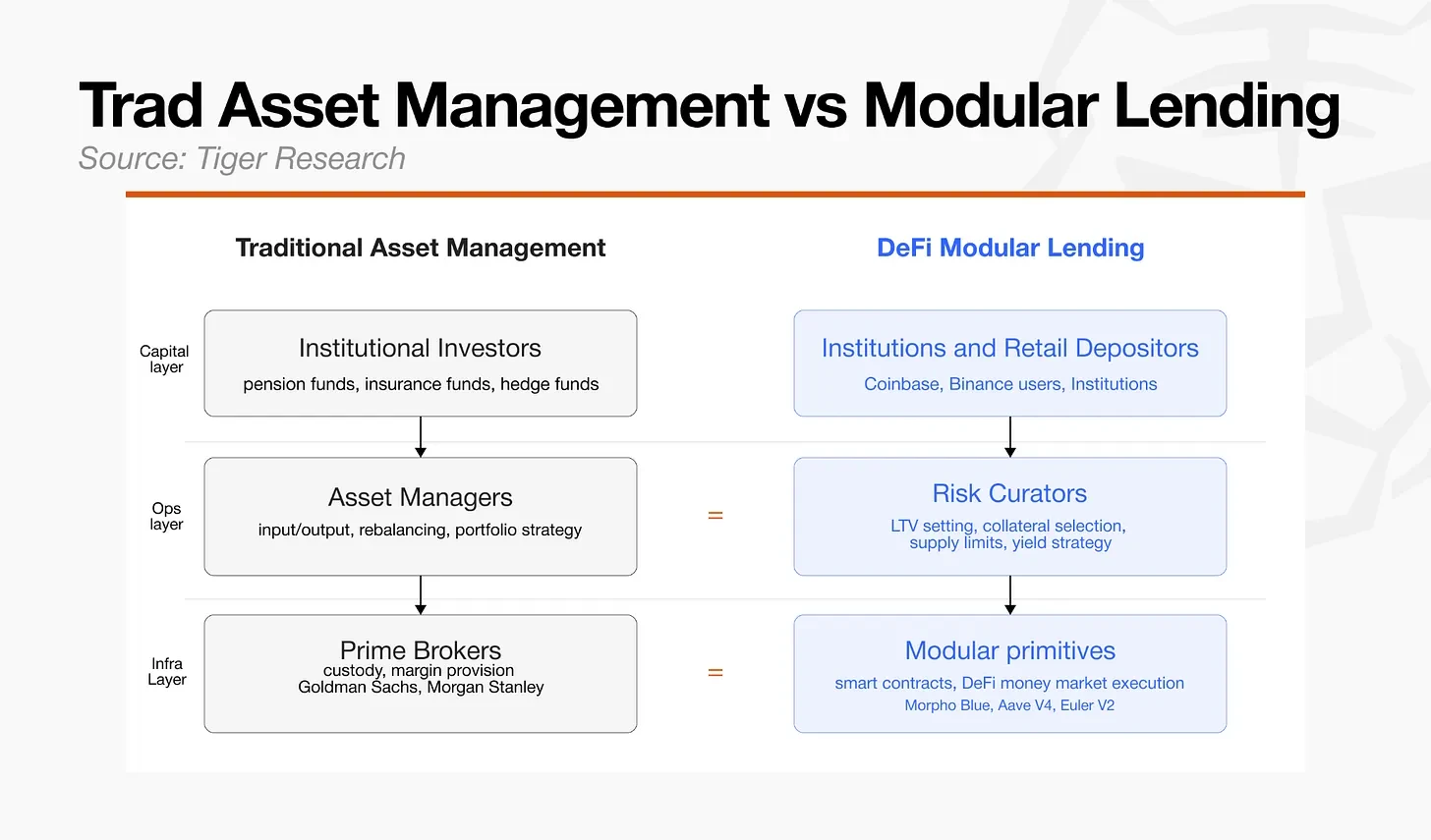
The influx of Real World Assets (RWA) has created a demand that goes beyond simple asset isolation. It requires transplanting the complex risk control frameworks of traditional finance into the on-chain environment. As asset diversity increases, the risks appearing on-chain also become increasingly complex. To control these risks, structural separation is needed: on one hand, an immutable infrastructure layer responsible for settlement and clearing, and on the other hand, an operational layer with real-time permissions to adjust and assume risk parameters.
Early decentralized finance (DeFi) compressed the financial intermediary layer into a single codebase. With the influx of RWA and the maturation of the lending market, the development path has changed: clearing and settlement efficiency have been entrusted to the blockchain, while risk monitoring authority has been separated into an independent level. To cope with the increasingly complex assets, on-chain lending has ultimately formed a structure akin to the traditional financial system (such as prime brokers and independent credit assessments), where investment and risk monitoring are separated. This modular architecture has become the new standard for on-chain lending markets.
4. Institutional-Level Risk Isolation and Convergence
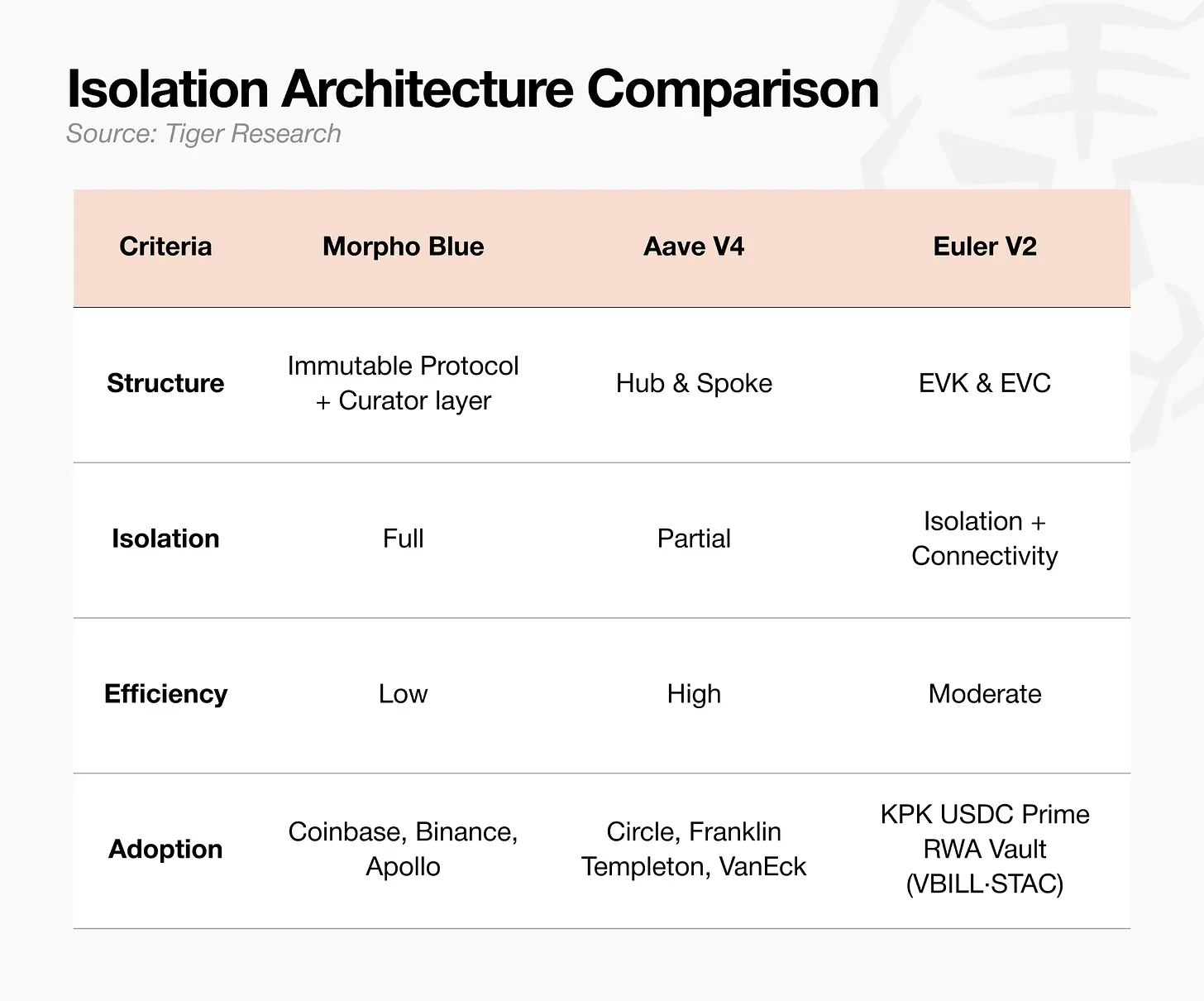
While modular architecture originates from the DeFi ecosystem itself, it precisely aligns with the risk control standards required by institutional participants.
Morpho has decided to prioritize achieving complete risk separation at the infrastructure layer, even if it sacrifices some capital efficiency, but it has stimulated institutional demand. This demand has become a turning point, prompting other major lending protocols (especially those that initially adopted a shared fund pool structure) to move in the same direction.
4.1 Morpho Blue: Prime Broker
Morpho began as an intermediary layer designed to optimize interest rates above first-generation DeFi lending protocols like Aave and Compound. In this model, it could not exist independently. In 2023, Morpho released the Morpho Blue white paper and launched Morpho Blue and Morpho Vaults in early 2024, officially announcing independent operations.
This transition discarded the previous structure where the governance entity handled all market risk decisions and separated market creation and risk judgment from the protocol itself. This separation has become the structural basis for institutional participants to choose and control risks according to their own compliance standards.
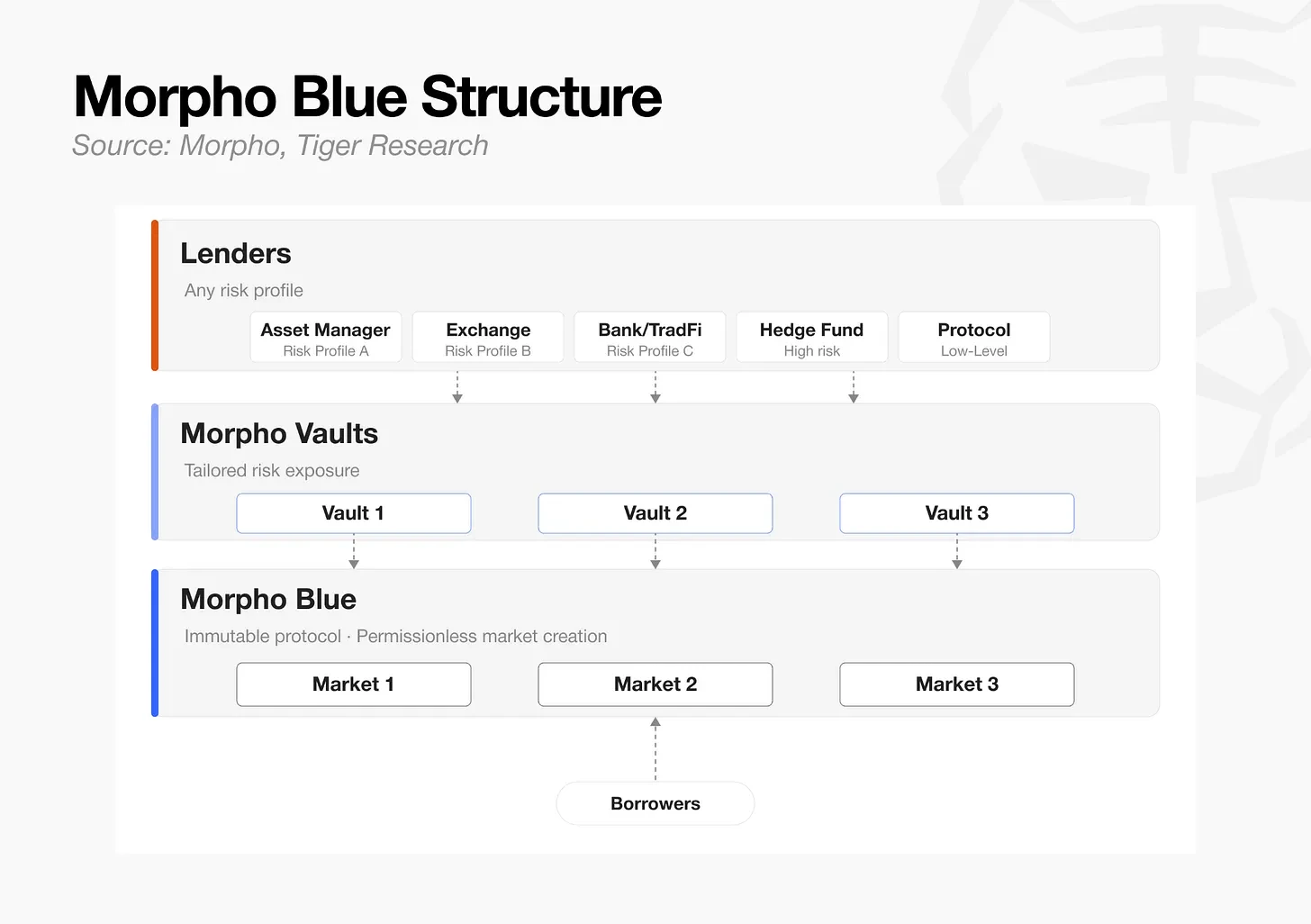
Architecture
- Morpho Blue: An immutable protocol. When a market is created, five parameters are fixed: collateral asset, borrowing asset, loan-to-value ratio (LLTV), pricing information, and interest rate model. Anyone can create a market without permission. The protocol itself is solely responsible for executing the pre-written code.
- Morpho Vaults: A risk management layer where independent curators choose eligible markets, set supply limits, and allocate funds. Each vault has a unique risk profile.
- Lenders: Depositors with varying risk tolerances, including DAOs, protocols, individuals, and hedge funds, choose vaults that fit their situation and provide funds.
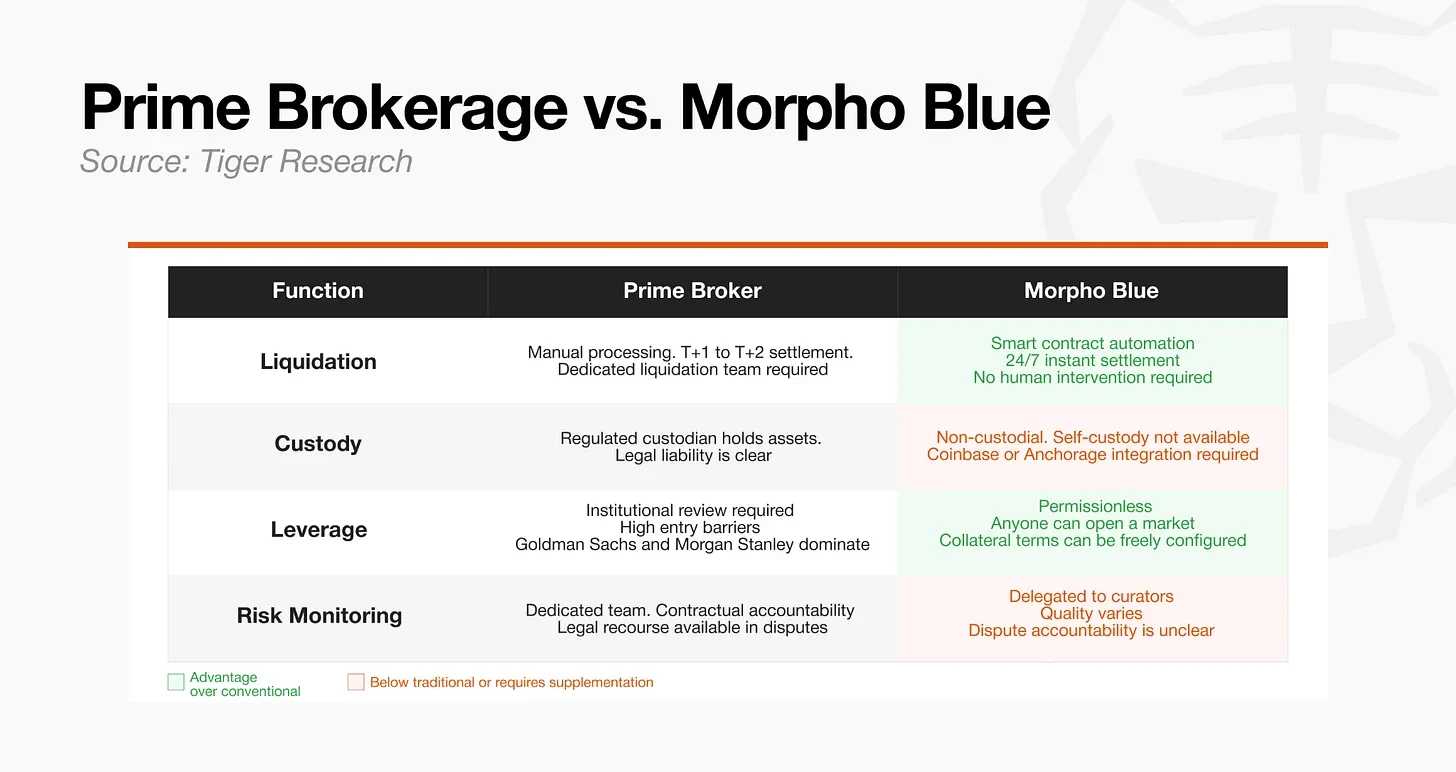
Traditional prime brokers typically need to fulfill four functions: clearing, custody, leverage provision, and risk monitoring. Morpho automates clearing and leverage provision at the protocol level through smart contracts. However, due to its non-custodial structure, it cannot provide the custodial environment that institutional investors require to meet regulatory demands. Therefore, integration with external custodians like Coinbase or Anchorage is necessary.
Similarly, risk monitoring is not determined by the protocol itself but depends on the ability of each custodian to select assets and manage risk exposure. This creates a persistent risk: the quality of custodians varies greatly. The xUSD and Stream Finance incidents in 2025 directly exposed this vulnerability. Multiple Morpho vaults held xUSD exposure and generated bad debts. Following the incident, the market began to scrutinize custodians’ asset selection capabilities and real-time risk management abilities more rigorously, and institutional capital concentrated investments in performance-driven top custodians such as Steakhouse, Gauntlet, and Sentora.
Traditional brokerage integrates clearing, custody, leverage, and collateral management into a single institution. Morpho replaces this model with a division of labor approach, allocating each function to specialized participants within the ecosystem rather than concentrating them in one institution.
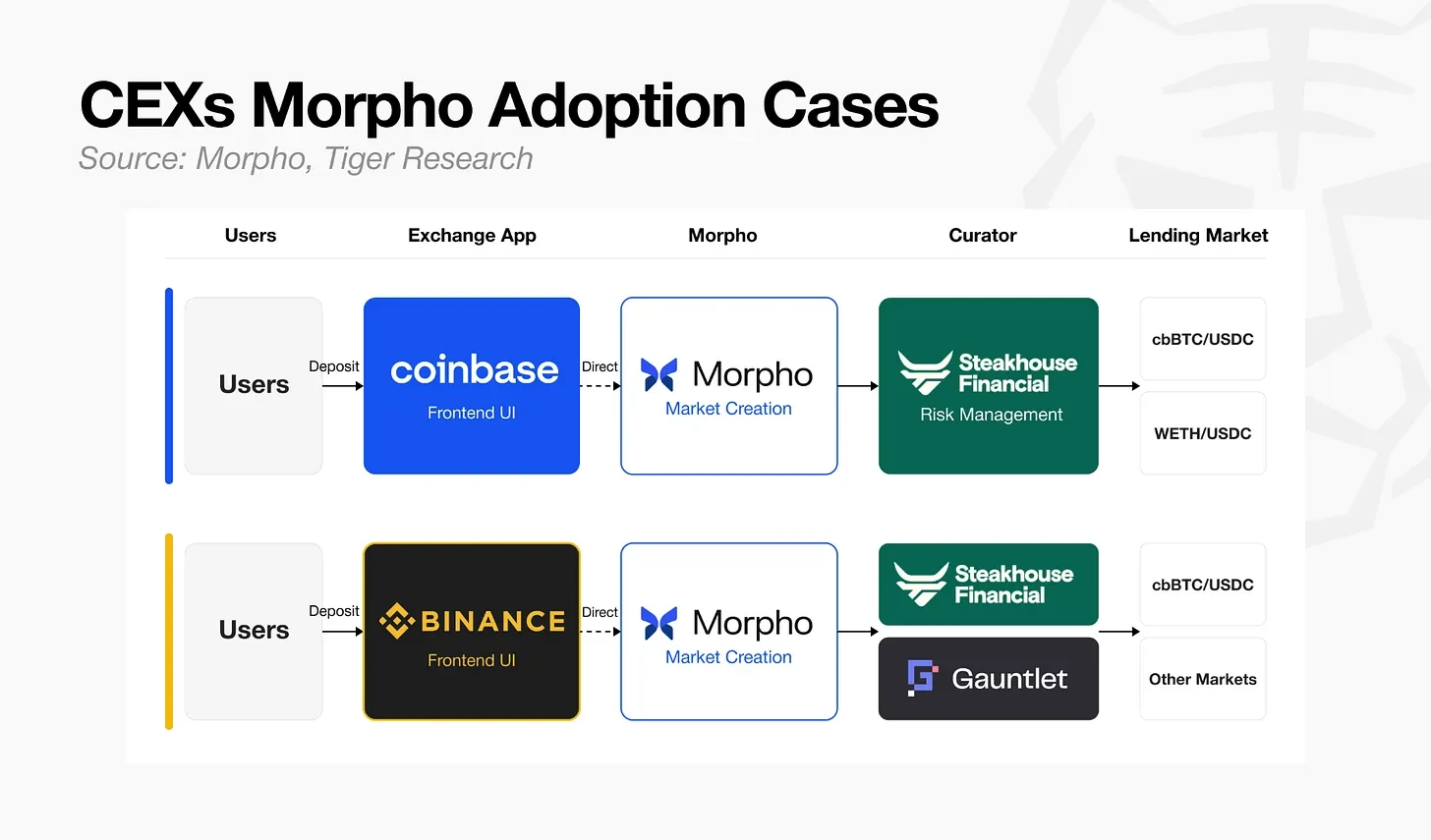
Institutional adoption is occurring on a large scale, and it all began with centralized exchanges.
- Coinbase: A USDC lending service built on Morpho Blue, provided by Steakhouse Financial as the custodial service.
- Binance: Adopts the same structure, with Steakhouse Financial and Gauntlet serving as curators.
Users can obtain loans by clicking the “Lend-Borrow” button in the Coinbase or Binance apps. The two largest exchanges by global trading volume have chosen the same architecture. This structure has also expanded to traditional financial institutions.
- SG-FORGE: Deploys stablecoins EURCV and USDCV on Morpho in compliance with MiCA standards.
- Apollo: Brings the private credit fund ACRED on-chain and uses it as collateral for Morpho.
- Bitwise: Manages risks directly on Morpho Vaults.
If tokenization opened the channels to obtain assets, Morpho has paved the way to turn these assets into productive capital. The development trajectory set by Morpho is gradually showing a new evolution direction that is hard for lending protocols with completely different starting points to ignore.
4.2 Aave V4: Universal Bank
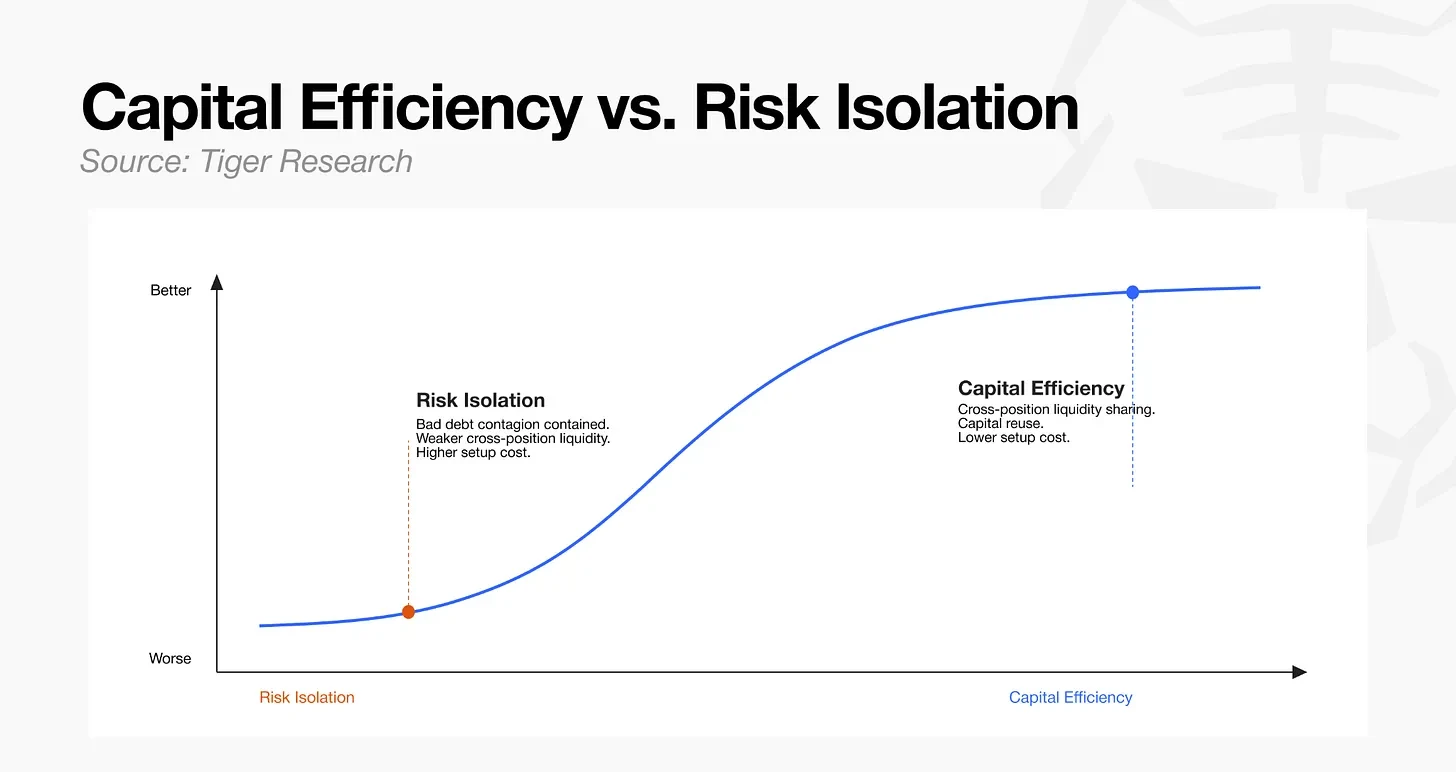
Aave was initially called ETHLend and started as a peer-to-peer loan matching platform, later undergoing versions V1, V2, and V3, gradually developing into a shared fund pool structure. In March 2026, Aave launched version V4 on Ethereum mainnet, which is a modular architecture. In contrast to Morpho's approach of structurally separating infrastructure from operations, Aave V4 has chosen a hybrid model that controls risks while maintaining liquidity efficiency.
Aave recognizes the tension between risk isolation and capital efficiency. Moving towards risk isolation can curtail the spread of bad debts but may weaken liquidity network effects and reduce capital efficiency. The design of V4 aims to structurally resolve this trade-off.
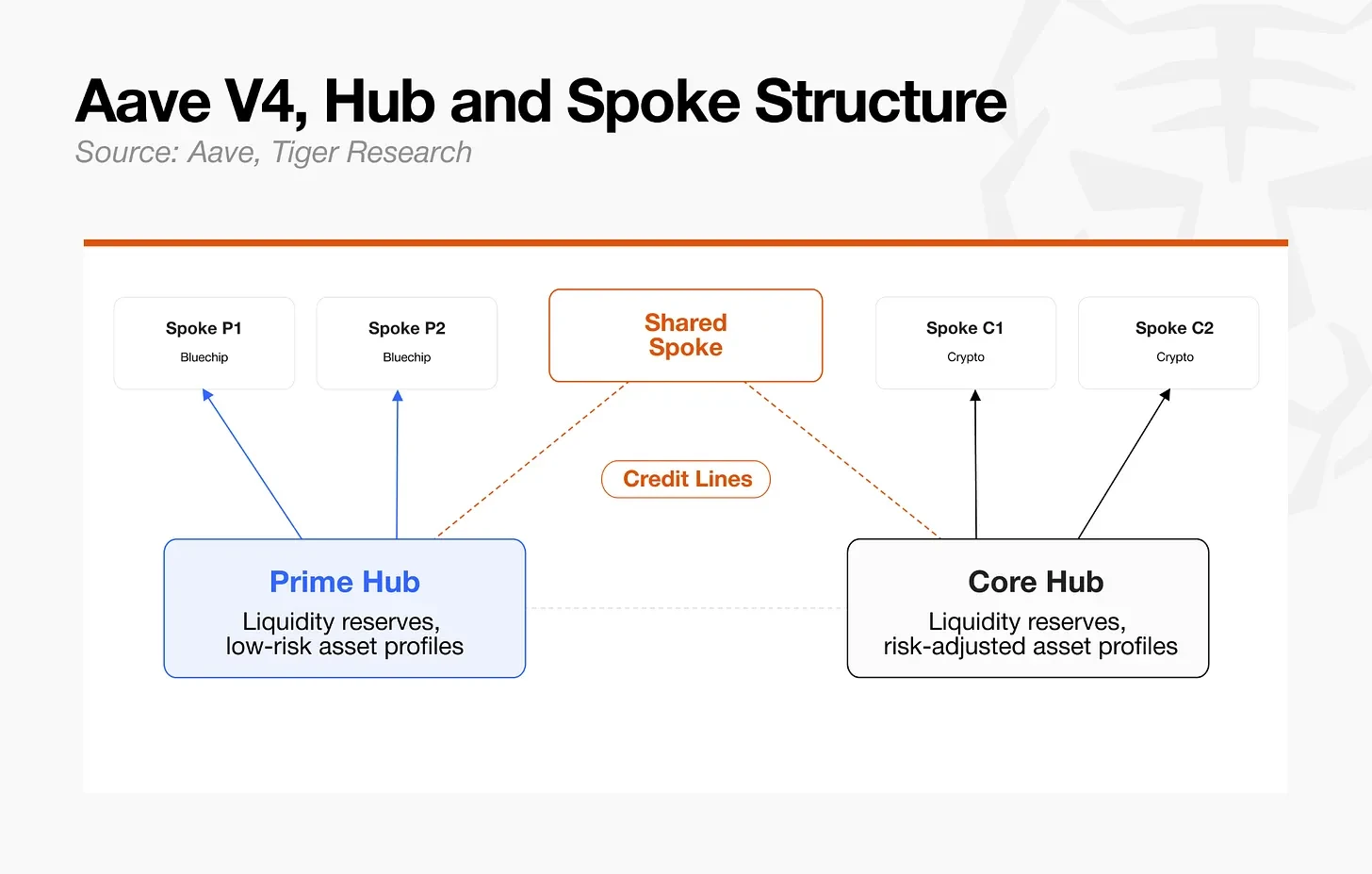
Architecture
- Hub: The core layer integrating liquidity and accounting. It allocates credit lines and borrowing limits for each branch, restricting the liquidity that can be withdrawn from any specific market. Basic risk firewalls are made up of these branch limits and local parameters.
- Spoke: An independent lending market with unique parameters for each asset. When a branch or asset encounters issues, governance and risk managers can reduce risk exposure by adjusting the branch's credit limit, restricting new borrowings, or initiating emergency control measures. Since the maximum risk exposure is fixed at the credit limit, the structural spread of contagion effects is inherently limited by design.
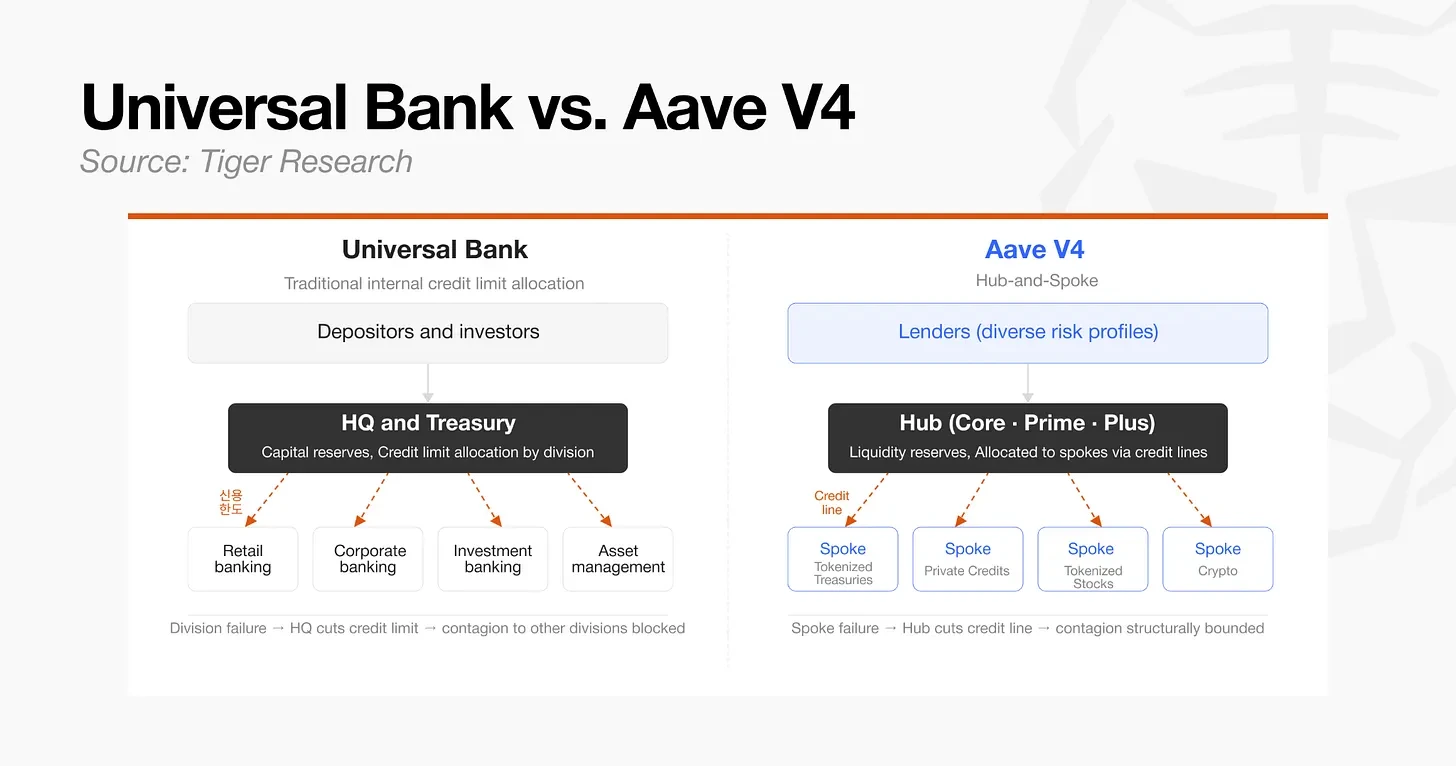
In traditional finance, this structure resembles an internal credit limit allocation system of a universal bank. The main office allocates credit limits to each department, adjusting these limits when a specific department faces difficulties to control spreads. The central hub acts like the main office, while each branch operates like an independent business unit. Unlike Morpho's complete isolation model (where capital is strictly locked within each asset pair), this centralized radiation structure allows unused liquidity in one branch to be flexibly reallocated through the hub's credit limits to more efficient branches. The result is greater capital efficiency.
This structure provides a significant advantage in RWA markets. Emerging RWA markets often struggle to attract initial liquidity, but in Aave V4, the existing liquidity hubs can serve as seed mechanisms for new branch markets. By building tokenized assets as independent branches and setting credit limit caps at the center, it can utilize the liquidity base of safer assets to bring new asset classes to market at a lower launch cost while keeping initial exposure within credit limits.
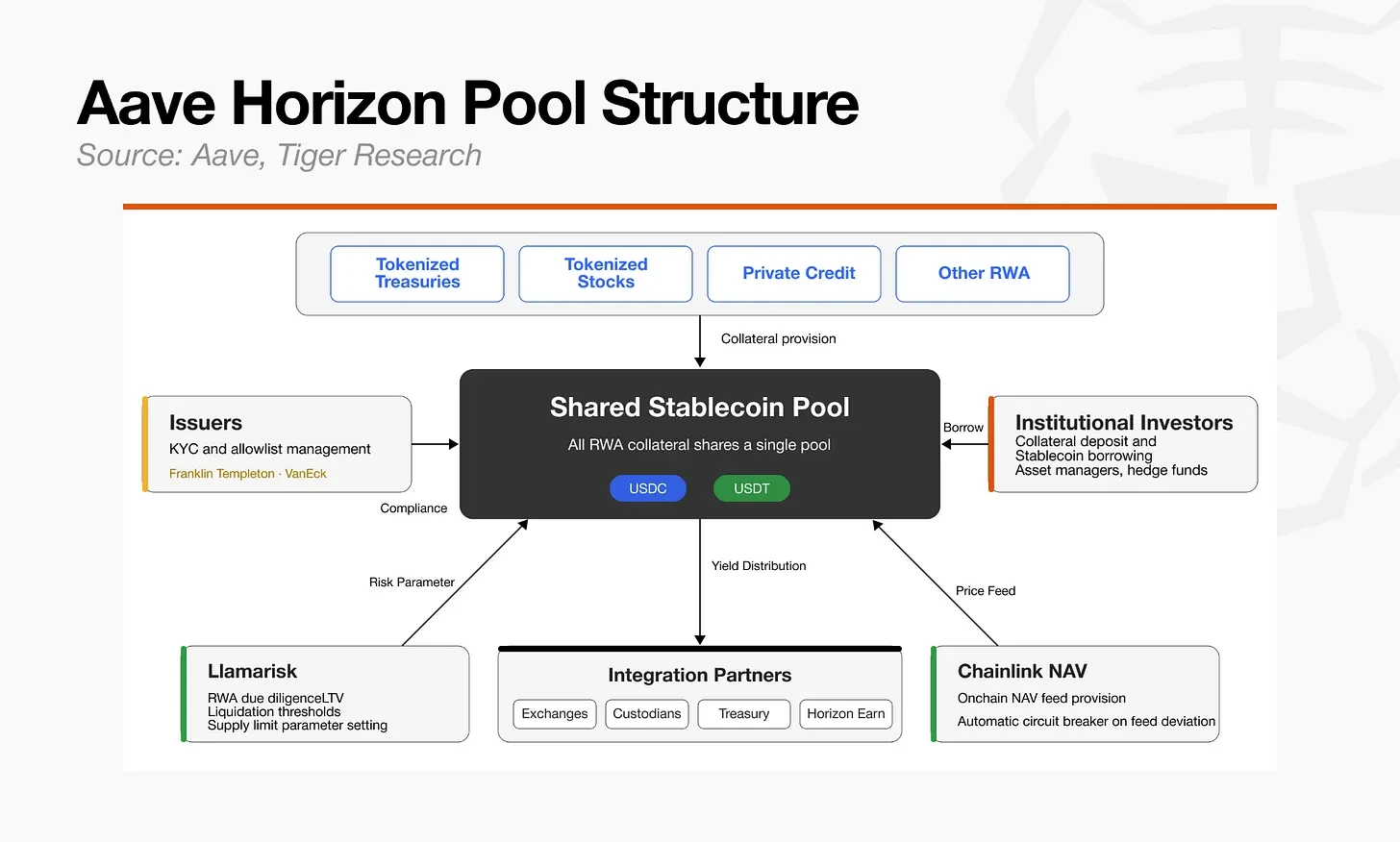
Institutional adoption mainly revolves around Horizon. Horizon was initially developed as an independent RWA lending instance based on Aave v3.3, but its design philosophy aligns with the direction of V4’s unified liquidity and risk separation. As the integration between Horizon and V4's credit limit structure deepens, it is likely to further embed into Aave's institutional RWA layer.
Horizon aims to allow regulated tokenized government bonds, money market funds, and institutional funds to serve as collateral for stablecoin borrowing, with potential expansion into asset classes like tokenized stocks and ETFs.
As approved institutional assets within Horizon are linked to the same institutional liquidity layer, any newly added RWA can immediately leverage the existing stablecoin liquidity.
The role distribution within this liquidity layer is as follows:
- Issuer: Management of investor access and KYC/AML allowed list.
- Risk Manager (LlamaRisk): RWA due diligence, risk framework, and parameter recommendations.
- Oracle (Chainlink): Provides on-chain price information.
- Protocol (Aave): Smart contract execution.
In traditional Aave markets, adding new assets requires deliberation and voting by the DAO governance committee, which slows down the process. Horizon separates these responsibilities: the issuer is responsible for the compliance of each asset, LlamaRisk handles risk due diligence, and Chainlink verifies prices. This architecture enables a much quicker onboarding and risk adjustment for institutional assets than having all decisions go through DAO governance committee approval.
Morpho minimizes governance participation and outsources market creation and risk management, choosing speed and optionality; while Aave has opted for a different path: controlling governance delegation and shared liquidity to maintain capital efficiency.
Both approaches are coherent solutions to transplant the risk allocation ideas of traditional finance into on-chain environments, but which side the RWA market will ultimately align with remains to be seen.
4.3 Euler V2: Multi-Strategy Hedge Fund
In March 2023, Euler suffered a loss of $197 million. This attack exploited a vulnerability in the smart contract code, causing losses to spread across multiple asset markets connected within the same protocol's accounting and clearing structure.
After about three weeks of negotiations, most of the stolen assets were recovered. Nevertheless, Euler chose to rebuild its architecture rather than simply fix it, and subsequently repositioned itself as a flexible institutional lending infrastructure.
Euler's drive to enter the RWA and institutional credit markets stems from a deficiency in tokenization of traditional financial assets. Although banks issued tokenized bonds, funds, and government bonds, these assets lacked the on-chain infrastructure necessary for lending or credit provision.
Euler did not introduce institutional demand into the volatile long-tail crypto asset market; instead, it began positioning itself as the credit layer for institutional finance, providing on-chain liquidity for these assets.
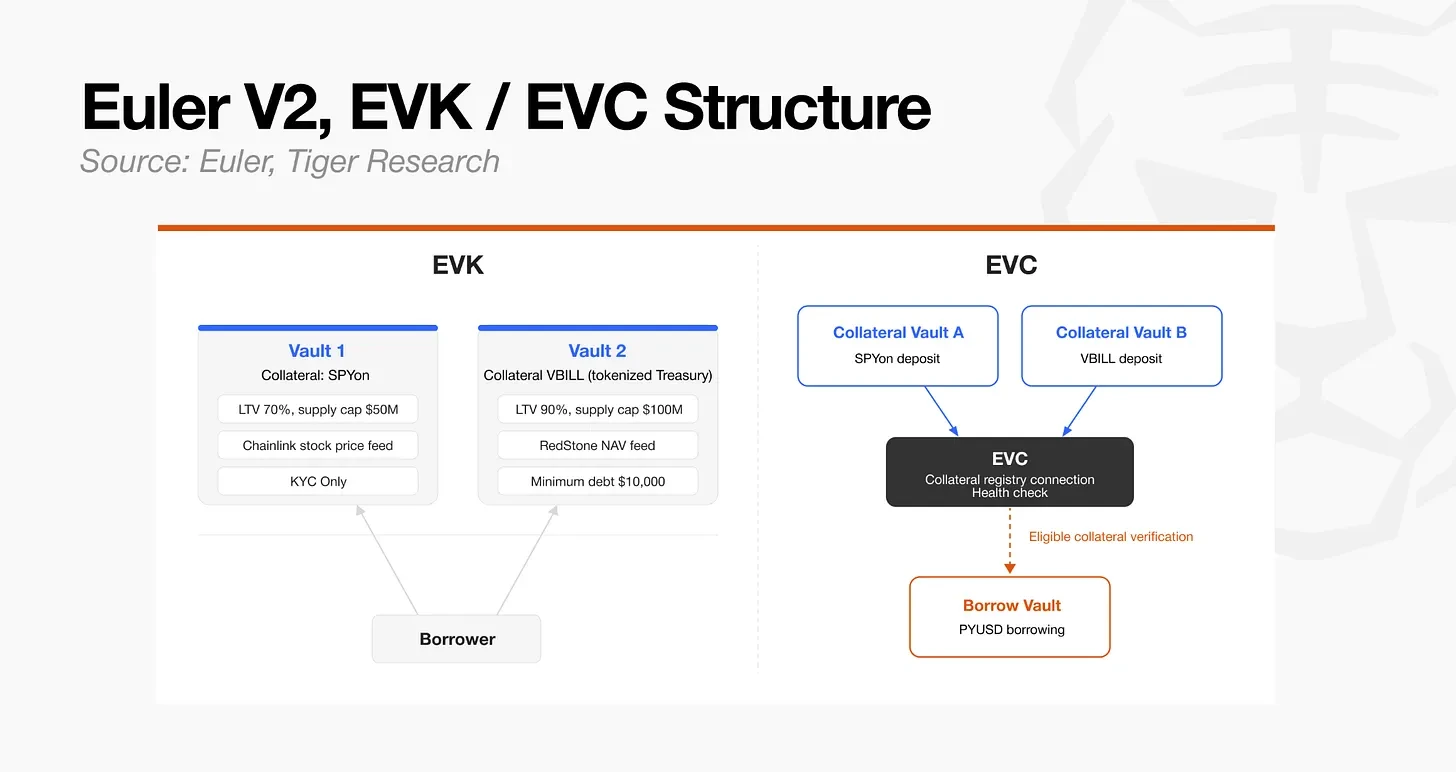
Structure
- EVK (Euler Vault Kit): A suite for creating ERC-4626 based credit vaults with lending functionalities. Each vault contains independent parameters for specific assets and risk configurations, and connects with other vaults through EVC to form a lending market.
- EVC (Ethereum Vault Connector): A core immutable primitive for connecting collateral and debt relationships distributed across multiple vaults, managing them within a single account. In traditional financial terms, it is analogous to consolidating multiple scattered asset accounts into a single margin account that allows cross-collateralization.
EVK allows for independent design at the asset level, while EVC connects originally dispersed assets into a unified account and position management framework.
From a traditional finance perspective, Euler funds share certain characteristics with the "group" structure of multi-strategy hedge funds. Each independent group adopts its strategies and risk limits while sharing technological infrastructure and capital management systems.
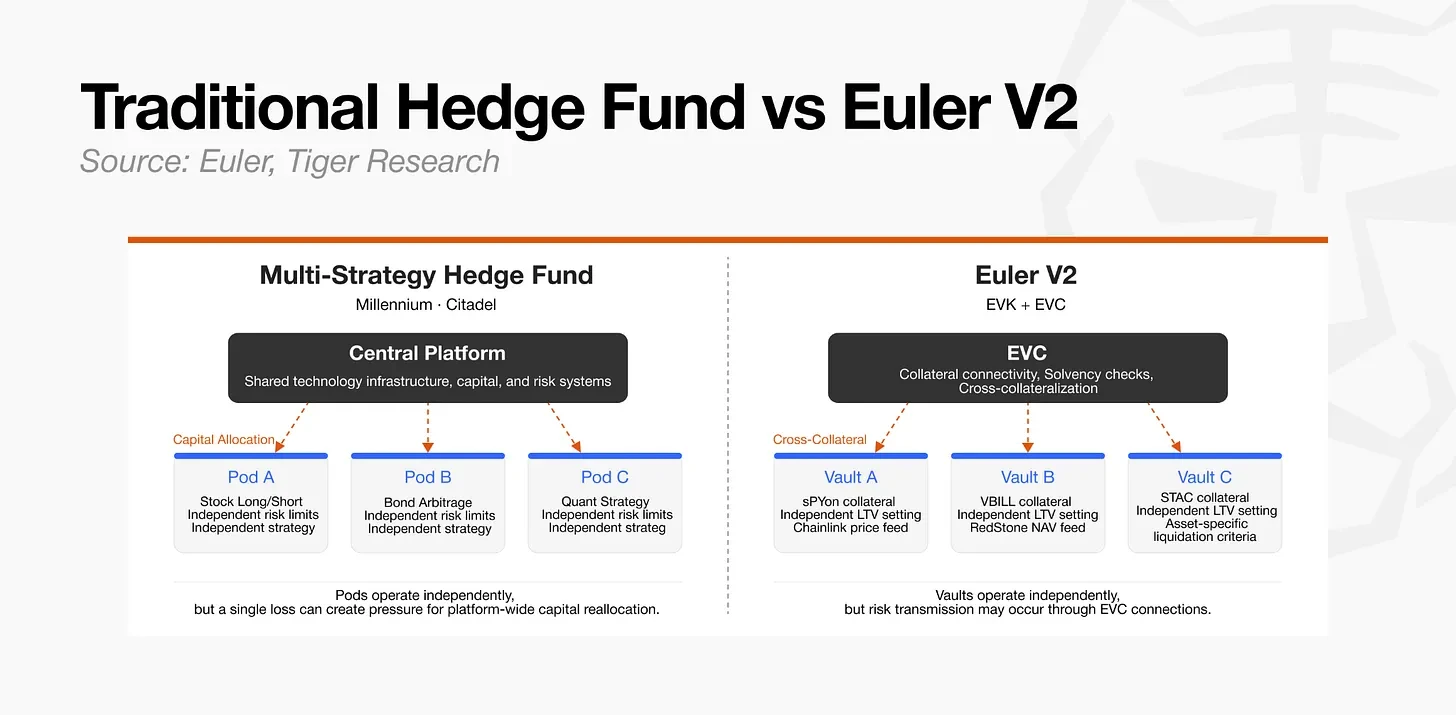
The key distinction is that Euler is not an internal organization of a single company but an open infrastructure where multiple independent participants can create and connect vaults.
By analogy, if Morpho resembles the division of labor pattern of prime brokers, and Aave resembles the shared liquidity model of universal banks, then Euler resembles the interconnected modular structure of multi-strategy hedge funds. The flexibility and capital efficiency provided by this architecture also make the risk potentially transferable from one asset within the interconnected vault ecosystem to other positions. Therefore, the custodians' risk management capabilities remain a central challenge that Euler V2 faces.
Euler's institutional applications are evolving to adapt to asset characteristics and regulatory requirements. The primary objective is tokenized stocks. Equity assets trade five days a week, 24 hours a day, requiring price information that reflects company events (such as dividends and stock splits). Building an independent market under a single risk-sharing structure to meet these conditions is impractical. EVK allows for independent design at the asset level, thus achieving this.
Euler has partnered with Ondo Finance to launch STEY, a lending market that accepts SPYon (S&P 500 index), QQQon (Nasdaq 100 index), and TSLAon (Tesla) as collateral.
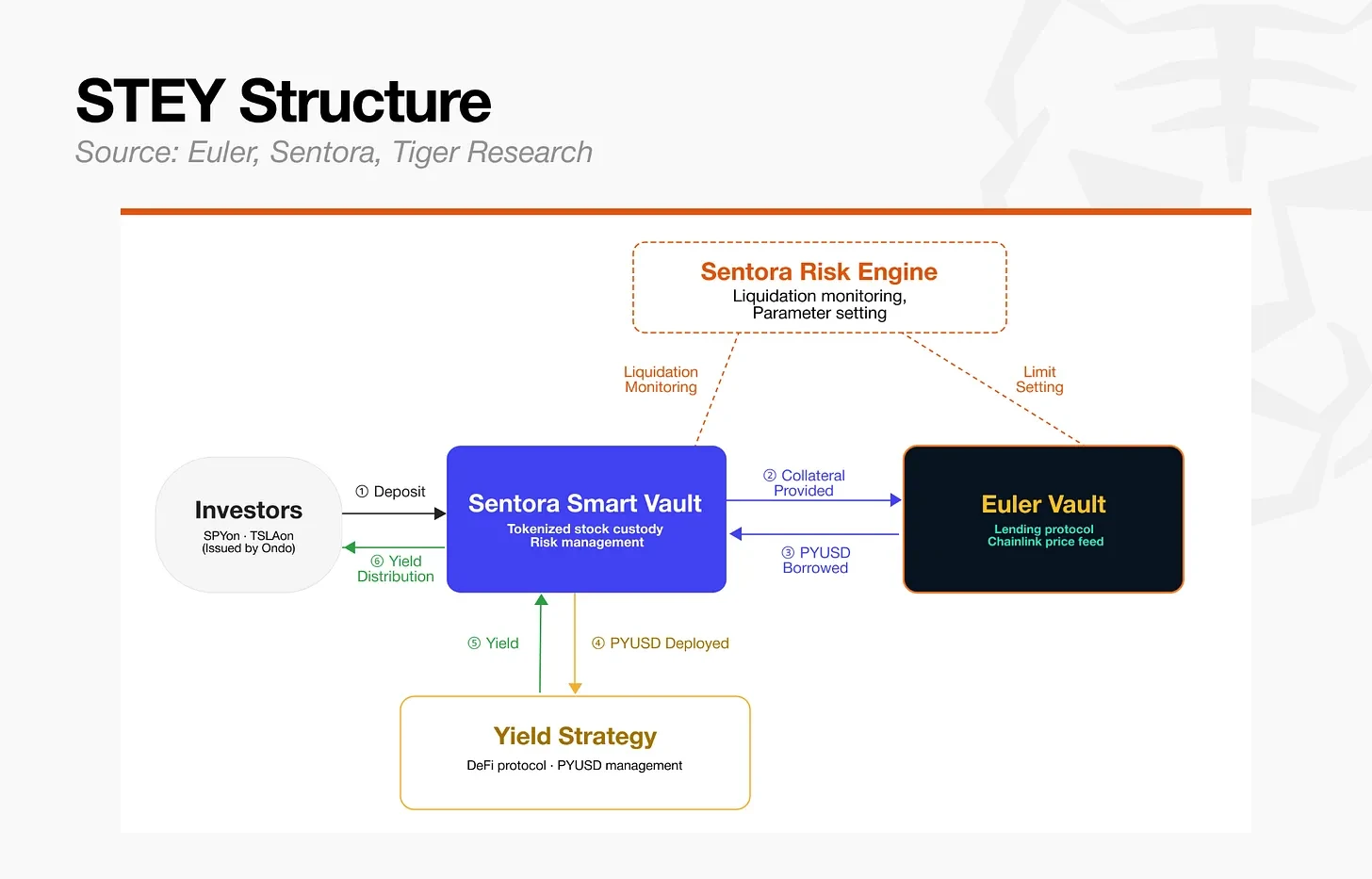
STEY Market Structure
- Collateral: Ondo tokenized stocks (SPYon, QQQon, TSLAon)
- Borrowed Asset: PYUSD (PayPal stablecoin)
- Price Information: Chainlink real-time stock price information
- Risk Management: Curated by Sentora
Just as traditional finance uses Lombard loans to release liquidity held in stocks, the STEY market also replicates this mechanism on-chain. Investors can maintain exposure to the price of tokenized stocks while redeploying borrowed stablecoins into on-chain yield strategies, thereby maximizing capital efficiency.
The second aspect combines tokenized government bonds and CLOs (Collateralized Loan Obligations). Euler launched the KPK USDC Prime RWA Vault to showcase this structural flexibility.
KPK USDC Prime RWA Vault Structure
- Collateral: VBILL (VanEck tokenized government bonds), STAC (Securitize AAA-rated CLO)
- Borrowed Asset: USDC
- Price Information: Redstone daily net asset value information
- Risk Management: Curated by Sentora
CLOs require periodic net asset value pricing via oracles and must follow specific asset liquidation standards. Tokenized treasury requires strict compliance controls. Without modular infrastructure that allows for custom interfaces and parameters at the vault level, onboarding these two asset classes as on-chain lending collateral would be extremely challenging.
Nevertheless, the potential for indirect risk transmission due to overlapping exposures, such as those related to the same assets, oracles, and collateral still exists, and Euler V2 faces an ongoing challenge of balancing flexibility and control.
These three protocols all address institutional access barriers from different starting points and using different approaches.
- Morpho: Completely externalizing market creation and risk management to maximize speed and optionality, with curatorial quality as a key variable for validation.
- Aave: Combining controlled governance delegation with V4’s central-radiating structure, seeking a hybrid approach that maintains capital efficiency without compromising stability.
- Euler: Utilizing the EVK and EVC to ensure both the independence of single assets and cross-collateral flexibility, seeking to achieve an optimal risk balance in a multi-strategy structure.
They differ in their methodologies, but all three are developing in the same structural direction: separating the execution infrastructure from the risk judgment layer and designing asset-specific risk parameters for each type of collateral.
5. Conclusion
In traditional capital markets, prime brokers took decades to establish their position as core infrastructure for hedge funds, covering transactions, custody, clearing, leverage, and risk management across various aspects. The 2008 collapse of Lehman Brothers and the run on the Reserve Primary Fund exposed different types of systemic risks, leading the market to focus more on custody, collateral, liquidity management, and role separation.
The DeFi ecosystem has reached structurally similar conclusions in a shorter time frame. Its rapid development is due to the speed of code iteration exceeding that of regulation.
After experiencing governance bottlenecks in early risk-sharing architectures and witnessing unforeseen risk exposures and bad debt spreads, Morpho, Aave, and Euler quickly achieved risk isolation and operational separation on-chain. The DeFi market has completed a process in just a few years that traditional finance took decades to accomplish through repeated actual capital losses and structural rebuilding.
History shows that the maturity of infrastructures like brokerage is one of the conditions that promote the development of the hedge fund industry. After 2008, as infrastructure stabilized, institutional capital began to flow in, leading to hedge fund total assets under management nearing $2 trillion. Between 2015 and 2025, the industry grew from $1.4 trillion to $4.5 trillion. As infrastructure matures, true competition in strategies and risk management begins to occur at the operational layer, where fund managers that demonstrate excellence attract market capital.
The on-chain lending market is at a similar inflection point. With Morpho, Aave V4, and Euler V2 trending toward risk isolation and operational separation, the current core question is what kind of competition will emerge at the operational layer atop these infrastructures.
Currently, the total assets under management of on-chain vaults are approximately $7.4 billion. Given that the hedge fund industry saw rapid growth after the establishment of infrastructure, today's on-chain credit market appears to be in the early stages of larger-scale expansion.
In traditional finance, Goldman Sachs and Morgan Stanley virtually monopolize prime broker infrastructure, and hedge funds must accept their terms to gain access. The operation of on-chain infrastructure is entirely different. Opening a market on Morpho or Euler requires no permission from any institution.
With the breakdown of infrastructure monopolies, competition at the operational layer on-chain may unfold more openly and quickly than in traditional finance. In traditional markets, platforms like Bridgewater, Millennium Management, and Fortress Investment Group, as well as alternative asset management companies like Blackstone and Apollo Global Management, have attracted significant capital due to their operational capabilities and infrastructure advantages.
On-chain, any participant capable of evaluating collateral, designing risk parameters, meeting institutional regulatory requirements, and establishing performance records now has the opportunity to secure a place in the emerging credit market, where the infrastructure is much more accessible than what traditional finance offers.
免责声明:本文章仅代表作者个人观点,不代表本平台的立场和观点。本文章仅供信息分享,不构成对任何人的任何投资建议。用户与作者之间的任何争议,与本平台无关。如网页中刊载的文章或图片涉及侵权,请提供相关的权利证明和身份证明发送邮件到support@aicoin.com,本平台相关工作人员将会进行核查。


