No one needs a Bitcoin band, but they have arrived.
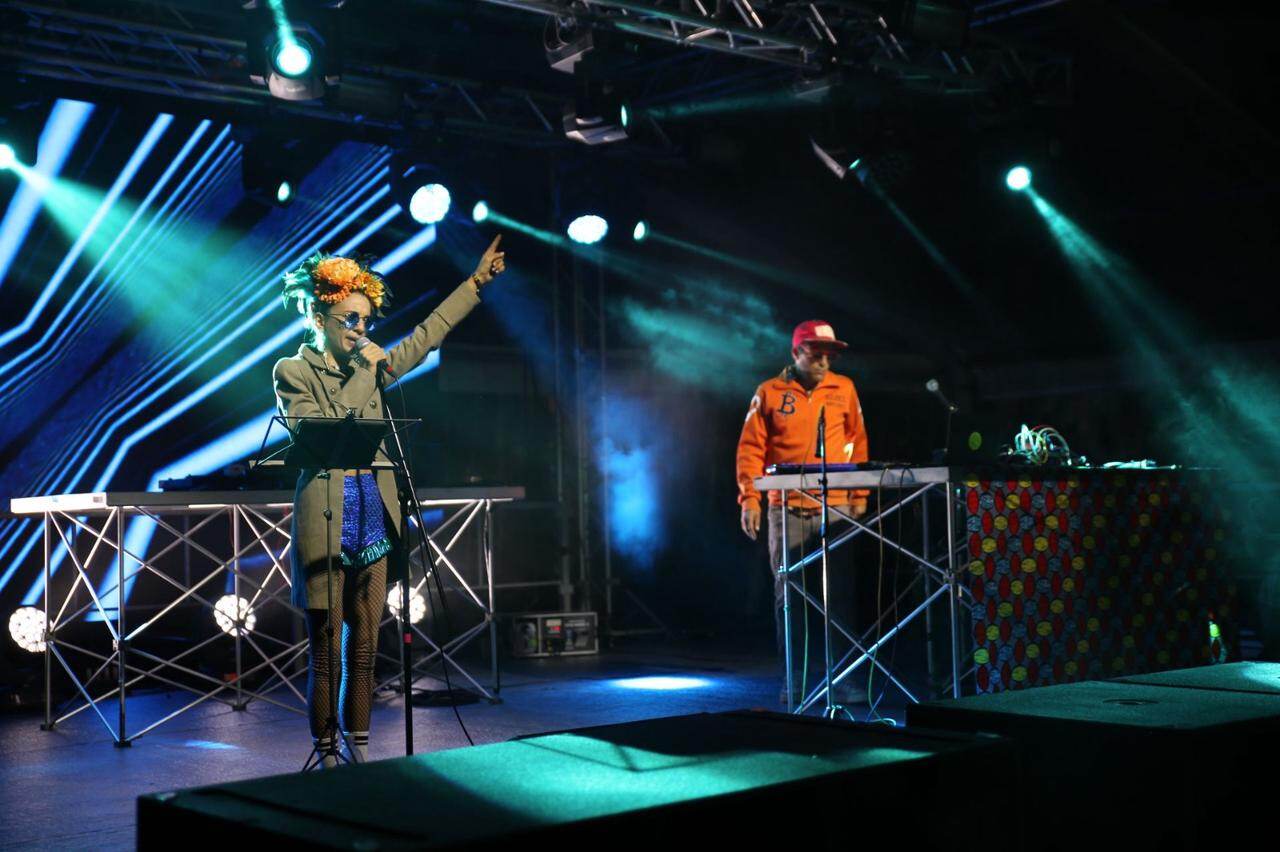
Caption: Orange Pill Jam performs live in Lugano, Switzerland.
Michi has a habit that drives his collaborators crazy.
When he decides there’s a problem with the recording—it's not off by a beat or a quarter note, but by some time unit that exists only in his nervous system—he requests a re-recording. Over and over again. His bandmate, female vocalist Mermaid, said that for the first six months, she couldn't hear the difference. Gradually, she began to grasp it.
It should be noted that we are currently in a crypto bear market. But the Orange Pill Jam band is still recording albums.
On the surface, Orange Pill Jam appears to be an unusual group. Their music explores financial sovereignty, privacy rights, and the slow corruption of certain modern systems. Their musical style is eclectic, ranging from gypsy reggae to African Latin to hip hop, and occasionally touches on reggae. They accept Bitcoin payments.
By the traditional metrics of the music industry, this band is not considered successful. Their YouTube channel has been running for two or three years and has just crossed five hundred subscribers. Spotify is also not enthusiastic about them.
However, in certain circles that truly value this, they are indeed beloved. Moreover, they are doing something quite difficult: creating music that non-Bitcoin users can appreciate without needing to understand Bitcoin, and music that Bitcoin users can enjoy without feeling deliberately catered to.
1. How Bitcoin culture grows its own music
The story begins, like many Bitcoin stories, at an industry conference.
It was at the Plan B Forum held in Lugano in 2022. Mermaid wrote a song called "Dollar Apocalypse" as a thank-you gift to all those who consistently create Bitcoin content; especially Max Keiser—the broadcaster and advocate. His podcast "Orange Pill Podcast" has long been a must-listen show in certain corners of the internet.
She wasn't sure if she would really get to meet him. Later, she did.
A few hours later, someone in the crowd at the Satoshi gallery said, "She wrote a song for you, let her sing it." Keiser turned to face the room and announced there would be an impromptu concert. Behind Mermaid, the resin orange pill artwork by artist Valentina Piccozzi hung on the wall. There was no microphone, no sound test, and no prior notice.
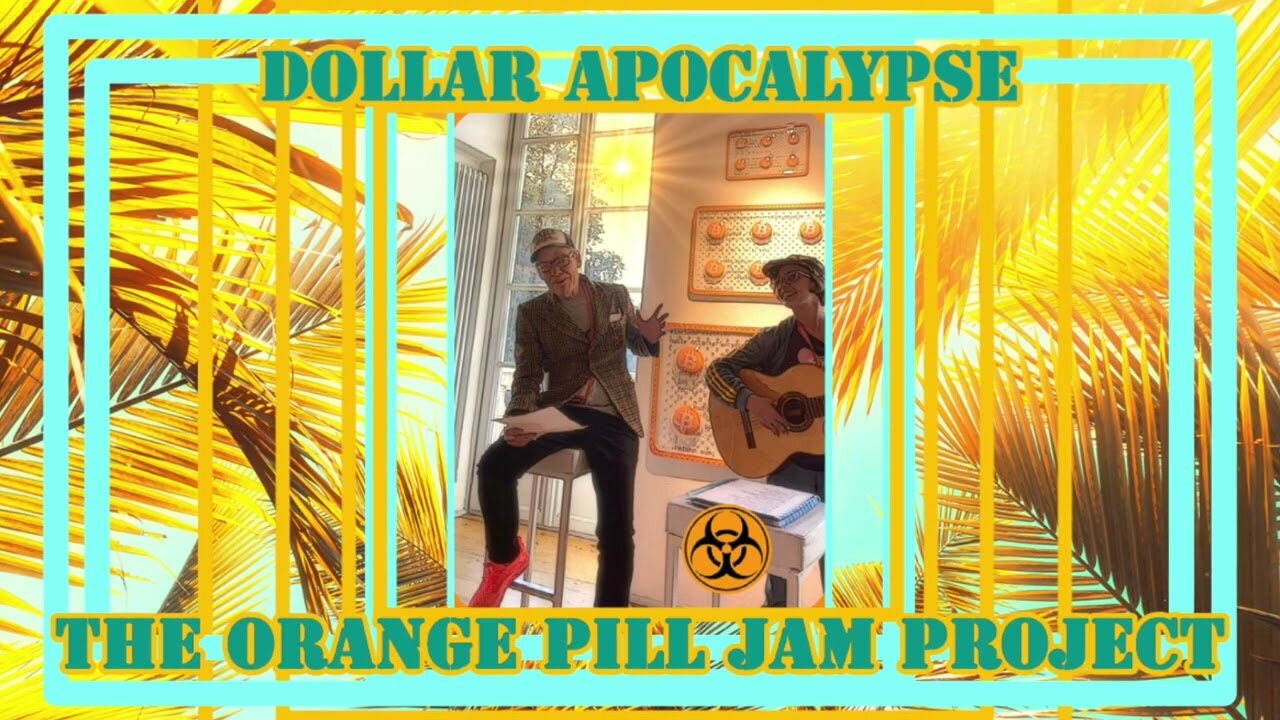
She sang that song. After that, Keiser spoke about the importance of Bitcoin art, which she still remembers vividly. What she gained from it was not a direction, but a question: Where is the music? Visual arts already have their followers—painters, illustrators, the entire Bitcoin aesthetic world. But music has yet to appear.
Mermaid said that this experience made her feel "grounded." But I doubt what truly grounded her was the experience of singing in that gallery, unarranged and unrehearsed, just because the song wanted to come out. It turned out to be a reliable indicator of character. This experience was referenced later.
She called Michi and proposed a simple idea: to turn these demos of guitars and vocals into real works—professional production, proper rhythms, something that people could dance to. He agreed. Three songs turned into seven, seven into thirteen, and thirteen into twenty-one, with more songs brewing, in their words.
Here’s the production process of one song.
Mermaid is the lead singer and main lyricist of the band. She starts by writing the lyrics, then sketches a melody around them—this is not a complete work, more like a contour that knows what it wants to express but hasn’t determined how to evolve. She hands this outline to the band’s producer and multi-instrumentalist Michi, who shapes everything that follows.
Everything else—performance arrangements, logistics, and the various paperwork to turn ideas into reality—is handled by band co-founder Martino. He is quieter than the other band members, a bit shy in front of the camera, and he doesn't play an instrument. He doesn’t need to. Someone has to keep the band running, and he seems genuinely grateful to take on that responsibility.
Michi does not bring traditional arrangements, but treats rhythm as an argument. He is trained as a professional drummer and possesses the same drummer attitude, so he brings the same approach to every instrument—exploring not what the music expresses but how it moves your body. Mermaid gives meaning to the music, while Michi determines when you can feel it.
This division of labor sounds clear, but it is not so. He often has her re-record the same line, pursuing a precision that she herself cannot hear. Over time, she learned to trust him. Eventually, the lyrics and rhythms of the band no longer embellish each other, but collide—this tension is where music comes alive.
2. Privacy, sovereignty, and the trap of "free" are all written into the songs
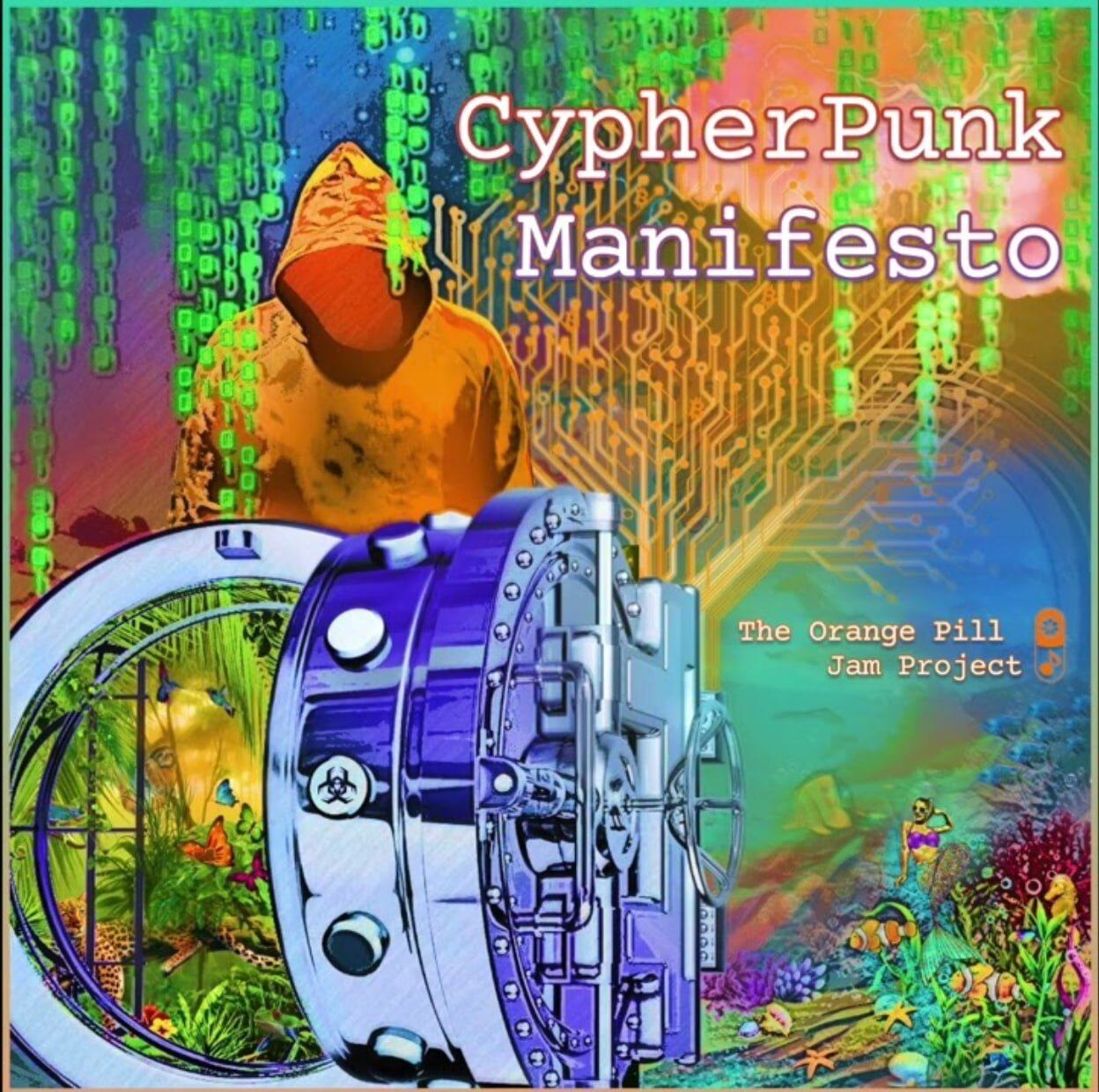
If you want to understand what this band is doing, their song "Cypherpunks' Manifesto" is an excellent starting point—although the title sounds somewhat obscure, the song is actually quite listenable. It has a lively beat, full of dance music style, heavily influenced by Rosalía, and starts with singing in Spanish.
The first line means: if you want to send me a secret message.
Mermaid explains that this is not just a song about encryption protocols. It’s a song about a feeling—about wanting a door that you can close. She gives a specific example: your child has just been born in the hospital, and you want to send a photo to a few friends, but you don't want that photo to end up somewhere you can't control or find. That should be your choice. Currently, depending on the app you use, that may not apply.
The song starts from there, flowing through a series of images in a danceable pop format, almost violently precise. There’s a line about airplane mode—switching your phone to airplane mode doesn't really mean you are invisible; if someone is really looking for you, they will find a way to get in touch. There's a saying about free products: when something is free, you are the product. She says this comes from observing how Google operates—massive free infrastructure, extensive data collection, and a feedback loop where your behavior funds the ads. "They steal your time, data, and money," she says, "then take the money back with ads, and you don’t even realize you are paying."
Then the song moves to its sharpest sentence, borrowed from Frédéric Bastiat through Stacey Herbert’s podcast: when plunder becomes a way of life for a group of people, they create a legal system to justify plundering and establish a moral code that glorifies it.
Mermaid does not present this as an economist would. She expresses it with a tone of long thought that is still angry. "The mob turns into politicians," she says. "No one sees it because it all happens so slowly, always behind the scenes." This is anything but detached. She is not interested in the view of homelessness.
The end of the song approaches personal sovereignty—virtual and physical, coexisting with integrity—this is not so much an ending as a direction. It’s an attempt to maintain a certain consistency on both sides of the screen. She wrote it before going to El Salvador. She changed not a word after returning.
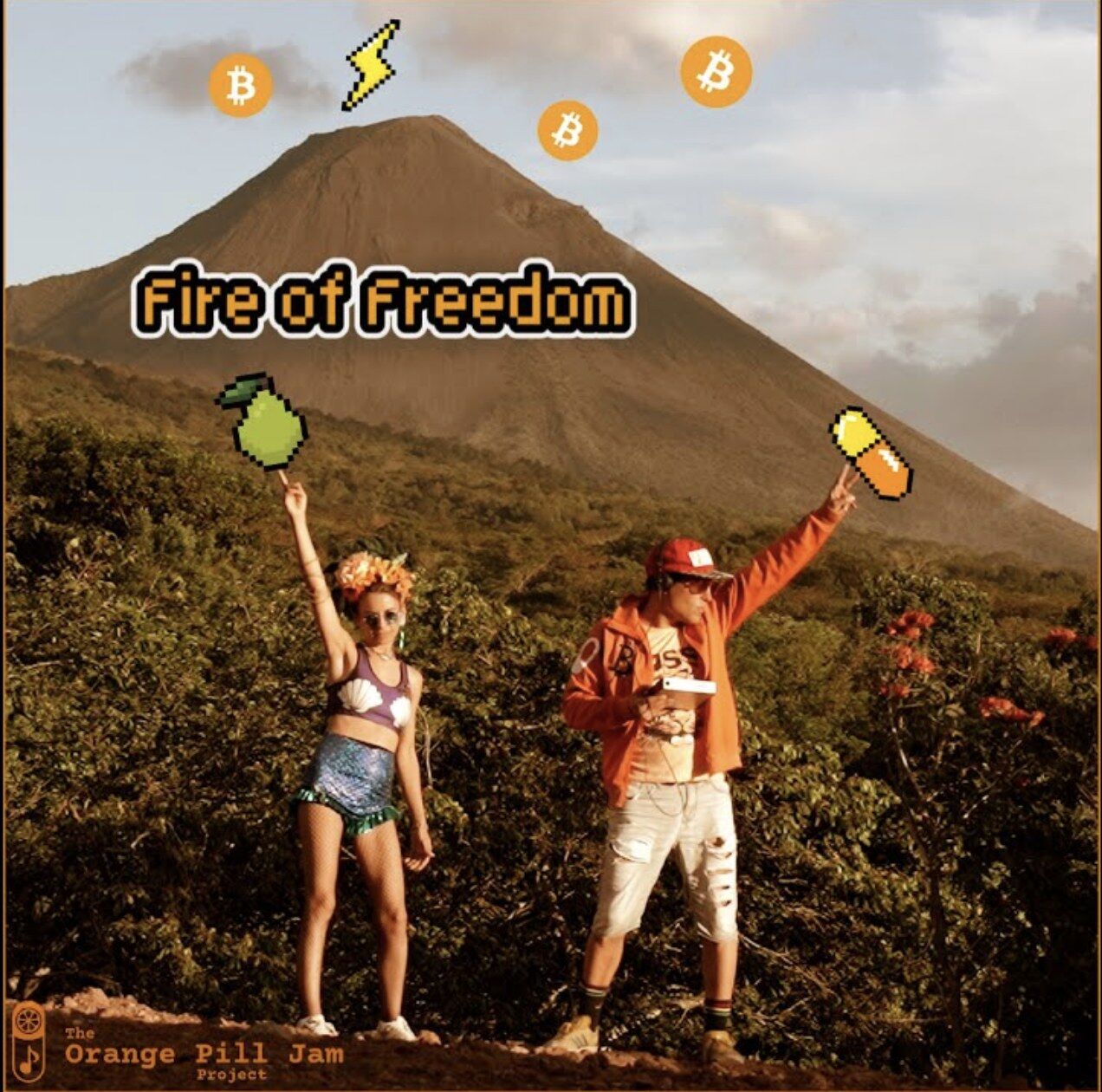
The song is about closing the big door. "The Fire of Freedom" talks about what happens after you pass through the flames.
This song was written for a conference held in El Salvador—by then, the country had made Bitcoin legal tender. Mermaid read the accompanying declaration repeatedly before writing. Her proudest line is: We are adopting Bitcoin, and Bitcoin is adopting us. She describes it as a feeling of being embraced—in a world that is rapidly moving towards something that no one can clearly define, this thing she found will not let her go.
She wrote it before going to El Salvador. She changed not a word after returning. This is not common in the music industry.
When this performance came, it felt more like a confirmation than a debut. The song had already said it all. The country had just proven that the statement was true.
3. What do they see when AI starts generating music?
Michi is not particularly surprised that artificial intelligence is reshaping and even squeezing job space. He has noticed this change, like a skilled painter noticing the arrival of new tools: some small music jobs are quietly losing their place. Video scoring, small tasks—now they can be completed with just a prompt and ten seconds.
He has a story about this that involves 19th-century painters and the invention of photography, which you’ve almost certainly heard in some form. In short: photography did not kill painting. It forced painting to exist in realms that photography could not reach, which is why we have Impressionism, Surrealism, and many forms of art that would not exist if painters were always trying to replicate reality as accurately as possible.
Michi believes that the music-theater version of this story is still being written. AI can generate any existing music genre in the time it takes to brew a cup of coffee, and the quality is sufficient for most needs. It cannot create a genre that does not yet exist, nor can it find the sense of rhythm that exists in the space between intention and instinct.
They would use AI for other things—business planning, feedback, administrative infrastructure. But not for the music itself.
"Machines should wash dishes," Mermaid says. "Fold clothes. Clean houses. I want to sing and dance while the machines clean. Not the other way around."
The machines have yet to comment.
4. Making music in a bear market: a survival experiment against the algorithm
The actual challenges of this music project are not philosophical. They are quite common.
Income is one of the challenges. They are a Copyleft project—music can be shared, remixed, and reused by anyone without permission, while also accepting Bitcoin, dollars, and any form of currency for sponsorship. Their Geyser Fund page provides downloadable split-track files for free, accessible to anyone who wants to remix or create derivative works.
"No matter how much, it’s the thought that counts," their profile states. In a bear market environment, this kind of open stance requires considerable composure and determination.
Being heard is harder than it sounds. Fourteen thousand songs are uploaded to Spotify every day, most of which are now generated or assisted by tools that didn’t exist three years ago. A band singing about monetary sovereignty is not exactly the algorithm's darling here.
The venues don't help either. Bitcoin conferences are usually held in conference rooms: white walls, fluorescent lights, attendees wearing lanyards, looking at slides all day. "You want to send out energy," Mermaid says, "but the whole space is absorbing it." What music needs is a room that already knows how to move. They don’t always find that.
Before this interview, the host Carine was setting up equipment and playing one of their songs. She forgot to turn it off. When Mermaid and Michi joined the online meeting room, she looked up and said: your music changed the whole room's atmosphere. Warmth. Freedom. Being alive.
This is a metric that would not appear on any streaming dashboard.
Ultimately, this is also the only important argument—also the argument that connects all other issues.In a bear market, the reason for Bitcoin depends on those who believe in it before price. In the age of AI, the reason for human creativity relies on those who describe things that cannot be generated. The Orange Pill Jam finds itself at the intersection of both perspectives, which is both uncomfortable and a necessary position.
What they are building cannot scale. It cannot be templated, optimized, or copied by others with similar inputs. It is the product of Mermaid's unique pursuit of ideals and Michi's distinct way of embedding ideas into the body— a collaboration that took seven years to find its form, still searching, an imperfect attempt. In a world where the marginal cost of content is nearly zero, this irreducible specificity is the only thing that cannot be devalued to zero.
The algorithms are getting faster. The Orange Pill Jam Project is already starting its seventeenth recording.
免责声明:本文章仅代表作者个人观点,不代表本平台的立场和观点。本文章仅供信息分享,不构成对任何人的任何投资建议。用户与作者之间的任何争议,与本平台无关。如网页中刊载的文章或图片涉及侵权,请提供相关的权利证明和身份证明发送邮件到support@aicoin.com,本平台相关工作人员将会进行核查。


