Author: Boaz Sobrado
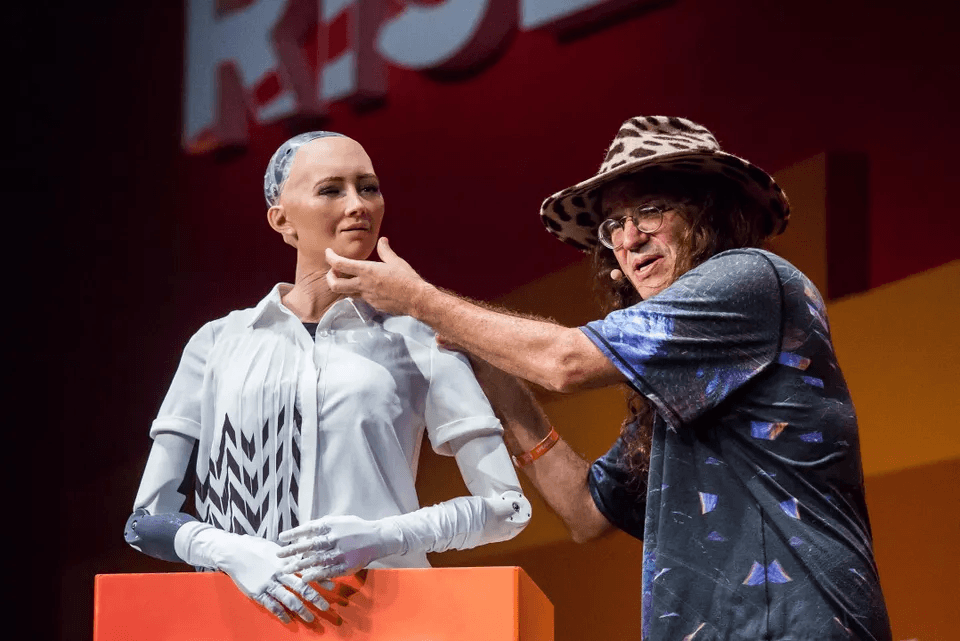
“I don't want to hand over control of what I'm doing to venture capital firms,” Ben Goertzel said on the On The Margin podcast, “because I think that AGI is too important to be handled this way.”
Goertzel is known for bringing the concept of "Artificial General Intelligence" (AGI) into the public eye through an influential book. He also led the team behind the Sophia robot and has spent decades trying to create genuinely thinking machines. Today, his bets are in stark contrast to those of almost everyone else rushing toward the same goal: the most important software written by humans should not belong to a single company. “I am very insistent that the core code responsible for AGI thinking should be free and open source,” he said.
This belief drives the blockchain project SingularityNET that Goertzel leads and underpins the larger Artificial Superintelligence Alliance. This alliance was established in 2024 by Fetch.ai, SingularityNET, and Ocean Protocol, merging their respective tokens into one, called FET. (However, Ocean Protocol withdrew from the alliance at the end of 2025.) While OpenAI and Anthropic secure hundreds of billions in funding and lock their strongest models behind high walls, Goertzel is integrating his AGI development into a user-owned crypto network.
His argument begins with a problem he believes cannot be solved by open source alone. He said, if no one can afford the operational costs, then making the code public doesn't mean much.
“If the code is open but the data requires a server farm to store, and you need a cloud provider-level server farm to use it, then whether the code is open source doesn't help much,” he said. “The ideal situation is to deploy the first AGI on a decentralized network controlled by 10,000 different people across 50 countries.”
In his narrative, this is the fundamental reason to put AI on the blockchain. He acknowledges that this might make some people uneasy because bad actors could also fork the system to create harmful things. Nonetheless, he is willing to accept this trade-off.
“I believe there will be more good people willing to host AI systems than bad ones,” Goertzel said. “Instead of entering an AGI arms race — where only a few great powers hold AGI and try to destroy each other with it — we should have an open and decentralized AI system.”
Labs that started open but later closed
When discussing companies that initially shared his open philosophy but later strayed, Goertzel was quite direct. He mentioned the lawsuit between Elon Musk and Sam Altman, arguing that this case well documented how OpenAI's founding mission quickly shifted.
“If you look at the complete records of the court hearings between Elon Musk and Sam Altman, you'll find that Sam Altman did not stick to that idea for long,” Goertzel said. “He quickly turned and wanted to make it a proprietary system. The records show that he soon shifted to a path that had to rely on hardware resources, and thus became closed and proprietary.”
He offered sharper critiques of Anthropic's origins and the transition of Musk from an “AI apocalypse alarmist” to an “AI builder.”
“Dario Amodei’s model was closed and proprietary from the beginning,” Goertzel said. “Elon Musk has always had a rather twisted relationship with ‘openness’. Back in 2015, he was saying AI was summoning demons and nobody should create it. Individuals began trying to create it anyway. But now, what he's doing at xAI is also closed AI development.”
Goertzel acknowledged that a closed route is certainly easier: securing funding, locking up the model, and then pushing toward acquisition. But he insists that the open route is not impossible; it just requires more effort. “Linux and the internet itself are proof: something can be open source, globally decentralized, and still serve as the basis for many people to make a lot of money,” he said.
How a token project founder plans to make money
At least for now, this business still operates on crypto logic. “I have SingularityNet, which is a functional token, so this is a blockchain project,” Goertzel said. “Some people are running nodes of SingularityNet, hosting AI processing. Basically, we make money through the token economics of tokens on this network.”
However, he expects this model to change. His plan is to: keep the AGI code open source while selling polished products on top of it, and keep the blockchain infrastructure hidden from users.
“My project might shift slightly from Web3 toward Web2, starting to offer more products directly using regular currency,” he said. “The underlying crypto network will still support it, but to end users, it will just look like an AI service.”
Goertzel stated that SingularityNET will launch a paid tier targeted at businesses and heavy users sometime next year. “We will launch a product similar to Claude Pro or ChatGPT Pro, but smarter,” he said. “It will run on a decentralized blockchain-based backend, but its reasoning capability and creativity will surpass that of current chatbots.”
However, there is one thing he does not intend to do: chase the consumer-grade chatbot market. “I won't make a retail product like ChatGPT because those guys are losing money right now,” he said.
The "agent economy" he is building
The core point Goertzel sells to ordinary users is: the next wave of advantage will not belong to the labs themselves, but to those who can command entire fleets of AI agents.
“The next batch of winners is likely to be those who use small teams to coordinate larger teams of AI agents to get the job done,” Goertzel said. “At that point, the competition will be: are you effective enough in training, educating, and orchestrating your beneficial army of agents.”
Other builders in the crypto industry are also aligning toward the same vision: agents not only answer questions but also spend money for you. Varun Kabra from the identity chain project Concordium mentioned on the On The Margin podcast, “The next step has already begun, which is AI agents beginning to transact on your behalf. They pay for you, register services for you, and in the future, likely handle your financial transactions.”
But this also means that software will take on an inherently high-risk role. Nitya Subramanian from the crypto wallet company Para said in the same podcast, “The essence of agents is essentially outsourcing purchasing decisions. And anyone who has ever outsourced procurement knows that it comes with trade-offs and costs.”
Goertzel's response to this is: to run this economy on an open network, rather than on some company's cloud platform.
Why this matters
Goertzel still believes that human-level AGI will arrive soon. “I think we can achieve it by 2029,” he said. “If it happens in 2027, I wouldn't be shocked; if it’s 2030, I wouldn't be surprised either.”
What he truly worries about is not what machines will do, but who will be left behind by them.
“If there is a cognitive gap between the top and bottom levels of society in understanding what is happening with AGI, then that cognitive gap will exacerbate the speed of growing inequality and it will get worse,” he said.
As for whether a crypto network can truly outperform companies holding hundreds of billions in funding, that remains unproven. Goertzel's first real-world test will come in a few weeks.
“We will release the first downloadable version of a new agent called Omega Claw in a few weeks,” he said. “By then, we’ll have the opportunity to train our own personal agents to help us manage our lives and also help us make money.”
This article link: https://www.hellobtc.com/kp/du/06/6357.html
Source: https://www.forbes.com/sites/boazsobrado/2026/06/21/agi-is-too-important-ben-goertzels-crypto-bet-against-openai/
免责声明:本文章仅代表作者个人观点,不代表本平台的立场和观点。本文章仅供信息分享,不构成对任何人的任何投资建议。用户与作者之间的任何争议,与本平台无关。如网页中刊载的文章或图片涉及侵权,请提供相关的权利证明和身份证明发送邮件到support@aicoin.com,本平台相关工作人员将会进行核查。


