Former U.S. Federal Reserve Chairman Alan Greenspan passed away on Monday at his home in Washington, at the age of 100, due to complications from Parkinson's disease. His wife, Andrea Mitchell, Chief Washington Correspondent for NBC News, announced the news. For global markets, Greenspan is not just a former central bank president: he led the Federal Reserve for nearly 19 years, witnessing the U.S. transition from the stock market crash of 1987 to the internet boom, and later being embroiled in the historical inquiries of the 2008 financial crisis after his departure.
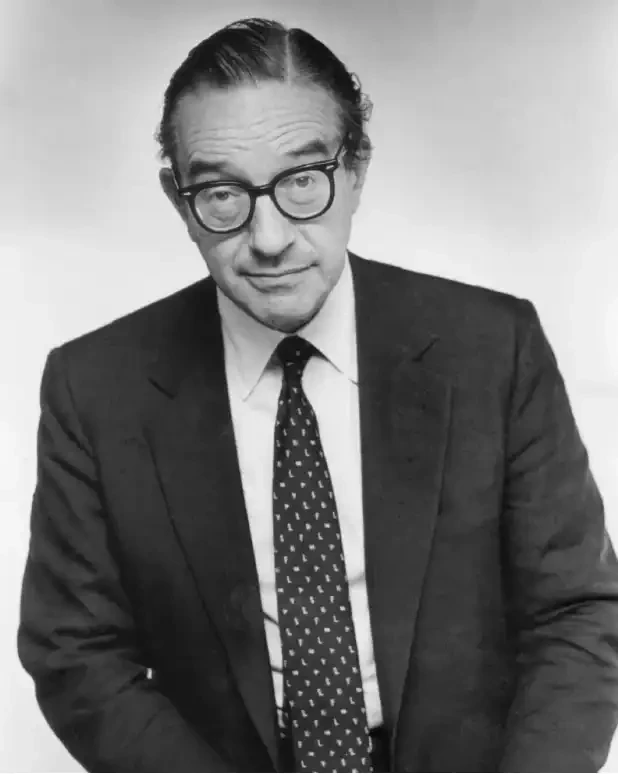
His life almost encapsulated the core controversies of the American capital markets over the past few decades: can markets self-regulate, and should central banks actively prevent bubbles?
Led the Federal Reserve for nearly 19 years, spanning four presidents
Greenspan took office as Chairman of the Federal Reserve in August 1987 and served until January 2006, with a tenure of nearly 19 years, making him the second longest-serving Chairman in U.S. history, only behind William McChesney Martin.
This tenure spanned the presidencies of Reagan, George H.W. Bush, Clinton, and George W. Bush, crossing the late stages of the Cold War, the internet wave, accelerated globalization, and expanded financial innovation. The fact that he received consecutive appointments across both parties demonstrates his unique position between Washington and Wall Street.
At the height of his career, Greenspan was dubbed "Maestro," a title often translated into Chinese as "Master." This title represented not only personal charisma but also reflected the strong confidence in technological progress, free markets, and capital market efficiency in the United States during the 1990s. At that time, the U.S. economy was in prolonged expansion, inflation remained moderate, and both the stock market and productivity rose in tandem, leading the outside world to believe that the central bank could maintain growth and stability without heavy market intervention.
Greenspan's public persona also carried a strong technocratic flavor. He often spoke cautiously and cryptically, yet the market would dissect his speeches word by word, trying to glean indications of interest rate direction. This era, where "a single word from the Fed Chairman impacts global markets," reached its peak during his tenure.
From the 1987 stock market crash to 9/11, he was seen as a crisis helmsman
Shortly after taking office, Greenspan faced his first significant test. In October 1987, the U.S. stock market experienced "Black Monday," and the Dow Jones Industrial Average plummeted in a single day. The Federal Reserve quickly released liquidity to support the market, which was considered a crucial step in stabilizing the financial system.
After that, he endured the Asian financial crisis, the Russian debt crisis, the Long-Term Capital Management (LTCM) debacle, and the market shock following the "9/11" attacks in 2001. At these junctures, the Federal Reserve's liquidity support and interest rate cuts reinforced Greenspan's image as a "crisis manager."
This policy style was later summarized by the market as the "Greenspan Put," which is not an official policy but a form of market expectation: when asset prices fall sharply and the financial system is under pressure, the Federal Reserve would step in to support it. For investors, this expectation reduced panic; but from another perspective, it could encourage higher leverage and more aggressive risk-taking.
Greenspan himself was not simply equated with "perpetual easing." In 1996, he warned of "irrational exuberance" regarding the overheated stock market, a phrase that later became a famous line in financial history. But the issue was that the warning did not translate into strong policies to suppress asset bubbles. For him, it was challenging for the central bank to accurately judge when a bubble forms, and it was also difficult to burst bubbles in advance without harming the real economy.
This judgment seemed pragmatic during prosperous times, but became a point of controversy after the crisis.
Market-friendly philosophy reexamined after 2008
Greenspan's policy foundation was market-friendly. He believed that market prices can aggregate information, financial innovations can disperse risks, and excessive regulation would weaken efficiency. He also long supported free trade, deregulation, and technology-driven productivity gains.
This ideology aligned closely with the economic atmosphere of the United States in the 1990s. After the Cold War, globalization and the expansion of information technology fostered great optimism, and Wall Street's financial innovations accelerated, with complex derivatives, securitization products, and off-balance-sheet activities continually expanding. Before the crisis erupted, these tools were often seen as progress in improving capital allocation efficiency and dispersing financial risks.
However, the 2008 financial crisis changed Greenspan's historical position.
Critics argued that the Federal Reserve kept interest rates too low for too long after the internet bubble burst and after "9/11," contributing to the overheating of the housing market; regulators were too lenient on the risks taken by banks and Wall Street, failing to restrain the securitization of mortgage loans, leverage, and the expansion of complex financial products; the central bank knew that asset prices might diverge from fundamentals but was unwilling to directly confront the bubble.
These criticisms do not imply that the 2008 crisis can be attributed solely to Greenspan. The causes of the crisis included multiple factors such as regulatory structures, incentives for financial institutions, the rating system, housing policies, and global capital flows. However, as the most influential monetary policymaker and representative of free market ideology before the crisis, it is not surprising that he became the center of controversy.
In his later years, Greenspan defended his policy legacy. He admitted that his assessment of financial institutions' capacity for self-restraint had flaws but also emphasized that bubbles are often hard to accurately identify at formation, and policymakers cannot foresee the full picture of a crisis in advance.
His legacy assessment remains caught between two eras
The attention surrounding Greenspan's death from global markets is due to the ongoing debate around him that hasn't faded with time.
In the eyes of supporters, he is the helmsman of the central bank during a long period of U.S. prosperity, maintaining stability in the financial system amid multiple external shocks, and helping the U.S. economy transition from high inflation to a key phase of low inflation growth. Without the Greenspan era, it is difficult to understand the optimism of the U.S. capital markets in the 1990s and the trust that global investors had in the Federal Reserve.
In the eyes of critics, he is also a symbolic figure of the era of financial laxity. Low interest rates, loose regulations, and a belief in the market's self-repair capabilities ultimately revealed their costs amid the housing bubble, subprime crisis, and imbalances in the global financial system. After 2008, the Federal Reserve and U.S. regulatory system moved towards stronger regulations and larger-scale interventions, which in some ways was a backlash against the Greenspan era.
This is precisely the complexity of Greenspan's legacy: he is neither a simple architect of prosperity nor can he be merely written off as the villain of the crisis. He represents an era that believed in the capacity of markets, technology, and financial innovation to continuously improve economic operations; yet, the end of that era forced the world to rethink the boundaries between central banks, regulation, and markets.
For today's investors, Greenspan's death is not merely a historical footnote. Whenever markets bet that the Federal Reserve will shift to easing during a crisis, and whenever rising asset prices coexist with financial stability risks, the questions from the "Greenspan era" resurface: is the central bank stabilizing the market or encouraging the next round of risk accumulation? This question still lacks a conclusive answer.
免责声明:本文章仅代表作者个人观点,不代表本平台的立场和观点。本文章仅供信息分享,不构成对任何人的任何投资建议。用户与作者之间的任何争议,与本平台无关。如网页中刊载的文章或图片涉及侵权,请提供相关的权利证明和身份证明发送邮件到support@aicoin.com,本平台相关工作人员将会进行核查。


