The original text is from WSJ, authored byKatherine Long, Caitlin Ostroff, Neil Mehta andBrenna T. Smith
Translated by|Odaily Planet Daily Qin Xiaofeng (@QinXiaofeng888)
Editor's Note: Recently, a Wall Street Journal investigation found that the prediction market platform Polymarket has been hiring dozens of creators to fabricate trading and profit videos on mock websites, which are then virally circulated via social media "bots" to attract American users. These videos did not disclose the paid relationships as required by federal regulations, and the "lucrative returns" they show are entirely fictitious. Polymarket stated that it is committed to maintaining an accurate, fair, and transparent market and plans to conduct a comprehensive audit of the promotional content.
The following is the investigative article from the Wall Street Journal, translated by Odaily Planet Daily, enjoy~
————————
From George Makihara's video, he seems to have a lucrative side job, which is betting on Polymarket.
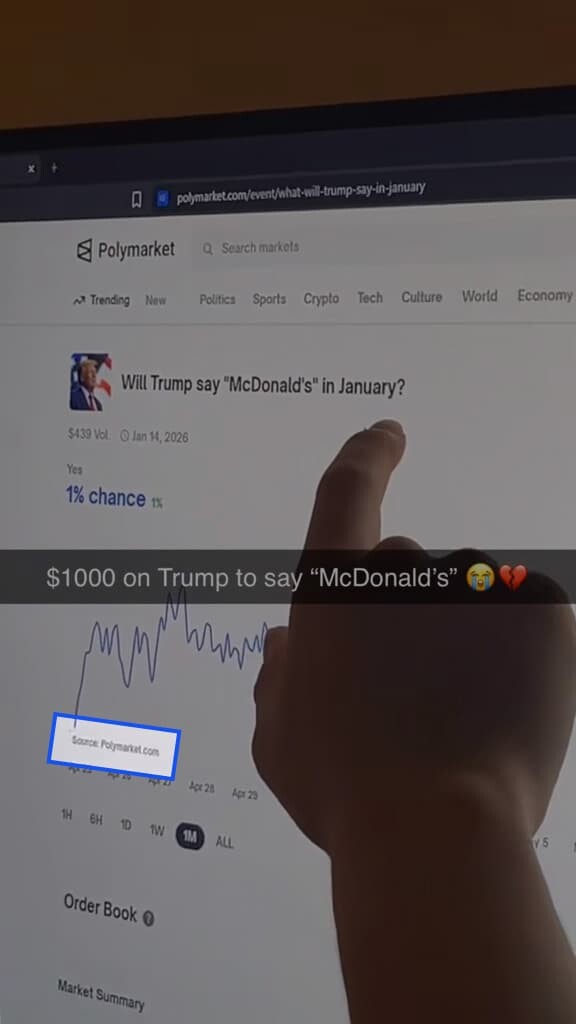
In January of this year, this college student posted a video showing he bet that President Trump would say the word "McDonald's" that month, winning $100,000.
According to his video, from January to mid-May, George Makihara seemingly placed 145 bets on the Polymarket website—totaling nearly $410,000.
However, the Wall Street Journal investigation found that none of these transactions were real.
George Makihara jumped up when Trump said the word "McDonald's"; however, Trump never publicly said this during that month, and the video was filmed two months ago.
According to the Wall Street Journal's analysis of over 1,100 videos, related instructional materials, and interviews with creators who have worked with the company, George Makihara is one of the dozens of paid creators hired by Polymarket, most of whom are college students who filmed themselves making fake trades and sometimes displayed fake profits. George Makihara declined to comment.
Public data shows that on the actual Polymarket website, over 50 accounts participated in betting on "McDonald's" in January. All these accounts lost money.
To attract users to its unregulated platform, Polymarket flooded social media with videos like that of George Makihara, which at first glance seem very convincing. In fact, Polymarket made an almost perfect clone of the website and instructed creators to simulate trades on these virtual sites, concealing the fact that they were paid by Polymarket.
To make the videos go viral, Polymarket recruited a social media "army" to replicate and forward creators' content. Although the New York-based company has been banned from offering its core crypto platform services in the U.S. since 2022, these social media creators worked for money, targeting American users—who can still access the website through a virtual private network (VPN).
Polymarket stated in a statement, "The company is committed to maintaining an accurate, fair, and transparent market. We are part of a rapidly evolving industry and are continually assessing how to improve engagement with our audience and earn their trust." The company said it plans to conduct a comprehensive review of existing promotional content.
Polymarket hired a marketing contractor and worked closely with them to promote the site. In a message reviewed by the Wall Street Journal, the contractor instructed its social media "army" to focus on forwarding content from 10 Polymarket creators, including George Makihara. Initially, these creators did not disclose that they were paid collaborators with Polymarket, though one provided a $20 discount code in their social media profile. After the Wall Street Journal began questioning the marketing operations, these creators began to add the "@" tags for "polymarket partner" in their profiles.
The Wall Street Journal reviewed 1,105 videos published by 10 creators approved by Polymarket's contractor from December 2025 to mid-May. 70% of the videos showed that the creators placed bets; clues in the videos indicated that all these bets — totaling $1.9 million — were fake. Most videos simply showcased the betting process, but 118 videos displayed the creators celebrating their wins, totaling almost $900,000 in winnings — all of which were actually fake trades; if one genuinely bet, they would lose over $166,000.(Note: Polymarket has a data partnership with the publisher of the Wall Street Journal, Dow Jones, and the Wall Street Journal only used public data in this analysis.)
According to creators who have worked with the company, Polymarket instructed creators not to disclose they were being compensated. They indicated that compensation typically accrued between $2,000 and $3,000 per month.
Investigating Fake Trades
One of the earliest videos showing signs of fake trades was published on social media in June 2025, filmed in Polymarket's New York office. The video showed someone betting $100,000 that Powell would say "good afternoon" in a press conference, captioning the wager as a "valid test of masculinity."
The Wall Street Journal investigation found numerous discrepancies between the real Polymarket website and the mock sites.
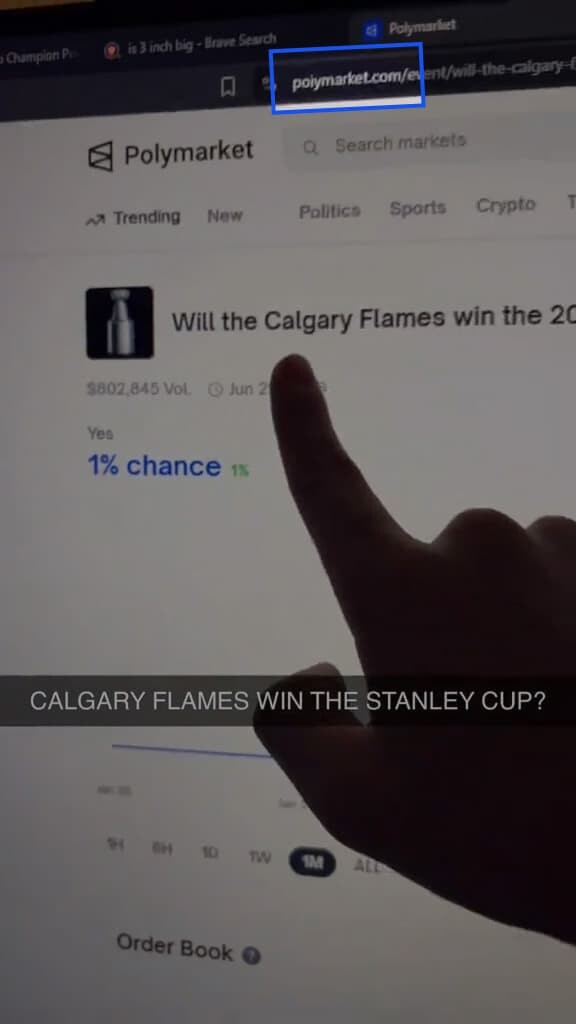
The fake mock site is called "poiymarket.com"; when the "i" is capitalized, it is indistinguishable from polymarket.com. According to a source, this site was created by Polymarket. The price charts on the site cite "Polymarket.com" as the source. However, the real official website of Polymarket does not display any such source information.
Additionally, the fake site sometimes contained mistakes. For example, buttons would show "YES" and "NIR," while the real site has "YES" and "NO".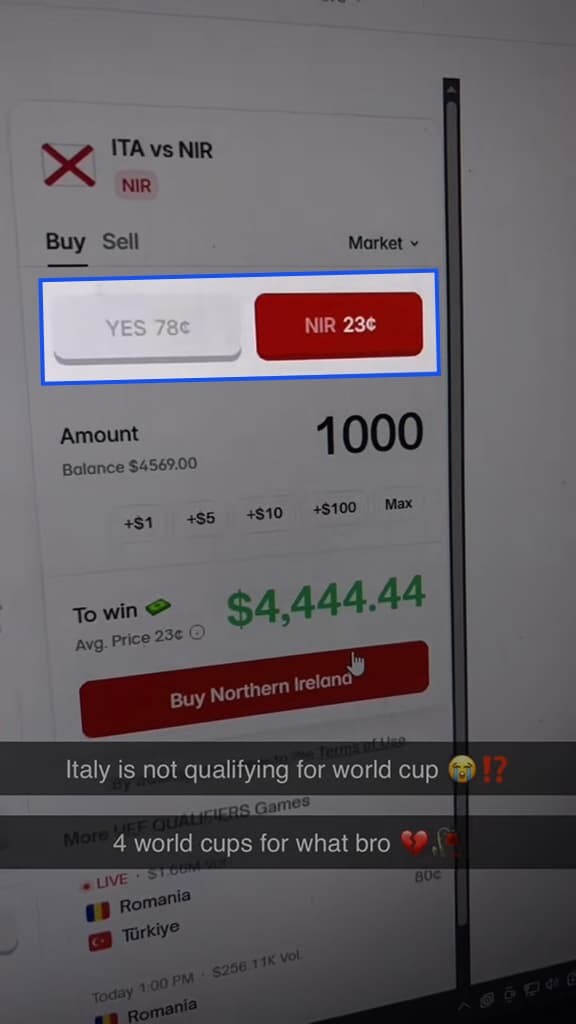
Several videos reviewed by the Wall Street Journal also briefly displayed URL addresses indicating these sites were test environments for Polymarket engineers. After the Wall Street Journal contacted Polymarket for a response, the fake "poiymarket" site was taken down.
Federal advertising laws require brands to accurately represent their promotional content and require individuals compensated for endorsing products to disclose their affiliations; while there remains some gray area regarding what actions are permitted. The commodities laws that govern prediction markets also prohibit deceptive and misleading practices.
A spokesperson for the Federal Trade Commission, responsible for enforcing advertising laws, declined to comment on the findings of the Wall Street Journal's investigation, citing the agency's policy of not commenting on potential investigations.
Razeen Khan, a college student from California, worked as a Polymarket creator for several months until March of this year. He compared these videos to fast food advertisements—the food in the ads looks more enticing than it does in reality.
"We are showing what is actually happening," he said, "you'd still go buy that hamburger."
Creators indicated that they would send the finished videos to Polymarket for review. If the videos were not engaging enough or showed clear signs of fabrication, Polymarket would request reshoots.
Haian Nguyen is one of the top-performing creators on Polymarket; she filmed videos of herself trading on the platform from a bedroom in San Francisco. In a video uploaded to Instagram, Haian Nguyen celebrated winning $60,000 after betting that Trump would say "Olympics."
In another video of her dancing on a beach next to the Golden Gate Bridge, the overlay reads "Polymarket funds my life."
Haian Nguyen declined to comment and cleared all videos from her personal homepage after the Wall Street Journal contacted her.
These promotional videos follow the same template: creators open Polymarket, place bets, and refer to the profits as "free money." Dozens of social media creators have posted nearly identical videos. According to creators who have worked with the company and a recruitment website, Polymarket sends creators bullet-point guidelines for what to say.
Common phrases used in Polymarket user-generated content videos include:
Nearly 25% of the videos used the word "free." Common phrases include "free bread," "free money," and "just free."
- “Bro, if this trend continues, this is free bread.” - 27 videos
- “Wait, what?” - 223 videos
- Free - 278 videos
- “Isn't this free money?”
- “If I bet a thousand dollars on Canada winning, isn't that free?” - 35 videos
- “Did I miss something?” - 237 videos
- “Bro, what?” - 166 videos
- “Hold on” - 100 videos
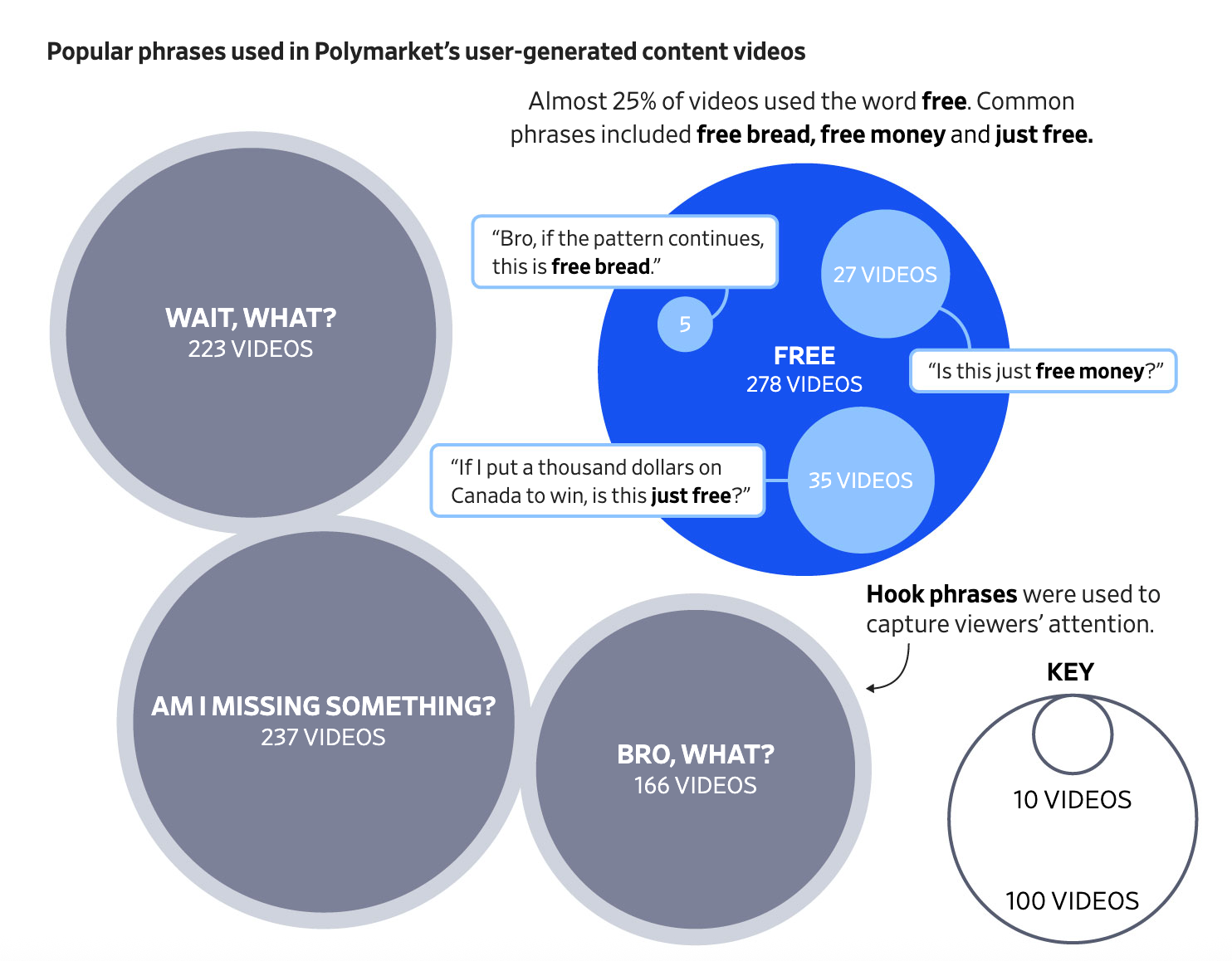
Source: The Wall Street Journal's analysis of 1,105 Polymarket creator videos on TikTok
The U.S. Commodity Futures Trading Commission (CFTC), which regulates prediction markets, has previously taken enforcement action against companies that used simulated trading to market products and made unrealistic profit promises.
The Trump administration took a lax approach to the regulation of prediction markets. The CFTC has filed multiple lawsuits to prevent states from regulating and taxing prediction markets. Trump recently posted on Truth Social that CFTC's exclusive jurisdiction over prediction markets is "critical" to allowing them to thrive and labeled politicians who want state regulation of prediction markets as "scum." Trump's son, Donald Trump Jr., is an investor in Polymarket and a paid consultant to rival Kalshi.
A White House spokesperson stated that there is no conflict of interest and that Trump's actions serve the best interests of the American public. A CFTC spokesperson said in response to the Wall Street Journal's report that it is important to bring offshore prediction markets back to the U.S. so that regulators can more effectively oversee them.
Hype Machine
For Polymarket, viral spread is everything.
According to two people familiar with their thinking, founder Shayne Coplan told Polymarket's growth team to make the company impossible to ignore online. His close friend Matthew Modabber, whom he has known since high school, is in charge of Polymarket's growth as its Chief Marketing Officer.
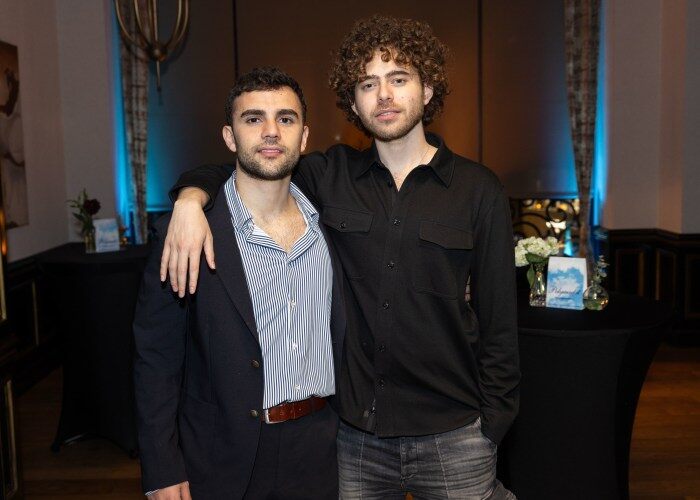
In 2024, Matthew Modabber (left) with Polymarket founder Shayne Coplan (right)
Polymarket is striving to attract more trading volume than its main competitor—the U.S.-regulated prediction market Kalshi. Polymarket initially led; for most of 2025, both grew in sync; but in recent months, Kalshi started to take the lead. According to data provider The Block, last month, Kalshi's trading volume was about double that of Polymarket.
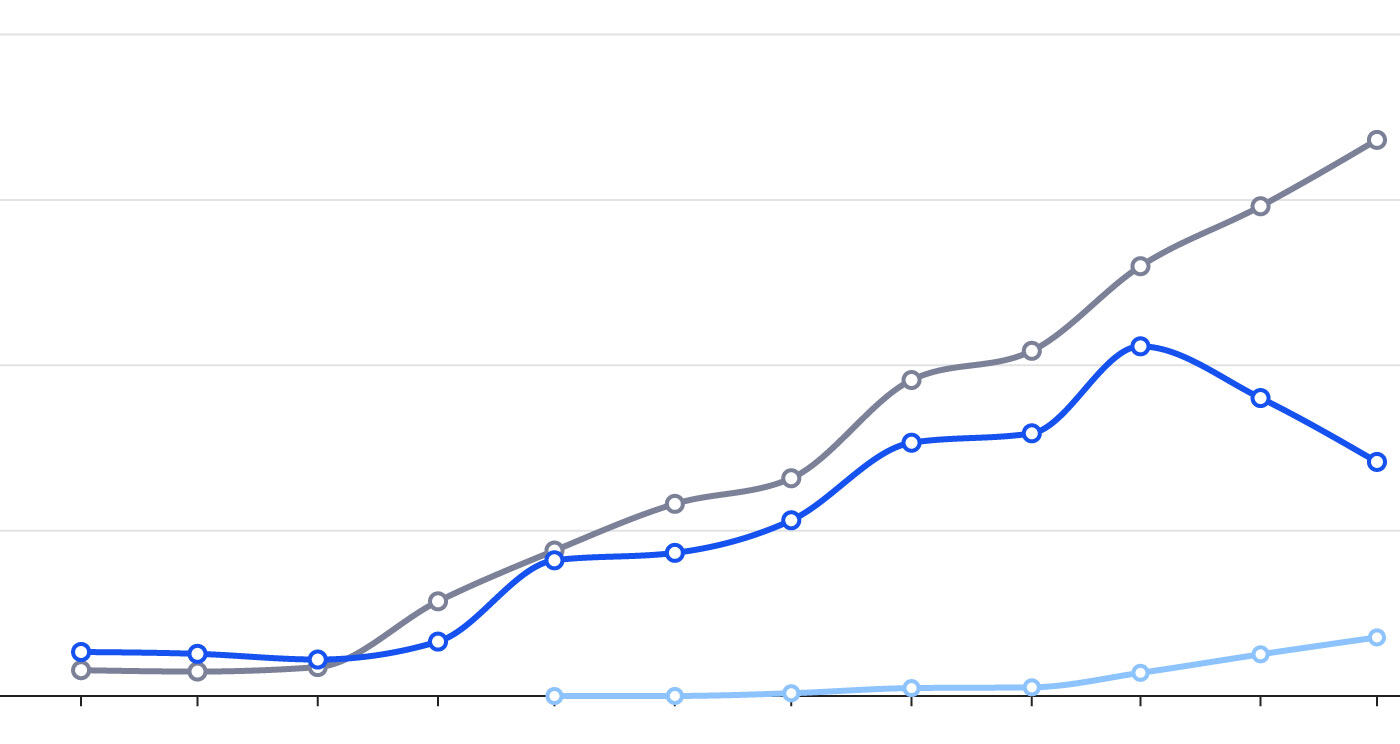
Monthly trading volumes of various prediction markets, data as of May 2026; source: The Block
In 2022, Polymarket settled charges of operating an unregistered options exchange, agreeing to stop offering its crypto asset-based trading services to U.S. customers and to formally re-register in Panama. At the end of last year, it launched a regulated U.S. version of the platform, available only as a mobile app. The app's trading volume is just a fraction of that of offshore crypto exchanges.
According to a knowledgeable source, Polymarket is currently seeking to overturn the terms of the 2022 settlement to bring its crypto platform back to the U.S.
Meanwhile, it is turning to social media to draw Americans into Polymarket.
Polymarket's Social Media "Army"
Polymarket's strategy leverages three groups of social media producers, molding the platform into a quick and easy way to make money, thereby gaining viral attention.
- Streamers: Social media influencers live stream on platforms like Twitch and Kick, discussing Polymarket and occasionally placing trades, sometimes streaming for hours.
- Creators: Social media users, mostly college students, make short videos discussing Polymarket or making trades.
- Clip-makers: People around the world—especially teens in Asia—will share videos from streamers and creators.
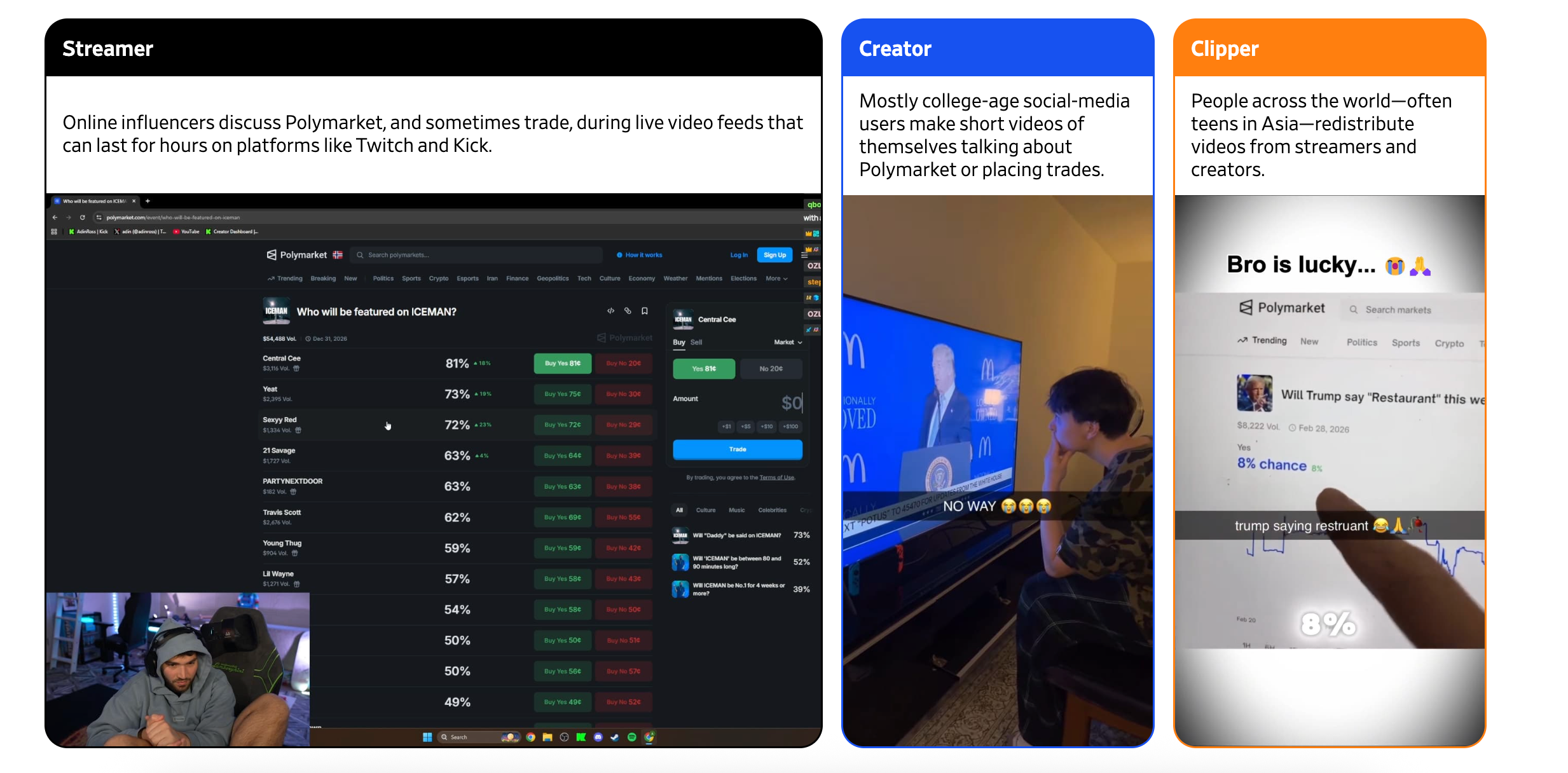
Polymarket hired marketing firm Virality to manage the "clip" team. Their promotional activities are targeted at Americans: according to instructional materials, as of early June, the clip team would only get paid when at least 60% of the audience was composed of U.S. users.
Polymarket publicly disavows any relationship with these advertisements. Based on the Wall Street Journal's investigation of nearly 20,000 messages in Polymarket's online content creator contractor chat groups and the instructional documents and videos prepared for them, Virality instructed the clip team to make their posts appear "personalized and organic."
“Guys, if your account name includes ‘Polymarket,’ please rename it and delete it as soon as possible,” a Virality employee told a group of clip-makers in the group chat. “Continuing to use it will violate our guidelines and could lead to submissions being rejected. Even 'poly' is not allowed; change that too.” Virality declined to comment.
Virality's clip promotion campaign has produced significant results.
A video posted by a creator on TikTok only received 151 views by mid-May. The clip team shared his video with secondary accounts, but most reposts garnered little attention, with view counts languishing. Still, Polymarket collaborated with many video creators to enhance the chances of their videos going viral. Ultimately, one video is bound to blow up.
According to data from analytics provider Tubular, Polymarket's viral clip promotion campaigns have amassed over 140 million views across TikTok, YouTube, and Instagram,
A TikTok spokesperson stated that several accounts identified by the Wall Street Journal, along with other related accounts, have been restricted due to violations of platform rules. A YouTube spokesperson said that creators and brands must comply with legal obligations, or else YouTube may take action against them. A Meta spokesperson stated that while the platform requires creators to disclose whether they are compensated to promote or endorse products, it cannot confirm whether this specific content violates its policies, as it has not independently verified whether these creators were paid by Polymarket.
Influencer Live Shopping
Polymarket and Virality targeted dozens of videos from Adin Ross for promotion. Ross is a 25-year-old influencer in the "male sphere," boasting millions of followers. According to a person familiar with the negotiations, Ross has a multi-million-dollar deal with Polymarket, spending an average of half an hour per week browsing Polymarket in his live streams and commenting on potential trades.
In at least five videos, Ross pointed out how he traded on the platform using insider information.
In a promotional video, Ross stated that he could easily capitalize on insider information to trade on the release date of a new album from rapper Drake (a friend of Ross's).
Both Ross and Drake's representatives declined to comment.
Internal materials show that Polymarket and Virality promoted videos showcasing how easy it is to trade on the platform based on insider information. Polymarket has paid to have clip-makers promote at least 19 videos discussing the use of insider information or other means to manipulate market opportunities.
Polymarket stated that it "prohibits trading based on information obtained through theft, illegal insider information, or violation of trust, confidentiality, or other legal obligations." It added, "Polymarket's market integrity framework includes trade monitoring, on-chain transparency, reporting channels, and escalation processes to detect, review, and respond to suspicious activities. When appropriate, we cooperate with regulators and law enforcement to uphold the integrity of our market."
As the World Cup approaches, some of Polymarket's creators have turned to filming themselves trading on the company's newly launched U.S. app, regulated by the CFTC.
Initially, these trades appeared legitimate as well. The application interface displayed in the social media videos is nearly identical to that of the Polymarket U.S. app.
However, upon closer inspection, differences emerged. For instance, the market in the official application is labeled "26 World Cup" while the mock version on the Polymarket U.S. app is "2026 FIFA World Cup."
The fake simulated trades continue.
免责声明:本文章仅代表作者个人观点,不代表本平台的立场和观点。本文章仅供信息分享,不构成对任何人的任何投资建议。用户与作者之间的任何争议,与本平台无关。如网页中刊载的文章或图片涉及侵权,请提供相关的权利证明和身份证明发送邮件到support@aicoin.com,本平台相关工作人员将会进行核查。


