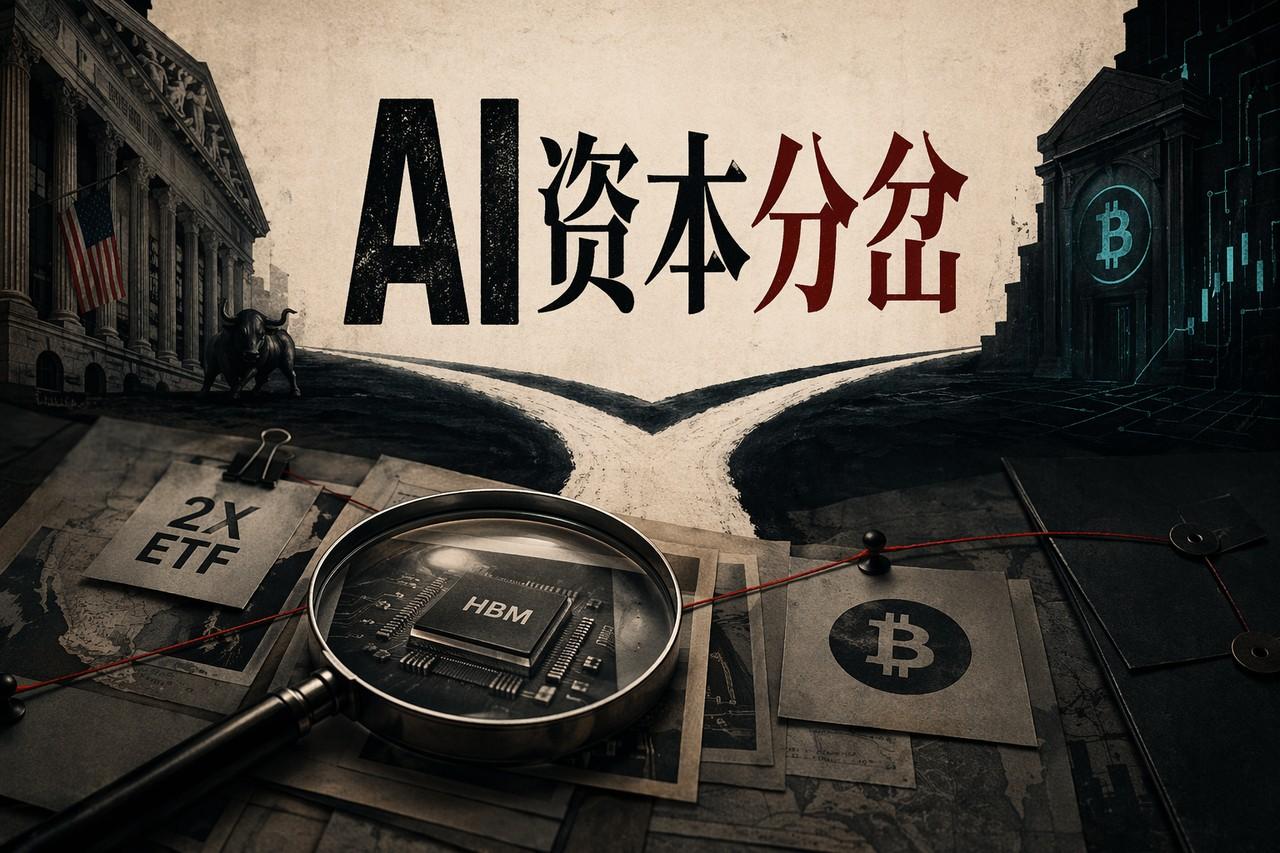
From June 26 to 27, 2026, two seemingly parallel lines converged in the global market: on one side was the softening of computing power prices, and on the other side was the accelerated tightening of regulations surrounding AI and cryptocurrency assets. SiliconData released a report during these two days stating that the widespread use of inexpensive open-source models directly lowered the spot rental prices of H100 GPUs, leading related Token price indices bundled with computing power narratives to decline. However, the overall demand for AI did not weaken; instead, users pushed up total computing consumption through these models. At the same time, South Korea announced the establishment of a cross-departmental consultation body composed of 10 government departments to address risks related to deep forgery and AI fraud, highlighting East Asia's high-pressure stance on AI ethics and security. Meanwhile, the Hong Kong Legislative Council passed the "2026 Taxation (Amendment) (Automatic Exchange of Information) Bill" and advanced the cryptocurrency asset reporting framework (CARF) bill to the review stage, integrating cryptocurrency assets into the global tax transparency system. Further afield, Musk received approval to acquire Mesh Optical Technologies, which focuses on 1.6T OSFP pluggable optical modules, extending his reach into AI data center optical communications following chips and models. The cross-departmental body in South Korea, the CARF process in Hong Kong, and Musk’s infrastructure acquisition intertwined with the falling H100 rental prices and Token indices, illustrating a common theme: as "AI democratization" lowers the entry threshold through inexpensive open-source models, computing power is being repriced, and regulations are forced to rewrite the rules of cryptocurrency and data flow more rapidly.
Inexpensive Open-Source Models Sweep In, H100 Rental Prices Bow Down
SiliconData directly pointed its finger at "inexpensive open-source" in its report. When enough teams discovered that they no longer needed to pay high rents for a few expensive closed-source models, they could complete training, fine-tuning, and inference using open-source solutions, the originally rigid demand for H100 spot rentals began to soften. The report noted that the spot rental price of the H100 GPU has already seen a decline, coinciding with a drop in a basket of related Token price indices—funds reacted first, misinterpreting this structural migration as a "cooling down of AI enthusiasm," while ignoring that demand was being redistributed to cheaper and more diverse models.
SiliconData's core judgment is viewing this price and Token pullback as a reshuffle of demand structure rather than a demand collapse. After users shifted en masse to inexpensive open-source models, the marginal cost of individual tasks decreased, thereby releasing more long-tail scenarios: experiments once deemed not cost-effective and small applications that would originally not launch began to consume computing power. The report emphasized that driven by these inclusive models, overall computing consumption has increased rather than decreased; it simply spread from a few expensive models to a broader open-source ecosystem. The result is that in the short term, H100 rental prices and related Token indices are under pressure, but in the long term, they are supported by continuously increasing total computing demand, bringing the computing power market into a new normal characterized by high volatility and long support amid the interplay of price correction and demand expansion.
South Korea Establishes a Defense of Ten Departments, New Regulatory Hub Emerges to Combat AI Fraud
When inexpensive computing power pushed generative models to the streets, South Korea felt the sting not from the industry, but from public safety. Around June 26 to 27, 2026, cases of deep forgery and AI fraud ignited a chain reaction of controversy in South Korean society, with media repeatedly emphasizing that crimes related to AI are rapidly increasing, and the existing sector-divided regulatory system is "powerless." An AI face-swapping phone call can simultaneously penetrate financial, internet, and personal privacy defenses; any single institution finds it difficult to provide a complete response to this cross-scenario and cross-platform risk, prompting the birth of a new hub under the pressure of "who is in charge" and public opinion.
The South Korean government announced the establishment of a cross-departmental consultation body to address AI-related crimes, comprising 10 government departments, attempting to replace the fragmented responses that each dealt with independently in the past with a "ten-department defense line." This design itself is a stance: no longer viewing the abuse of AI as a niche problem within a specific industry, but elevating it to a national-level issue that requires unified coordination, intelligence sharing, and standardized rules. For East Asia, this step also fills in the practical example of "how to regulate" within existing discussions emphasizing AI ethics and security—through a cross-departmental consultation mechanism, linking technology abuse, public opinion risks, financial safety, and criminal accountability at the same table. In the future, when AI generation tools further overlap with cryptocurrency assets, leading to more complex cross-border fraud and asset concealment techniques, this framework centered on the consultation body is likely to become a leading template for handling AI- and cryptocurrency-related crimes within the region, rather than just a domestic institutional patch in South Korea.
Hong Kong Promotes CARF Framework, 8000 Financial Institutions Under Scrutiny
At the same time that South Korea brought AI crimes to the "joint conference table," Hong Kong chose to tackle cryptocurrency assets from the tax perspective. Legislative Council member Chien Hwei-Min disclosed that the "2026 Taxation (Amendment) (Automatic Exchange of Information) Bill" has passed the Legislative Council, and the CARF bill has also formally entered the review stage. On the surface, this is a technical upgrade of the existing automatic exchange of information system; in essence, it extends the globally established tax transparency system, originally centered on traditional accounts, into the cryptocurrency domain via the CARF pathway.
This extension did not appear out of thin air. Between 2018 and 2025, Hong Kong cumulatively recovered over HK$100 million in tax and fines through tax enforcement, demonstrating the authorities' patience and will for tax transparency and compliance with real money. Now, under the CARF framework, it is expected that around 8000 financial institutions in Hong Kong will need to be forced to register, falling under new reporting and transparency requirements—this scale indicates that, from banks to various licensed institutions, as long as cross-border funds and cryptocurrency assets are involved, it will be challenging to remain in a "gray area." For the industry, this round of adjustments will not only raise compliance costs and compress anonymous arbitrage space but also reshape pathways for cross-border capital flows: those cryptocurrency funds accustomed to skirting regulatory gaps will be compelled to leave clearer and more sustainable traces within the global tax transparency network.
Musk Bets on 1.6T Optical Modules, Computing Power Battlefield Shifts to Data Pathways
As regulations gradually push cross-border funds and cryptocurrency assets out of the gray area, on the other end of the infrastructure battlefield, Musk chose to place his bets on a deeper level—the data pathways themselves. In late June 2026, he received approval to acquire the optical communications startup Mesh Optical Technologies, which doesn’t create models or issue Tokens, but focuses on one thing: 1.6T OSFP pluggable optical modules for AI and next-generation data center scenarios. For large-scale training clusters, such modules are not just "accessories," but high-speed channels for exchanging parameters, gradients, and intermediate results between GPUs. Once open-source models bring single-card computing power to "sufficiently cheap" levels, the new bottleneck often lies not in chips but in transporting data between racks and data centers with sufficiently low latency and cost.
Placing this acquisition back into a larger context, it is less of a "communication investment" and more of another piece of the puzzle for giants vertically integrating AI infrastructure: upstream are self-developed or deeply affiliated chips, in the middle are models and data center operations, and downstream extends to high-speed optical communications, unifying computing power, models, and data flows on the same value chain. Musk’s bet on 1.6T optical modules acknowledges that the next round of competition is no longer just about who hoards more GPUs, but about who can deliver each bit of data faster, more stably, and more inexpensively to target nodes with the same GPU stock. The softening of computing power prices is just a surface phenomenon; the deeper contest is reshuffling along the data pathways.
Backlash After Technological Inclusion: A Race Between Regulation and New Order of Computing Power
Inexpensive open-source models are like a wrench thrown into the market, SiliconData observed that H100 GPU spot rental prices were forced down, and related AI sector Token indices fell, but overall computing consumption was further elevated—the threshold was lowered, and cost curves redrawn, with "AI democratization" not leading to a retreat in computing power demand, but merely pushing demand from high-priced closed models towards inexpensive open-source stacks, exposing new gray areas amid repricing and volatility. In late June 2026, South Korea's consultation body on AI-related crimes, established by ten departments, and Hong Kong's tax revisions and CARF bill brought cryptocurrency assets into the automatic exchange of information system, fundamentally reflecting a passive rectification to technological abuse and tax loopholes; regulation is playing catch-up, while technology and markets have already completed a round of rule arbitrage. At the same time, Musk’s acquisition of Mesh Optical Technologies and the establishment of 1.6T optical modules on the foundation of AI and next-generation data centers indicate that giants are solidifying their discourse power over infrastructure along the vertical chain from chips, models to optical communications. Looking ahead, the next round of competition in the AI and cryptocurrency market will no longer just involve the price of a specific coin or GPU, but will also pull various aspects such as computing power prices, compliance costs, and underlying infrastructure into the tug-of-war. Those who can firmly stand at the intersection of these three lines will have the right to define the new order after the technological inclusion.
Join our community, let’s discuss together, and grow stronger together!
AiCoin exclusive Hyperliquid benefits: https://app.hyperliquid.xyz/join/AICOIN88
AiCoin exclusive Aster benefits: https://www.asterdex.com/zh-CN/referral/9C50e2
On-chain Telegram community: https://t.me/AiCoinWhaleData
On-chain community: https://www.aicoin.com/link/chat?cid=N6OVMor5g
AiCoin on-chain Twitter: https://x.com/aicoinwhaledata
免责声明:本文章仅代表作者个人观点,不代表本平台的立场和观点。本文章仅供信息分享,不构成对任何人的任何投资建议。用户与作者之间的任何争议,与本平台无关。如网页中刊载的文章或图片涉及侵权,请提供相关的权利证明和身份证明发送邮件到support@aicoin.com,本平台相关工作人员将会进行核查。