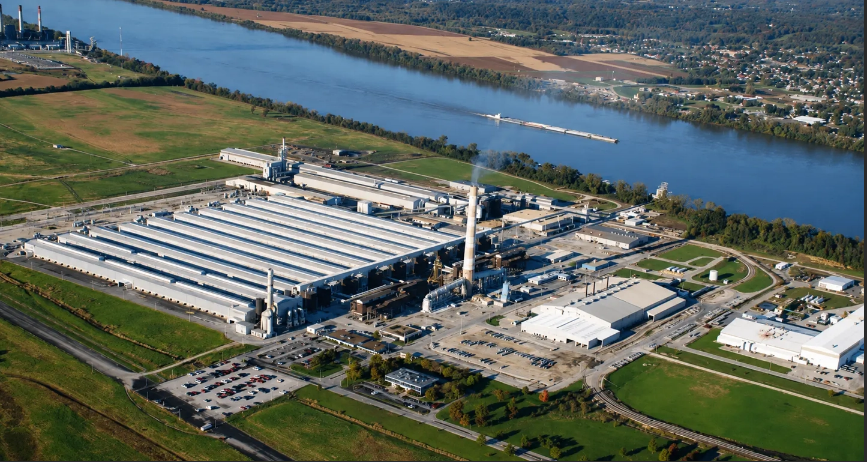
On July 6, 2026, local time, the U.S. Bitcoin mining company TeraWulf officially announced that it had signed a 20-year long-term lease agreement for data center infrastructure with AI unicorn Anthropic. The agreement focuses on TeraWulf's Justified Data park located in Hawesville, Kentucky, which is planned to support approximately 401 megawatts (MW) of critical IT load, with the first phase of capacity expected to go live in the second half of 2027 and full operation achieved in early 2028. TeraWulf expects that this lease will secure approximately $19 billion in contract revenue during the initial lease term and will gain investment-grade credit support.
After the announcement, TeraWulf (WULF) stock price soared over 10%-17%, continuing its strong performance with a cumulative increase of more than 85% this year. Meanwhile, the stock prices of peer mining companies such as IREN, Hut 8, and Cipher Digital also experienced significant upward movement.
This transaction is not only the largest single AI infrastructure deal for TeraWulf but is also seen by the market as a landmark event signaling Bitcoin miners' comprehensive transformation towards AI/HPC (high-performance computing).
From "mining shell" to AI computing platform
The Justified Data park was previously a mining facility, and TeraWulf upgraded it into a dedicated AI infrastructure through brownfield redevelopment. The agreement stipulates that Anthropic will lease about 401 MW of critical IT load, developed in multiple phases. TeraWulf, as the owner, is responsible for providing power, cooling, and facility support, while Anthropic will handle IT equipment deployment and operation.
This model fully leverages the original advantage of high-power density power access of mining companies—data centers, especially AI training clusters, have a high demand for stable, large-scale power that overlaps significantly with Bitcoin mining, but the former can provide longer-term, predictable high rental returns. TeraWulf also announced that it would sell its 50.1% stake in the Abernathy joint venture project to an investor consortium led by Fluidstack, achieving a significant premium exit compared to its approximately $450 million investment, further optimizing its balance sheet and providing funding for new projects.
According to public information, this 401 MW capacity will double TeraWulf's contracted AI/HPC load, marking its strategic acceleration from primarily Bitcoin mining to being an AI infrastructure operator. Local officials in Hancock County, Kentucky, view this as a significant economic benefit, with the project's full-load operation consuming electricity equivalent to the continuous electricity needs of approximately 300,000 households.
Mining profits under pressure, AI transformation becomes mainstream narrative
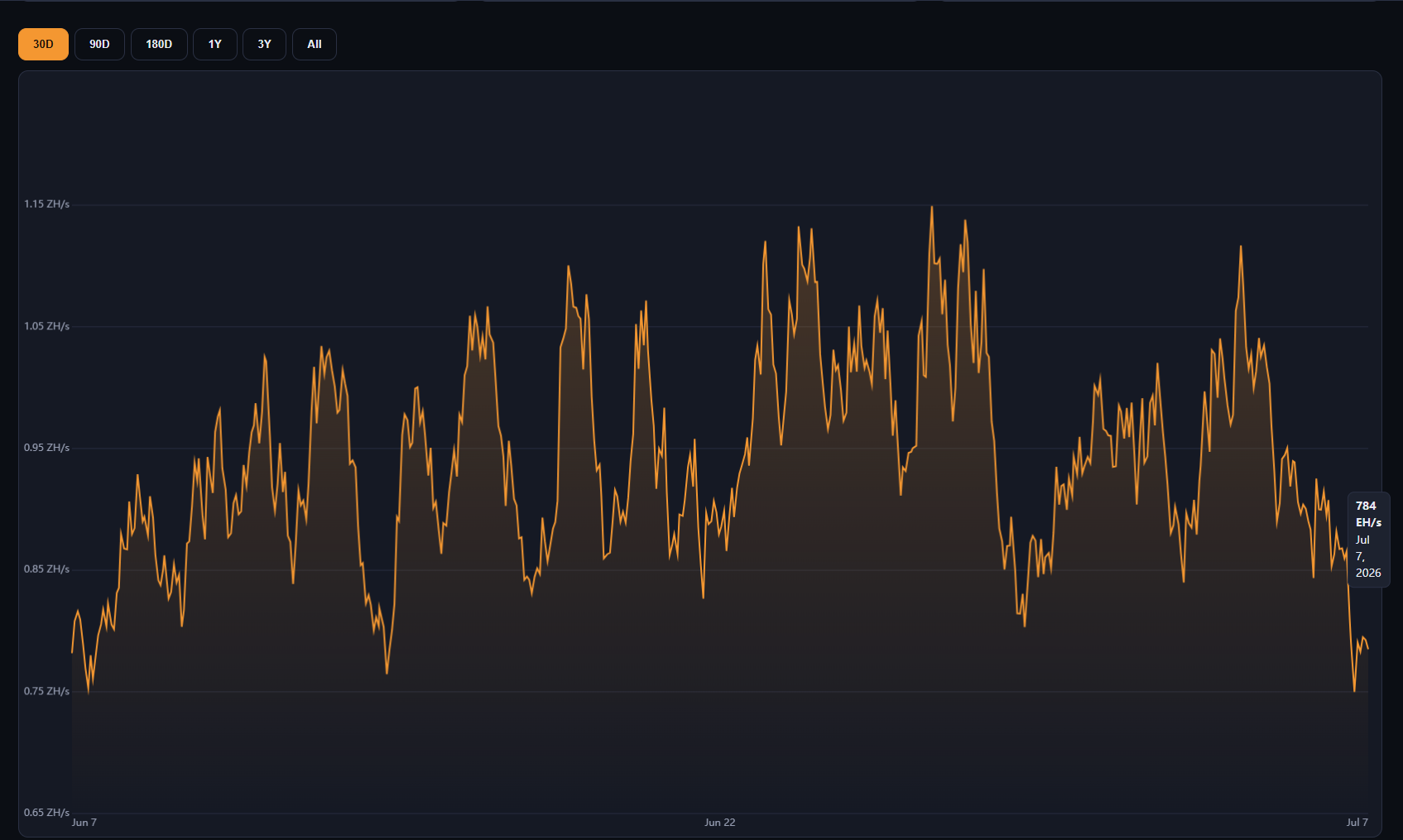
In the first half of 2026, there was noticeable volatility in Bitcoin's total network computing power. U.S. publicly listed mining companies are facing multiple pressures: reduced block rewards after the halving, fluctuations in Bitcoin prices relative to production costs, as well as energy prices and regulatory uncertainties. Some data indicates that the average computing power of Bitcoin's total network has declined by about 11% this year, and U.S. mining companies' global computing power share has decreased by more than 0.4 percentage points.
In this environment, liquidating BTC holdings and transitioning to AI/HPC has become a common choice for leading mining companies. Companies like Bitfarms and CleanSpark are accelerating related layouts: Bitfarms plans to convert some sites to HPC/AI loads, while CleanSpark is enhancing its AI data center financing capabilities and optimizing its energy structure. Previous research reports from institutions like Bernstein have noted that mining companies, leveraging ready power combinations and rapid delivery capabilities, are natural candidates to become "power landlords" in the AI era, with expectations of significantly increased AI-related revenues.
TeraWulf's actions are particularly aggressive. It has previously laid out HPC through projects with Fluidstack and Google support, and this 20-year lease with Anthropic further locks in long-term cash flow. Compared to traditional mining, which relies on cyclical fluctuations in Bitcoin prices, AI leasing provides stable rental income backed by investment-grade credit, which is significant for valuation reconstruction in capital markets.
In the context of tightening global regulations, compliance has become an important support for industry transformation. As one of the first platforms to complete the MiCA transitional period, Gate has all heightened levels of compliance systems, risk control, and fund security in Europe. Regulatory rules are directly embedded into business processes, with increasing layers of internal risk control, compliance review, and asset protection, ensuring a direct sense of security.
CEO Dr. Giovanni Cunti has also stated that they will continue to enhance compliance construction, professional talent, and operational resilience, thoroughly integrating "compliance + security + innovation."
Want to engage in cryptocurrencies but worry about compliance? Want to find a reliable platform but feel overwhelmed? Trust this strong "MiCA + PI dual license pass," safe, transparent, and efficient; Gate will help you enter steadily:
https://jump.do/zh-Hans/xlink-proxy?id=5
Miner selling pressure alleviated with new fund inflows
From the Bitcoin market perspective, mining companies are accelerating their exit from or reduction of pure mining business, which theoretically helps to alleviate long-term selling pressure. Miners are traditionally an important source of BTC supply; when profits are thin, they are forced to sell to maintain operations; after shifting to AI, their incentive to hold coins decreases, which can stabilize Bitcoin prices.
At the same time, the AI transition is bringing new capital into the entire on-chain ecosystem. Companies like TeraWulf are attracting traditional infrastructure and technology capital into crypto-related fields through equity financing, asset sales, and long-term prepaid contracts. This "computing power structure optimization" may benefit the long-term narrative of BTC: network computing power becomes more decentralized (with Southeast Asia, Central Asia, and Latin American miners taking a share), while high-quality U.S. power resources shift towards higher-value AI uses.
For concept coins like SOL that combine AI and blockchain, it can further warm up the narrative of "decentralized computing power" or "AI infrastructure on-chain." Although the current impact is more on the emotional level, in the long term, the hybrid model of combining mining companies' power assets with blockchain may give rise to new application scenarios.
The valuation logic for mining-related targets (WULF, BITF, CLSK, IREN, etc.) is switching: from "Bitcoin beta" to "AI infrastructure alpha." Companies that successfully execute long-term contracts are likely to achieve higher multiples in valuation, while slower transition companies may face differentiation pressure.
Execution capability determines success or failure
Despite the bright prospects for transactions, implementation is not without risks. The 401 MW project needs to be delivered on schedule in 2027-2028, involving multiple stages such as power capacity expansion, cooling system upgrades, supply chain coordination, etc. AI clusters have high requirements for PuE (Power Usage Effectiveness) and liquid cooling, which may raise actual capital expenditures. TeraWulf needs to balance the financing of new projects with existing debts to avoid excessive dilution of equity.
On a more macro level, although demand for AI computing power is strong, uncertainties exist regarding the model training pace, funding chain, and global data center regulations (energy consumption, environmental protection) of companies like Anthropic. If the Bitcoin mining exit tide accelerates, it could lead to further adjustments in total network computing power in the short term, affecting perceptions of network security.
On the other hand, while traditional energy states like Kentucky have abundant power resources, grid stability and the mix of renewable energy are also long-term variables.
The "time window" for miner transformation
The $19 billion deal between TeraWulf and Anthropic is the latest testament to the deep integration of mining and AI in 2026. It proves that Bitcoin miners have a first-mover advantage in the "time is computing power" race: ready-made power infrastructure can quickly monetize during periods of exploding AI demand.
The industry watershed is clear: a few companies with execution capabilities, quality power assets, and partnership resources will complete the transformation from cyclical mining players to stable infrastructure operators; most who fail to follow suit may be marginalized in the competition.
For investors, this event provides a window of observation—pay attention to the subsequent project milestone achievements, financial metric improvements, and dynamics of peer follow-ups. The Bitcoin market will need to adjust to a new equilibrium of "lighter miner selling pressure, heavier institutional capital."
TeraWulf has positioned itself at the forefront of industry transformation and has set a replicable (or difficult to replicate) benchmark for the entire sector. The execution results over the next 12-24 months will determine the ultimate quality of this transformation story.
Risk warning: The prices of digital assets are highly volatile; institutional cooperation and related business advancement should rely on official announcements; please participate rationally and pay attention to risk control.
Join our community, let's discuss, and get stronger together!
Official Telegram community:
AiCoin Chinese Twitter:
Gate benefits group:
https://aicoin.com/link/chat?cid=de0QGAe7W
免责声明:本文章仅代表作者个人观点,不代表本平台的立场和观点。本文章仅供信息分享,不构成对任何人的任何投资建议。用户与作者之间的任何争议,与本平台无关。如网页中刊载的文章或图片涉及侵权,请提供相关的权利证明和身份证明发送邮件到support@aicoin.com,本平台相关工作人员将会进行核查。