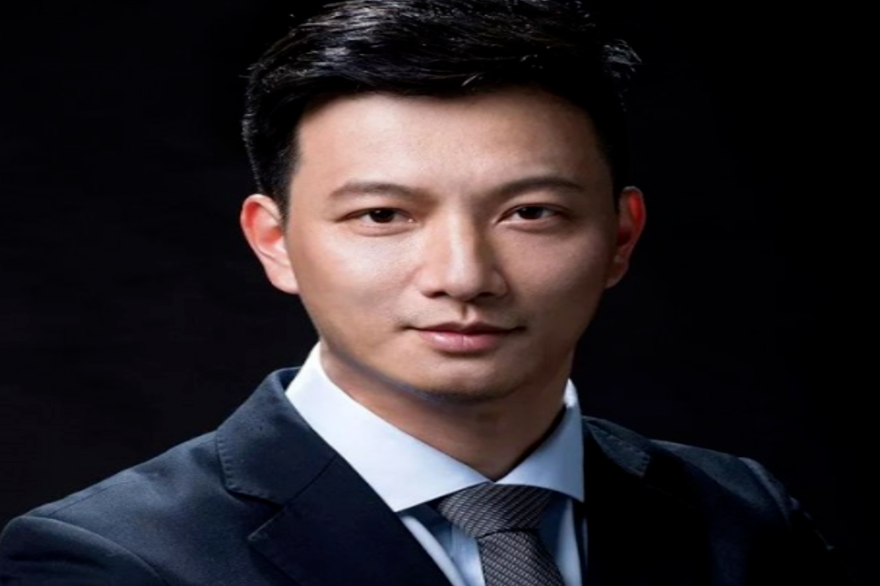
Michael Coates announced on the X platform that he has taken the position of Chief Information Security Officer (CISO) at the Solana Foundation, calling this step a "new chapter" in his career: an expert who has been navigating top security roles in Web2 has officially moved the battlefield to the core level of high-performance public chains. Prior to this, he served as the security head at Mozilla, participating in the security system construction and offense-defense games of traditional internet products; later, he became the CISO of Twitter, handling information security risks, compliance pressures, and emergencies for such a global social platform. The trajectory from Mozilla to Twitter to a startup has already drawn a complete path in the corporate and internet security circles, yet he has forcefully turned it toward Web3. Alongside Coates' shift, another timeline for Solana is filled with technical and security concerns: as a public chain known for its high performance, it has experienced multiple network interruptions and security incidents during its rapid expansion, with a long-standing contradiction between performance gains and security shortcomings hovering over the ecosystem. Against this backdrop, the Solana Foundation chose to entrust the CISO position to a seasoned leader in Web2 platform security, and this appointment is seen as a signal of its commitment to bolstering security protection and governance, reflecting the entire Web3 industry’s initiative to actively seek help from traditional information security talent, while details regarding Coates' specific start date and a more thorough official statement from the foundation have yet to be made public.
From Twitter's Defense Line to the Frontline of Public Chains
Before moving to public chains, Michael Coates' defense building experience was almost entirely embedded in the core battleground of traditional internet. Early on, he served as the security head at Mozilla, facing consumer-facing products such as browsers—where the attack surface spanned operating systems, network protocols, and vast user terminals, with any oversight potentially magnifying vulnerabilities infinitely. Such roles required him to embed security within the product iteration pace, controlling risks from the design phase rather than patching vulnerabilities afterward. Later, as the CISO of Twitter, the security focus expanded from a single product to the information security framework of a global social platform: maintaining platform availability while balancing privacy protection, account security, and internal process flow. This deep perspective spanning from underlying technology to organizational governance constitutes his most significant asset in the "traditional internet defense line."
After accumulating a certain level of experience in enterprise security, Coates chose to transition from a large platform to an entrepreneurial role, founding Altitude Networks, which focuses on enterprise SaaS data security, attempting to use a productized approach to address data exposure risks in cloud applications. This startup was later acquired, validating the market demand and technical value in the data security sector. The essence of the SaaS scenario is the meticulous governance of complex data flows in a multi-tenant environment, while a public chain also represents an open system shared among various parties, each bearing its own risks: the former taught Coates how to identify data exposure paths and design executable security strategies, while the latter required him to transfer similar methodologies to nodes, protocols, and ecosystem participants. The security narrative he formed at Mozilla, Twitter, and Altitude Networks—from product to platform, from technology to organization—will directly influence how he understands Solana's vulnerabilities and how he reconstructs the rules and boundaries of security governance on this new front line of public chains.
Solana, Struggling with Frequent Outages, Urgently Needs Security Reinforcement
Before Michael Coates arrived, Solana had already paid the price for its "high-speed engine." As a well-defined high-performance public chain, it indeed established advantages in high concurrency and low-cost transactions but also experienced multiple network interruptions and security incidents during its rapid expansion. For ordinary users, "downtime" means assets and applications being forced to stop; for developers and institutions, it raises questions about the reliability of the technology stack. As these incidents are repeatedly amplified, frequent outages and security events have gradually been viewed in industry discourse as one of Solana's main risks, and the security shortcomings have begun to turn against its once most competitive speed narrative, with trust pressure being re-evaluated every time an anomaly occurs on the chain.
The contradiction is embedded deep within the architecture: to pursue higher throughput and lower costs, Solana has pushed more complexity into its underlying protocol and node operating environment; high performance does not automatically bring stability, but instead demands more refined risk management. The competition among public chains is no longer merely a parameter battle of TPS and fees; security and stability are becoming unavoidable thresholds in attracting developers and institutional users. If the governance layer cannot keep pace with the technological expansion regarding early warnings, handling of security incidents, and information disclosure, application parties in the ecosystem will hesitate to build critical businesses here, and institutions will consider "frequent network interruptions" a serious evaluative condition in due diligence. In this context, bringing in top security talent is no longer just about image engineering; rather, it becomes a key variable determining whether Solana can continue to expand and reshape external trust.
Why a Web2 Security Veteran Bets on Web3
For seasoned security veterans like Coates, jumping from a mature Web2 platform into the forefront of public chains is not a simple job transition but a choice to actively embrace a more complex and novel risk landscape. His career focus has long been at typical internet companies like Mozilla and Twitter, where he was responsible for reinforcing systems and patching vulnerabilities within existing architectures. Now, he describes joining the Solana Foundation on X as a "new chapter in his career," effectively casting his vote with his feet: the truly challenging security issues have partially migrated to the chain world. Smart contracts represent programmable assets, essentially a collection of high-risk codes; cross-chain bridges facilitate value flow between different systems, and once breached, it is a systemic event; private key management compresses the "ownership" of individuals and institutions into a few characters—these aspects are more directly tied to funds and governance power than the traditional Web2 attack surfaces, forming both a high pressure and high achievement attraction for responsible security leaders.
This crossover not only alters the technology stack of a public chain but also reshapes the entire industry’s perception of security talent. Research briefs interpret this appointment as a signal of increased demand for professional information security capabilities in Web3: in the past, security engineers were often seen as "background roles" for applications or platforms, but now they are thrust to the forefront of public chain governance and trust systems. Coates' journey from Mozilla and Twitter to founding and selling Altitude Networks originally depicted a typical trajectory for a Web2 security executive, but now, with his position as CISO at the Solana Foundation, he draws a new extension that sends a clear career expectation to those still wrestling in large Web2 companies and the enterprise security field—when vulnerabilities in smart contracts, cross-chain bridge security, and private key management risks become critical bottlenecks for the entire ecosystem, individuals who understand large-scale system protection and risk governance will no longer be merely "optional," but essential for whether a public chain can continue to expand. Therefore, Coates' choice not only responds to Web3 challenges but also quietly rewrites the career landscape of the entire security industry.
Solana Foundation's Security Calculations and Governance Upgrades
When the Solana Foundation established and awarded the CISO title to Michael Coates, what was truly written into the narrative was not a new position but a security governance structure that is being restructured. In the past, high performance, public chains, and expansion speed were the keywords for Solana, but multiple network interruptions and security incidents forcibly pulled the question back from "how fast can it run" to "can it be stable?" Now, introducing a security head who has honed foundational internet security at Mozilla and taken on risk control at a super traffic platform like Twitter is, in itself, an open declaration: security is no longer a "background task" for the technical team but must gain strategic weight equal to performance and ecosystem growth at the organizational level.
In traditional large technology organizations, the CISO is responsible for formulating information security strategies and managing risks, a structurally validated role in the industry. Transplanting such a role to the Solana Foundation is seen as an intentional "institutional upgrade attempt"—it is not just about filling a position but establishing an entire decision-making pathway: from who makes security decisions internally to who bears ultimate responsibility for risk assessment results, to how security investments are communicated and implemented between the foundation and the developer community. For ecosystem participants who have harbored concerns due to faults and attacks, the presence of a CISO provides a name that can be held accountable to the question of "who is guarding the gate," helping to rebuild basic trust in this public chain. For developers and institutional users, it also means that future dialogues with Solana can extend beyond TPS and fees to obtain a more systematic response regarding risk control, compliance expectations, and incident response mechanisms. In other words, the greatest value of this appointment lies not in an immediate fix to a specific technical detail but in the Solana Foundation beginning to address its expansion risks with a security governance structure more akin to that of large technology organizations.
Upgrading the Security Battleground: What’s Next for Solana
The journey of a veteran CISO who once ran Twitter and traversed through Mozilla and corporate SaaS security startups to a core position in high-performance public chains signals an upgrade in security narratives: in the competitive landscape of public chains, whoever can shift from the "performance race" to the "security and governance race" first stands a greater chance of earning the trust of institutions and long-term capital. For Solana, the frequent discussions regarding outages and security incidents in the past are now becoming a measurable and comparable frame of reference—if future investments increase and processes resemble those of large tech companies with checks and balances, reviews, and clear boundaries of responsibility, these changes will directly reflect in the event records and ecosystem feedback. Currently, apart from confirming the appointment and Coates’ resume, there is no public security roadmap available; what truly deserves the attention of investors and developers is whether there will be more systematic security disclosures, public reviews and commitments to improvements regarding incidents, and increased transparency in the governance level's security decision-making process—these specific and detailed signals will determine whether Solana can elevate its high-performance narrative to a trusted infrastructure story.
Join our community, let's discuss, and become stronger together!
AiCoin exclusive Hyperliquid benefits: https://app.hyperliquid.xyz/join/AICOIN88
AiCoin exclusive Aster benefits: https://www.asterdex.com/zh-CN/referral/9C50e2
On-chain Telegram community: https://t.me/AiCoinWhaleData
On-chain community: https://www.aicoin.com/link/chat?cid=N6OVMor5g
AiCoin on-chain Twitter: https://x.com/aicoinwhaledata
免责声明:本文章仅代表作者个人观点,不代表本平台的立场和观点。本文章仅供信息分享,不构成对任何人的任何投资建议。用户与作者之间的任何争议,与本平台无关。如网页中刊载的文章或图片涉及侵权,请提供相关的权利证明和身份证明发送邮件到support@aicoin.com,本平台相关工作人员将会进行核查。