Original | Odaily Planet Daily (@OdailyChina)
Author|Azuma (@azuma_eth)
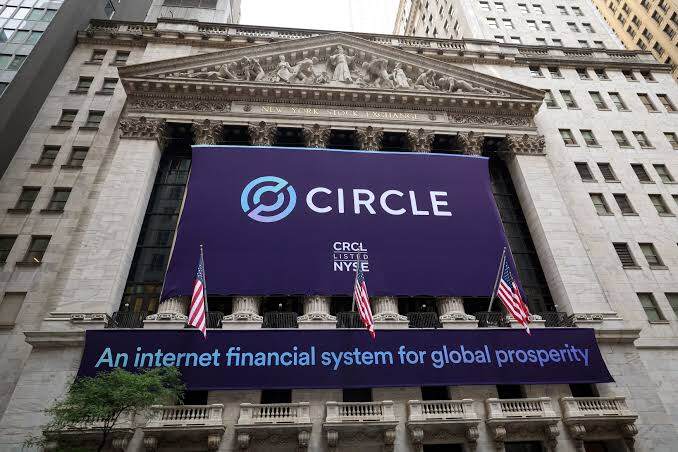
“Circle is focused on long-term development (playing the long game)… If the mission of building a full-stack internet platform infrastructure can be realized, in the long run, the stock is going to take care of itself.”
On July 14, Circle President Heath Tarbert appeared for a live interview with FOX Business. In response to the host's question about “CRCL has dropped from a high of $260 to $62, what do you want to say to the investors caught in a loss,” Tarbert gave the above answer.
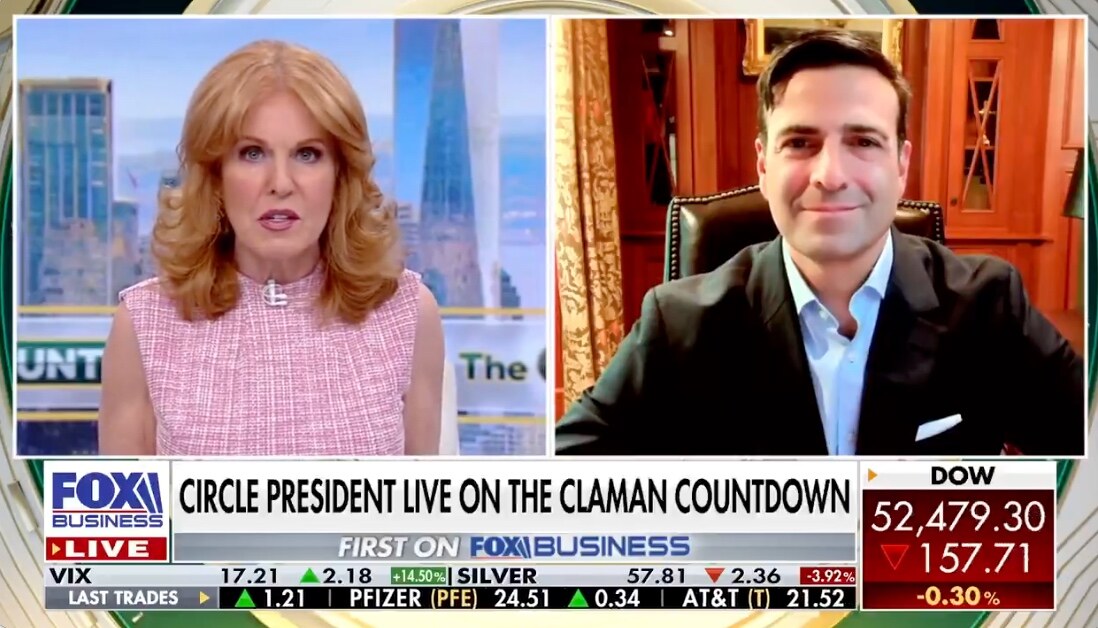
Shouting “long-term value,” this seems to be the answer every company experiencing a downturn in stock prices would give, but to determine the credibility of this answer, one cannot simply look at how management describes the future, but rather whether they are willing to continue betting their own money on the future.
After all, management is often the group that understands the company's situation best; they hold the company's operating data, strategic plans, and future growth paths. If they firmly believe that the current stock price is undervalued, then a significant price correction should theoretically present a rare buying opportunity.
But for Circle, management's actions may reveal another answer.
73 sales, 0 purchases, is this the so-called long-term value?
After Tarbert raised the banner of “long-term,” CRCL investors combed through the Form 4 documents submitted to the U.S. Securities and Exchange Commission (SEC) by Circle and discovered a rather intriguing fact — the Circle president who just conveyed long-term confidence to the market has been continuously selling company stock since CRCL went public.
- Note from Odaily: Form 4 is a securities transaction report that insiders of U.S. publicly traded companies are required to submit to the SEC to disclose the buying and selling of company stocks by directors, executives, and shareholders owning more than 10%. Compared to ordinary investors who can only see changes in public market prices, Form 4 provides an important window to observe how insiders view company value.
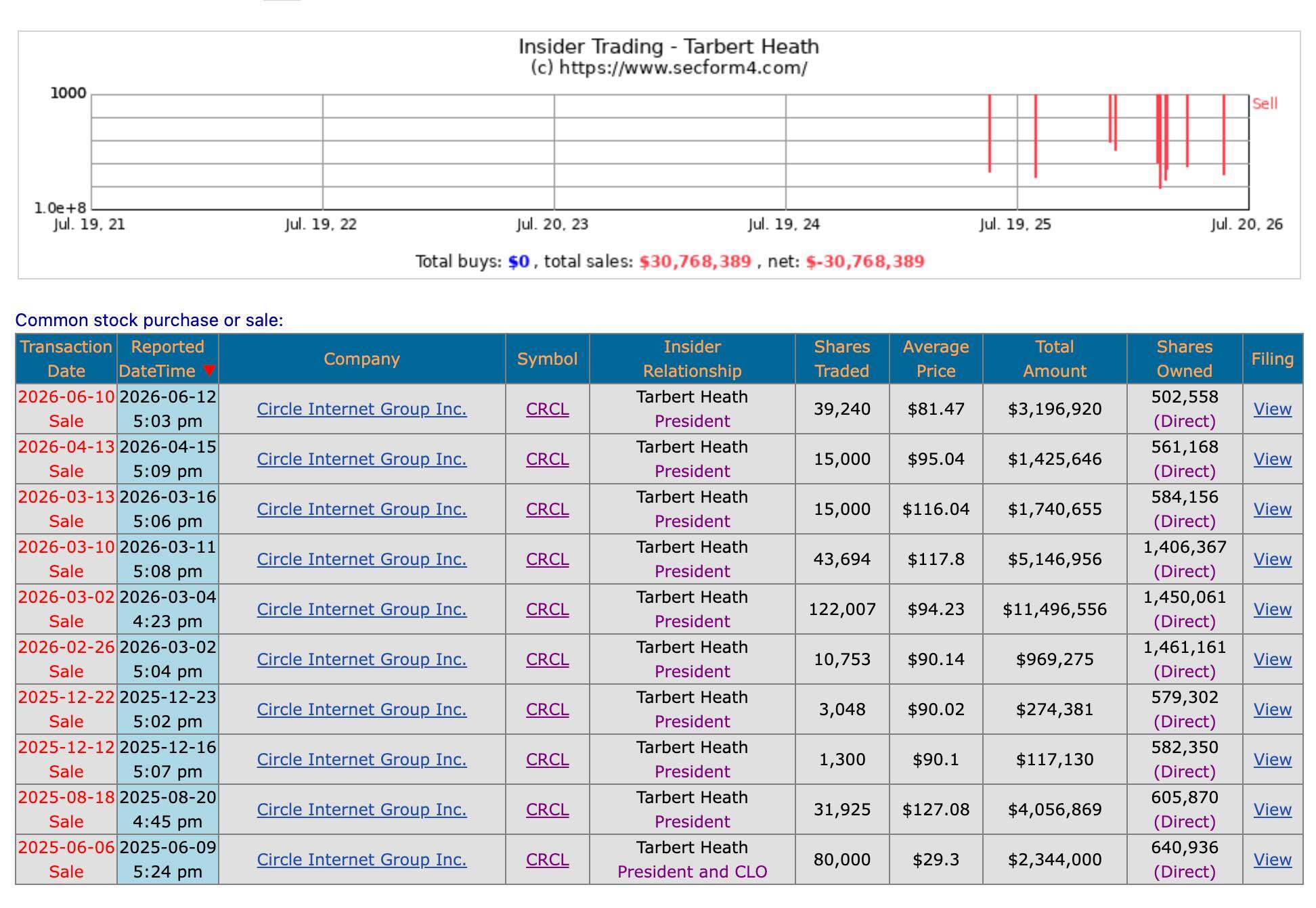
Circle's Form 4 documents show that Tarbert has sold CRCL a total of 10 times since first selling it in June 2025, cashing out approximately $30.77 million, and has never made any additional purchases.
If it were just Tarbert continuing to sell shares, that would be one thing, but a further review of all insider trading records at Circle reveals that the situation is not so simple — from the founder and CEO to the CFO, the CPTO, the CAO, and board members… multiple core insiders at Circle have also been selling shares, for a total of 73 sales and 0 purchases, cashing out approximately $664 million.
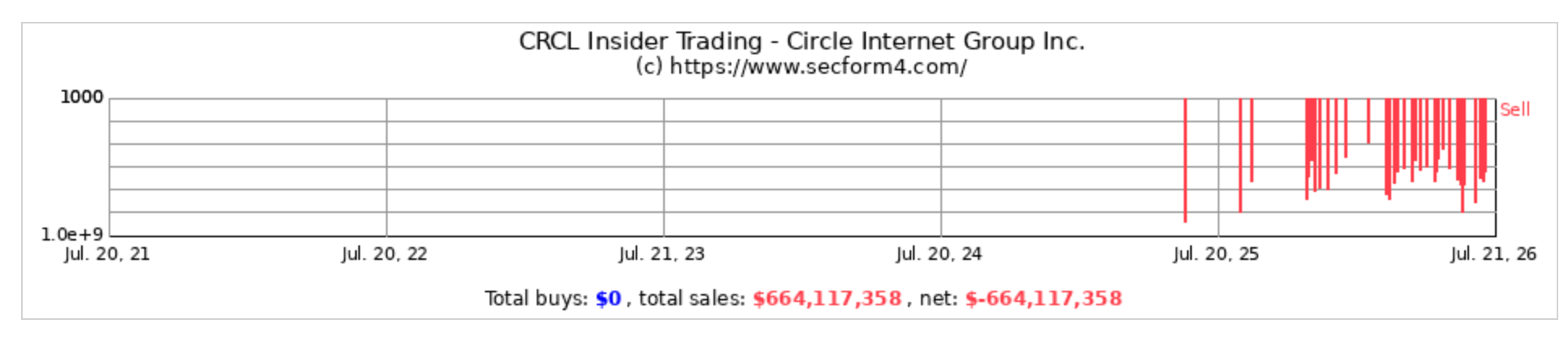
Here are some highlighted selling data from these core insiders:
- Founder and CEO Jeremy Allaire has sold 9 times, bought 0 times, cashing out $139 million;
- Board member Burns M Michele has sold 12 times, bought 0 times, cashing out $276 million;
- Board member Neville Patrick Sean has sold 13 times, bought 0 times, cashing out $181 million;
- CFO Fox-Geen Jeremy has sold 9 times, bought 0 times, cashing out $22.45 million;
- CPTO Chandhok Nikhil has sold 12 times, bought 0 times, cashing out $69.21 million;
- CAO Schulz Tamara has sold 9 times, bought 0 times, cashing out $1.21 million;
- President Heath Tarbert has sold 10 times, bought 0 times, cashing out $30.77 million…
Clearly, when the CRCL price fell more than 70% from its high, and the market began to reassess Circle's long-term value, those closest to the company's actual business did not choose to express confidence in future growth by increasing their holdings.
Executive sell-offs are common, but the trading structure is too one-sided
It should be noted that insiders selling stock does not simply equate to them being bearish on the company's future.
For the management of publicly traded companies, stock reductions are not uncommon, especially after an IPO, when founders, executives, and early investors usually hold significant shares. Selling some shares to diversify wealth, tax planning or personal asset allocation is a normal phenomenon.
Therefore, simply seeing one or even multiple executives sell stock does not sufficiently prove that they are pessimistic about the company's future; the real issue lies in — after a significant correction in stock prices, is anyone willing to buy back?
For Circle, the controversy lies precisely here.
CRCL rose rapidly to over $260 after its IPO, then fell all the way back, currently down over 70% from its peak. There was a brief rebound some time ago, but it did not last long before falling again. According to traditional investment logic, if management truly believes that the company's long-term value has not changed, or even believes that the market has underestimated Circle’s future, then a significantly corrected stock price should present a highly attractive buying opportunity.
After all, compared to ordinary investors, these insiders naturally possess absolute informational advantages. They know the growth of USDC, the progress of the company's customer expansion, the future product roadmap, and the company's real position in the stablecoin competition… However, from the publicly disclosed Form 4 data, it can be seen that Circle's core management has not made any purchases at the low stock price but has been continuously selling to cash out.
This highly one-sided trading structure makes it difficult to convey long-term confidence to the market that matches the "playing the long game" narrative in interviews.
Reassessing CRCL's value: Can the long-term narrative match current valuations?
Of course, even if insiders are continuously selling shares, it cannot be entirely equated with "Circle lacks long-term value," but it easily further reinforces the market's pessimistic expectations for the company.
Especially in the context of CRCL's price continuing to decline, there is already a significant divide in market perceptions of Circle — Is Circle ultimately a future financial infrastructure company, or a publisher relying on stablecoin scale and interest rate environments?
In the early days of its IPO, the high valuation given to Circle bet on a grander story — as stablecoins became the global digital payment infrastructure, Circle had the opportunity to become an important gateway between traditional finance and the crypto world.
However, as the stock price fell from its peak, investors have begun to reassess this logic. On one hand, Circle's current revenue still heavily depends on the income from USDC reserve assets. Whether profitability can maintain rapid growth in a rate-cutting cycle has become a concern for the market; on the other hand, during the downturn in the crypto market, whether the growth space for USDC still meets prior expectations is also uncertain; furthermore, as more financial institutions and crypto firms enter the stablecoin field, Circle's once significant compliance advantage is also being reevaluated.
Therefore, the current low performance of CRCL can essentially be understood as the market reassessing its value — whether the growth of the stablecoin industry and Circle's own business condition are sufficient to support the high-growth valuation that CRCL was once assigned.
In the future, Circle will still need to answer this question with actual performance.
免责声明:本文章仅代表作者个人观点,不代表本平台的立场和观点。本文章仅供信息分享,不构成对任何人的任何投资建议。用户与作者之间的任何争议,与本平台无关。如网页中刊载的文章或图片涉及侵权,请提供相关的权利证明和身份证明发送邮件到support@aicoin.com,本平台相关工作人员将会进行核查。


