The BOOST mode extracts the originally intended 20% settlement funds for injection into the LP and buys them on the secondary market through TWAP within 5 minutes, directly destroying them.
Written by: Mahe, Foresight News
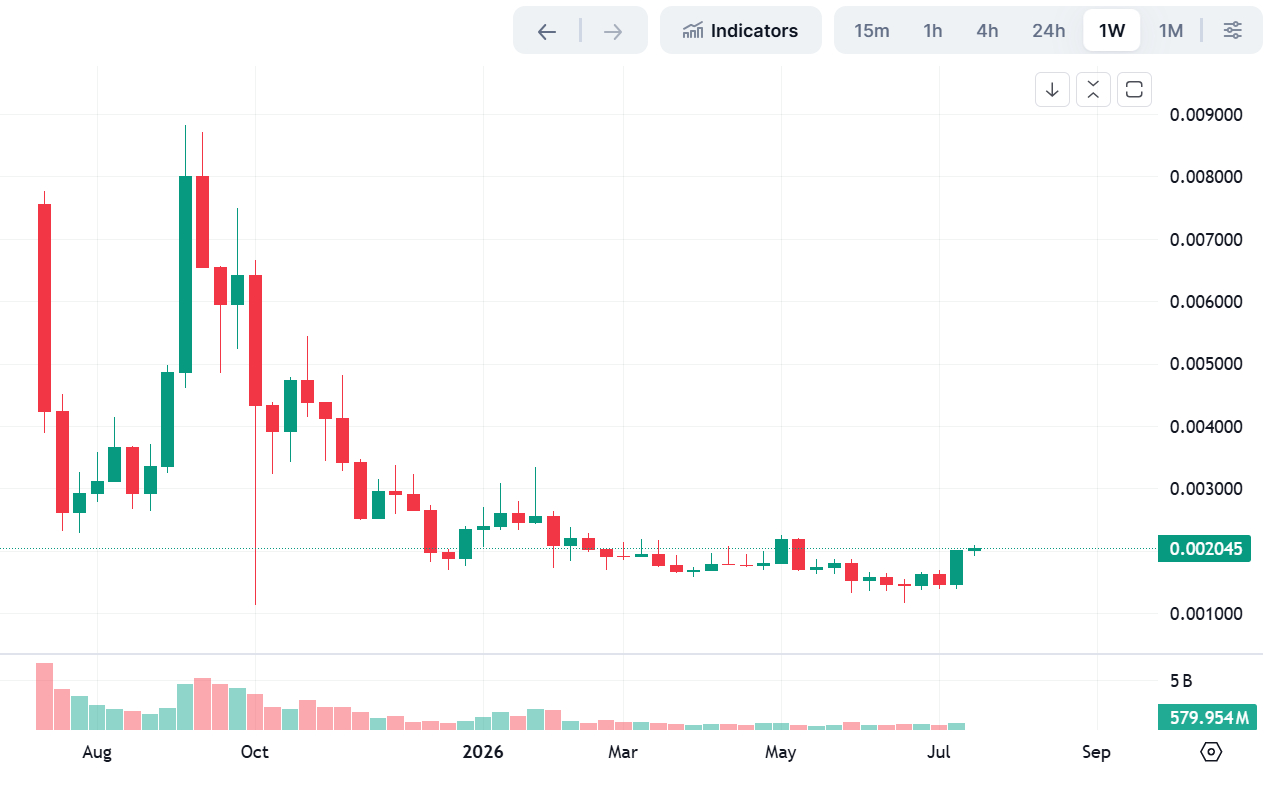
On July 21, Pump.fun officially announced the launch of the BOOST mode, designating it as the standard default launch mechanism for new tokens. After the announcement, the price of PUMP remained fluctuating around $0.002.
According to official descriptions, historical data shows that whenever a token graduates from the bonding curve and migrates to the liquidity pool, approximately 20% of the liquidity turns into "dead liquidity." Even if all holders sell out, this portion of funds will be permanently locked in the LP and can no longer be effectively utilized. The platform estimates that this mechanism causes a permanent liquidity loss of over 100 million dollars each year.
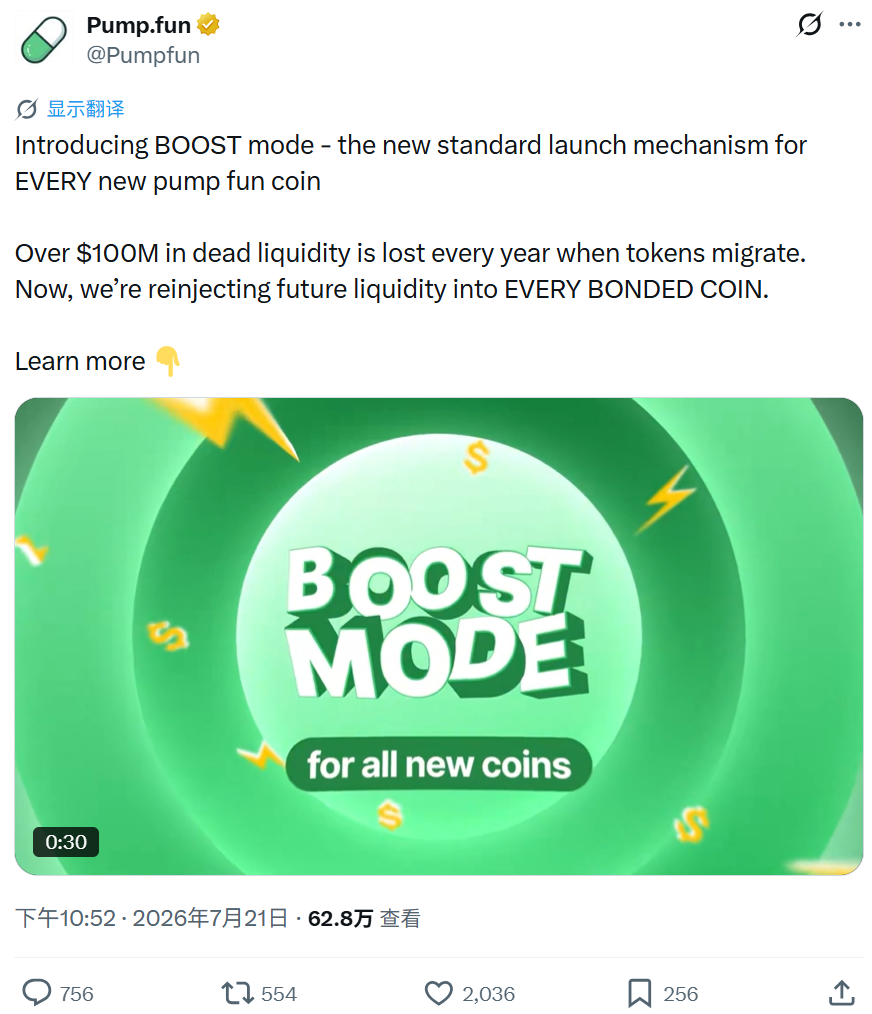
The core action of the BOOST mode is straightforward: it uses the funds that would be wasted to continuously buy the token through TWAP (Time Weighted Average Price) within the first 5 minutes after the token migration, and immediately destroys all purchased tokens. At the time of graduation, Pump.fun forcibly retains approximately 20% of the funds. According to fixed migration rules, the SOL trading pair retains 17.6 SOL, and the USDC trading pair retains about 2516 dollars.
All these funds come from the portion of liquidity that was "sacrificed" during the previous migration, not from new platform subsidies. After the purchase is completed, the corresponding tokens are directly destroyed, creating short-term buying pressure and permanently reducing the circulating supply.
Using Reserves to Provide Buying Pressure for Tokens for 5 Minutes
Pump.fun's classic process is: users create a token with one click, then trade on the bonding curve, and once the token reaches a certain market value threshold, it automatically migrates to the PumpSwap liquidity pool. During migration, the platform locks a portion of the liquidity in the LP according to a predetermined ratio to ensure trading depth afterwards.
The issue lies in the high proportion of locked funds. Even if the token's price later drops to zero and everyone clears out, there will still be a chunk of "dead money" left in the LP. This money cannot be withdrawn or reallocated to other active assets, creating systemic capital waste. The official estimate is "over 100 million dollars each year."
The BOOST mode does not change the trading experience of the bonding curve nor adjust the graduation threshold itself. The BOOST mode does not create or release any external liquidity out of thin air. Its essence is to extract the originally intended 20% settlement funds for injection into the LP and buy them on the secondary market through TWAP within 5 minutes, directly destroying them.
The official announcement clearly states that Pump.fun coins migrated after 22:23 Beijing time on July 21 will automatically enable the BOOST configuration. Previously migrated coins and those launched via the Mayhem (AI Agent Laboratory) mode do not enjoy this mechanism.
The First 5 Minutes Fireworks
As of July 22, the current annual revenue of Pump.fund is approximately 342.54 million dollars, and the total repurchased token value is about 411.27 million dollars. However, its token price is still far from its peak of $0.008. Solely relying on large-scale repurchases has become difficult to effectively boost price expectations.
The essence of BOOST is not to add another round of repurchase for PUMP, but rather to attempt to solve the product issues of the launchpad itself.
The underlying logic might be: if the meme coins after graduation can have slightly thicker order books and perform somewhat better in the short term, traders' retention and repurchase willingness will be higher. Most PVP players do not care about the life or death of a Meme coin three days later; they care about whether there can be an "explosive pull" at the moment of graduation. Perhaps the Pump.fun team sees this clearly, and rather than keeping 20% of the funds defensively locked in the LP pool, it is better to turn this money into "fireworks" in the first 5 minutes.
The platform's real moat is not "a large volume of issued tokens," but "a certain proportion of the issued tokens can continuously generate trading volume." Only with the latter stabilized can protocol income truly be sustainable. When income stabilizes or even grows, repurchase can have sustained ammunition, rather than making it seem like "supporting the price using stagnant income" as the repurchase continues.
Of course, there are also many traders who worry that the additional buying pressure will lower the actual difficulty of project launches, potentially allowing more low-quality coins to "look successful," thus encouraging more aggressive launching behavior. Others have pointed out that the 5-minute TWAP buying window is still relatively short; once buying stops after 5 minutes and faces large sell orders, the token price may collapse with even more exaggerated slippage than before. This essentially trades off a very high risk of back-end sell-off for an illusion of a price surge in the first 5 minutes.
免责声明:本文章仅代表作者个人观点,不代表本平台的立场和观点。本文章仅供信息分享,不构成对任何人的任何投资建议。用户与作者之间的任何争议,与本平台无关。如网页中刊载的文章或图片涉及侵权,请提供相关的权利证明和身份证明发送邮件到support@aicoin.com,本平台相关工作人员将会进行核查。


