Author: Castle Labs
Compiled by: Shen Chao TechFlow
Shen Chao Introduction: In the past two years, 14 crypto companies have annual revenues exceeding 200 million dollars, with only one being a public chain—Hyperliquid. When Arbitrum generated a monthly revenue of 430,000 dollars, Hyperliquid achieved 58 million dollars (a 100-fold difference), public chains finally realized: the business of selling block space is no longer viable. They either need to transform into product studios or application distributors, or focus on vertical industries to do SaaS— the era of neutral infrastructure is coming to an end.

We have recently invested a lot of time studying revenue issues, covering both applications and public chains.
Applications have always been a strong revenue generator; they directly reach customers and must provide value.
Public chains have long supported their ecosystems through subsidies and protocol upgrades, but now they also need to adjust direction and focus on serving paying clients, or they risk depleting their treasury.
In the past two years, 14 crypto companies have revenues exceeding 200 million dollars, with only one being a public chain.
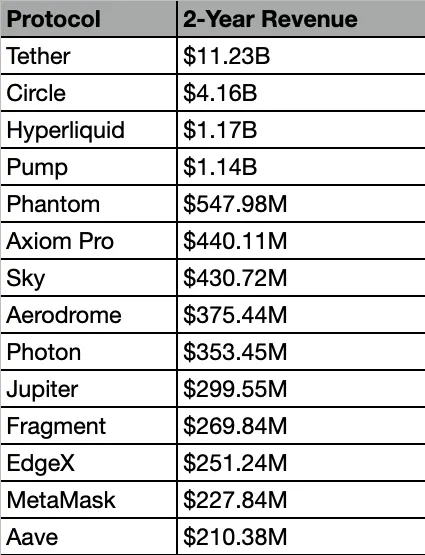
That is Hyperliquid.
To illustrate the gap between public chains: Arbitrum generated only 430,000 dollars in revenue in the past 30 days, while Hyperliquid generated about 58 million dollars (over 100 times).
However, the situation is changing. Public chains understand that block space is no longer a business model and need to focus on other sources of revenue. We have already seen the first movers striving to become product studios, application distributors, payment rails, or vertical SaaS stacks. This will undoubtedly continue, and more public chains will move away from neutral infrastructure toward ownership in specific verticals.
Ostium Vulnerability Causes Over 40% Loss in TVL
Last week, Ostium's LP treasury was attacked, resulting in a loss of 23,752,746 USDC, as the attacker compromised the off-chain infrastructure that provided price inputs to the protocol.
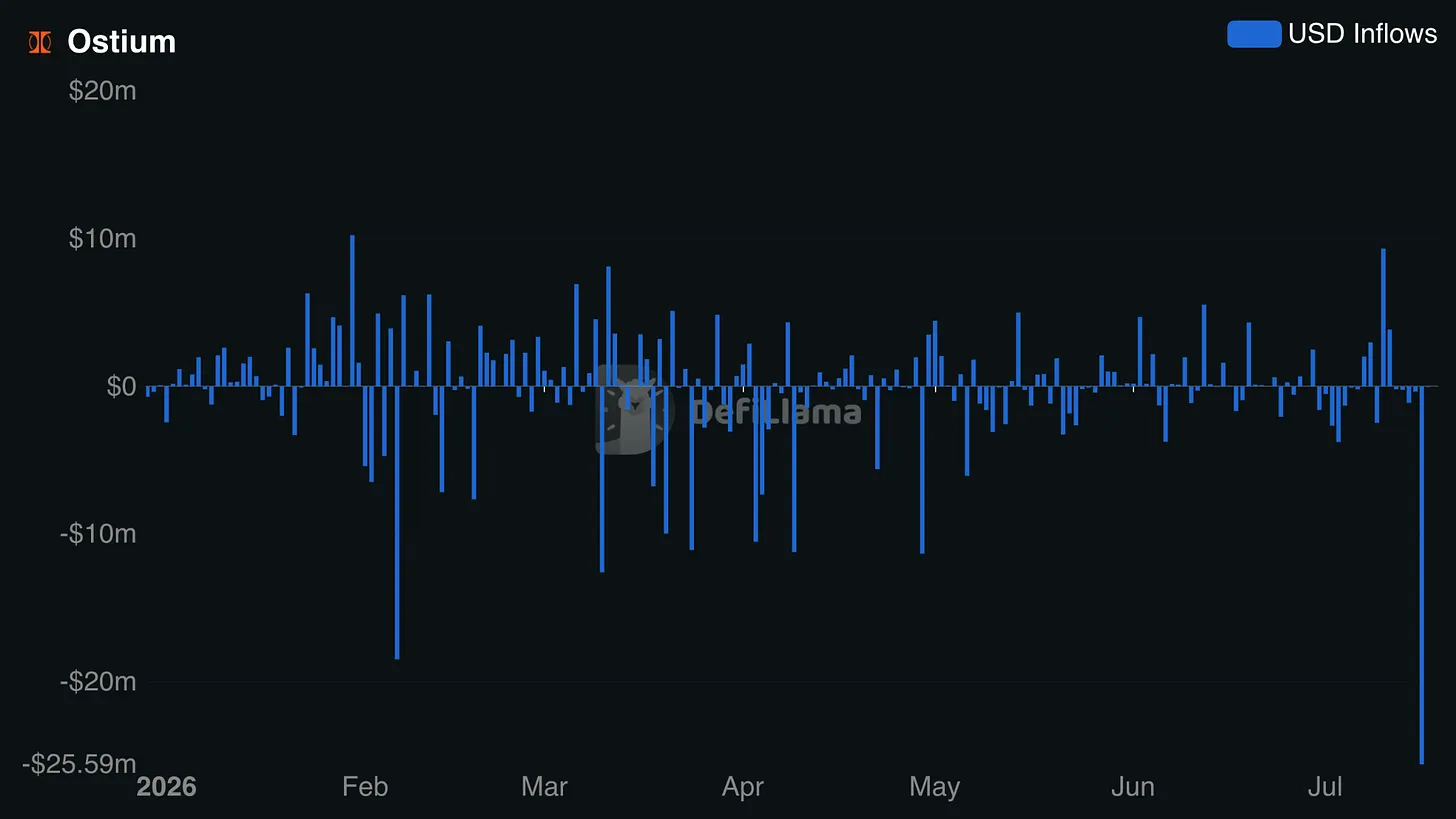
The attacker submitted seemingly valid false price reports, then opened large positions with them and immediately closed those positions, extracting artificial profits from the treasury. Essentially, the attacker found a way to push false price updates through approved channels, making losing trades appear profitable, thereby draining the LP treasury.
This is particularly painful for Ostium, as its entire product core is to bring off-chain markets on-chain. Stocks, commodities, and foreign exchange on Ostium do not have native on-chain prices; the protocol must import them, and more importantly, must trust them.
Contracts on the protocol rely on this trust, as do users, which means that falsified prices that pass checks can quickly evolve into bad executions, bad treasury records, and real LP losses. For Ostium, oversight of this journey from off-chain to on-chain is core to its product.
Ostium stated that traders' collateral was isolated and unaffected, and trading contracts were frozen within 60 minutes. This is quite fast, but the question is: how much damage should a bad price input be able to cause before the protocol captures it?
More frustratingly, Ostium has been grappling with the trade-offs of TradFi. Many of the markets it provides are not truly 24/7, as the underlying assets themselves are not 24/7. If you have already accepted market trading hours, outdated prices, closures, and liquidity gaps, this should make the stricter controls around price updates, trade sizes, withdrawals, and timing easier to justify rather than more difficult.
The industry needs to become more adaptive to this, and I believe Ostium is in a leading position. If authorized paths can update prices, shouldn't those paths be strictly controlled and monitored? If new price updates can support large trades or withdrawals, shouldn't there be circuit breakers regarding size and timing? If an attacker tests the system first with small trades, shouldn't monitoring capture the pattern before the treasury is drained?
For protocols bringing off-chain markets on-chain, these controls should not be optional security features; they should be embedded and marketed as part of the product.
Options Need Abstraction
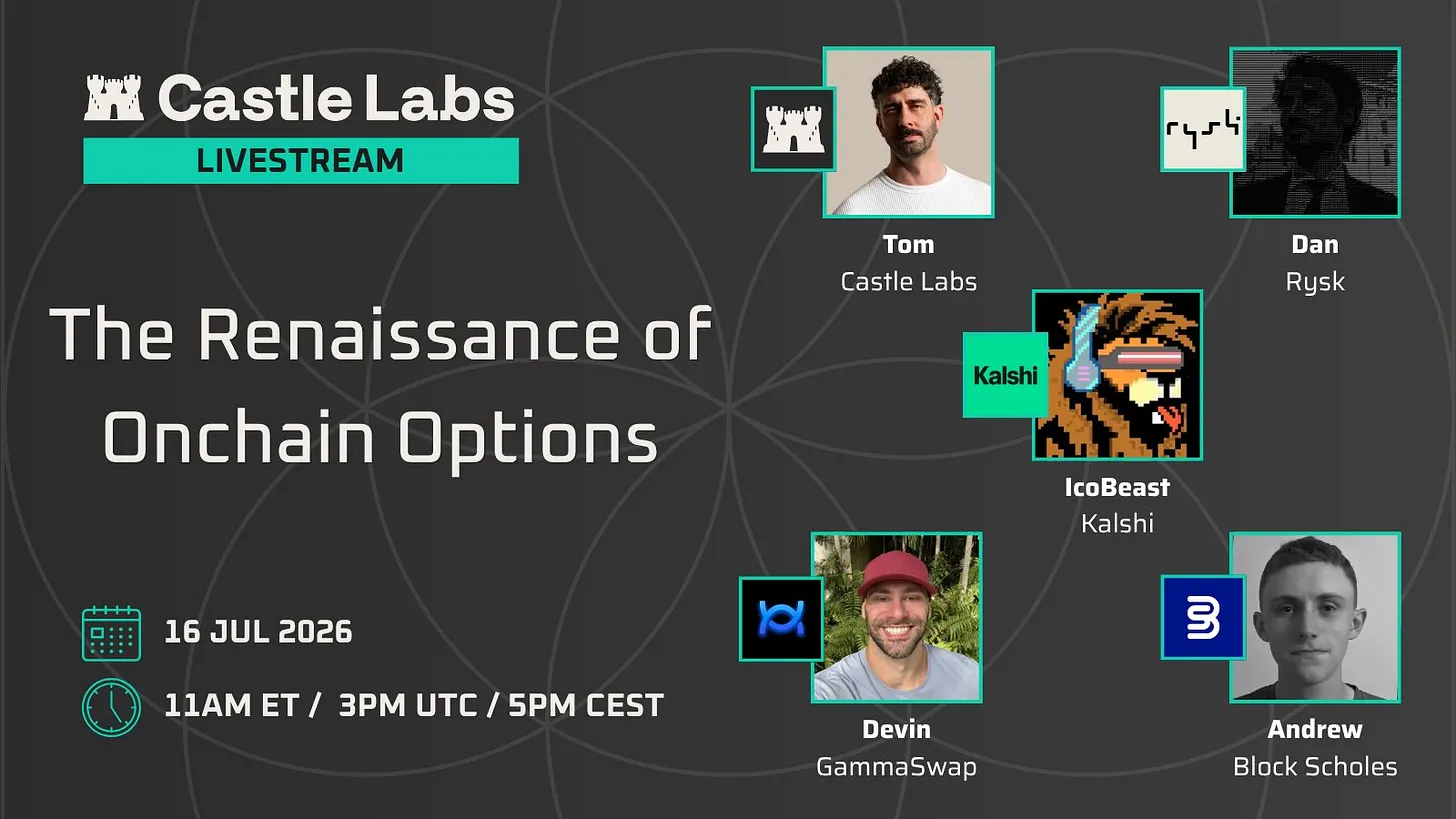
Last week, after we released the report "The Revival of On-Chain Options," we invited Kalshi, Rysk, GammaSwap, and Block Scholes to participate in a live stream. These builders repeatedly mentioned one point: options are powerful, but marketing them as "options" is often the worst sales approach.
Most users do not want to think in terms of Greek letters, expiration dates, strike prices, or volatility surfaces; they want simple ways to gain returns, leverage, protection, or express opinions. This is why the most promising products in terms of user adoption are often not ordinary options venues, but rather yield vaults, short-term binary options, structured products, and prediction markets.
Dan from Rysk summed this up almost perfectly: Options are not products; the benefits of options are the products.
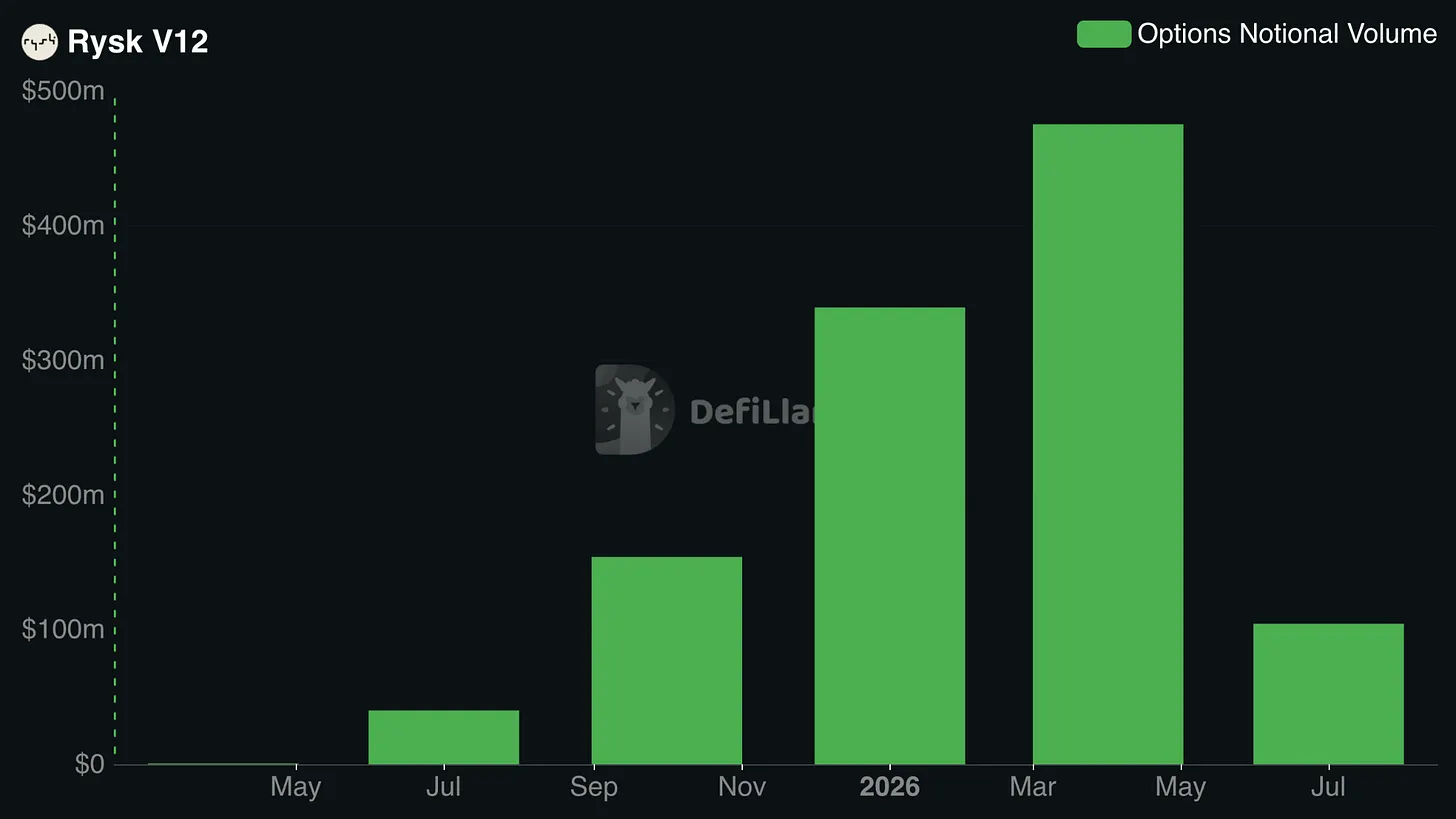
Rysk reported that its newer products had over 1 billion dollars in outstanding positions last year, primarily from seasoned DeFi users seeking asset yields rather than from people arriving as options traders. Quarterly nominal amount charts show how quickly this product found demand.
Kalshi claims to handle 86% of global crypto binary options trading volume, as well as about 70% of global prediction market trading volume, with 15-minute markets appearing to be the best time window for crypto binary options because users find it easy to understand returns, time windows, and risks.
GammaSwap is an excellent example of abstracting options away from the end user. Its V1 allows users to borrow liquidity from AMMs, where the behavior of AMMs resembles that of option sellers, but once Greek letters, exotic returns, and fragmented liquidity must be part of every user journey, the product becomes capital inefficient and difficult to use. V2 is in development, shifting towards predictive markets, order books, and known returns, focusing on providing a clear question that is easier to sell than another complicated options product.
Block Scholes brings perspective from an infrastructure angle, as they support about 90% of on-chain options trading volume through venues like Derive. Traditional options exchanges may retain a niche user base through their native UX, but structured products are the way more users will engage with them in the future without knowing they are interacting with options at all.
For options to grow further on-chain, they need to stop being sold as options. The broad consensus is that the next wave may come through bundling returns into more easily understandable products.
Our Radar
Flex, Yearn's fixed-rate lending: Yearn's Flex product is a fixed-rate money market where borrowers choose their own fixed rates. Keep an eye on new protocols on DefiLlama.
How Base rebounds: Two announcements from Jesse and Brian have sparked widespread discontent in the community on X. Jesse acknowledged his failed strategy regarding social and creator tokens, now handing over the Base App to Cobie, a Crypto Twitter trader and founder of Echo (which Coinbase acquired for 400 million dollars). On the other hand, Brian takes no responsibility for the memecoin market manipulation related to his avatar last week. Posts like Rune's well summarize the sentiment. Cobie taking over the Base App is actually their last straw to regain face among crypto native users.
Plether, on-chain dollar index perpetual contracts: Plether is building perpetual contracts DEX for the dollar index (DXY), allowing users to long or short synthetic dollar exposure on-chain. Interestingly, positions have a maximum return defined at the time of opening, and LPs are divided into priority and subordinate tiers, with the protocol blocking new openings if it cannot enforce insolvency.
Starknet's security focus: Yesterday, we released a report on the next phase of institutional on-chain growth's two major obstacles: privacy and resilience against quantum threats. Starknet is a useful perspective here as its recent work touches on both areas: privacy improvements enable institutions to safely disclose on-chain content, while quantum resilience questions whether today’s infrastructure can survive the next security cycle.
免责声明:本文章仅代表作者个人观点,不代表本平台的立场和观点。本文章仅供信息分享,不构成对任何人的任何投资建议。用户与作者之间的任何争议,与本平台无关。如网页中刊载的文章或图片涉及侵权,请提供相关的权利证明和身份证明发送邮件到support@aicoin.com,本平台相关工作人员将会进行核查。


