Organized & Compiled: Deep Tide TechFlow
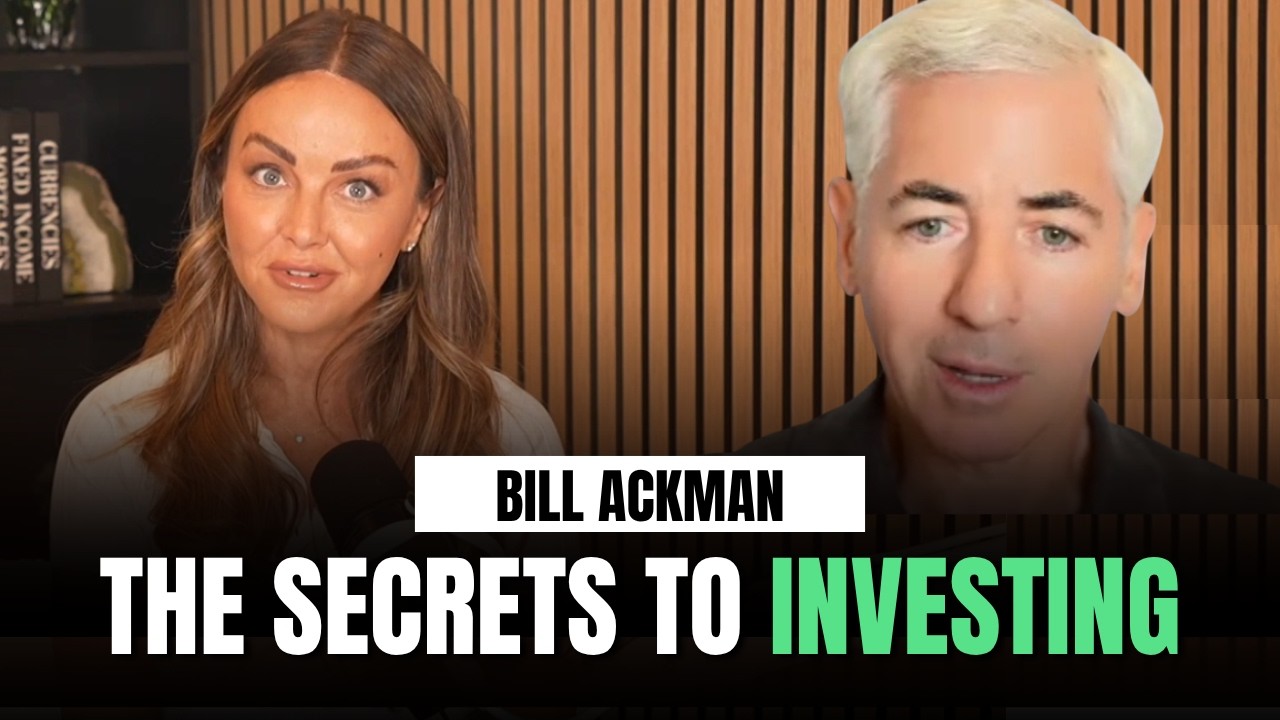
Guest: Bill Ackman, CEO and Founder of Pershing Square Capital Management
Host: Nicole Lapin, Money Rehab
Podcast Source: Money News Network
Original Title: Which Companies Bill Ackman Is Bullish and Bearish on Right Now
Broadcast Date: July 20, 2026
Disclosure Statement: Pershing Square manages about $14 billion in assets, holding 11 U.S. stocks, with income derived from management fees and performance commissions. This episode discusses market and individual stock judgments; Ackman himself does not hold Bitcoin or gold. The interview includes promotional content for PSUS (a publicly traded fund under Pershing Square).
Key Summary
Bill Ackman manages one of Wall Street's most concentrated hedge fund portfolios: $14 billion invested in 11 stocks, with the top five holdings accounting for 78%. In this interview, he revealed a few specific positions: just sold Alphabet, increased position in Microsoft by $2 billion, betting on the AI infrastructure wave of hyperscalers. He didn’t make it overly complicated; the core logic is simple: buy predictive companies, earn compounding returns. His biggest concern about the market is not valuation, but the high-leverage players being forced to flee en masse at some point. Regarding Bitcoin and gold, his exact words were, "I don’t know if it’s worth $50,000, $70,000 or $5,000 or $1 trillion, but I don’t need to know; investing only requires you to know what you know and what you don’t know."
Highlights of Insights
AI is the main line, everything else is noise
- "Right now is a very special point in history. AI is driving a lot of entrepreneurship, giving a very broad range of people access to intelligence at very low costs."
- "The largest companies are competing to build models leading to superintelligence; they are racing for land, building data centers, and stocking GPUs. It's a 'land grab'."
- "I’m not very willing to bet on cutting-edge model companies. Open-source models are getting better, and people will soon have access to low-cost or free models that can solve most problems."
Every stock in the portfolio is carefully selected
- "There are some companies we've always wanted to buy but were too expensive before, like Amazon, Meta, Uber, and Microsoft are on that list. A lot of money is chasing 'new new things', semiconductors, and memory, wherever there is profit, that's where they run. We're focusing on areas that can provide high compounded returns over the next three to five years."
- "Uber is very cheap right now because the market thinks Tesla’s autonomous taxis will disrupt it. I believe consumers will still open the Uber app to book rides; they want the cheapest and fastest ride from A to B."
- "Want to know which giant will win? SpaceX is the only place you can rent 100,000 GPUs with extremely high returns. The only concern is the price; the imagination space shrinks when market value reaches $6-7 trillion."
Don’t touch Bitcoin and gold, because they are speculative
- "Satoshi Nakamoto is a genius. If I had read the white paper when Bitcoin was $0.20, I might have bought some. But I don’t buy because it doesn’t generate income. A business is valuable because it can generate cash flow in the future; gold and Bitcoin only have value based on what someone is willing to pay. That’s not investing; that’s speculating."
- "I have indirectly invested in blockchain companies through some VC funds; I am technically interested. But speculating on various coins is not my thing."
The market is most afraid of not high valuations
- "The market is indeed not cheap in certain places, but saying the whole PE is expensive is meaningless. The current top companies, Nvidia, Microsoft, Google, have much higher quality than the top companies twenty years ago and should enjoy higher valuation multiples."
- "My biggest concern is that there are too many leveraged players in the market. If some external shock occurs, people panic and sell; those who are leveraged will be forced to liquidate, triggering a chain reaction. If you are not leveraged and hold quality companies, and you don’t need the money to be spent tomorrow, then a big drop is actually an opportunity to accumulate."
- "Don’t borrow money to trade stocks; that’s how you get wiped out. Carl Icahn borrows against his own stocks; a fortune of $20 billion turned into $3-4 billion; even the wealthy can lose a lot."
Don’t play day options
- "I don’t like the trend of day trading options; that’s just gambling. No one can predict whether a stock will go up or down in a day, unless you have insider information. It’s just a crazy game."
"We do not predict the future; we just notice what others overlook"
Nicole Lapin: Your moves in 2008 made people feel you could foresee the future. What did you see?
Bill Ackman: The so-called foresight is often just a careful study of the present, then finding similar cases in history. In the years leading up to 2008, we saw a group of companies doing crazy things: bond insurance companies holding AAA ratings, as good as government credit, yet going to guarantee high-risk mortgage loans, collecting a small premium, and showing profits all over their financial statements. This is unsustainable. It’s not about predicting the future; it’s about seeing that there’s a problem now and knowing it will eventually blow up.
As for the future, the market will always fluctuate. I don’t know what the specific trigger point will be, but there’s an enormous amount of speculation in the market, with both professional investors and retail investors using significant leverage. If I could give you one piece of advice: don’t borrow money to trade stocks. Also, don’t gamble with the money you need to live on.
How these 11 stocks were selected
Nicole Lapin: Pershing Square only holds 11 to 12 stocks; why so concentrated?
Bill Ackman: We look for the best businesses in the world, ones that can withstand the test of time, and ideally, not be disrupted by AI but rather benefit from it.
In our portfolio, there are some companies we've always wanted to buy but were too expensive before, which have only recently become reasonable. Amazon, Meta, Uber, and Microsoft are on this list. A lot of funds are chasing recent money-making places in the market, like semiconductors and memory, while we focus on assets that can yield high compounded returns over the next three to five years.
Brookfield also fits this model perfectly. It does asset management, private equity, real estate, infrastructure, especially in power and energy-related businesses. The construction trend of data centers will need a lot of infrastructure, and Brookfield happens to be in that position. It helps others manage money and charges fees and carried interest, which is a good business.
Nicole Lapin: You recently bought $2 billion of Microsoft while selling some Alphabet. Does that mean you’re no longer optimistic about Alphabet?
Bill Ackman: Two things are very important to us: the quality of the business and the price. We want to buy at a price that can deliver very attractive returns. Sometimes a stock we own rises to a level where future returns fall below our threshold, and we sell it. Selling Google is not a sign of being pessimistic about it; Google is still a remarkable company. It’s just that its price reached a point where the subsequent return is not as good as using that money to buy Microsoft.
Right now, Microsoft is about $387 per share. If you want to buy Microsoft at $310, you don’t need to wait for it to drop to that price; you can just buy PSUS. PSUS is a publicly traded fund we manage, and it’s currently trading at a 22% discount to its net asset value, with Microsoft included in that basket.
Ackman's favorites and least favorites
Nicole Lapin: Let’s play a game called "Bullish or Bearish". Gold?
Bill Ackman: No opinion. I don’t buy gold, although I have bought jewelry for my wife. My dad bought gold a long time ago, probably in the 70s, and has held it ever since. It’s not a good investment. I told him to sell when gold rose above $4,000, and he listened. I’d rather hold companies that grow compound returns.
The problem with gold is that its value is just what someone is willing to pay; it doesn’t provide any returns. Every asset I invest in generates some type of income: profits, dividends, rent. I only view gold as speculation, not as investment.
Nicole Lapin: What about Bitcoin?
Bill Ackman: I don’t buy it either. Very similar, it’s like gold. Satoshi Nakamoto is a genius. If I read the white paper when Bitcoin was $0.20, I might have bought some, but I don't know if it's worth $50,000, $70,000, $5,000, or $1 trillion. The beauty of investing is that you don’t need to have an opinion on every asset class; you only need to know what you know and what you don’t know. I don’t understand Bitcoin, nor gold, so I don’t touch either.
I have indirectly invested in companies that focus on blockchain and crypto through some VC funds; I am technically interested. But trading various coins is not my business.
Nicole Lapin: What about Chipotle?
Bill Ackman: One of our most successful investments. We bought it when it was in the middle of a food safety crisis and helped recruit Brian Niccol. He later went to Starbucks, and the management team he took over faced some challenges. I think the company has a good position in the long run, but I don’t have a strong directional judgment on its current stock price.
Nicole Lapin: Starbucks?
Bill Ackman: There’s a very talented CEO running it. But Starbucks has pushed its prices to a relatively high level for a long time; I don’t think there’s much room for further price increases. The consumer experience is also declining, and Brian is trying to bring it back.
Nicole Lapin: Bonds?
Bill Ackman: Treasuries are a place to let money go. But if I had to choose, I would prefer to hold high-quality companies for the long term rather than choose treasuries.
The real risks he worries about
Nicole Lapin: What’s the next crisis? Will there be a second 2008?
Bill Ackman: There’s always something worth worrying about. First, the U.S. government is spending more than it collects; we have around $34 trillion in national debt and continue to issue bonds to fill the deficit. To make matters worse, the AI infrastructure trend is causing many companies to issue debt financing, leading to a surge in demand for credit, while the government is also issuing more treasury bonds. Such a massive supply needs to be absorbed by investors, which could lead to rising interest rates.
The second risk is even more lethal: there are too many leveraged players in the market. If some kind of adverse external shock occurs, panic selling will ensue, and those who have borrowed money will be forced to liquidate, dragging down more people. Stock prices will fall significantly.
But if you have a non-leveraged portfolio, hold a group of high-quality companies, and you don’t need that money tomorrow, that’s your opportunity to accumulate. If you have margin debt, you may be forced to liquidate at the bottom, and that’s the last thing you want to do.
Berkshire's secret is longevity. Buffett designed Berkshire to never be subject to margin calls, so it can keep compounding. We’ve had some years with 30%, 40% gains, and some years with losses, this year is also slightly down, but that’s okay. You don’t need to make money every year. You need to survive and let good companies keep compounding.
Nicole Lapin: Is the market overall expensive right now?
Bill Ackman: Some areas are expensive. But saying the market PE is now 21 and the historical average is 17, and thus feeling it’s high doesn’t mean much. Market value depends on future earnings, and earnings have consistently exceeded expectations and have grown faster than most periods in history. Moreover, the largest companies right now, Nvidia, Microsoft, Google, Meta, have much higher quality and faster growth compared to the top companies twenty years ago, and they should enjoy higher valuation multiples.
If Microsoft, Amazon, and Meta are all cheap, it’s hard to say that the entire market is expensive.
A roadmap for young people
Nicole Lapin: If someone has $1,000 to invest right now, what would you suggest?
Bill Ackman: Find a few companies that aren’t heavily leveraged, that you like, admire, and whose decisions you believe are reliable. And you need to firmly believe: if the stock market closed tomorrow for ten years, you would still be willing to hold it for ten years.
Don’t invest in what seems the hottest right now. Invest in what you believe can withstand the test of time. The value of a company is the discounted value of all cash flows it generates; you need to be sure it can survive for a long time.
Where do you start? Actually, as a consumer, you often notice great things earlier than Wall Street. Many early shareholders in Tesla were retail investors; institutions didn’t understand how powerful it was. Look at the products and services you admire in your life and think about whether they can withstand competition. Amazon, whenever I want to buy a book, I go to Amazon. You may have had the experience in New York's pharmacy, where everything is locked behind plastic screens, and you have to find a clerk to open it. Amazon delivers in two hours. Who can compete with it?
Nicole Lapin: What do you think about young people playing day options every day?
Bill Ackman: It’s just gambling. No one knows whether a stock will rise or fall in a day. Unless you have insider information.
Nicole Lapin: What’s the formula for success?
Bill Ackman: It’s all the basics: show up on time, do a little more than others, keep your word, promise less and deliver more. If you enter an industry and spend time becoming the most knowledgeable person in that field, you will be seen.
When I first started in real estate, I would go to McGraw Hill bookstore during lunch every day to read real estate books. That knowledge was something my peers would take years of experience to learn. In the age of AI, you can have AI teach you anything; it’s so much simpler than flipping through books in a bookstore back then.
The workplace winners I have seen are usually not the ones with the highest IQ. They are the ones who are likable, trustworthy, do a little more than others, have a bit of creativity, and never give up. These are things you can have starting tomorrow. You can’t change your IQ, but you can work harder than others; you can be honest—these are all choices.
Don’t gamble today’s pocket money away for tomorrow’s compounding
Nicole Lapin: Last question, what advice would you give the audience that can be "directly banked"?
Bill Ackman: First, start investing early, save a little money each month to invest in the market. If you don’t have time to pick stocks, buy index funds. If you have time, find the best company in the industry. Don’t buy highly leveraged companies. Buy companies you believe will be much larger in five, ten, or twenty years. Buy companies that are unlikely to be disrupted by "two Stanford grads tinkering in a garage."
The most powerful aspect of compounding is time. Most investors are short-sighted, while long-term players have a huge competitive advantage. Moreover, the government only taxes you when you sell, allowing your profits to snowball tax-free. If you can open an IRA or a Trump savings account, then compounding remains tax-free.
免责声明:本文章仅代表作者个人观点,不代表本平台的立场和观点。本文章仅供信息分享,不构成对任何人的任何投资建议。用户与作者之间的任何争议,与本平台无关。如网页中刊载的文章或图片涉及侵权,请提供相关的权利证明和身份证明发送邮件到support@aicoin.com,本平台相关工作人员将会进行核查。


