Author: Dovey,Founder of Primitive Ventures
The Permanent Underclass of Cerebral Valley
A dystopian term has begun to gain popularity in the tech circles of San Francisco: permanent underclass. Silicon Valley officially became known as Cerebral Valley among the younger generation this year.
At 160 Noe St in Duboce Triangle, not far from the heart of Cerebral Valley, a house has just completed a two-year renovation: a six-person wide marble island, nine-foot-tall doors, and a loft staircase that can fold up into the ceiling. Young engineers, constantly visiting the house, sigh and express their hope that this is six months later. The real estate agent relayed the seller's response, meaning it was okay, I can accept your company's stock as long as it's OpenAI or Anthropic.
These two companies are expected to produce at least 3,000 new millionaires after their IPOs soon, with 800 individuals’ net worth exceeding 100 million dollars. According to Redfin's calculations: if the after-tax value of these employees' equity theoretically could buy 29% of all residential properties in San Francisco's core area.
Similarly in this city, amidst waves of an AI leap aimed at reducing costs and boosting efficiency, nearly 50,000 tech jobs have disappeared. The hiring demand for tech positions remains about 40% lower than before the pandemic. Remaining big tech employees walk on thin ice; Meta employees even voluntarily accept the company-mandated 24/7 keyboard/screen tracking technology, either conforming or facing immediate dismissal. This is the plight of the permanent underclass.
The unabashed new form of class humiliation has transformed companies that once embodied the coolest geek culture in the previous generation of the internet into today's distorted "squid factories". It's only been 15 years since Facebook's world-renowned IPO.
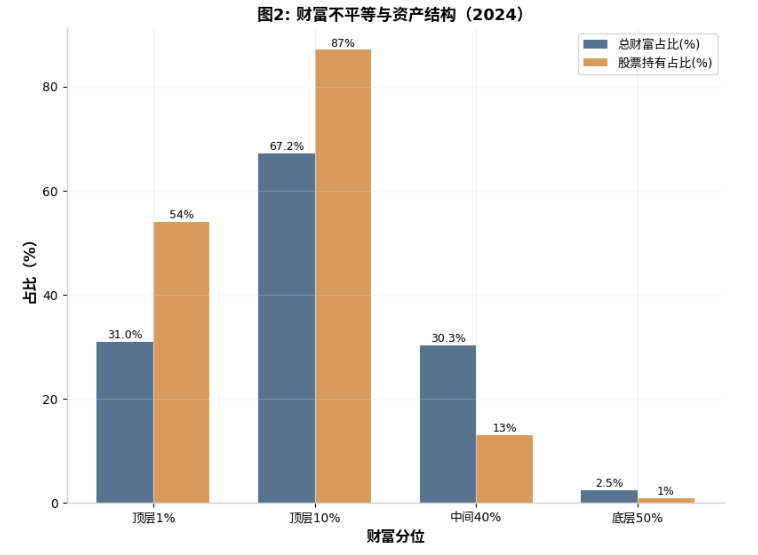
When it comes to spending, Americans are still willing to spend money. However, if we break down the types of spending, we find that the top 10% of households' spending on non-essentials is almost equivalent to that of the bottom 70% combined. The bottom half of households own less than 3% of the wealth, while the top 10% hold 59%. Thus, the so-called resilient US consumer is actually an average of two different worlds represented as macro data: one group travels, receives healthcare, education, and entertainment on the back of asset appreciation; another group struggles to afford basic necessities.
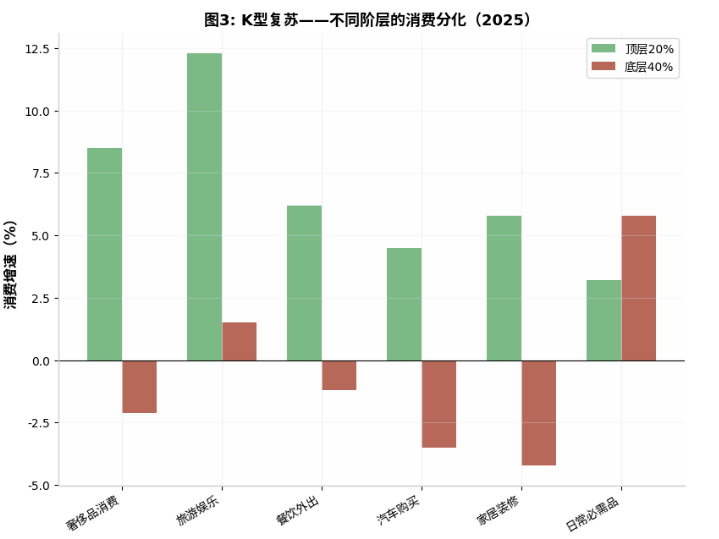
During the pandemic, consumption supported by the government's balance sheet is gradually shifting to household balance sheets. Credit card balances have climbed from about $820 billion at the end of 2020 to $1.25 trillion, with average interest rates still above 20%. Nearly one in ten working-age adults has purchased daily necessities through buy-now-pay-later programs, with about one-third having missed payments in the past year. Actual wages for the broader middle class have far lagged behind inflation, and the economic headlines claiming "demand resilience" actually refer to the "resilience" in the private sector credit system.
The Equal Poverty Card of the Post-90s Generation
Over the past five years, real estate in China has issued an equal poverty card to all strata of society; the collapse of real estate as the core anchor of household wealth has led to a reversal of the wealth effect and a decline in private sector balance sheets. This is the biggest difference from the United States: in the consumption function of Chinese residents, the elasticity of the wealth effect is far greater than that of the income effect. This means that even if disposable income continues to grow (an actual growth of 5.0% in 2025), as long as asset prices keep shrinking, the willingness to consume is hard to recover. When deflationary expectations become a societal consensus, consumer behavior reinforces this expectation— the less they consume, the more prices fall; the more prices fall, the less they consume. This downward spiral can become a self-fulfilling prophecy: in a survey of urban savers in the third quarter of 2025, 63.8% of residents prefer "more savings," while only 19.2% prefer "more consumption." The core drive of households has shifted from profit maximization to debt minimization.
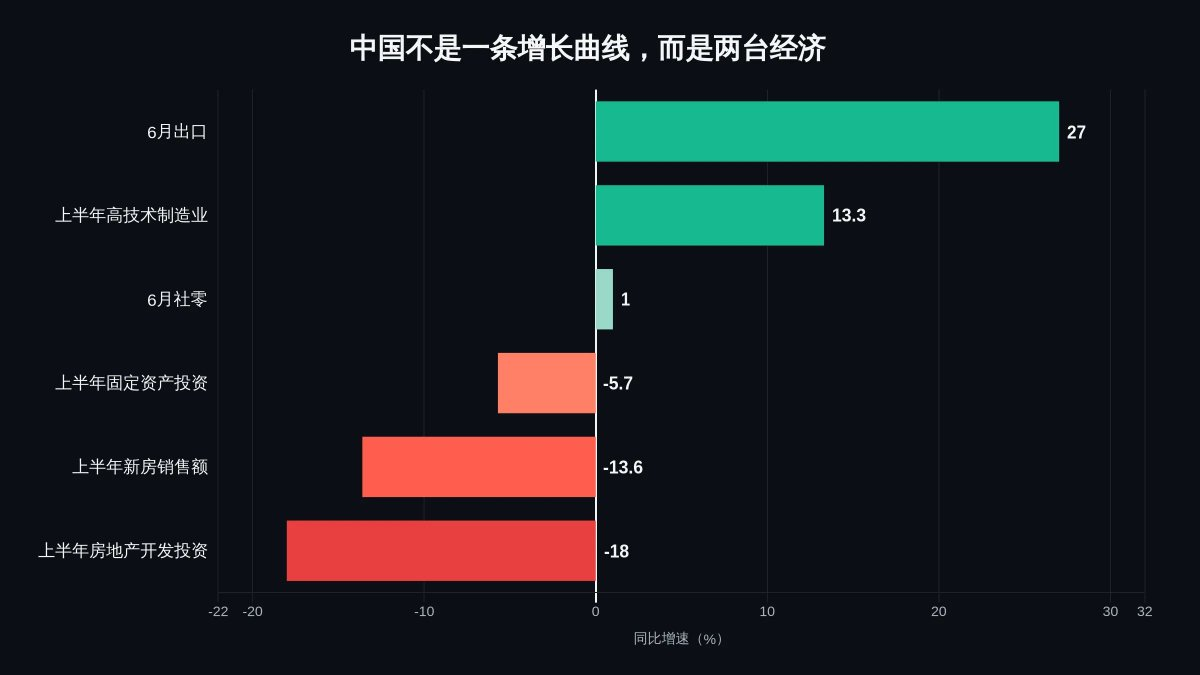
K-shaped differentiation in China is mainly reflected in domestic demand vs. exports: exports in June increased by +27% year-on-year, high-tech manufacturing +13.3%, integrated circuit manufacturing +67.3%; but fixed asset investment decreased by -5.7%, real estate development investment -18%, and new home sales decreased by -13.6%. The WAIC has allowed tech practitioners to once again feel the beauty of economic upturn, but only a few employees of leading pattern companies, along with suppliers in the T chain and Da chain, are benefiting from it.
The Disappearance of the Underclass
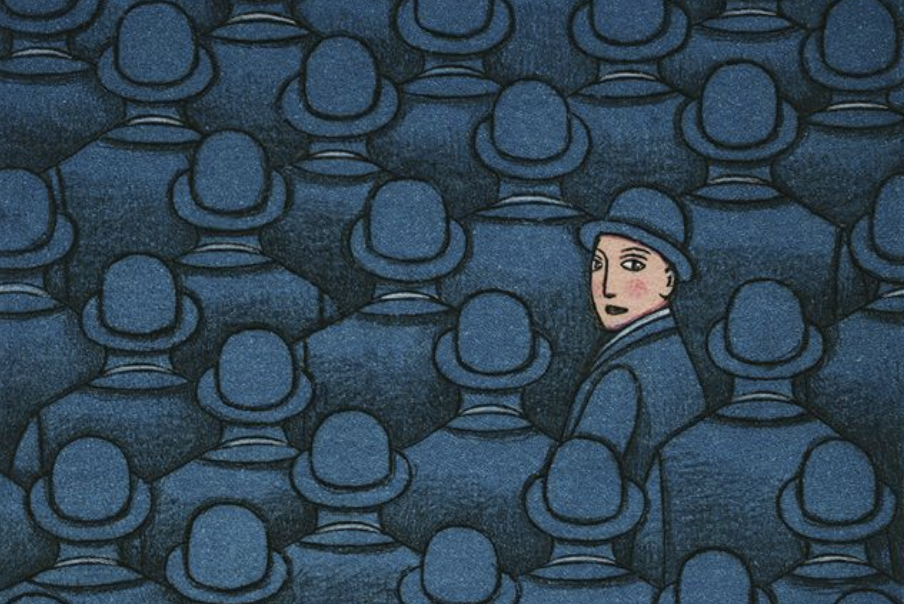
Winners naturally receive the favor of algorithmic propagation, and the suffering of ordinary people goes unnoticed. Within the group with extremely short attention spans, everyone is busy watching the next winner. Losers have neither market value nor narratives. The underclass has disappeared from both narrative and the sight of each other, becoming a mere statistic.
Over the past nearly fifty years, China’s reform and opening-up combined with globalization, with the U.S. continuously exporting capital, bringing about new assets and inflation, while China exports manufacturing capacity, achieving scale effects at Chinese speed. The pathway that two generations in China and the U.S. have believed in is: work hard, accumulate income, purchase assets, and achieve a leap. If future careers cease to provide stable income and if work no longer defines a person's worth, then why continue to cling to the identity, dignity, and meaning of life established around work ethics of the past? The collapse of the old system of meaning also releases the possibility of redefining humanity.
Hannah Arendt distinctly categorized the active life of humanity (Vita activa) into three core activities: labor, work, and action. She argues that people should not merely use labor to prove their existence; we also need to create a meaningful world and to be seen by others in the public sphere.
Action, in this context, means choosing to enter the map without a script, embracing the protagonist's mindset, and initiating something that previously did not exist. No model can decide for a person: what is worth loving, what is worth undertaking, and with whom one wishes to level up and battle in this great MMORPG of the world. When established paths cannot answer for us "who are you," perhaps through pain and confusion, it becomes a form of late-arriving freedom.
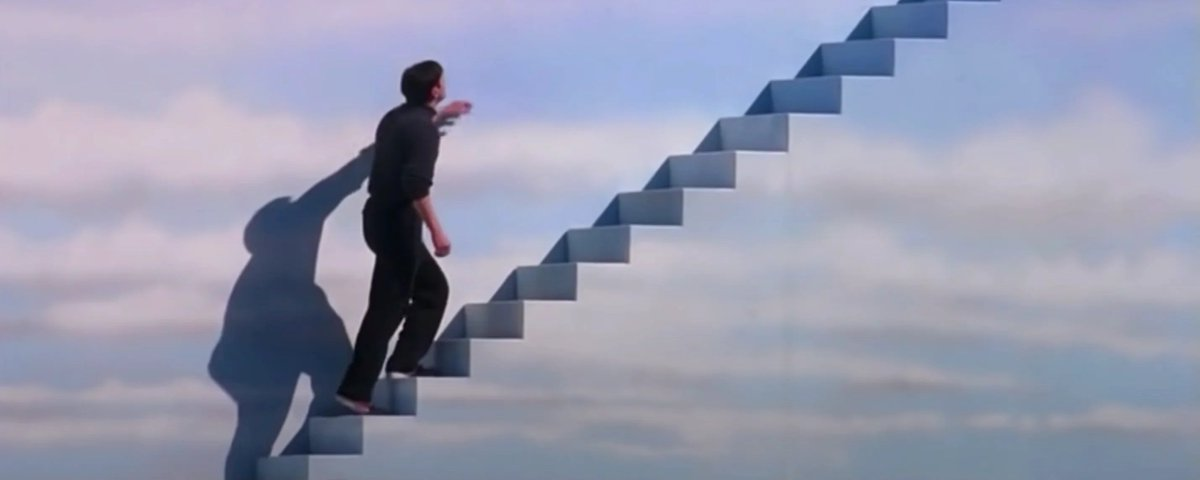
The disappearance of the underclass signifies that everyone is forced for the first time to truly own their life.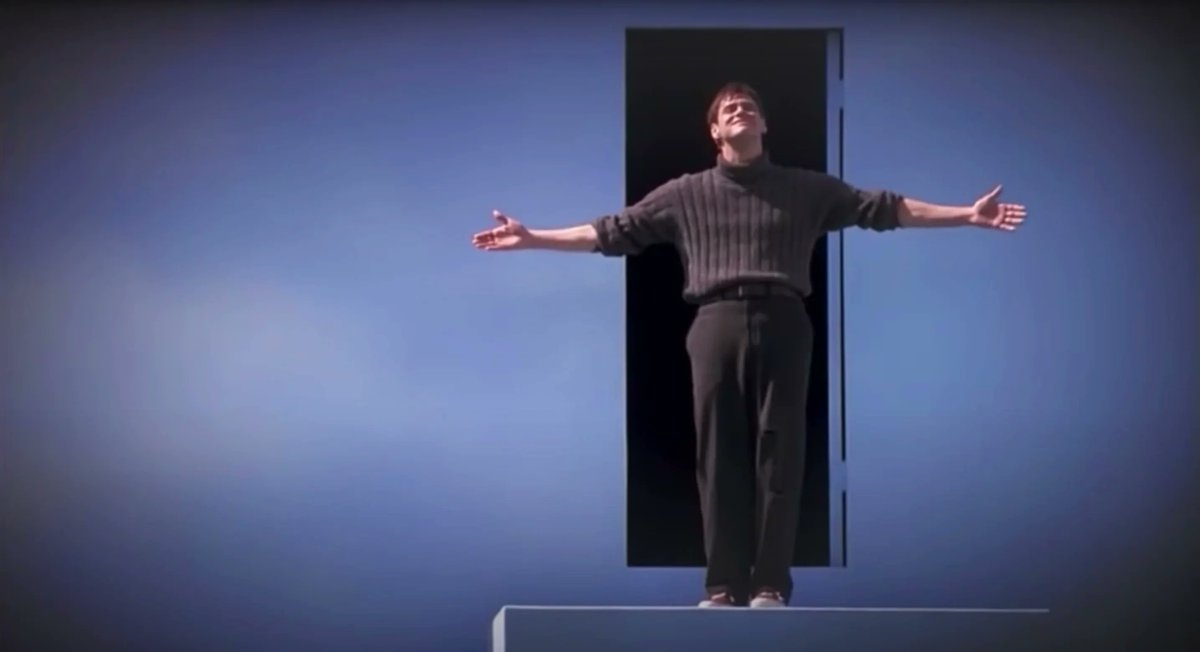
"In case I don't see ya, good afternoon, good evening, and good night!"
免责声明:本文章仅代表作者个人观点,不代表本平台的立场和观点。本文章仅供信息分享,不构成对任何人的任何投资建议。用户与作者之间的任何争议,与本平台无关。如网页中刊载的文章或图片涉及侵权,请提供相关的权利证明和身份证明发送邮件到support@aicoin.com,本平台相关工作人员将会进行核查。


