Author: Nancy, PANews
More than four years ago, Alex Atallah exited before the peak of the NFT bubble; now, he is once again in the spotlight during the AI boom and is preparing to sell the AI model aggregation platform he founded, OpenRouter, at a high price.
On July 23, according to The Wall Street Journal, payment giant Stripe is in talks to acquire OpenRouter, with a deal valuation potentially close to $10 billion. If the deal comes to fruition, it will mark another success for Alex Atallah in building a $10 billion company after the NFT platform OpenSea.
Stripe plans to acquire OpenRouter, valuation may reach $10 billion
The rumors of OpenRouter's "sale" have been brewing for some time.
Last week, several foreign media outlets, including The Information and Jawl, reported that OpenRouter has received acquisition interest from multiple large tech companies and discussions about the sale have begun, with a potential deal size reaching several billion dollars.
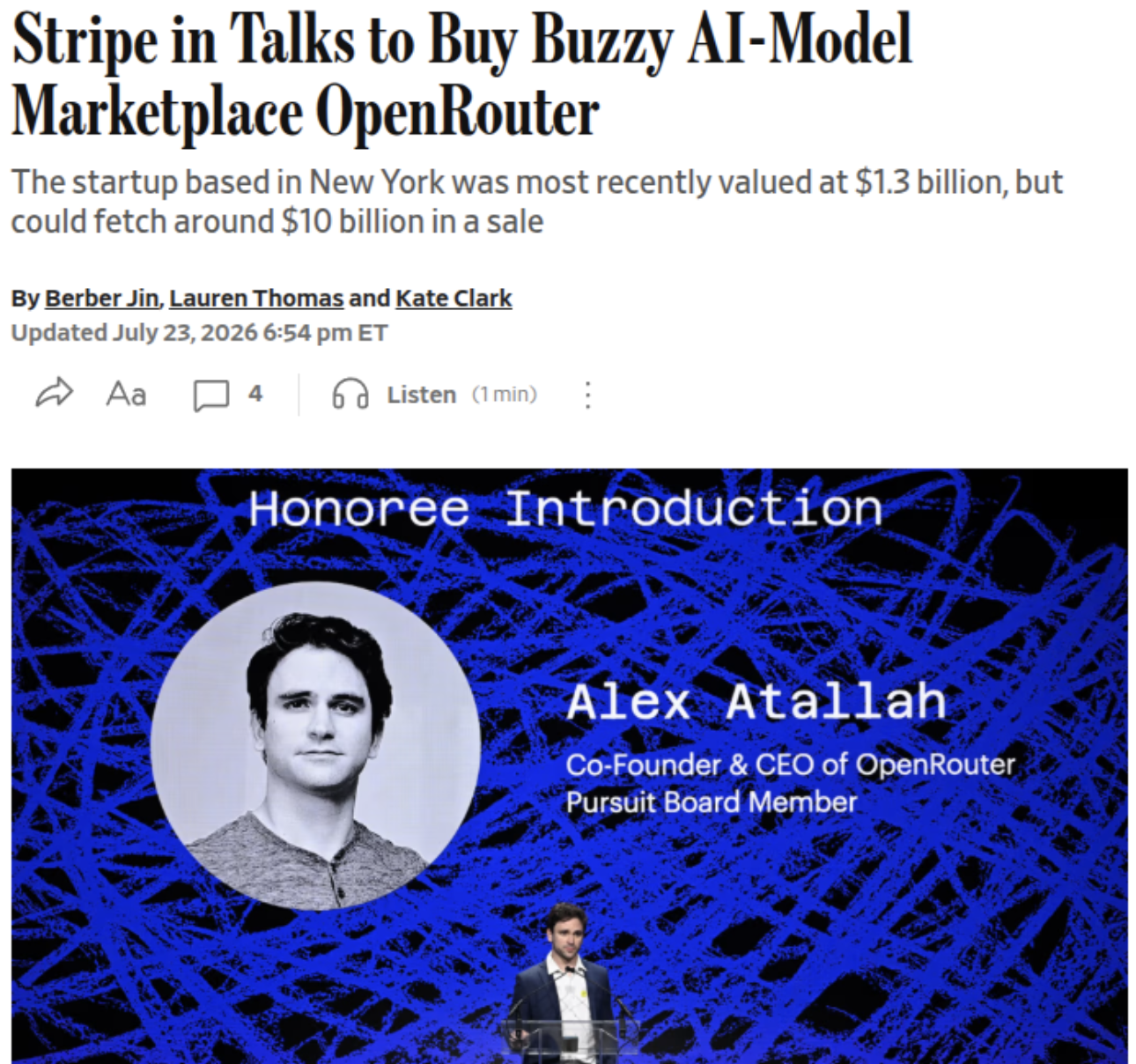
According to the latest news from The Wall Street Journal, Stripe is considering acquiring the world's largest AI model aggregation platform. Informants revealed that negotiations between the two parties may be announced soon, but the deal still carries uncertainties, including the possibility of negotiations breaking down or other potential buyers entering the bidding.
Interestingly, Alex Atallah previously described OpenRouter as "the Stripe of the AI field." In his view, just as Stripe helps clients process various payments through a unified entry, OpenRouter aims to become a unified entry for businesses to access different AI models, reducing the costs involved in switching between multiple AI providers while avoiding being "locked in" by a single model supplier.
In fact, OpenRouter and Stripe have already established a cooperative relationship. This potential deal is also seen as an important extension for the payment infrastructure giant into the AI infrastructure sector. It is worth noting that this may be another significant acquisition move for Stripe, following recent market reports of their plan to acquire PayPal.
Currently, neither party has disclosed the specific transaction amount. However, insiders have reported that if the deal is finalized, the valuation of OpenRouter at the time of sale may be close to $10 billion.
This figure would far exceed the valuation of OpenRouter during its previous financing rounds. Founded just over three years ago, this AI infrastructure company has achieved rapid growth driven by the surge of large models.
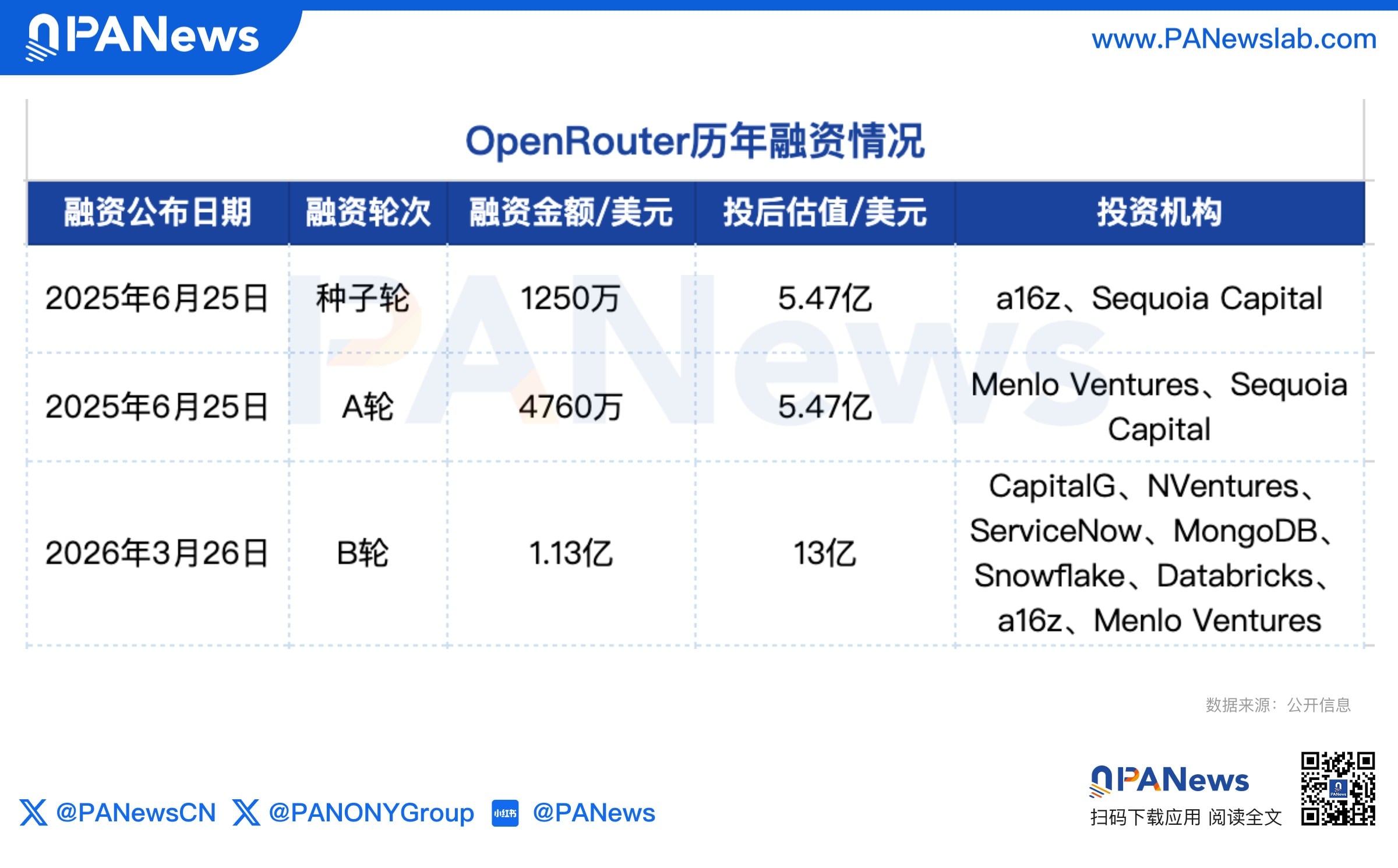
Public data shows that OpenRouter has completed three rounds of financing, raising over $150 million in total. In June 2025, OpenRouter announced it completed a $40 million seed and Series A financing round, at which point its post-investment valuation was approximately $547 million; on March 26, 2026, OpenRouter announced it completed a $113 million Series B financing round, with a post-investment valuation of about $1.3 billion.
If this transaction is finalized, it implies that OpenRouter's valuation could achieve nearly tenfold growth within months, entering the $10 billion unicorn club.
The skyrocketing valuation of OpenRouter is not only driven by the burst of demand brought about by the rapid expansion of large models but also benefits from increasing attention from the capital market towards the AI infrastructure sector.
Replaying the OpenSea exit script? Why has OpenRouter chosen to "sell out"
This is not the first time Alex Atallah has built a $10 billion company.
Previously, this serial entrepreneur co-founded OpenSea, pushing NFTs from a niche community into the public eye. At the height of the NFT frenzy, OpenSea grew from an obscure platform to the world's largest NFT trading market, with a valuation exceeding $13 billion, and the two founders' net worth peaked at around $2.2 billion.
However, before the NFT market cooled significantly in 2022, Alex Atallah chose to leave OpenSea. Subsequently, as the industry bubble faded, OpenSea's valuation saw a substantial decrease, and the former NFT giant gradually lost its luster from its peak. Alex Atallah's early exit was viewed by the market as an important signal of a peak.
After that, Alex Atallah turned his attention to AI infrastructure, establishing OpenRouter as the largest transfer hub in the AI era.
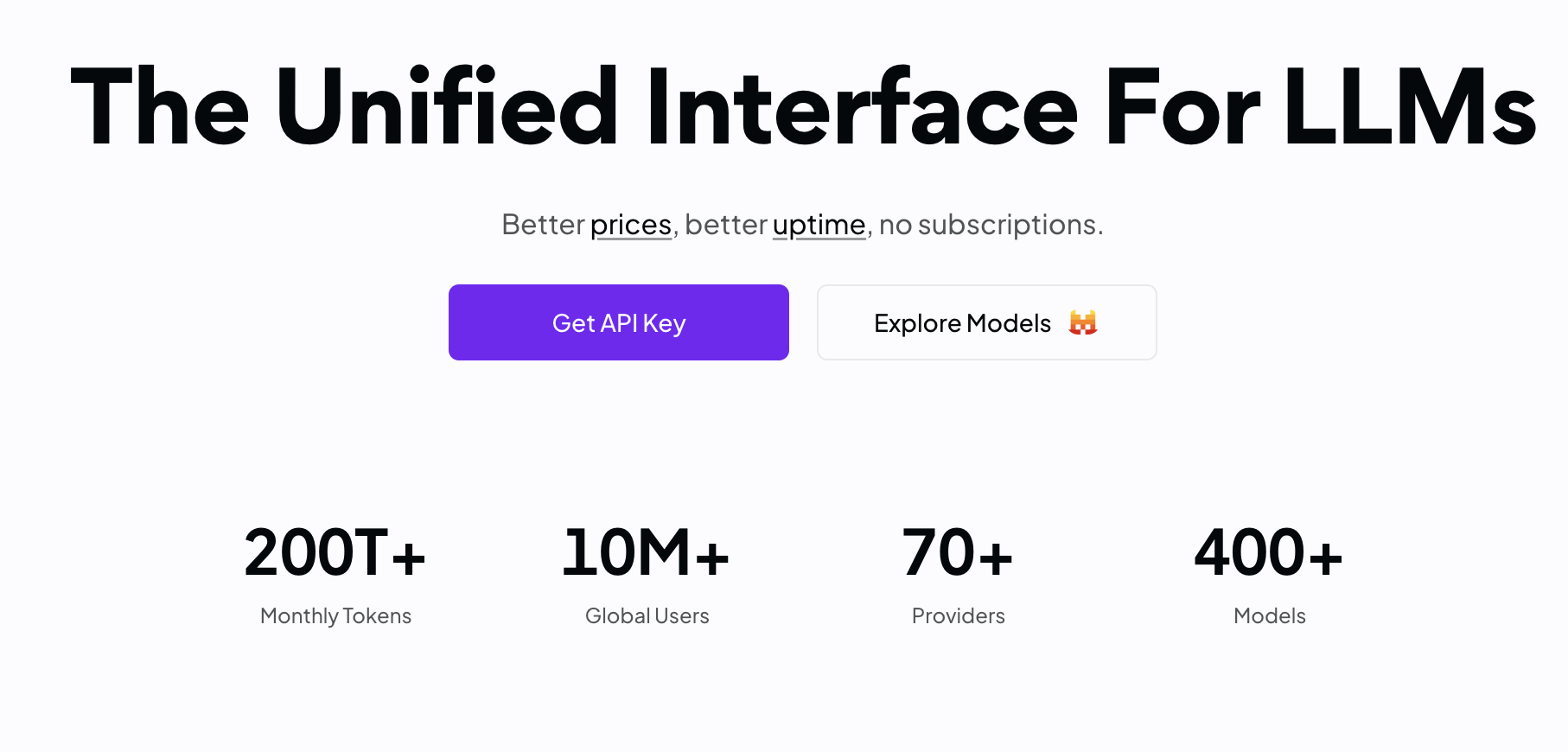
Currently, OpenRouter has connected over 400 AI models, has approximately 10 million users, and processes more than 200 trillion tokens each month. Since the beginning of this year, the number of tokens processed through its API has increased by about 10 times.
However, it is worth noting that despite the rapid growth of its business, OpenRouter has not chosen an IPO route, but rather moved towards a potential sale. The reason is that this is a massive-scale business with limited profit margins.
Currently, OpenRouter primarily makes profits by charging a platform service fee when developers call AI models, with a commission rate of about 5%-5.5%. Although its annualized AI inference consumption has reached hundreds of millions of dollars, as of April 2026, the company's annualized revenue is about $50 million.
In other words, OpenRouter connects a huge AI demand market but does not completely control the upstream of the value chain. As model capabilities gradually standardize, the platform is vulnerable to the rise of open-source models, binding of cloud vendor ecosystems, and the direct price reductions from model providers, which may continue to pressure profit margins. OpenRouter finds it challenging to tell a story of exponential growth and ultra-high profits in the capital market.
Meanwhile, competition in the AI model aggregation sector is intensifying. For example, Meta's internal AI incubator is developing a scheduling service to compete with OpenRouter to reduce code development computing costs; domestically, platforms like Cheetah Mobile's EasyRouter and NetEase Youdao's ThinkFlow have emerged as large model aggregators.
Therefore, the high valuation the market places on OpenRouter is more about pricing its future imaginative space rather than its current profitability.
However, for potential buyers, the truly attractive asset of OpenRouter may not be its current revenue scale but the real AI usage data it has accumulated over time.
By connecting hundreds of models and tens of millions of users, OpenRouter has accumulated a large amount of usage data from real production environments, including performance differences of various models on actual tasks, developer preferences, price sensitivity, and relationships between open-source and closed-source models. Compared to laboratory test data, this real-world AI usage data is much closer to market demand and is harder to quickly replicate through short-term investments. This may be one important reason why large tech companies are willing to pay a high premium for OpenRouter.
From NFTs to AI, Alex Atallah has hit the zeitgeist twice. If OpenRouter is finally sold at a $10 billion valuation, does it signify a repricing of AI infrastructure value, or is it yet another peak signal in the cycle? The answer may still require time to validate.
免责声明:本文章仅代表作者个人观点,不代表本平台的立场和观点。本文章仅供信息分享,不构成对任何人的任何投资建议。用户与作者之间的任何争议,与本平台无关。如网页中刊载的文章或图片涉及侵权,请提供相关的权利证明和身份证明发送邮件到support@aicoin.com,本平台相关工作人员将会进行核查。


