

This article is jointly produced by PANews and BIT US Stocks. BIT US Stocks offers over 10,000 U.S. main board stocks and ETFs, supports stablecoin deposits and withdrawals, as well as traditional USD wire transfers, enjoying full shareholder rights and dividend voting rights.
Bitcoin Returns Above $65,000, True Test at FOMC
Due to the suspension of mutual strikes between the United States and Iran for two consecutive days, crude oil prices quickly fell back, with WTI and Brent crude oil once dropping nearly 7%, falling below $83 and $87 respectively. The drop in oil prices eased inflationary pressures, allowing risk assets like Bitcoin to catch their breath, with Bitcoin rising above $65,000.
BIT stated that BTC rebounded after the RSI indicator fell to around 30, entering the oversold zone, although market worries about the progress of the "CLARITY Act" have cooled, they remain optimistic about Bitcoin's subsequent trajectory. However, Alex Thorn, head of Galaxy research, pointed out that the dormant BTC movement in the second quarter fell to the lowest level since the third quarter of 2022, implying that selling pressure from long-term holders is weakening.
Currently, traders are intensifying their bets within the range of $65,000 to $67,000. Analyst Justin Bennett pointed out that if BTC can hold above $64,700, the next target will be $67,300; trader Ardi emphasized that if the subsequent rebound fails to reach $66,500, it will signal weakened bullish momentum. In addition, bearish forces still exist, and several analysts have warned that if BTC retraces and breaks the trend line and faces rejection, the technical target may point to $61,000.
In the derivatives market, the monthly options expiration on July 31 is attracting attention. Deribit data shows nearly $5 billion in open contracts around the $70,000 and $72,000 strike prices, which includes a large call spread transaction with a notional value of about $2.5 billion. However, BTC is still about 9% away from $70,000, and market pricing indicates the probability of reaching that price in July is only 14.5%.
The market is highly focused on the FOMC meeting of the Federal Reserve scheduled for the early morning of July 30, analysts Doctor Profit remind that in the past nine meetings, BTC experienced significant sell-offs after eight of them, with an average decline of about 10%. Although the market expects interest rates to remain unchanged at 3.50% to 3.75%, there is still about a one-third expectation of rate hikes, with the $61,000 support level being crucial for judging whether the market will probe lower.
Overall, the cryptocurrency market this week needs to focus on three things: first, will the Federal Reserve FOMC signal a rate hike; second, can Bitcoin hold above $65,000 and break above $67,000; third, before the July 31 options expiration, can the price approach the $70,000 bullish bet. For ordinary investors, the direction that matters more this week is position control, as the FOMC and options expiration coincide, making it easy for the market to suddenly amplify.
PONS Hits New All-Time High, BitMEX and BitMart Shut Down as Prices Plummet
In the altcoin sector, there is a partial market rebound, with SHIB rising about 39% over the weekend, hitting $0.0(5)58, with a single-day market cap increase of about $1 billion, mainly driven by buying on South Korean exchange Upbit, accounting for over 10% of global trading volume, and showing a slight premium.
In addition, Robinhood Chain governance token PONS has also rapidly increased, with its market cap temporarily surpassing $61 million, creating a new historical high, mainly due to increased trading share of the platform and expectations for V2 upgrades. The Pons V2 plan aims to introduce ETH joint curve and Uniswap V4, and supports trading pairs such as USDG, NVDA, AAPL, HOOD, reviving the “Meme+RWA” concept in the market.
Following the announcement of shutdown by BitMEX last week, cryptocurrency exchange BitMart announced it will orderly halt trading operations, with the platform tokens of both exchanges plummeting after the news was released. Meanwhile, the decentralized cloud storage protocol Storj Labs has applied for bankruptcy reorganization under Chapter 11 of the U.S. Bankruptcy Code, but stated that customer services will not be interrupted. Regarding the recent rumors of shutdowns at multiple exchanges, Binance founder CZ commented that he hopes this is a signal that the market is bottoming out.
Today's Highlights:
Coinbase will suspend trading of Across Protocol (ACX) on July 28
AI infrastructure project Vanar will commence migration to Base on July 28
Upbit 24-hour trading volume rankings: EUL, ETH, PIEVERSE, BTC, ESP
Bitcoin spot ETF had a net inflow of $33.79 million last week, marking three consecutive weeks of net inflows
Ethereum spot ETF had a net inflow of $104 million last week, marking three consecutive weeks of net inflows
HYPE spot ETF had a net outflow of $8.6111 million last week
XRP spot ETF had a net inflow of $8.1526 million last week
SOL spot ETF had a net inflow of $7.2 million last week
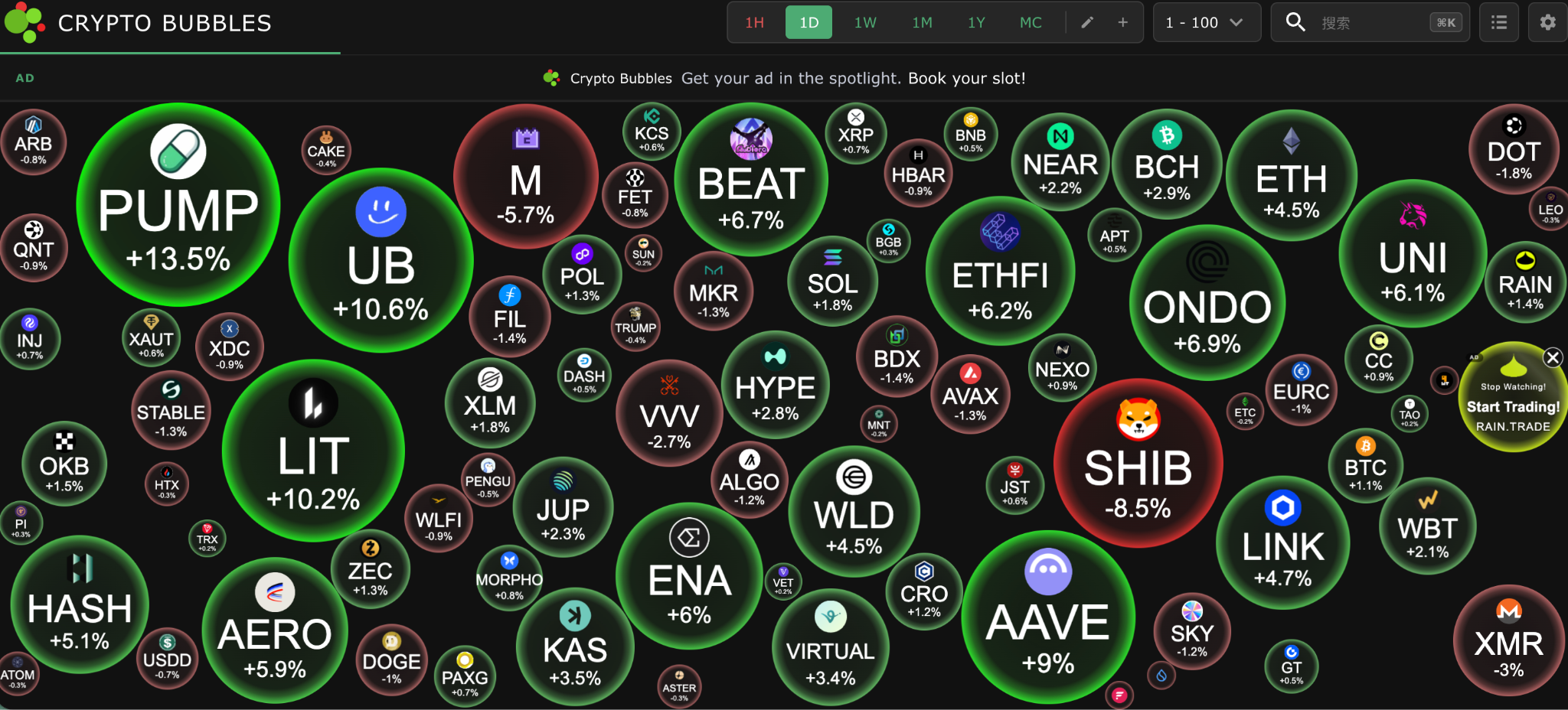
Today’s Top Gainers Among the Top 100 Cryptocurrencies: PUMP rises 13.5%, UB rises 10.6%, LIT rises 10.2%, AAVE rises 9%, ONDO rises 6.9%.
U.S. Stock Indices Futures Bounce Back, Storage Sector Strengthens

The three major U.S. stock index futures saw a violent rebound, with Nasdaq 100 futures rising 1.42%, Dow futures rising 0.84%, and S&P 500 futures rising 0.85%.
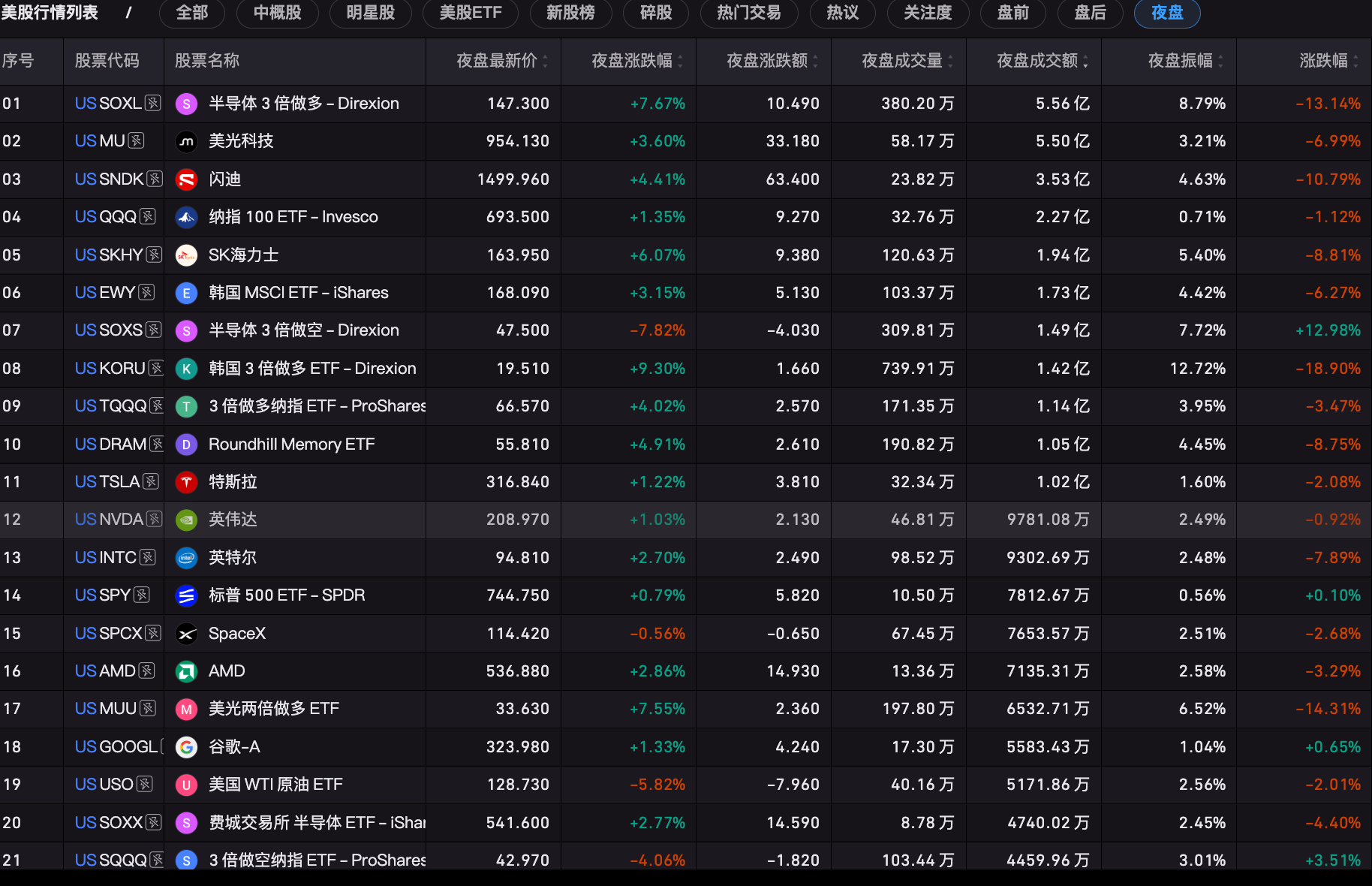
BIT Night Market Data shows, in the U.S. night market, AI and chips are still the hottest, with 3x leveraged semiconductor rising 7.67%. The storage concept strengthened in the night market, with SK Hynix up over 6%, Micron and SanDisk up over 4%, as funds continue to bet on the storage demand from AI servers. Meanwhile, CME Group has launched single stock futures covering over 50 U.S. companies like Nvidia and SpaceX on July 27, trading 23 hours a day, which means popular U.S. stocks may also more easily fluctuate during Asian hours in the future.
AI Capital Expenditures Enter "Guilty Until Proven Innocent," "Big Short" Burry Increases Short on Nvidia and Micron
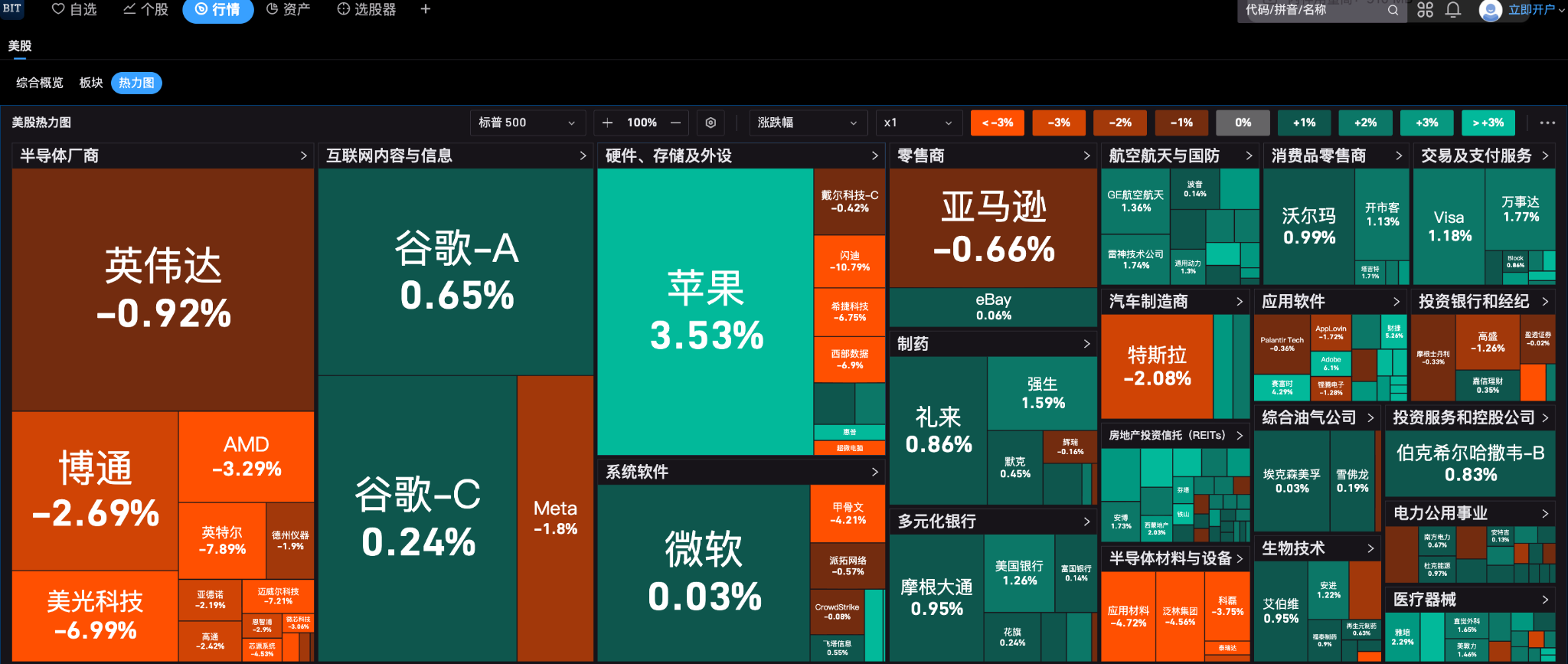
Last week, U.S. stocks experienced severe fluctuations due to concerns over AI capital expenditures, with the Nasdaq falling a total of 2.1% for the week. BIT Asset Management head Daniel YU pointed out that the market’s scrutiny of AI has transitioned from the "storytelling" phase to the "accounting" phase, with investors beginning to question the return cycle of high capital expenditures. Alphabet is a typical case; despite a significant increase in Google Cloud revenue, the stock price fell sharply by 7.8% in one week after it raised its 2026 capital expenditure guidance to $195 billion to $205 billion and reported negative free cash flow.
The semiconductor sector also faced selling pressure last week, with Intel, Micron, and AMD stock prices all declining. The market has expressed caution regarding crowded trades in chip stocks, with renowned investor Michael Burry continuing to increase short positions on Micron, Nvidia, and the semiconductor ETF SOXX. In addition, news that Nvidia intends to provide financial backing for OpenAI's $500 billion data center project has raised market concerns over leverage risks in the AI industry chain.
On the individual stock level, Apple's stock rose over 3.5% on Friday due to its light-asset AI strategy and expectations for AI implementation in Greater China, pushing the Dow higher, with a rise of about 15% in July, potentially marking its best monthly performance in three years, and a cumulative increase of 23% until 2026; Jefferies raised Apple's target price from $299.88 to $308.92.
Moreover, funds are starting to shift from "burning money to buy computing power" hardware manufacturers to companies that can convert AI into actual software revenue, with shares of firms like SAP, Snowflake, and ServiceNow seeing increases ranging from 4% to 9%.
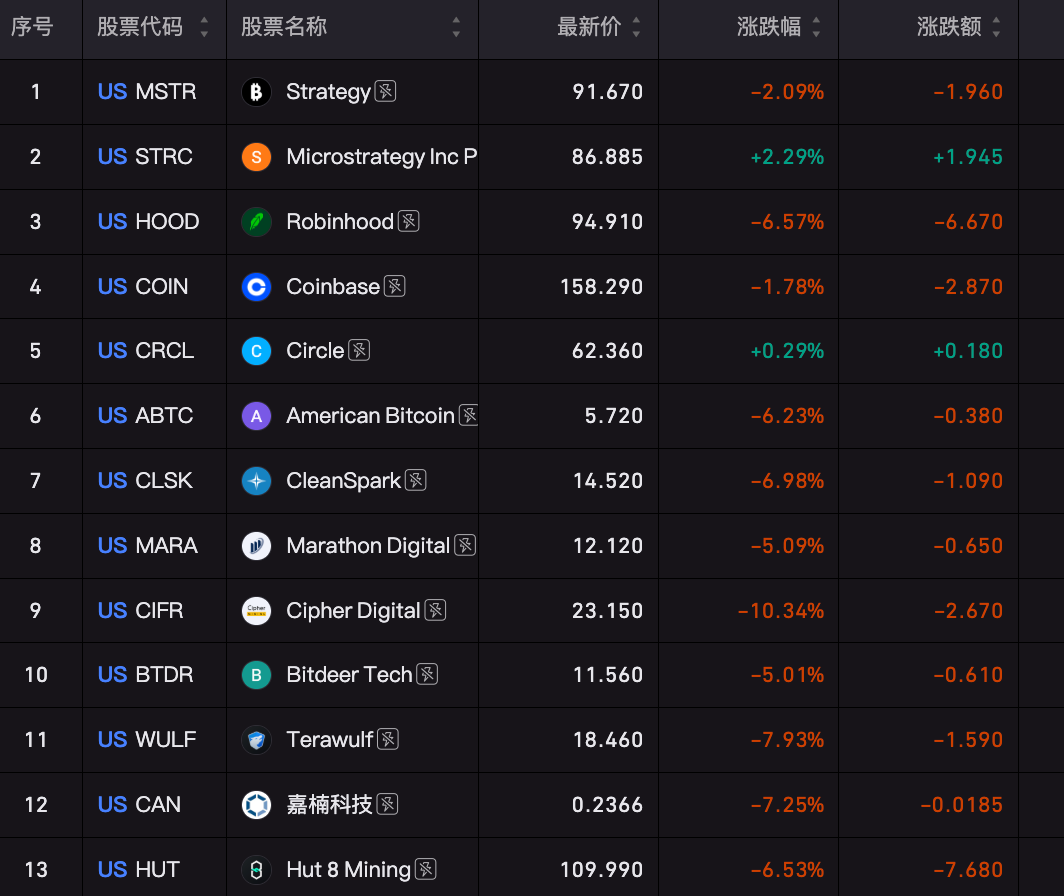
In the crypto-related stocks, according to BIT US Stocks, there was a comprehensive decline, with Robinhood down 6.57%, Coinbase down 1.78%, Strategy down 2.9%. In the mining sector, Canaan down 7.25%, Cipher down 10.34%, Hut 8 down 6.53%, MARA down 5.09%, CleanSpark down 6.98%.
Surging AI Orders in South Korea, Changxin's IPO Sparks Domestic Storage
Amid a relief in geopolitical tensions and a drop in oil prices easing inflationary pressures, the overall market in the Asia-Pacific region strengthened today. The KOSPI index in South Korea rose 0.97%, while Japan's Nikkei 225 index rose 0.5%.
In the South Korean market, Samsung Electronics is reported to have secured a contract with Broadcom worth over $200 billion for chip manufacturing, and SK Hynix has reached a potential AI storage supply arrangement with Nvidia worth up to $500 billion, while Naver also received around $1 billion in investment from Nvidia to support data center expansion. Despite these positives, Goldman Sachs data shows that foreign and institutional investors have been net selling Samsung Electronics and SK Hynix stocks recently, as the market worries that the previous increase in chip stocks was excessive and is waiting for performance realizations. Additionally, there is a notable pressure for deleveraging in the South Korean market, with retail margin loan balances decreasing from $25 billion to $22 billion.
In the Japanese market, the drop in oil prices has effectively eased imported inflation pressures. SoftBank’s $40 billion bridge loan to invest in OpenAI is progressing smoothly, attracting participation from 21 institutions including Abu Dhabi First Bank, Singapore’s Government Investment Corporation (GIC), and Standard Chartered Bank, with the new lenders’ subscribed share reaching $7 billion. Analysts believe that as long as the AI infrastructure narrative continues, SoftBank will remain a core trading target in Japan’s AI sector. Overall, while the Asia-Pacific capital maintains caution as risk appetite rises, the investment logic in the AI industry chain has shifted from mere "storytelling" to cautious evaluations supported by performance.
The A-shares and Hong Kong stocks are now being driven by domestic semiconductors and robotics concepts. The A-shares closed with the ChiNext index up over 3%, both Shenzhen Component Index and Beixin 50 rising over 2%, and the Shanghai Composite Index rising 1.15%. The strongest line is undoubtedly Changxin Storage officially listing on the Shanghai STAR Market.
Changxin Storage today listed on the STAR Market, raising about 57.92 billion RMB, equivalent to about 8.6 billion USD, making it the largest IPO in Asia so far in 2026, as well as the largest IPO on the STAR Market. Changxin Storage’s opening price rose over 470% compared to the issue price, closing with an increase of 465.8%, giving it a total market capitalization of 3.28 trillion RMB.
As a representative enterprise capable of mass-producing DRAM, Changxin Storage has attracted high attention from the capital markets. Nomura Securities has initiated coverage with a target price of 116 RMB, projecting its revenue will rapidly grow from 61.8 billion RMB in 2025 to 773.3 billion RMB in 2028. Analysts point out that Changxin Storage is not only a leading player in domestically controllable semiconductors but also, due to its high valuation, has raised market concerns about short-term capital crowding and industry cycle fluctuations.
The Hong Kong stock market's robotics concept stocks have risen, driven by Tesla's expectations for mass production of Optimus by the end of the year and the accelerated industrialization of humanoid robots. Liafu Harmony has increased by over 7%, MicroPort Robotics has risen nearly 6%, while Zhao Wei Electric, Horizon Robotics, and Aston have each risen nearly 4%, with Wuling Electronics and Sanhua Intelligent Control increasing by over 2%. Guolian Minsheng Securities believes the humanoid robot industry is entering a triple-drive phase of "scale manufacturing landing, industry giants ramping up, and embodied intelligence upgrading," with the competition focus shifting from prototype demonstration to capacity, supply chain, training data, and industrial customer deployment.
Upcoming Points to Focus On:
July 27: Storage stock Rambus will release Q2 earnings, along with AstraZeneca, Baker Hughes, LVMH, Kington Electronics, F5 Networks, Tianhong Technology, Amkor Technology, Nucor Steel, etc., which will also announce earnings.
July 28: Corning, Boeing, Coca-Cola, UPS, Royal Caribbean Cruises, etc., will announce earnings, with the market focusing on Boeing's delivery recovery, Coca-Cola's consumption resilience, UPS's logistics demand, Corning's AI hardware and optical communication demand, and Royal Caribbean's judgment on tourism consumption. Among them, Corning’s Q2 earnings call will be held at 20:30 Beijing time, serving as an important window to observe demand for AI server glass substrates, optical communication, display materials, and data center hardware.
July 29 05:00 Seagate Technology earnings call: The market will focus on AI data center hard drive demand, enterprise storage orders, NAND cycles, and full-year guidance. If management confirms strong demand from cloud vendors, it will be positive for the storage chain; if they are cautious about shipments in the second half, chip hardware stocks may be under pressure. Additionally, Western Digital, Ford, Visa, KLA, NXP Semiconductors, Skyworks, Teradyne, Bloom Energy, Procter & Gamble, Vertiv, and Amphenol will also have earnings or conference calls concentrated.
July 29 08:00 SK Hynix Q2 earnings: The market expects SK Hynix's operating profit for the second quarter to potentially set a record, with core points being HBM shipments, AI server demand, NAND prices, and guidance for the second half. If the earnings are strong, it will be positive for the global storage chain; if management turns cautious on demand, chip stocks may continue to adjust.
免责声明:本文章仅代表作者个人观点,不代表本平台的立场和观点。本文章仅供信息分享,不构成对任何人的任何投资建议。用户与作者之间的任何争议,与本平台无关。如网页中刊载的文章或图片涉及侵权,请提供相关的权利证明和身份证明发送邮件到support@aicoin.com,本平台相关工作人员将会进行核查。


