Original | Odaily Planet Daily (@OdailyChina)
Author | Azuma (@azuma_eth)
On July 29, Beijing time, SK Hynix released its financial report for the second quarter of 2026.
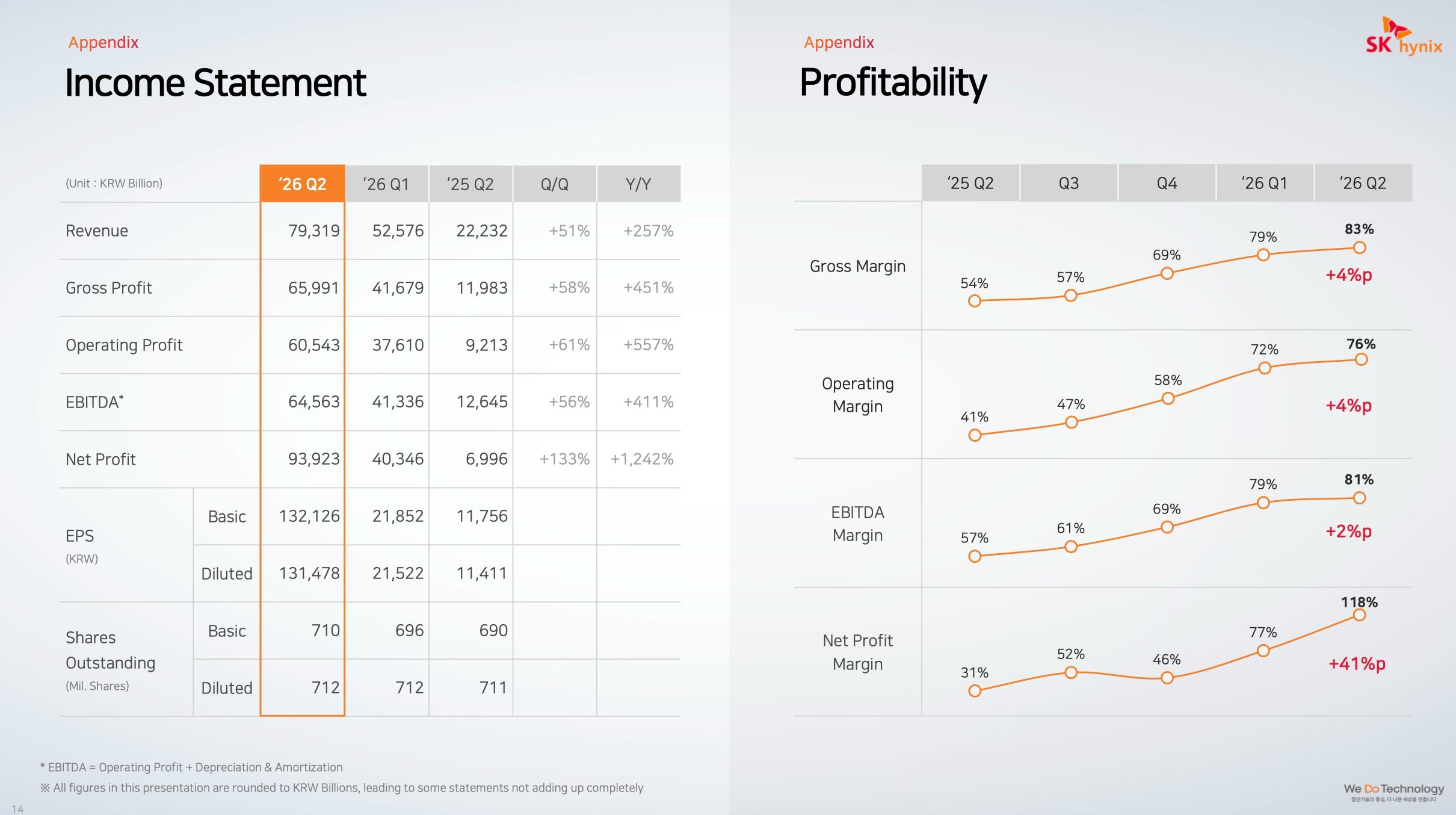
According to the financial report, SK Hynix achieved revenue of 79.32 trillion Korean won in the second quarter, a year-on-year increase of 257% and a quarter-on-quarter increase of 51%; operating profit was 60.54 trillion Korean won, a year-on-year increase of 557% and a quarter-on-quarter increase of 61%, with the operating profit margin further rising to 76%, setting a historical record; if we include a one-time investment income of 62.166 trillion Korean won from the sale of part of Kioxia's equity, the company's net profit could reach 93.92 trillion Korean won.
In any industry, this can be considered a report card capable of shocking the market.
However, the initial reaction from the capital markets was completely opposite. Due to revenue (actual 79.32 trillion Korean won, market expectation 84 trillion Korean won) and operating profit (actual 60.54 trillion Korean won, market expectation 64 trillion Korean won) being slightly lower than previous market expectations, coupled with SK Hynix's stock price declining over 40% in the previous month, a mix of pessimistic sentiment led to SK Hynix's U.S. stock ADR price dropping by about 9% in after-hours trading after the financial report was released (the U.S. stock market had already closed down nearly 9% the day before), but as investors gradually digested the details of the report, the stock price quickly recovered all losses and even turned upward.
Meanwhile, this morning after the Korean stock market opened, SK Hynix's stock price first opened higher, rising by 4%, but then gradually weakened, dropping more than 9% by 10:00.
Why did a record-breaking financial report first encounter a frenzied sell-off, quickly recover losses, and then turn sharply downward again? The answer may lie in the market's genuine concern being far beyond how much SK Hynix earned in the second quarter, but rather how to reprice the future growth space—where the bulls and bears have clearly yet to reach a consensus on this point.
Why was the most profitable quarter still below expectations?
From a numerical standpoint, SK Hynix is still in a phase of strong profitability.
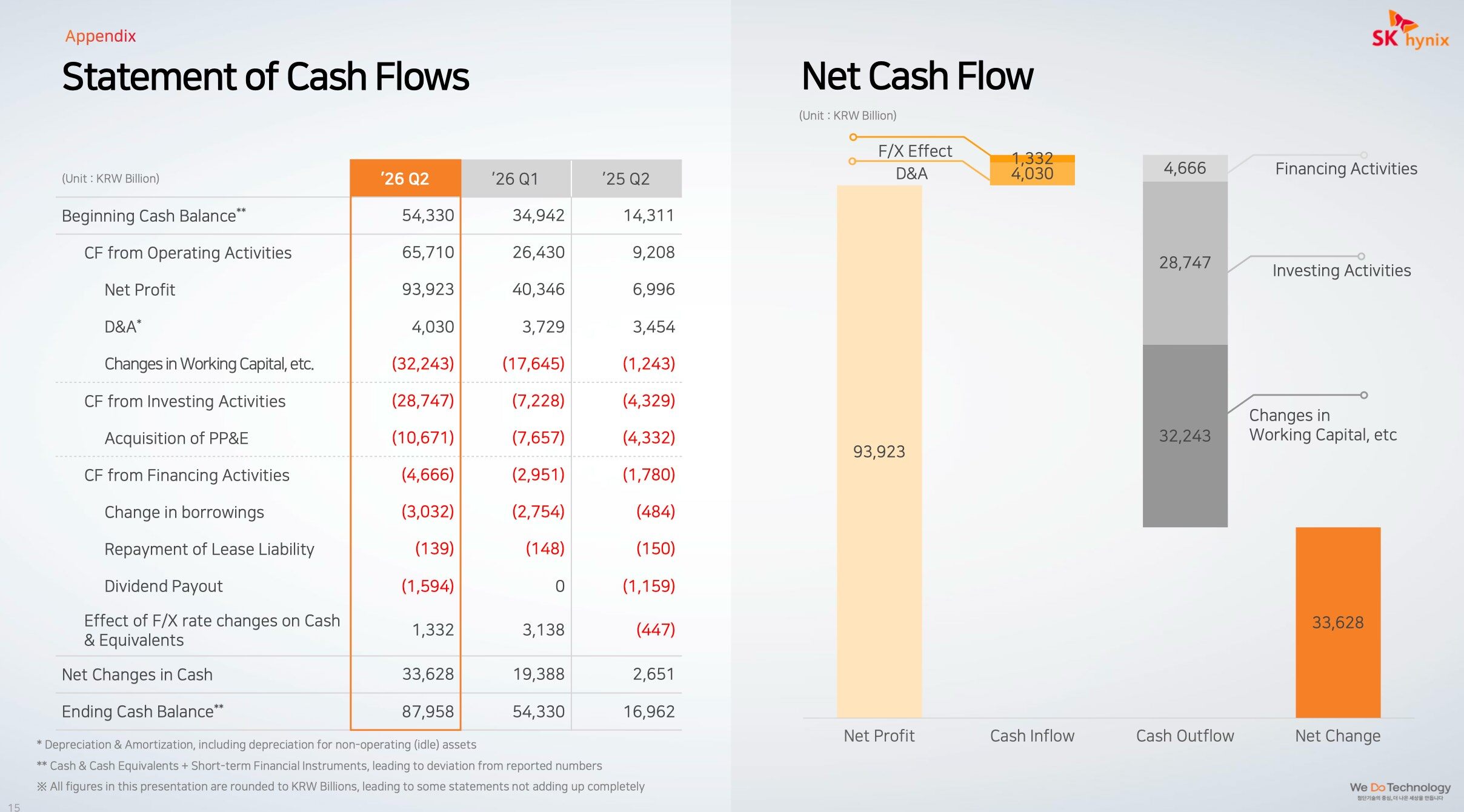
In the second quarter, the company's gross margin reached 83%, and the operating profit margin reached 76%, meaning that for every 100 won of products sold, approximately 76 won was converted into operating profit, a profitability level that even exceeds most global semiconductor manufacturers. Meanwhile, the company's cash and short-term financial assets also continued to grow rapidly to 87.96 trillion Korean won, further expanding its net cash position, providing ample ammunition for future capacity expansion.
However, the problem is that the market had already raised expectations higher. Previously, the market uniformly expected SK Hynix's second-quarter revenue to be about 84 trillion Korean won and operating profit to be about 64 trillion Korean won, while the final actual data was about 5% and 6% lower than expectations, respectively.
For a company, such deviations are not large, but for SK Hynix, which is already labeled as the "biggest beneficiary of AI" and whose valuation is built on high growth expectations, any data that falls below expectations will be magnified by the market.
Upon closely examining the financial report, it becomes clear that this instance of "not meeting expectations" did not actually stem from a deterioration in market demand, but rather from changes in the profit structure.
The first point, which seems counterintuitive, is that the continuous rise in the proportion of HBM products has actually weakened profit elasticity. In the past few quarters, the key driving force behind the rapid expansion of the entire storage industry's profits has been the continuous rise in spot prices for traditional DRAM and NAND, but since SK Hynix's HBM revenue proportion is much higher than its peers, and HBM is more often priced through long-term supply agreements (LTA), it cannot fully enjoy the benefits brought by the rapid rise in spot prices like ordinary DRAM.
Moreover, SK Hynix also disclosed that the average selling price of ordinary DRAM increased by about 30% quarter-on-quarter in the second quarter; although it still maintained growth, it was clearly lower than the first quarter; NAND's average selling price increased by 50%-55%, also slowing compared to the first quarter.
In other words, AI products have been selling more, but the price increase rate of traditional products has slowed; long-term orders have locked in future revenue but limited short-term profit elasticity. This is why record profits did not reach the numbers that the market had previously "imagined."
Is the storage supercycle still alive? How does the financial report respond?
If the operational data answers how much SK Hynix earned in the second quarter, then the information from management in the financial report and subsequent conference call addresses another question of greater market concern—has the AI storage supercycle already begun to cool?
Currently, SK Hynix's answer still leans towards optimism.
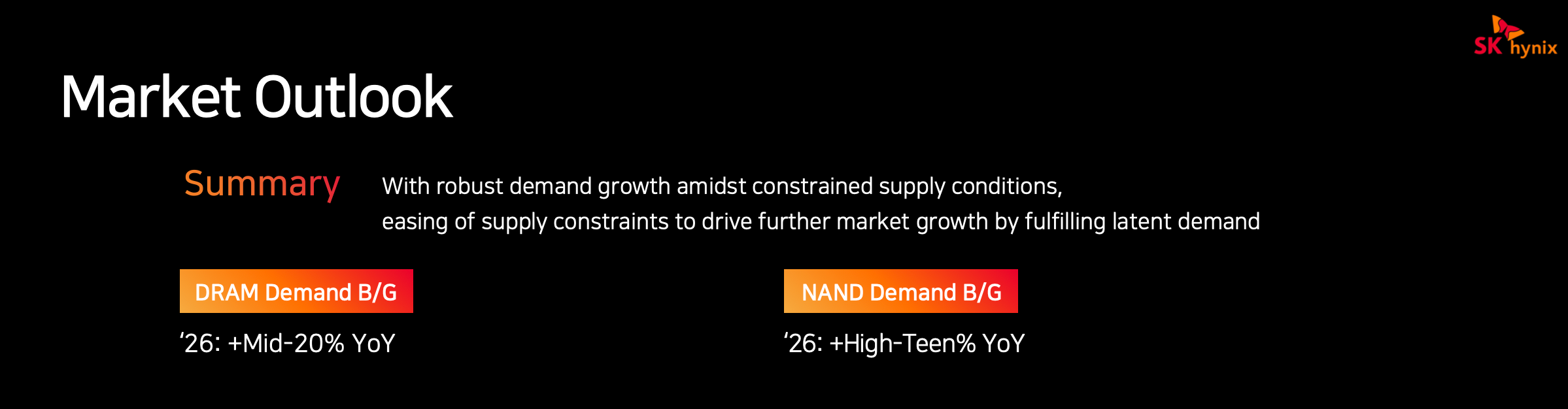
First, regarding demand outlook, the company did not release any obvious cautionary signals as the market feared. SK Hynix expects global DRAM market demand to grow mid-20% year-on-year in 2026, with NAND market demand growing at a high teen percentage year-on-year. Management also stated in the post-report conference call that no signs of a slowdown in AI investment have been observed, and they expect AI infrastructure investment to continue to grow steadily after 2027.
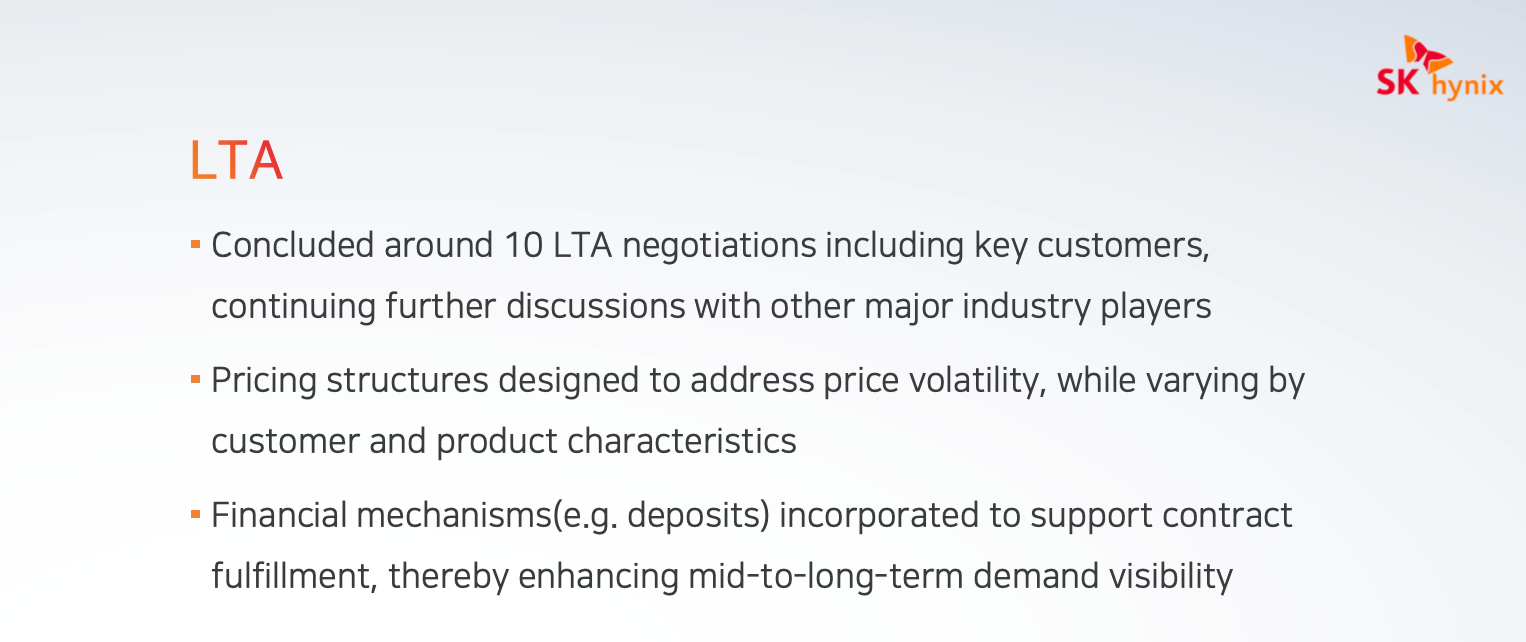
Secondly, another key piece of information worth noting is the further advancement of long-term supply agreements (LTA). SK Hynix disclosed that the company has completed negotiations for long-term supply agreements with about 10 customers and is still negotiating with other major industry clients. The new generation of long-term agreements will adopt a pricing mechanism that can respond to price fluctuations and ensure contract fulfillment through appropriate financial mechanisms to enhance the stability and predictability of future demand.
For the storage industry, the significance of this change is considerable. In the past, products like DRAM and NAND relied heavily on spot market pricing, with price volatility leading the entire industry to always wear the "cyclical stock" label; however, as the proportion of HBM products increases in the AI era, more and more large cloud service providers begin to lock in future supply capabilities in advance, transforming the supply-demand relationship from short-term competition to a more long-term, stable cooperative relationship. Although long-term agreements may compress profit elasticity to some extent during phases of rapid spot price increases, what they yield is greater revenue certainty in the coming years.
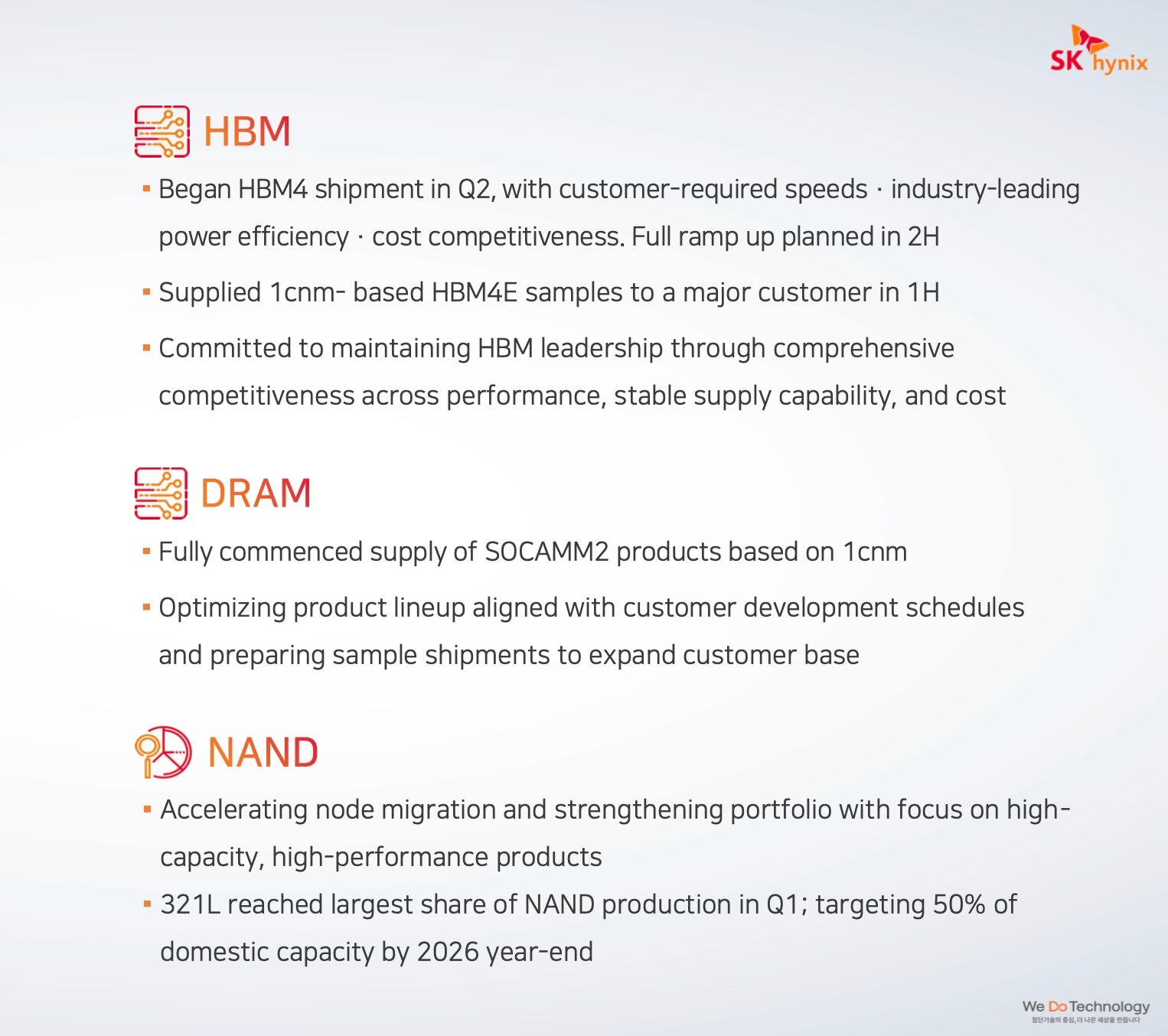
Furthermore, SK Hynix's advancement pace for next-generation products has not encountered any surprises. The financial report indicated that SK Hynix began shipping HBM4 products in the second quarter and plans to ramp up production in the second half of the year; the next generation of HBM4E has also been sampled to major clients in the first half of the year; in addition, products based on the 1cnm process for SOCAMM2 have officially begun supply.
This means that SK Hynix remains ahead in product pace on the next-generation AI GPU platform. Considering that HBM4 will become crucial memory for next-generation AI platforms like NVIDIA's Rubin, its smooth ramp-up also indicates that the company still firmly occupies a leading position in the high-end AI storage market.
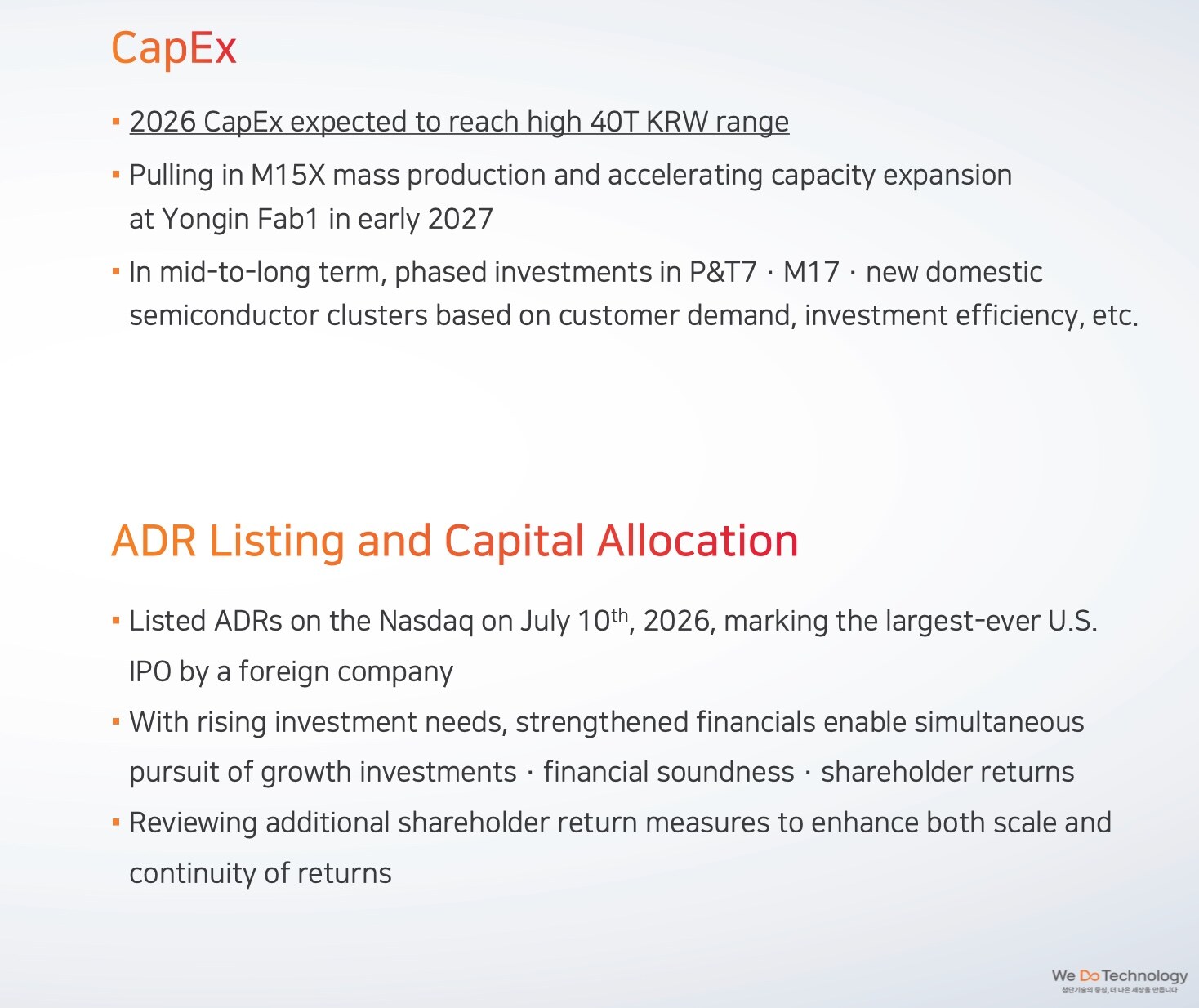
Finally, in terms of "capital expenditure" (CapEx), which most accurately reflects the management's genuine judgment, SK Hynix not only maintains its expectation of capital expenditure exceeding 40 trillion Korean won in 2026, but also plans to accelerate the mass production of the M15X plant and speed up the construction of the Yongin Fab phase one, while continuing to advance medium- and long-term projects such as P&T7, M17, and the new semiconductor cluster in South Korea.
For a company that has experienced multiple cycles of the storage industry, such an aggressive expansion plan is itself a statement—management still believes that AI storage demand in the coming years is sufficient to absorb these new capacities.
Focus of the Bull-Bear Tug-of-War
Today, SK Hynix has become the core target of the bull-bear tug-of-war in the AI storage cycle.
For bulls, record profits,持续扩大 的 HBM 需求 and the AI infrastructure investment cycle still support the company's long-term growth logic; for bears, disappointing performance, valuation pressure, and market concerns about the sustainability of AI capital expenditure are continuously amplifying short-term adjustment pressure. Bulls bet that the expansion of AI infrastructure will continue, while bears worry that the market has already overdrawn future growth.
To wear the crown, one must bear its weight. SK Hynix enjoys the valuation of an industry leader, but also must withstand the pressure of being a leader—when the market has already believed your story, excellent performance is no longer sufficient; only by continuously exceeding higher expectations can the valuation continue to rise.
免责声明:本文章仅代表作者个人观点,不代表本平台的立场和观点。本文章仅供信息分享,不构成对任何人的任何投资建议。用户与作者之间的任何争议,与本平台无关。如网页中刊载的文章或图片涉及侵权,请提供相关的权利证明和身份证明发送邮件到support@aicoin.com,本平台相关工作人员将会进行核查。