Author: qinbafrank
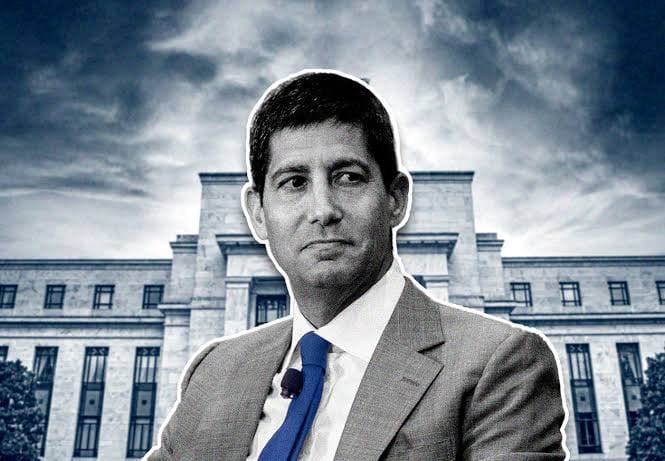
In the early hours of Thursday, the interest rate decision is pending, and the current bond market still gives a 40% probability of a rate hike at this Wash meeting, a scenario that has been rare in the past. Why? The core reason is naturally the "data dependence + low communication" under the new Wash framework.
Since taking office in May, Wash has clearly promoted communication and framework reform: 1) significantly shortened statements, removed traditional forward guidance language (no longer suggesting an easing or tightening bias), emphasizing "statements only provide facts";
2) established five working groups focusing on communication, balance sheet, data sources, productivity and employment, inflation frameworks, etc., systematically reviewing existing practices.
3) strongly reaffirmed "delivering price stability" and a "zero tolerance" for persistently high inflation (inflation has been above the 2% target for more than 60 consecutive months), while downplaying the employment trade-off in the dual mandate.
He himself does not submit personal dot-plot forecasts and indicates that the market should price more based on its own interpretation of the data, rather than "reflecting" the Federal Reserve's views. The result is that the market has lost its previous "guided" anchor. During Powell's era, officials' speeches, statement wording, and dot plots would align expectations in advance, converging probabilities as the meeting approached.
Now, the policy path is more "real-data-driven + potentially sudden actions," and the market must price the possibility of unexpected rate hikes on its own, especially in the phase when the new chair is building credibility. This directly raises short-term interest rate volatility and tail risk premiums - the bond market (federal funds futures) pays protection costs for the scenario in which "unexpected inflation risks suddenly worsen, and the committee chooses to act immediately to reinforce signals." This indeed brings higher risk premiums and volatility, rather than a smoother path.
Although in the morning's tweets, I personally believe that holding steady is a high probability scenario, one cannot overlook the tail risks either. Because the current environment also has specific catalysts supporting high uncertainty:
1) Iran conflict and energy prices
US-Iran tensions are recurring (threats in the Strait of Hormuz, attacks, and temporary agreements), causing severe fluctuations in oil prices, which directly raises inflation tail risks. Even if June's CPI was once softer than expected, the market still worries that energy will transmit to core and services, or that escalating conflicts may force the Federal Reserve to react more quickly. Oil prices and rate hike probabilities are highly correlated recently.
2) New chair's credibility and signaling needs
In Wash's first meeting after taking office, a hawkish stance was evident (the statement was concise, emphasizing price stability), and the market worries that he might choose "early action" to establish his anti-inflation determination, especially when data still has upside risks. The lack of guidance means a stronger "live meeting" attribute, with the tail (unexpected rate hikes) priced higher.
In simple terms, this 40% rate hike probability stems from the significant weakening of forward guidance under Wash's new chair framework, combined with geopolitical and data uncertainties, as the market pays for protection against tail risks rather than treating a rate hike as the baseline scenario.
Currently, various analyses are all deductions and probabilities; it ultimately depends on how the interest rate decision unfolds on Thursday early morning?
Also keep an eye on the wording of the statement (whether it will further simplify or reaffirm price stability) and Wash's press conference remarks (he may continue to provide less guidance).
1) If unchanged, the market may breathe a sigh of relief and quickly shift focus to September, continuing to observe subsequent data (employment, inflation, oil prices).
2) If there is an unexpected rate hike, it will strengthen the narrative of "data + credibility first" under the new framework, the market will further revise up the rate path, while quickly repricing "higher for longer," which will naturally tighten financial conditions. Risk assets will continue to be under pressure.
It can be said that this pricing itself is a reflection of the market's adaptation process under the new communication paradigm.
免责声明:本文章仅代表作者个人观点,不代表本平台的立场和观点。本文章仅供信息分享,不构成对任何人的任何投资建议。用户与作者之间的任何争议,与本平台无关。如网页中刊载的文章或图片涉及侵权,请提供相关的权利证明和身份证明发送邮件到support@aicoin.com,本平台相关工作人员将会进行核查。


