Author: CNA
Translation: Deep Tide TechFlow
Deep Tide Brief: The Monetary Authority of Singapore has rarely established a special task force to address AI fraud and quantum computing threats, requiring banks to complete their migration to quantum encryption by 2030. When regulatory agencies begin to establish timelines for technological risks in 5-10 years, it indicates that traditional financial security systems are facing a generational crisis.
The Monetary Authority of Singapore (MAS) announced on Tuesday that it has jointly established a task force with the Association of Banks in Singapore (ABS) to address cybersecurity and fraud risks posed by artificial intelligence and quantum computing to financial institutions.
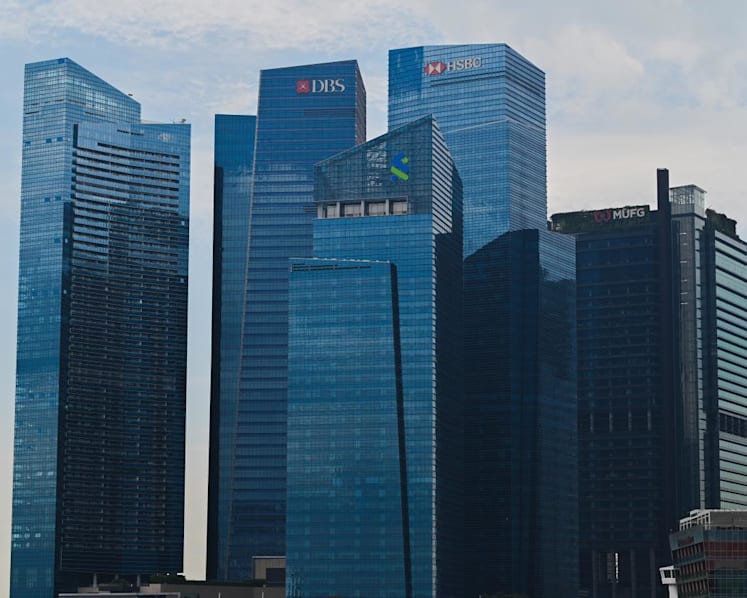
Image: The skyline of Singapore's financial district. Source: Channel News Asia.
The head of the MAS, Ravi Menon, stated at a press conference that the task force will focus on enhancing financial institutions' professional capabilities in using AI in the field of cybersecurity, testing advanced tools, and developing industry guidelines and new response measures against AI-driven threats.
In addition to AI, Menon also pointed out that quantum computing technology poses "significant risks" to the data security and communication of financial institutions. Although this technology is still in its early development stage, the MAS will release a set of "regulatory expectations" later this year, setting a gradual timeline for financial institutions to address quantum security issues.
"Our goal is to achieve quantum security for financial institutions by the end of this century," he said.
New Threats and Challenges
The MAS and the banking association stated in a joint statement that the establishment of the "AI-Driven Cyber and Technological Risk Task Force" (ACT) is aimed at addressing emerging risks brought by cutting-edge AI models. The task force has been operational since May of this year.
Task force members include senior technical and cybersecurity leaders from the MAS and DBS Bank, OCBC Bank, UOB, the Singapore Exchange, NETS, and banking IT service companies.
The MAS and the banking association stated that the task force will promote industry sharing of AI cybersecurity use cases and experiences, enhance knowledge of cyber defense, and strengthen the cybersecurity posture of financial institutions.
Wang Aiwen, the director of the banking association, stated, "AI is reshaping the landscape of cyber threats, and the financial industry must continue to work together to maintain resilience."
Menon pointed out that AI enables phishing scams to be personalized and persuasive on a "scalable" level. The friction mechanisms in digital banking transactions still help to deter fraudsters, but banks must leverage AI and strengthen control measures to better defend against increasingly sophisticated tactics.
The MAS will review banks' efforts to improve the effectiveness of their fraud detection models, including their level of AI usage.
The MAS is also collaborating with the government’s technology agency, the police, and five banks to test whether AI models trained on cross-bank and public-private sector data can improve overall detection capabilities for fraudulent transactions. The results of the tests are expected to be available next year.
Menon also stated that cutting-edge AI models can discover and exploit system vulnerabilities, posing threats to the cybersecurity defenses of financial institutions.
Cutting-edge AI models can uncover more vulnerabilities and shorten the time from discovery to exploitation. "These factors significantly compress the window for patching, testing, and repairing."
In April of this year, the MAS issued an announcement calling for financial institutions to strengthen their cyber defenses; in July, it required critical financial institutions to conduct AI-assisted "red team" testing on internet-facing critical systems, using advanced AI models to identify potential attack paths.
These requirements are about to be further upgraded. The MAS will issue regulatory expectations, requiring critical financial institutions to develop and submit comprehensive assessments and action plans to enhance their defense capabilities against AI-driven cyber threats.
These plans will cover financial institutions' large-scale detection and remediation of vulnerabilities, testing system changes before implementation, and the ability to back up, recover, and restart critical systems and services in the event of disruptions.
Quantum Computing Risks
Menon stated that quantum computing poses "significant risks" to the data security and communication of financial institutions in the medium term.
Experts estimate that quantum computing could break existing encryption technologies within 5 to 10 years. He stated that the transition to quantum-safe practices will take time.
"It's definitely not too early to prepare seriously now," he said.
Regarding the regulatory expectations to be released later this year, Menon indicated that the MAS will set a gradual timeline for financial institutions: to establish a list of cryptographic assets, prioritize the migration of vulnerable assets to quantum-safe solutions, and establish technical capabilities and governance frameworks to support quantum security migration.
In recent years, the MAS has begun laying the groundwork for a quantum-safe financial industry, such as issuing transition measures suggestions to financial institutions in 2024 and engaging in technical work with industry and international partners regarding cryptographic technology solutions.
Additionally, Menon explained that Singapore has launched significant measures and made substantial progress in enhancing the resilience of digital financial services against fraud, operational disruptions, and cybersecurity threats.
For example, banks have introduced a "lock money" feature that allows funds to be locked in a state where digital transfers are not possible. By May 2026, the amount of money protected by this feature reached SGD 47 billion, doubling from a year ago.
The number of fraud cases and losses in Singapore in 2025 decreased.
The MAS has also been collaborating with financial institutions to enhance the effectiveness of risk management frameworks and has strengthened the resilience of retail payments.
Since August of last year, during disruptions in the banking system, contactless NETS debit payments continue to be usable within a certain limit. The MAS is also working with major banks to launch functions that allow payments and transfers to continue during system disruptions.
免责声明:本文章仅代表作者个人观点,不代表本平台的立场和观点。本文章仅供信息分享,不构成对任何人的任何投资建议。用户与作者之间的任何争议,与本平台无关。如网页中刊载的文章或图片涉及侵权,请提供相关的权利证明和身份证明发送邮件到support@aicoin.com,本平台相关工作人员将会进行核查。


