A company that rose from the ruins of a Bitcoin mining site has just made its debut on Nasdaq.
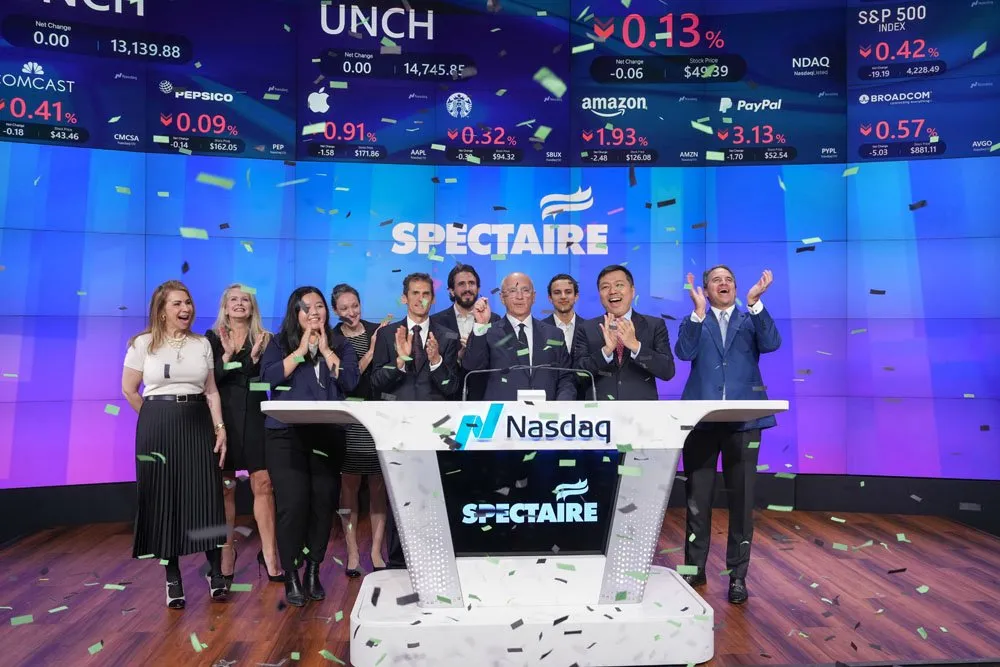
On July 28, 2026, Ionic Digital landed on Nasdaq, with the stock code "IOND". It saw a rise of 25% on its first day, pushing its market capitalization to approximately $2.4 billion.
Just weeks ago, it secured $400 million in private funding - led by Attestor, Oak Tree Capital, and Sachem Head, with Citadel participating.
The pre-investment valuation for this funding was $2 billion.
Ionic Digital operates straightforwardly: it transforms cheap electricity and land in Texas into AI data centers, which are then fully leased to cloud providers and AI companies.
More importantly - the data center is not fully built yet, but it has already secured $2 billion in orders.
On the day of its listing, the CEO made a candid remark: "The market is rewarding us for converting Bitcoin mining sites into AI data centers."
The story of this company is worth dissecting: it emerged from the bankruptcy of cryptocurrency giant Celsius Network in 2022, growing out of a mess and now becoming a new player in the AI computing infrastructure sector.
Orders Arrived Before the Data Center
Ionic Digital's approach differs from most AI computing companies - it signs contracts first, then builds the data center.
In October 2025, it signed a 10-and-a-half-year lease with global cloud provider Nscale. Ionic's flagship data center in Ward County, Texas, has a total capacity of 234 megawatts, all leased to Nscale. The total contract amount is approximately $1.95 billion.
In February 2026, both parties renewed the agreement: Nscale committed to leasing an additional 89 megawatts under the same conditions. If the expansion goes smoothly in the second half of 2027, the total contract amount will rise to about $2.6 billion.
To put it simply: a 234 megawatt data center, still under construction, has already locked in at least $2 billion in revenue over the next ten years. Moreover, it's a "triple net lease" - tenants are responsible for taxes, insurance, and maintenance, leaving Ionic to simply collect rent.
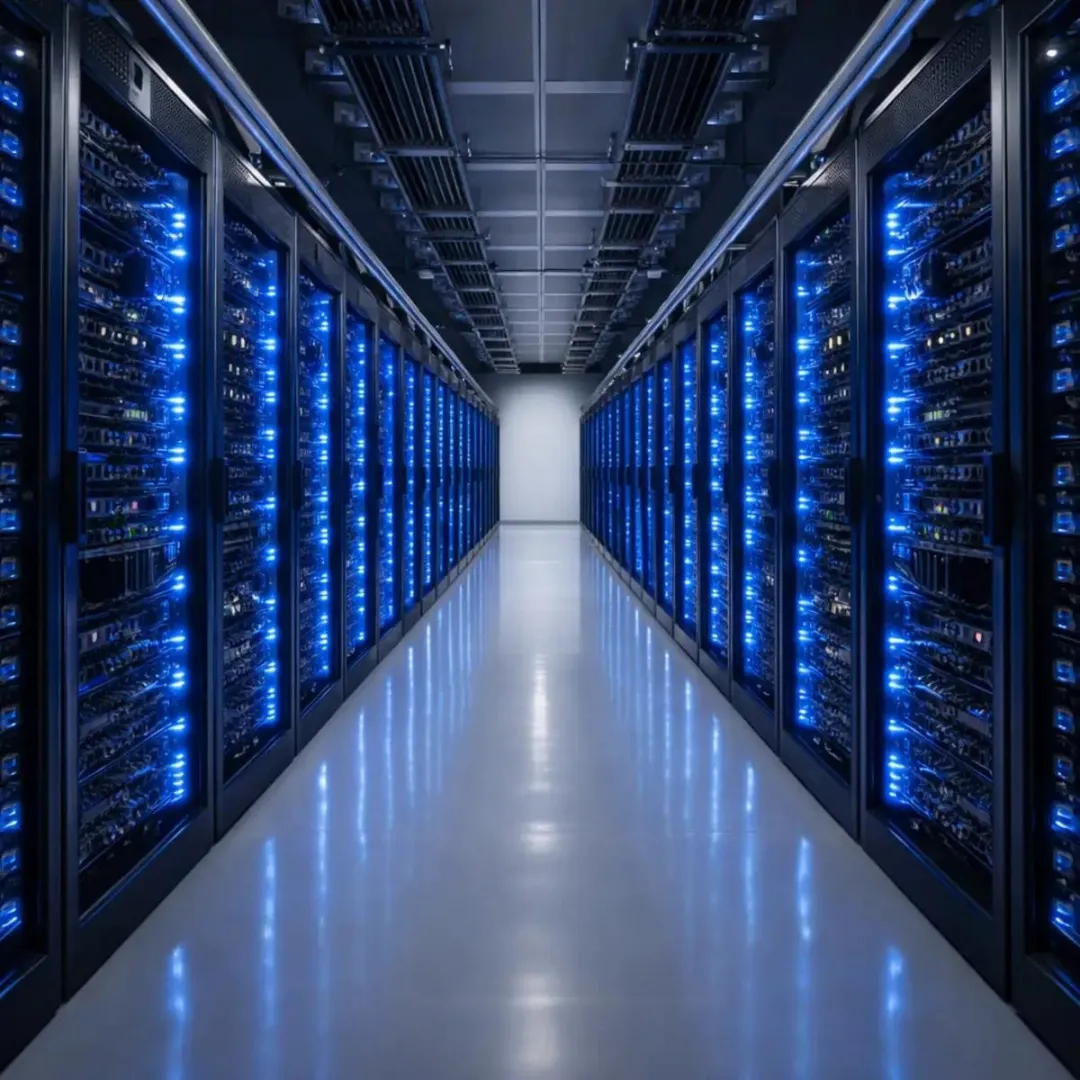
The transformation is already reflected in the books. In the first quarter of 2026, the company reported revenues of $51.4 million, with $44 million coming from data center leasing and only $7.4 million from Bitcoin mining. A year ago, its entire revenue was from mining - the first quarter of 2025 was $41.1 million.
The company projects full year revenue in 2026 to be between $190 million and $195 million. Although there are still losses - mainly due to one-time investments in building the data centers - cash flow returns are already foreseeable.
The logic is straightforward: Texas has cheap electricity, high-power computing data centers are scarce, rents are rising, and Ionic has locked in long-term leases. As long as the data center operates normally, money will flow in continuously.
The way of listing is also worth mentioning. Ionic did not take the traditional IPO route but went public directly - without issuing new shares or raising new funds, existing shareholders sold off old shares.
Since it already raised $400 million in June, the company does not lack funds. The advantage of a direct listing is: it does not dilute existing shareholders and does not have to pay high underwriting fees. JPMorgan, Jefferies, and BTIG provided advisory services for this listing.
At the same time, Ionic also announced its performance guidance for the second quarter of 2026: expected revenue between $48 million and $51 million, adjusted EBITDA between $10 million and $12 million.
While Others Compete for GPUs, Ionic Competes for Electricity
This sector is not empty; there are many leading players.
CoreWeave - a GPU cloud service provider built for high-performance computing, focuses on supporting large-scale AI and machine learning workloads. It has signed multi-year agreements with Core Scientific to expand its infrastructure into Texas, Nebraska, and Ohio, with a total capacity of up to 1.3 gigawatts.
Lambda Labs - provides AI computing cloud services, offering H100 GPUs at $2.99 per hour, with API service charging $0.3 per million tokens, focusing on cost-effectiveness.
Vast Data - focuses on AI data center infrastructure and collaborates with both CoreWeave and Lambda, working on underlying storage and data management.
Core Scientific - Ionic's most direct competitor. Like Ionic, it has transitioned from Bitcoin mining to AI data centers. On July 27, 2026, it signed a 15-year infrastructure cooperation agreement with AMD, forecasted to generate over $14 billion in basic contract revenue.
Each company has its own focus, but the core logic is consistent: providing AI companies with usable computing power.
What differentiates Ionic is that its starting point is electricity, not computing power.
Building data centers incurs heavy assets and slow cash flow but allows for strong cost control. In a business where electricity prices determine profit margins, those with cheap electricity hold the power. The data center in Ward County, Texas, with its 234 megawatt power capacity, already forms the largest competitive moat.
Electricity is becoming the most scarce resource in the AI industry. Whoever secures large-scale electricity first will gain pricing power.
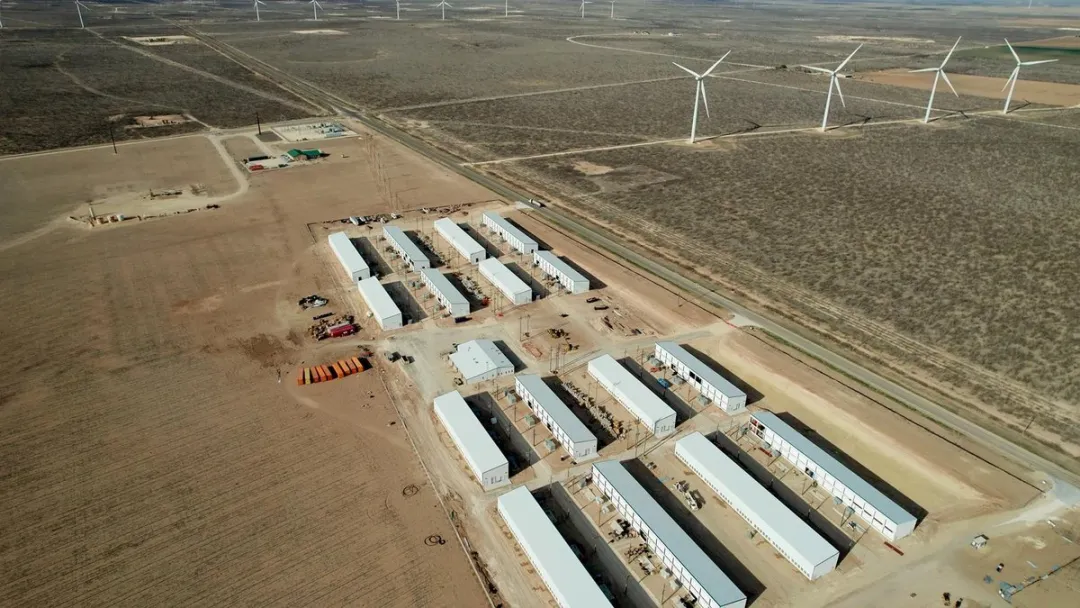
Ionic is also expanding. It plans to increase Ward County's capacity from 234 megawatts to 700 megawatts, expecting to invest an additional $40 million in the first half of 2027.
Where will the money come from? Cash on hand or selling some of their Bitcoin. CEO Prusak stated post-listing: "We are already one of the largest power data center parks in Texas and are actively exploring partnerships to promote multi-gigawatt scale expansions in Ward County."
Speaking of Bitcoin - as of March 31, 2026, Ionic held approximately 120,600 mining machines, but only about 23,200 were operational, with total computing power reduced to 2.0 EH/s, primarily due to aging machines and the economic considerations under high electricity prices.
In the first quarter of 2026, they mined 95.7 Bitcoin, all unsold, ending with 2,861 Bitcoin held. At the time's market price, this was worth around $250 million. Their strategy is "mine first, sell later," which means they still hold a Bitcoin call option.
However, the Bitcoin mining business is rapidly shrinking. In the first quarter of 2026, Bitcoin mining revenue plummeted 82% year-on-year, accounting for less than 15% of the company's total revenue.
The company also retains four mining sites in the Midland region of Texas, totaling 112 megawatts of electricity capacity, but its focus has completely shifted to AI data center leasing.
Additionally, there is a familiar face on Ionic's board - former Core Scientific CEO Mike Levitt. He joined the Ionic Digital board in April 2026 as a member of the Audit Committee and Compensation Committee.
A seasoned executive from a rival company joining the board indicates that Ionic is taking this transformation battle seriously.
Capital is Shifting from "Betting on Models" to "Betting on Electric Meters"
Ionic's funding and listing release a clear signal: capital is shifting from "betting on models" to "betting on electric meters."
In the past two years, money has flowed into AI companies focused on building large models. But the pace of capital consumption for large models is accelerating, while the paths to commercialization are becoming increasingly unclear. Computing power leasing is different - its logic is simple: use electricity to build data centers, lease those centers to AI companies, and collect rent. Revenue is predictable, and cash flow is calculable.
Just look at Ionic's order structure: a 10-and-a-half-year lease locks in $2 billion in revenue. This kind of "revenue visibility" is extremely rare in the AI industry. OpenAI does not know how much it will earn next year, but Ionic knows how much rent it will collect each year for the next decade.
This is also why traditional asset investors, like Oak Tree Capital, are placing their bets - they are not betting on technical routes but on the idea that "in places where electricity is cheap, computing power data centers will always have tenants."
The story of Ionic Digital tells us that from the Bitcoin mining crisis, the most scarce asset of the AI age has emerged - electricity.
It has not turned around by technological breakthroughs but has transformed the heaviest, least attractive assets (electricity, land, data centers) into the most valuable ticket to enter the AI era. From a bankrupt mining site to Nasdaq, there was only a transformation in between.
For entrepreneurs, the lesson from this case is: the AI industry is undergoing a shift from "model competition" to "resource positioning". Whoever locks in large-scale, low-cost electricity first will take the lead.
Of course, risks also exist - tenant concentration is high, with Nscale alone accounting for nearly all revenue. If Nscale encounters issues one day, that $2 billion order becomes paper wealth.
Ionic has clearly listed "tenant default risk" as one of the most significant risk factors in its prospectus.
The company is currently highly dependent on Nscale's ability to pay rent; any credit event involving a tenant could significantly adversely impact the company's financial situation.
Another risk is construction progress. Ionic's Ward County data center is still in the expansion phase. Delays in construction, cost overruns, or delays in equipment delivery could all affect the timing of revenue recognition.
But at least for the next decade, Ionic Digital has firmly tied itself to the ship of AI computing infrastructure. How far the ship can go depends on how much electricity it can secure and how many data centers it can build.
As CEO Prusak stated: "Now is the best time to leverage the incredible tailwinds of artificial intelligence, and we are excited to execute our growth plans through our innovative business model."
免责声明:本文章仅代表作者个人观点,不代表本平台的立场和观点。本文章仅供信息分享,不构成对任何人的任何投资建议。用户与作者之间的任何争议,与本平台无关。如网页中刊载的文章或图片涉及侵权,请提供相关的权利证明和身份证明发送邮件到support@aicoin.com,本平台相关工作人员将会进行核查。


