Author | Qin Xiaofeng, Odaily Planet Daily
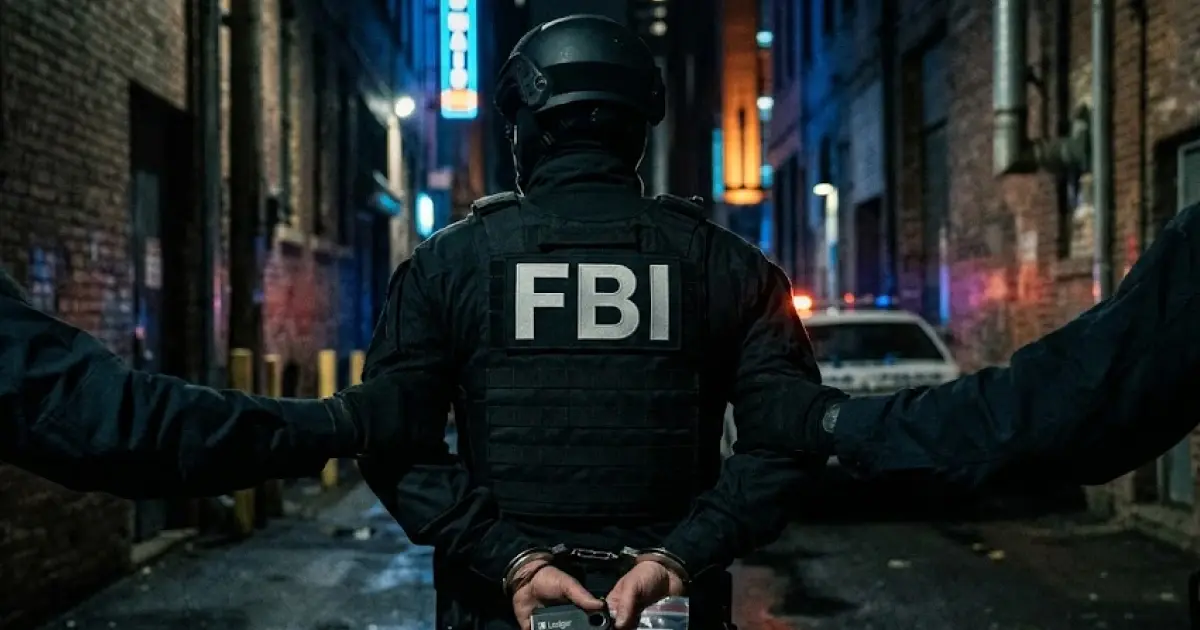
Recently, a criminal complaint document made public by the U.S. District Court for the Eastern District of Virginia has once again torn the veil off the American law enforcement community.
Former Federal Bureau of Investigation (FBI) Supervisory Special Agent Patrick Steven Yaroch is accused of abusing his position to transfer nearly $1 million in cryptocurrency from accounts related to “hostile nations” (one claim is “Russia”) that the FBI was monitoring to a personal wallet, and investing part of the funds in DeFi platforms for profit.
Perhaps due to inexperience, Yaroch even asked ChatGPT how to handle this million dollars, plan for retirement in Europe, and booked a ticket to Portugal. However, these plans ultimately did not materialize, as Yaroch voluntarily confessed to the FBI due to being “mentally tormented,” which brought this internal corruption case involving cryptocurrency to the public’s attention.
The FBI has since fired Yaroch and emphasized that “the agency holds employees to the highest ethical standards and does not tolerate such behavior.”
This is not the first instance of federal employees in the United States exploiting their positions to steal cryptocurrency—during the globally shocking “Silk Road” investigation, several federal agents also used their authority to pocket bitcoins.
These cases remind us once again: the myth of “decentralization” of cryptocurrency assets is powerless in the face of unregulated authority. What truly needs fixing is not the code of the blockchain, but the nonexistent oversight mechanism within the law enforcement system.
1. FBI Senior Agent, Brain Memorizing Mnemonics to Transfer Assets
37-year-old Yaroch has been working in the FBI's Boston Division since 2017, focusing on national security investigations, particularly intelligence and counterintelligence operations against “hostile nations.”
According to an affidavit submitted by federal agents, Yaroch came into contact with cryptocurrency accounts used by individuals associated with the “hostile nations” during the investigation.
The theft began in late 2024 or early 2025, while Yaroch was still at the Boston Division. He accessed FBI internal systems to obtain the mnemonics of the target cryptocurrency accounts. Yaroch did not directly download or copy files but chose to memorize the words with his brain, then created a personal cryptocurrency wallet to gradually transfer the funds in.
He admitted to conducting around 10 to 12 transfers; the funds eventually accumulated in a personal wallet under his control, totaling nearly $1 million.
Interestingly, he did not immediately cash out or transfer all the funds abroad but mixed the stolen cryptocurrency with his personal funds. Some funds were stored in a Kraken exchange account, while others were connected to the DeFi protocol Suilend via a Slush wallet to earn interest. He later explained that one reason for choosing Suilend was that “he liked its droplet-shaped logo.”
In fact, as a supervisory special agent of the FBI, Yaroch held a Top Secret classification and Sensitive Compartmented Information (SCI) clearance, with an administrative level of GS-14 (out of a total of 15), earning an annual salary ranging from $180,000 to $230,000. A mere million dollars did not seem like a substantial amount to him.
Therefore, the FBI initially suspected Yaroch might have been recruited. However, he later explained to investigators that he had not interacted directly with any foreign entities or individuals related to the accounts, and there is currently no evidence.
Yaroch explained that he became increasingly frustrated with the FBI’s “inability or unwillingness to take action to disrupt the use of these accounts.” In his view, these assets were being used to support hostile activities, while the FBI could only remain at the intelligence collection level, unable to execute seizures or disruptions. This sense of frustration became the starting point for his decision to “take matters into his own hands.”
2. ChatGPT Becomes a “Financial Immigration Advisor”
On the surface, Yaroch's actions seem to stem from “idealistic” patriotic concerns. However, the truth is quite the opposite; chat records extracted from his phone revealed another side.
On May 28, 2026, he asked how to invest or spend $1 million; on June 4, he further inquired about the feasibility of “leaving the United States for a European country with $1 million.” ChatGPT recommended areas such as Cilento in Italy or the Douro region in Portugal based on his description, which included his age (37), young family, desire to retire around 40, and preference for a slow-paced vineyard or agricultural lifestyle, specifically praising Portugal as the top choice.
At the same time, Yaroch booked a flight from Washington to Lisbon/Porto from September 3 to 11, 2026, traveling with his wife and children. He also signed a power of attorney for a Portuguese lawyer (June 15, 2026) concerning tax identification numbers, customs, and financial matters, and personally went to the tax office to obtain a password—this is a typical preliminary step for purchasing real estate or long-term residency. Additionally, he made several overseas trips in 2026 that he did not report to the FBI, including trips to Germany and Portugal in May and to Grenada in late June to early July.
These actions were interpreted by prosecutors as potential signs of fleeing or asset transfer. Yaroch himself stated that all of this was “devouring his insides,” and he hoped to “speak up.” On July 29, 2026, he voluntarily reported himself to the Department of Justice and the FBI and handed over the mnemonic note and a Trezor hardware wallet, among other items. On July 31, the FBI immediately fired him and executed an arrest.
On the day he was arrested, he told the agents, “I know I might not get away, but I hope my wife and kids can still go to Portugal as planned.”
Currently, the charges facing Yaroch include interstate transportation of stolen goods and receiving stolen goods, with the case still pending in the Eastern District of Virginia.
3. Is the FBI Also Playing Undercover?
This case is not complicated, but it leaves many doubts and makes many cryptocurrency holders uneasy.
First, the FBI's authority is too vast; once someone is identified as a “hostile country person,” they enter the surveillance list. Even with decentralized cryptocurrency assets, the FBI can “steal” mnemonics through various informants or technical means. It is important to note that these assets are self-custodied by users, not stored in exchanges, and similarly difficult to escape the grasp of the FBI, providing no safety.
Interestingly, last year the U.S. Department of Justice sued Cambodian Prince Group founder and chairman Chen Zhi, seizing 127,000 BTC (worth about $15 billion at the time), which had previously been stored in a non-custodial wallet controlled by Chen Zhi, with the private keys held by him, but were also obtained by the U.S. government through various means.
Secondly, there is a lack of an effective oversight system within federal agencies. Even sensitive data like mnemonics is stored in the FBI's office systems and case files as evidence for investigation, available for the case agents to review. Anyone who has seen the mnemonics, if they are clever enough, can easily fly to a non-extradition country and find an internet cafe to log into the wallet and withdraw funds.
Additionally, the strangest part of this case is that the FBI is a world-class investigative agency, yet internal data theft occurred “without detection.”
When Yaroch transferred the $1 million out of the wallet, the FBI's blockchain monitoring team likely detected the large transfer, but FBI analysts might have instinctively thought it was a hostile force laundering money or pooling funds internally to evade sanctions. They may have even updated the intelligence map to track the new address's movements.
Throughout the process, was there not a single person who suspected that the money was being pilfered by an insider? Or did everyone know without stating it explicitly? Before Yaroch's case was disclosed, how many such cases of embezzlement had occurred, remains unknown. Perhaps this is the way the “Smith Agent” survives.
Finally, it is rather ironic that if Yaroch had not turned himself in, the FBI would likely never have caught him. After all, all funds occurred on the chain without being tied to his real name.
4. Not Uncommon, Federal Law Enforcement Personnel “Using Power for Personal Gain”
The “Yaroch case” is not an isolated incident. Looking back at the past decade, there have been numerous cases of U.S. federal law enforcement personnel leveraging their positions to engage with cryptocurrency, each attracting significant attention.
The most notable case occurred in 2015, related to the dark web Silk Road investigation. At that time, Drug Enforcement Administration (DEA) Special Agent Carl Mark Force IV and United States Secret Service Special Agent Shaun W. Bridges were both accused of stealing bitcoins during the investigation.
Force, as an undercover agent, communicated with Silk Road founder Ross Ulbricht using a false identity, received and concealed the cryptocurrency obtained during the investigation, transferring it to his personal account; he also used his authority to freeze assets in a trading account and transferred about $300,000 into his own account, embezzling over $700,000 worth of cryptocurrency in total. Force ultimately pleaded guilty and was sentenced to six and a half years.
Bridges, after gaining control over bitcoins related to Silk Road, transferred over 20,000 bitcoins (valued at $800,000 at the time) into Mt. Gox and then to a personal investment account, trying to cover his tracks through complex transactions. Bridges was eventually sentenced to 71 months for money laundering and obstruction of justice. In 2017, he received an additional 24 months for another case involving the theft of about 1,600 bitcoins from a government wallet and was ordered to forfeit a large amount of bitcoins.
These cases occurred during the early days of bitcoin when cryptocurrency regulation and tracking technology were far less developed than today. Once law enforcement obtained access to private keys or control over accounts, they were easily tempted to take advantage. Similar to the Yaroch case, motives often intertwine greed, dissatisfaction with case progress, and various forms of luck.
Conclusion
For the entire U.S. federal law enforcement agency, the occurrence of the Yaroch case emphasizes once again: the anonymity and irreversibility of cryptocurrency assets pose severe challenges to the law enforcement agents themselves. Even under top-level authority and closely monitored internal systems, human risks still exist.
The weaknesses of human nature are often harder to guard against than any technical vulnerabilities. This nearly $1 million cryptocurrency theft case may become an important catalyst for future reforms in the digital asset management of federal agencies.
免责声明:本文章仅代表作者个人观点,不代表本平台的立场和观点。本文章仅供信息分享,不构成对任何人的任何投资建议。用户与作者之间的任何争议,与本平台无关。如网页中刊载的文章或图片涉及侵权,请提供相关的权利证明和身份证明发送邮件到support@aicoin.com,本平台相关工作人员将会进行核查。


