Written by: Jordyn Holman, The New York Times
Translated by: Luffy, Foresight News
Kalshi is far smaller than many people imagine. The company's 200 employees mostly work in an open office in Manhattan’s meatpacking district, and they do not even occupy an entire floor of a high-rise.
However, today, Kalshi is nearly ubiquitous alongside a number of prediction market platforms like Polymarket.
They are major sponsors of various sports events, and media organizations frequently cite their data in reports related to politics and financial markets. Users can bet on the probability of various events occurring on these websites: the final score of a soccer game, the results of clinical trials for new drugs, what topics will be mentioned in President Trump's speeches.
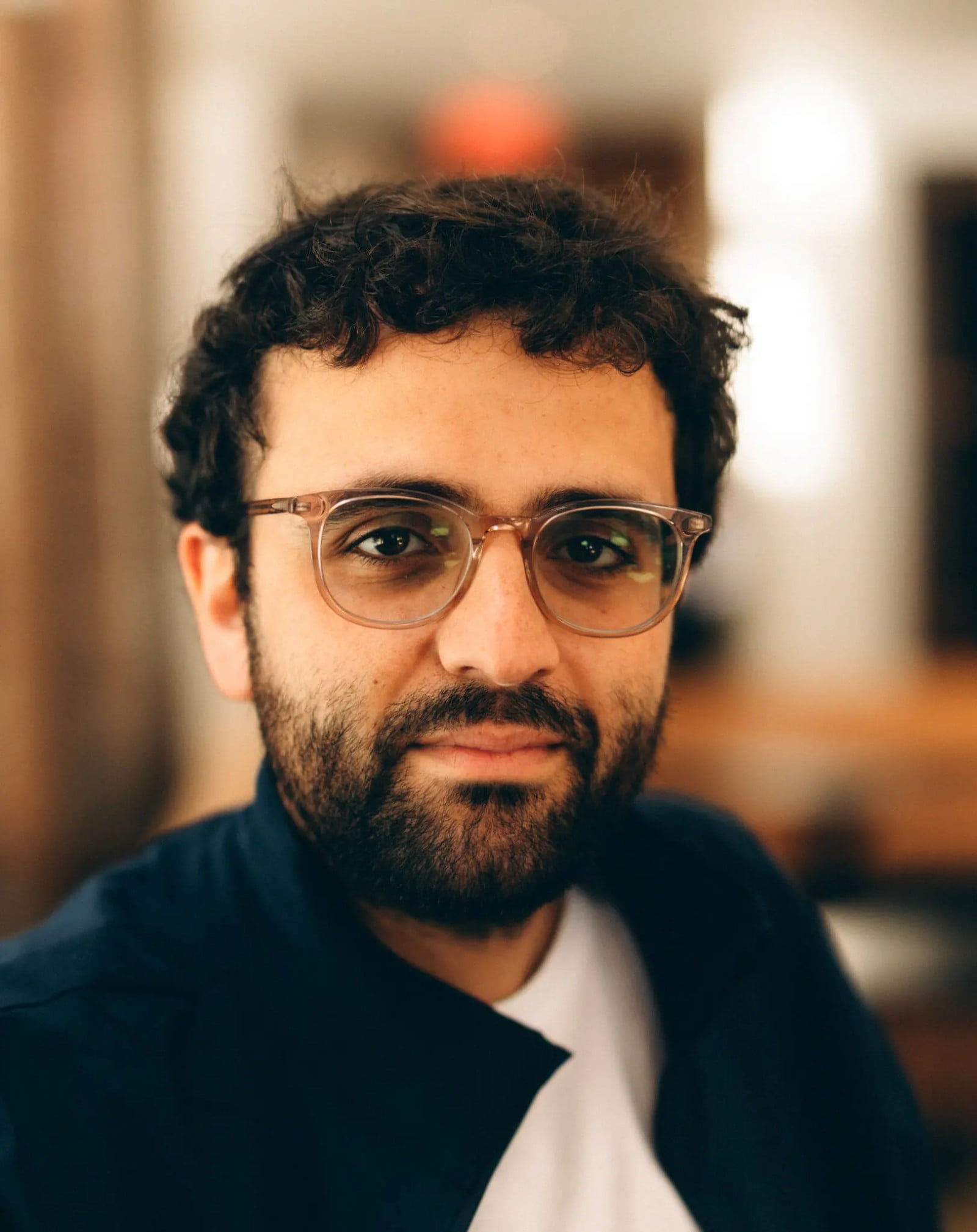
Kalshi was founded in 2018 and opened to the public in 2021. The founders are two graduates who just left MIT: CEO Tarek Mansour and COO Luana Lopes Lara. In May of this year, the company completed a new round of financing, with a valuation reaching $22 billion. Mansour grew up in Lebanon, and Lopes Lara is from Brazil. According to Forbes, the two are only 30 years old and are already billionaires.
In the United States, prediction markets are regulated by the Commodity Futures Trading Commission (CFTC), which allows them to operate nationwide once approved. Gambling companies, on the other hand, must obtain licenses from each state one by one, and the regulatory rules for the two are different. An investigation by The New York Times shows that the recent CFTC staff reductions and relaxation of enforcement have objectively promoted the development of the prediction market industry.
The rapid expansion of the industry has attracted a large number of investors and newcomers, including individuals with ties to the Trump family: Donald Trump Jr. is an investor in Polymarket and serves as a paid advisor to Kalshi. Mark Zuckerberg of the metaverse platform Meta is also interested in the prediction market track.
Some legislators and regulatory bodies believe that prediction markets are merely a rebranded form of gambling. The industry also faces the risk of insider trading: in recent months, a U.S. soldier involved in the capture of Venezuelan President Maduro placed bets on relevant events on Polymarket; a teleprompter operator at the White House placed bets on Trump's speech content on Kalshi.
The Attorney General of New York, Letitia James, recently sued Kalshi, accusing it of illegal operation and evasion of state gambling regulations. Kalshi stated that the lawsuit is merely a "political stunt" and that states have no authority to order the company to cease operations. More than ten states have introduced regulatory bills targeting prediction markets this year.
In the disclosure of the previous round of financing, Kalshi stated that its annualized trading volume soared to $178 billion. In Mansour's view, a market that allows people to back their predictions with money holds significant value, helping to "calibrate" (a term he often uses) this "information-overloaded but truth-deficient" world.
The following is the content of this interview, with text edited for brevity.

Tarek Mansour
Q: You once stated that one of Kalshi's visions is the “financialization of everything,” which many consider to be dystopian. Why do you think this is a good thing?
I believe people have taken this statement out of context. The charm of prediction markets lies in their ability to transform subjective, emotional, and politically charged debates into a mathematical and objective system, with clear and transparent incentive mechanisms. If you conduct thorough research, engage in rational analysis, and strive to seek the truth, you are likely to profit; if your views are biased, disconnected from reality, or extremely partisan, you are likely to lose money in the end.
This market possesses a unique sense of order: you can clearly discern the motivations behind others' opinions. People participate in this game essentially to pursue the truth, with the goal of earning returns.
Q: Many users currently participate in sports event trading. What is the proportion of sports trading versus other categories in platform event contracts?
Indeed, people are keen on trading sports events. Most of our users enjoy mathematics, economics, and trading, and have a passion for considering probabilities and various variables that influence event outcomes. Sports events are an excellent training ground for probabilistic thinking.
Q: What are the specific data?
Last year, sports-related trading accounted for about 95%, and now it is close to two-thirds. There are countless sports events every week, but political events do not occur continuously. Sports trading provides ample liquidity to other categories such as cryptocurrencies, politics, and macroeconomics, significantly boosting the growth of other sectors.
Q: How is the political category developing currently?
The market size for major political events can reach $50 million to $100 million. As the number of participants increases, the accuracy of market pricing significantly improves, and expectations become more aligned with reality.
Q: Returning to the topic of “financialization of everything,” what are Kalshi's next steps?
Everything needs to be done in moderation. Kalshi supports reasonable regulation. We have consistently adhered to a compliant approach. In the early days of our startup, we spent several years planning product categories and striving for federal licenses, which was a difficult process. At that time, we were only 22 years old, and our first four years of our careers were spent collaborating with lawyers to promote the establishment of regulatory frameworks in the industry.
Q: Are you satisfied with the current regulatory environment? Are there any loopholes in the regulatory system?
As long as innovation and new things exist, there will always be gaps in regulation during any period. If regulation were perfect, this country would not see the birth of new things.
Q: I want to ask about the rumors of a strained relationship between you and Polymarket founder Shayne Coplan; perhaps you can discuss the true situation.
Everyone is always eager to see rivalries among peers. However, this is not direct competition. The rivals that I truly value are others: Robinhood, the Chicago Mercantile Exchange (CME), Coinbase, Interactive Brokers, major banks, and Zuckerberg who is paying attention to the prediction market track. Competing with these players excites me.
The differences we have with Polymarket essentially stem from incompatible philosophies.
Q: What are the specific differences?
The core difference lies in developmental paths. The choice between compliant operations versus unregulated wild growth. I believe Polymarket has not established a solid market risk control baseline, which, in the long run, is not good for them or the entire industry.
Q: How can you make outsiders believe that the regulatory rules Kalshi promotes truly stand on the side of user interests?
The continuous growth of the industry itself is a testament to trust; users are willing to entrust their funds to us. If everyone's interests are harmed and they no longer trust the platform, they will naturally stop using it and warn those around them.
Q: Is trading volume highly concentrated in the hands of a few traders on the platform?
I do not have exact percentage data, but the distribution of trading volume is indeed uneven. Some users trade sporadically each month, while some treat trading as a hobby or side job, and there are full-time participants, known as super forecasters. Super forecasters sift through massive amounts of information. This group may account for less than 2% of the population but contributes 70% to 80% of the trading volume.
Our most accurate inflation forecaster is just an ordinary person from Kansas; the top ten political forecasters also come from various backgrounds, without Wall Street elite backgrounds, many of whom are blue-collar workers, which is quite interesting.
Q: What measures does Kalshi take to prevent insider trading?
First, all users must complete identity verification, so the platform knows the true identity of the traders and can quickly trace back if abnormal trading occurs. Second, we have built a system comparable to the New York Stock Exchange that automatically marks suspicious trading patterns. Third, we implement a comprehensive transparency mechanism, with all trading data publicly accessible.
This matter has both advantages and disadvantages. The downside is that everyone can see the trading records; once there is a fluctuation, someone will immediately question the possibility of insider trading; the benefit is precisely in this: abnormal behavior will be supervised by everyone. If someone wants to engage in insider trading, it is equivalent to committing the act under everyone’s gaze.
Insider trading is subtle. In one sense, insider information can make market prices more efficient. But we strictly prohibit insider trading because it undermines fairness and ultimately discourages ordinary traders.
Some economists argue that insider trading can enhance prediction accuracy, thereby making everyone more trust the market conclusions. However, fairness is our priority consideration and bottom line.
Q: The company's expansion speed is rapid. How do you balance external affairs while focusing on company building?
Luana and I work at a high intensity, often working weekends; time can always be squeezed out. When the business reaches a stable stage, many affairs can be standardized and handed over to the team. She is responsible for internal operations, while I mainly handle external affairs; this model works well.
Kalshi employs a highly flattened structure which facilitates the efficient promotion of projects. There are few management levels to prevent managers from monopolizing the achievements of frontline staff. The doers are the team leaders, creating a sense of urgency and intrinsic motivation.
Q: Where does your management style come from?
Lebanese people generally have strong adaptability, and the local environment is full of uncertainties. This upbringing made me realize that the world itself is filled with variables.
In the current AI field, new changes happen almost every two weeks, with the environment changing rapidly. The organizational structure of enterprises must adapt to this rhythm. Therefore, we deliberately avoid establishing rigid hierarchical structures. Whether facing significant challenges or brand new opportunities, the team can flexibly reorganize and collaborate.
Q: Continuing on the topic of your growth experience, what is the most important advice your parents gave you?
My mother always told me: always put in 120% effort, striving for excellence. The difference in results often lies in that last 20% of effort.
Rapid-fire Q&A
Q: Which recent Kalshi trade has caught your attention?
A: Contracts related to computing power prices.
Q: What is your favorite question to ask when interviewing candidates?
A: What do you think of Elon Musk?
Q: What is your most contrarian viewpoint?
A: I believe the success of any great company does not fundamentally depend on its executives.
Q: Do you consider yourself a manager?
A: No, I am not good at managing others.
Q: What question have you recently asked AI?
A: I asked ChatGPT about the probability of the Democratic Party winning in the 2028 midterm elections; AI can now retrieve Kalshi's data for deductions.
Q: What is the worst advice young entrepreneurs commonly hear today?
A: Many people advise entrepreneurs to collect all sorts of opinions. But there is no one-size-fits-all formula for starting a business. People overly rely on others’ opinions, while many also enjoy guiding others to gain a sense of superiority; however, most advice has little value.
Q: What advice would you give to young entrepreneurs?
A: Do not take my words as gospel. Within controllable limits, be as bold as possible in trial and error, and take risks.
Q: What's the best advice regarding meetings?
A: If it can be avoided, don’t hold a meeting.
免责声明:本文章仅代表作者个人观点,不代表本平台的立场和观点。本文章仅供信息分享,不构成对任何人的任何投资建议。用户与作者之间的任何争议,与本平台无关。如网页中刊载的文章或图片涉及侵权,请提供相关的权利证明和身份证明发送邮件到support@aicoin.com,本平台相关工作人员将会进行核查。


