
Original Title: Charts of the Week: Head In The Neoclouds
Original Author: Moses Sternstein, a16z
Editor's note: In the context of generative AI driving a new round of computing power investment, the market's discussion of AI infrastructure is shifting from "Is there enough GPU?" to "Who can provide computing power sustainably?" As the consensus grows around model training, inference demand, and data center expansion, a deeper question emerges: Can the rapid growth of computing power demand truly translate into stable profits and cash flow?
In the "Charts of the Week" published by a16z New Media, author Moses Sternstein delves into new cloud companies such as CoreWeave, Nebius, and Applied Digital, discussing the growth of the AI computing power market, valuation, and profit contradictions, and extending further to horizontal SaaS, model routing, and talent competition in frontier labs.
In this article, the author does not simply assess whether AI demand is strong but dissects current AI transactions into a set of deeper structural issues: how existing infrastructure is being repriced, why revenue growth has not improved market expectations simultaneously, and why the competitive focus of the AI industry is shifting from mere expansion to efficiency and returns.
First, there is the rediscovery of the value of infrastructure. In the past, land along railroad lines, natural gas pipelines, and cable networks served specific industries before being transformed into telecommunications and internet infrastructure. Today, a similar asset re-evaluation is happening. Some new cloud companies originally served cryptocurrency mining and have operational experience in power, data centers, cooling systems, and high-density computing; after the explosion of AI demand, these capabilities were rapidly transformed into scarce computing power supply. This signifies that the competition for AI infrastructure does not start from scratch; early advantages often come from the reconfiguration of old assets, energy resources, and engineering capabilities.
Second, there is a coexistence of high revenue growth and profit uncertainty. The early revenue growth rates of new cloud companies like CoreWeave once surpassed those of cloud giants like AWS during their initial stages, yet the capital markets did not recognize them to the same degree. The reason is that new clouds are not typical light-asset software businesses. GPU procurement, power access, data center construction, chip depreciation, and debt interest will rise in tandem with scale, often even faster than revenue growth. This means that revenue expansion can only prove that AI computing power demand is strong, but it does not automatically demonstrate that the business model has a sufficiently high capital return rate. What the market is truly waiting for is whether these companies can convert orders and revenue into sustainable free cash flow.
Third, the value of software is being differentiated according to the impact of AI. Previously, there were concerns that generative AI would generally weaken the moats of SaaS companies, but Atlassian's performance shows that AI can also enhance customer spending and product stickiness. Meanwhile, cybersecurity and observability software continue to receive valuation premiums because AI has increased potential risks and heightened enterprise reliance on mature solutions. This indicates that the so-called "SaaS apocalypse" will not occur uniformly. Whether AI serves as substitute products, drives down prices, or expands demand is becoming a new standard for the differentiation of software valuations.
Fourth, AI applications are transitioning from "stacking tokens" to optimizing tokens. In the past, companies often preferred to call upon the strongest models directly or give engineering teams a budget to experiment; now, companies like Databricks have begun to use intelligent routing to match different models of varying prices and performance according to task difficulty, reducing costs while maintaining effectiveness. The decrease in per-token prices does not necessarily mean a contraction in total AI spending: when unit costs decrease and application scenarios increase, the total token consumption and overall market size may continue to rise. Efficiency and demand are not mutually exclusive but may form a mutually reinforcing cycle.
If this article could be condensed into one judgment, it would be: AI infrastructure has proven itself capable of generating rapid growth, but the next phase's success will depend on whether companies can convert that growth into greater capital efficiency. In this sense, the subject of discussion is no longer just whether CoreWeave and others can become the next generation of cloud giants, but whether the entire AI industry can shift from computing power expansion to sustainable business returns.
Below is the original content:
Head Under "New Cloud"
In the early 20th century, the Southern Pacific Railroad Company had a vast amount of idle construction rights on cleared land connecting cities and towns across the United States. The range of railroad rights-of-way extended far beyond the tracks themselves, leaving many corridors available for development.
Thus, this railroad company laid a communication network along the railway line, naming it the "Southern Pacific Railroad Internal Networking Telephony." By the 1970s, the company began commercializing this network, opening it up to a broader user base.
Subsequently, two things happened simultaneously: on one hand, the monopoly structure of the long-distance phone market came to an end; on the other hand, fiber optic cables became commercially viable. The original communication corridors were transformed into fiber lines, and this network later became known by its English acronym, "Sprint." Assets that once served railroads thus became the backbone of the telecommunications revolution.
The transformation of existing physical networks into larger-scale commercial technology infrastructure was not limited to railroad companies.
In the 1980s, Williams Company repurposed idle natural gas pipelines into fiber channels and established WilTel. The company was later sold and eventually renamed WorldCom. By the 1990s, the one-way coaxial cables laid for cable television businesses underwent a large-scale, costly upgrade, ultimately becoming the infrastructure for Comcast and Charter to provide broadband internet services to consumers.
This brings us to another type of company: those that also possess ready-made infrastructure and whose assets are now being significantly transformed and repriced to meet the demand of an emerging technology—these are the "new cloud" companies.
In summary, most new cloud companies were primarily engaged in energy and computing-intensive cryptocurrency mining businesses, and then the AI wave arrived. Suddenly, whoever owns access to electricity, infrastructure, and experience in building and managing high-intensity computing loads—like CoreWeave, which also includes a large number of GPUs—has staked a claim to one of today’s hottest tracks.
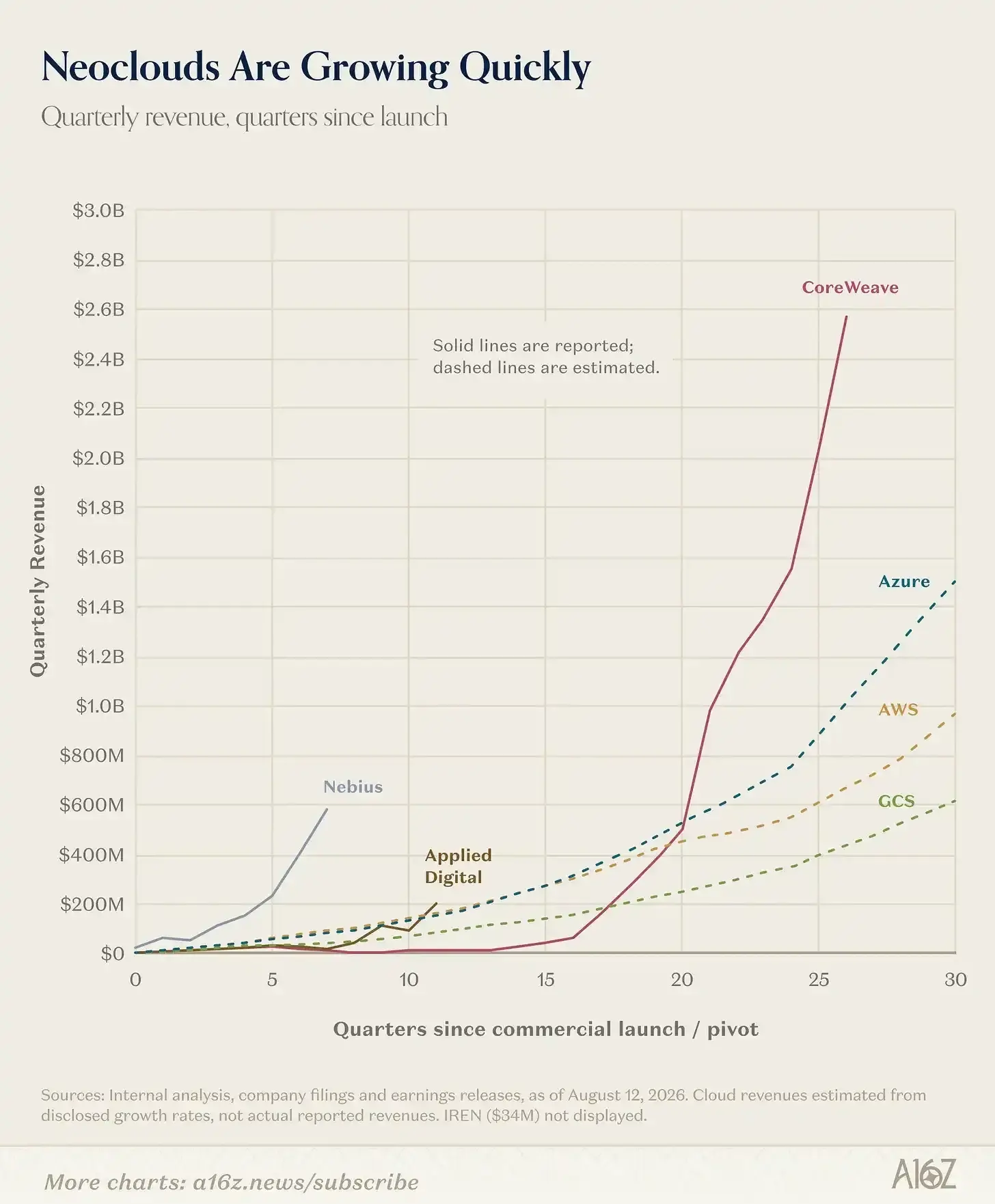
Of course, this is not a strict comparison of like-for-like. But if we look at the three largest listed new cloud companies, their revenue growth is indeed remarkable.
We can only estimate the cloud business revenues of ultra-large cloud service providers during their startup phases, but the overall trends are clear: new cloud companies are experiencing rapid growth, noticeably faster than that of the major cloud service providers in their early stages.
It's important to note that in the entire computing power sales market, new cloud companies remain relatively small participants.
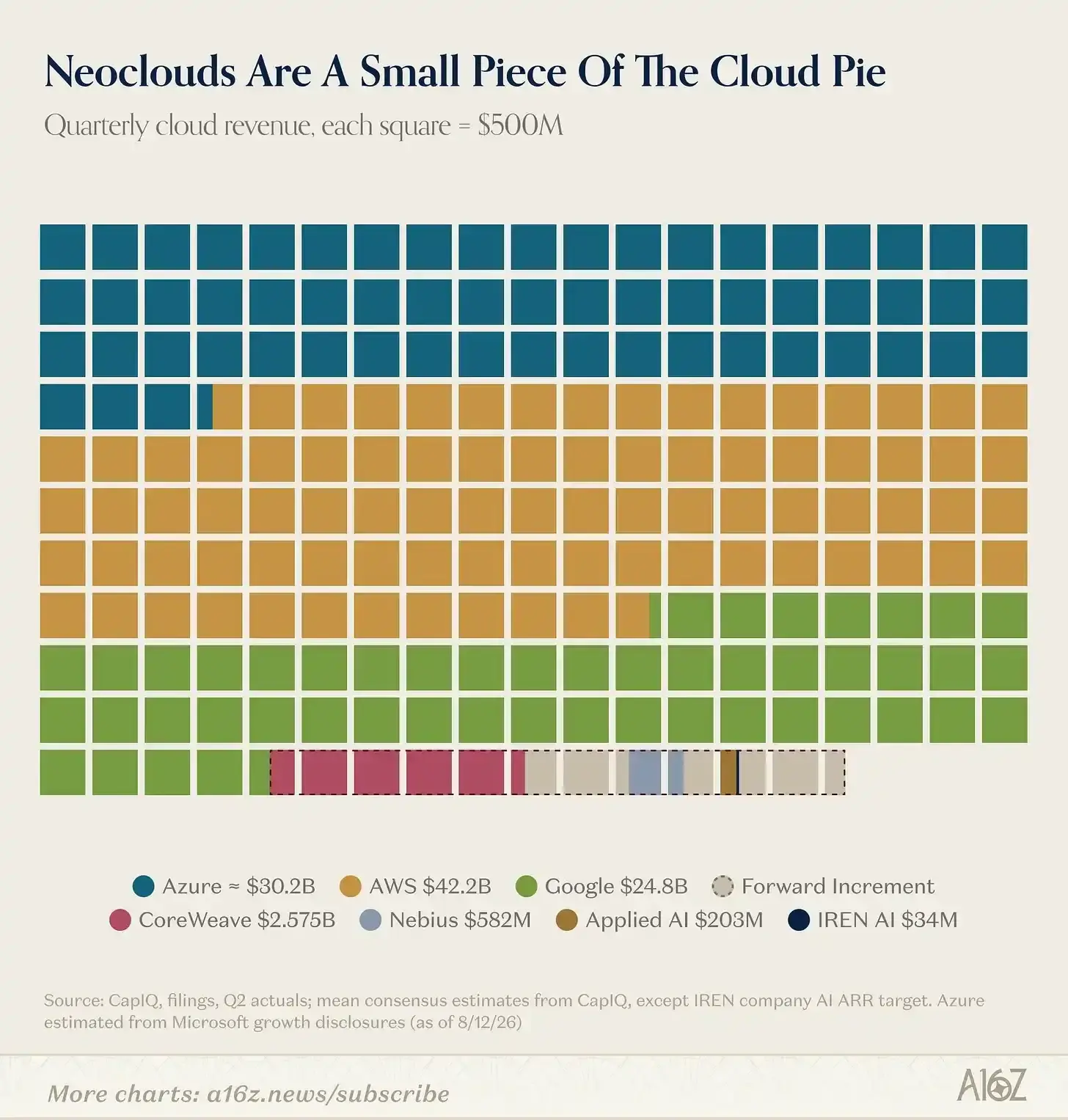
They still have a long way to go to reach the scale of ultra-large cloud service providers.
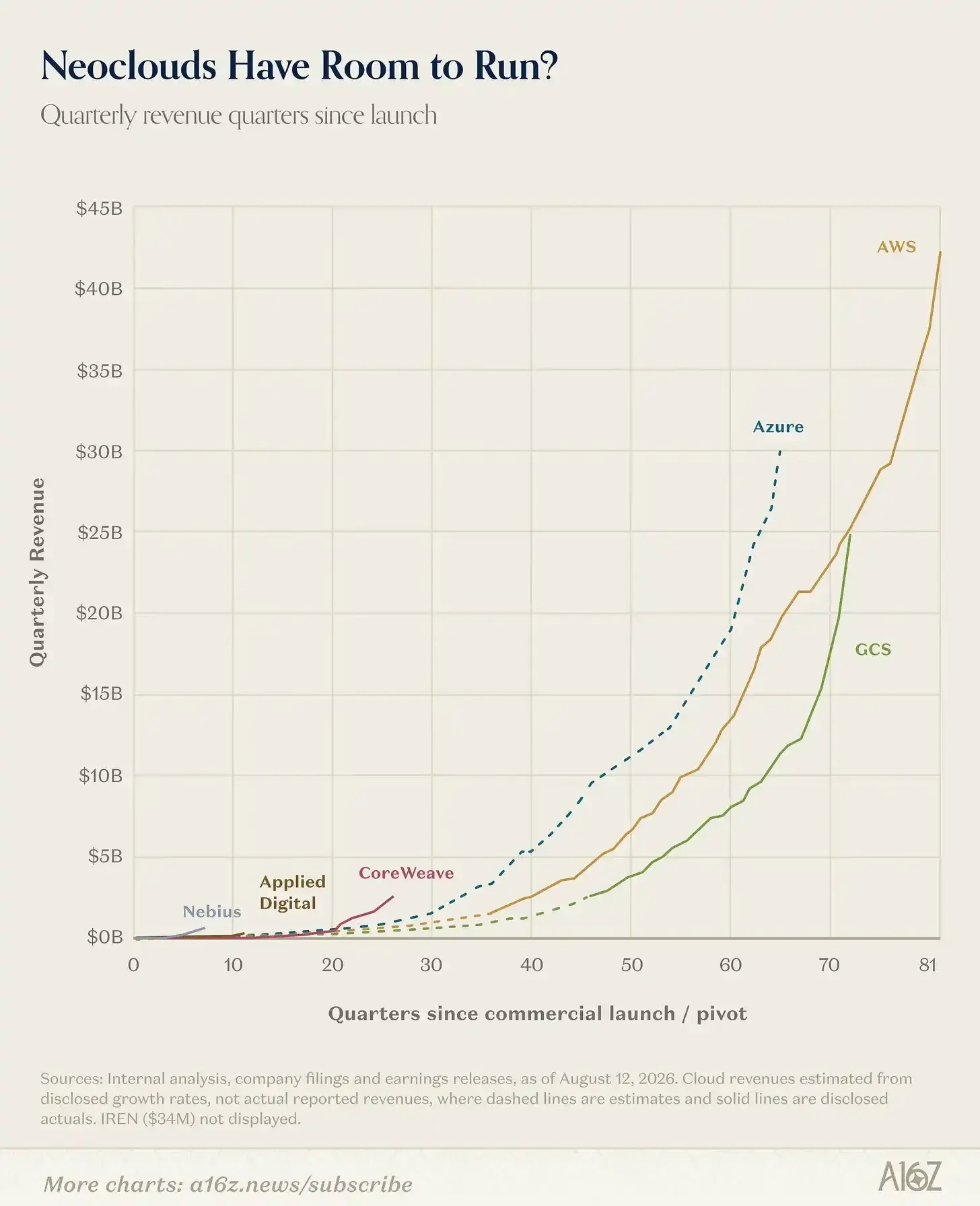
The revenue generated by ultra-large cloud service providers each quarter is several orders of magnitude higher than that of new cloud companies. However, at the same time, CoreWeave reached $2.6 billion in revenue in approximately 25 quarters, a feat that AWS took 40 quarters to achieve after its launch. To reiterate, these companies are indeed growing at an incredibly fast pace.
With such high growth rates and riding the tailwind of the AI industry, one would expect investors to be quite excited. To some extent, this is true, but the reality is more complex.
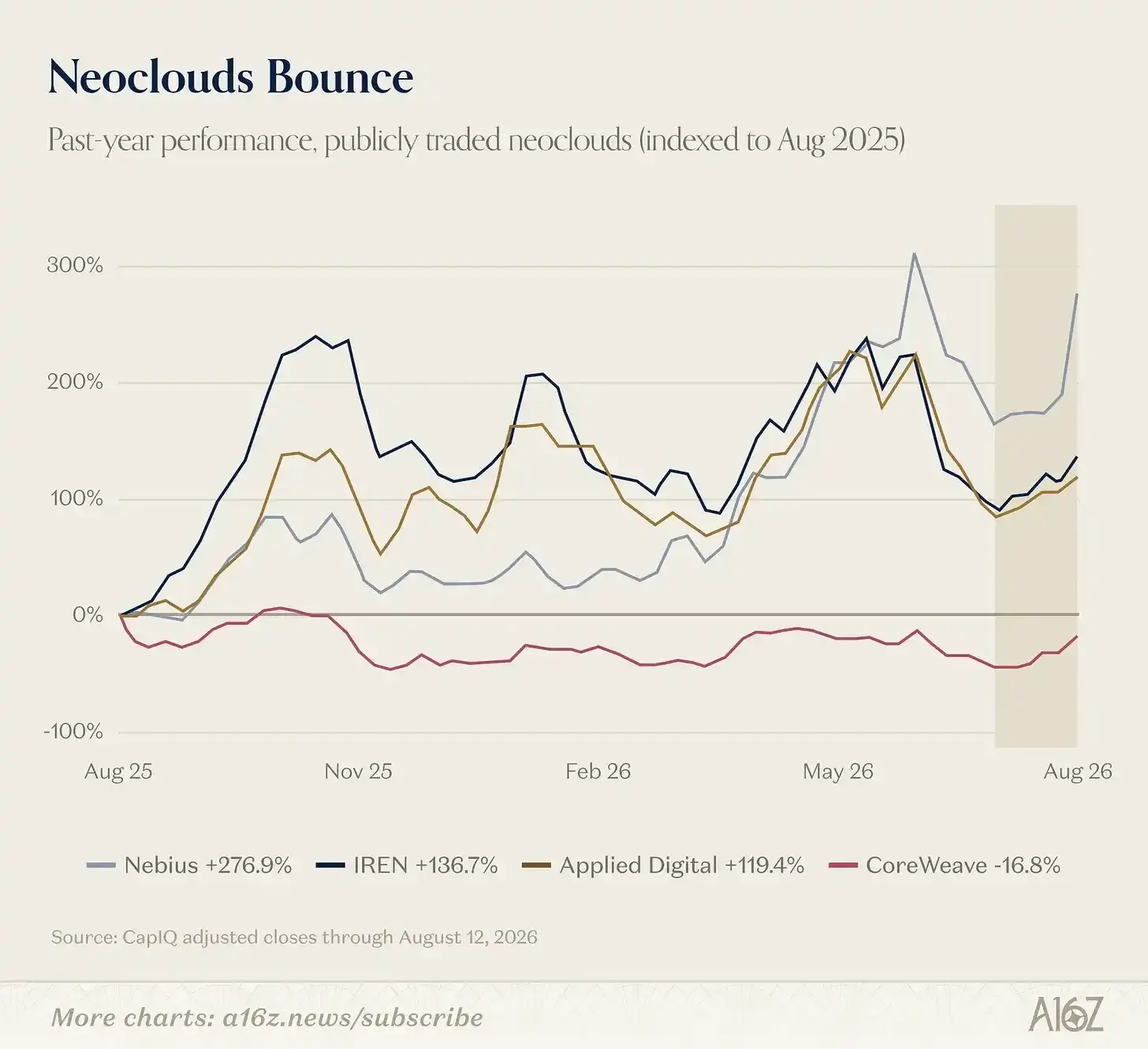
Although these companies generally performed well in their recent earnings reports, CoreWeave's stock price has still fallen about 16% over the past year; only Nebius has come close to its previous high.
Therefore, the overall story is still positive, but for the largest new cloud company among them, the attraction has clearly diminished somewhat.
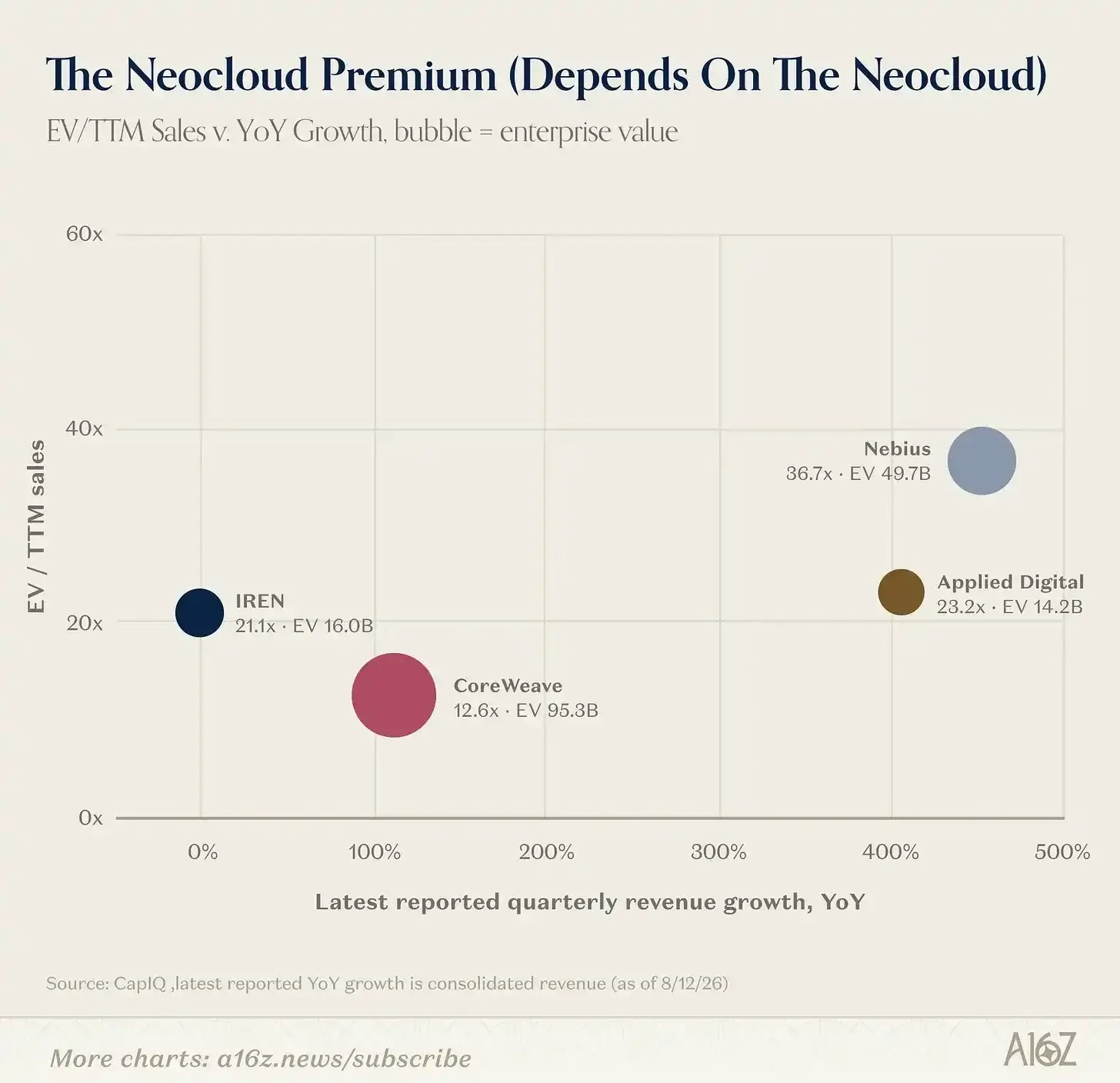
The recent market performance has been relatively flat, partly because many growth expectations may already be reflected in valuations.
For capital-intensive companies like new clouds, price-to-sales ratio is not the most appropriate valuation metric, but it still serves as an intuitive illustration. Smaller, faster-growing Nebius and Applied Digital have significantly higher valuation premiums than the much larger CoreWeave. CoreWeave's revenue is still doubling, but it is no longer keeping pace with the top companies at 400% to 450% growth rates.
If new cloud companies have any significant issues, it is not growth, but long-term profitability. New cloud companies need to continuously invest in chips, power, and physical infrastructure to scale, and these costs are not low:
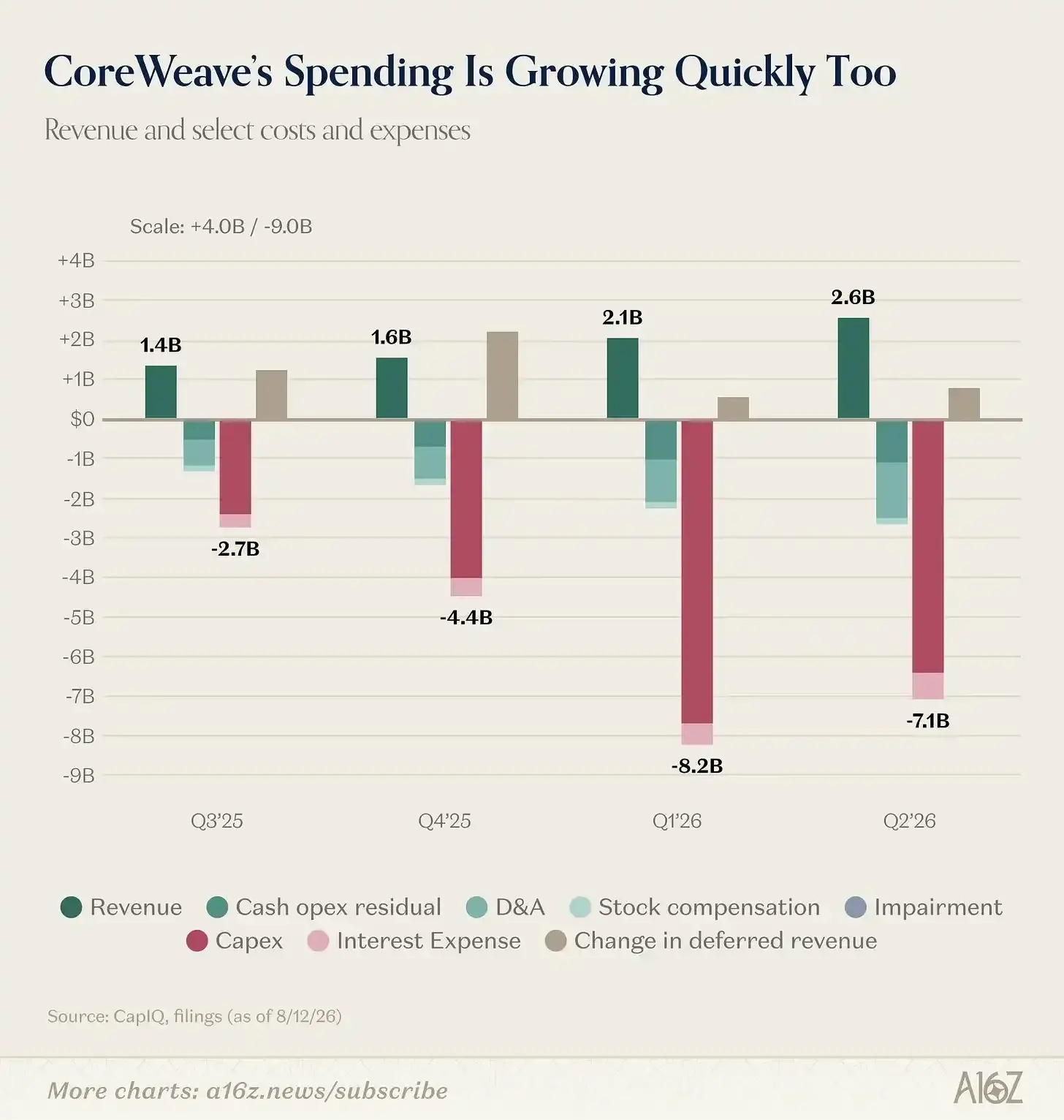
For example, CoreWeave's revenue growth is indeed impressive, but its capital expenditures are even more staggering. Other major costs include chip depreciation—where the depreciation amount has already exceeded half of revenue—and the interest expenses from borrowing to build expensive infrastructure in advance, which are still rising.
This article does not aim to judge whether new cloud companies will ultimately succeed or whether their current stock prices are reasonable. Beyond the topicality of the subject itself, the real point being made is that new cloud companies exemplify the tug-of-war dynamics present in the entire AI transaction landscape.
On one hand, they operate in a vertical market— the computing power market— that is expanding far beyond anyone's previous expectations and continues to do so, exhibiting historically rare growth rates; on the other hand, the costs of building such enterprises are at historical highs, requiring substantial and continuously depreciating fixed infrastructure investment.
Return of Horizontal SaaS?
Next, let's briefly update the continually evolving market landscape of the "SaaS apocalypse." One of the companies that was hit hard during the recent software stock sell-off has performed quite well over the past month.
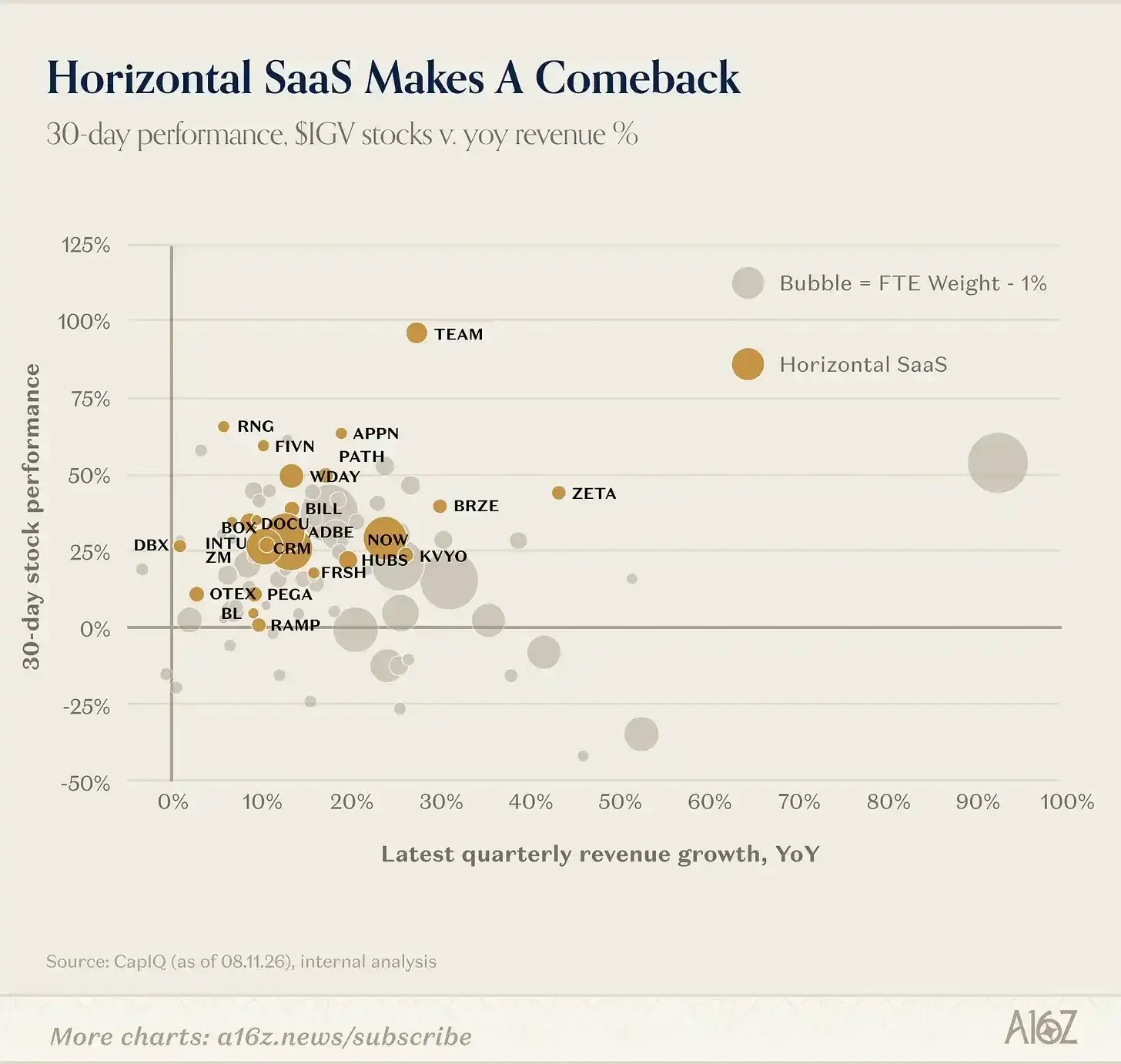
Over the past 30 trading days, horizontal software companies have performed well among the IGV software ETF components—despite the fact that they have retraced some gains since the data collection began.
Overall, the fundamentals of these companies remain strong. Especially Atlassian, which has not declined under the AI impact as previously expected by the market.
This productivity software company reported both performance and guidance exceeding expectations: cloud business revenue grew 31% year-on-year, with backlog revenue growth even higher. But perhaps the more critical signal is that AI is becoming a booster for business growth rather than a hindrance. Atlassian stated that its AI assistant Rovo has been widely adopted; simultaneously, customers using Rovo are seeing their spending growth rates nearly double those of non-Rovo users.
This is good news for Atlassian, good news for Rovo, and good news for horizontal SaaS.
However, the overall valuation of horizontal SaaS still remains slightly lower than that of other software categories.
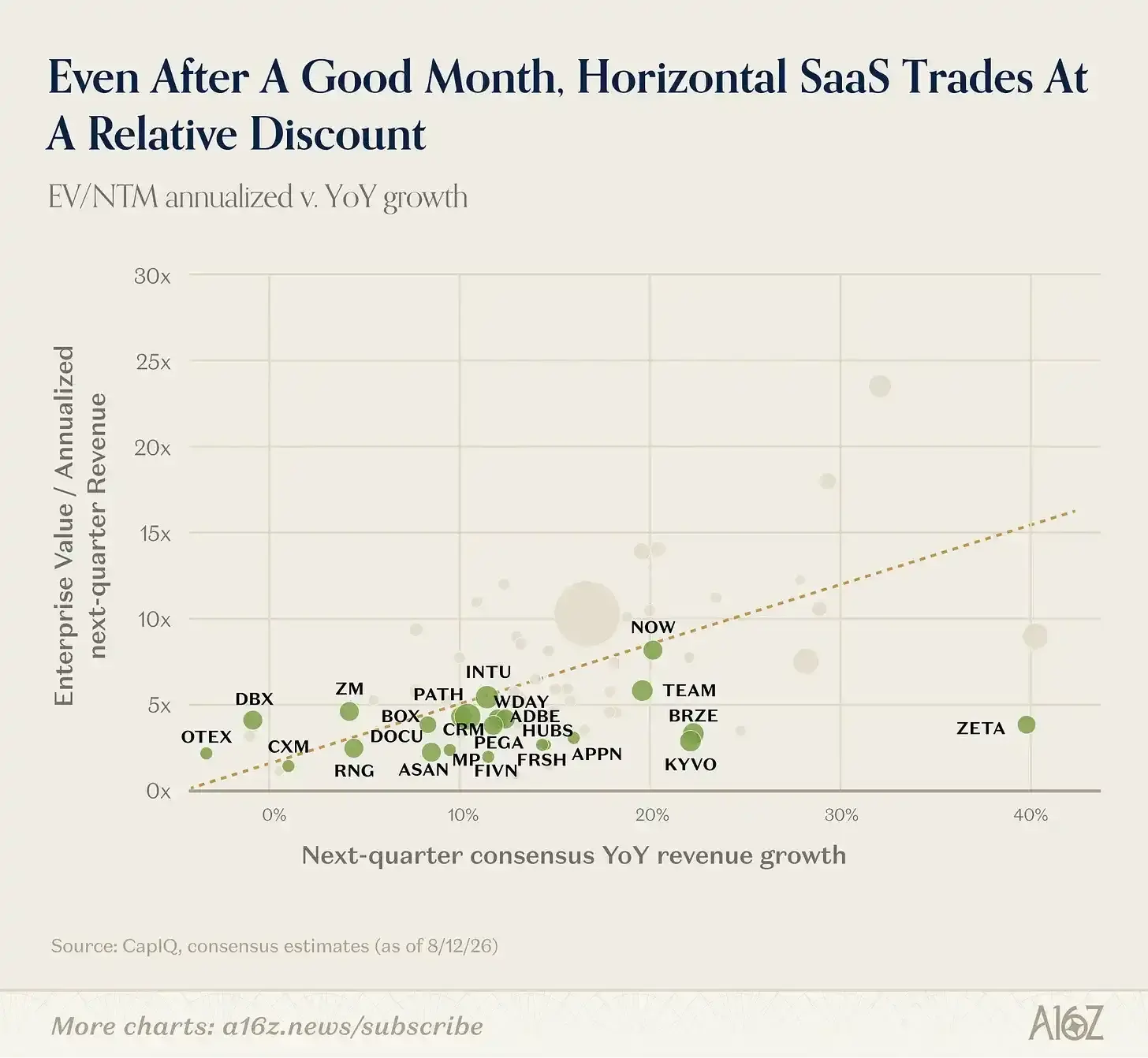
With a few exceptions, including Atlassian, horizontal SaaS companies generally have expected price-to-sales ratios that are below the levels corresponding to the "growth—valuation multiple" trend line.
Again, it's important to emphasize that horizontal SaaS has just gone through a relatively good "month." One month's performance is far from enough to convince the market that the "SaaS apocalypse" has been canceled.
Of course, if your software business falls into the cybersecurity or observability field, that's another matter— for these companies, the so-called "SaaS apocalypse" has never occurred.
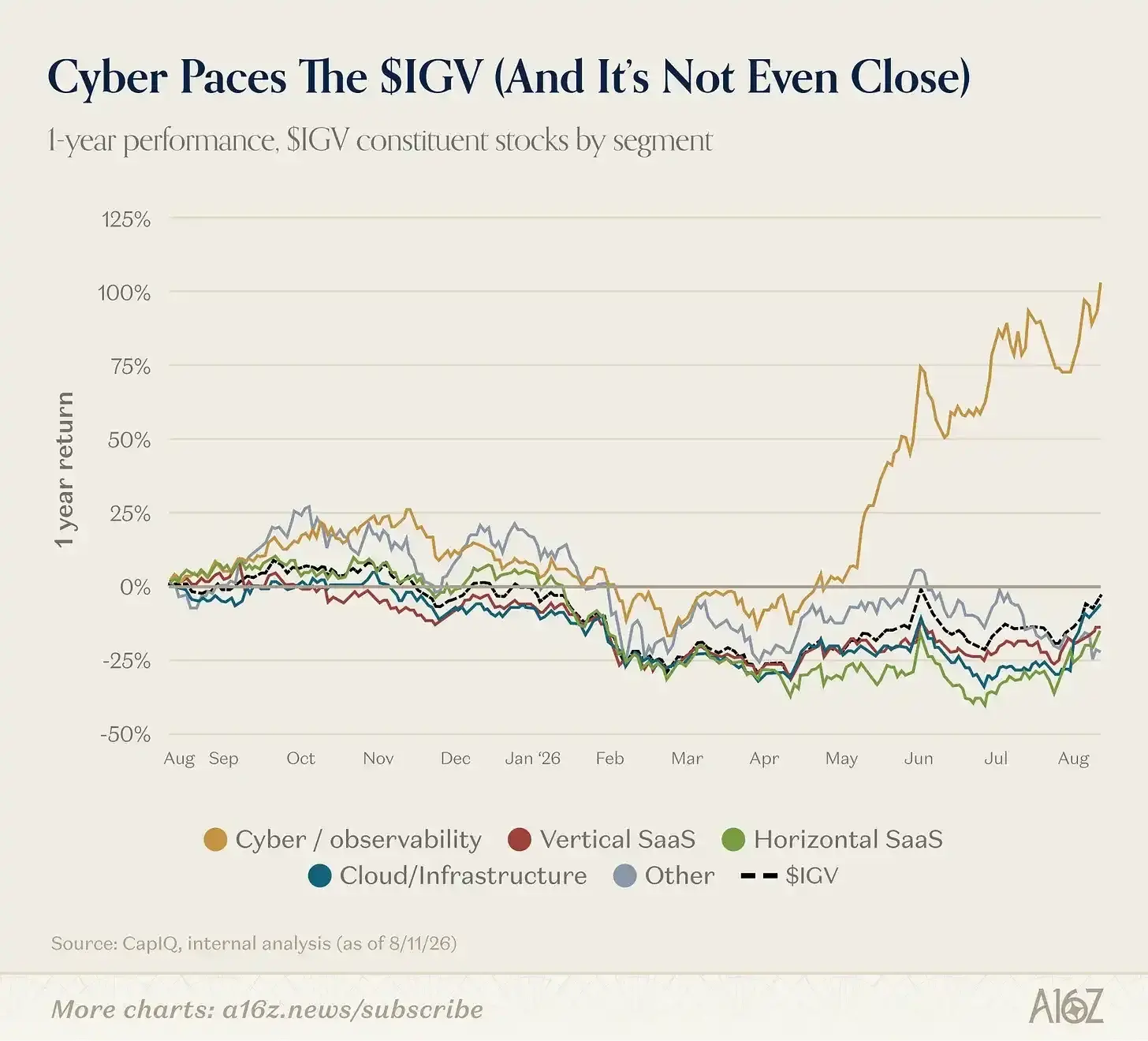
The cybersecurity sector continues to outperform other categories within the IGV software ETF. In this field, AI acts as a tailwind: the market generally believes that AI has heightened people's risk perception regarding cybersecurity threats, and no enterprise client will rely on "vibe coding" to cobble together their own security solutions.
Whether this logic ultimately holds true, of course, still needs time to be tested. But at least currently, the situations of traditional software companies are far from uniform.
Investors are highly focused on whether AI will yield gains or cause erosion for each company, continually revising their judgments with each new batch of data— this is only natural.
Moving Towards Efficiency at the Token Input Frontier
The market landscape surrounding model usage, token consumption, and token spending management continues to evolve in various interesting ways.
Take Databricks as an example.
On questions like "Which model should we use?" and "Which model is best?", Databricks has neither adopted a winner-takes-all mindset nor simply given engineers a budget to decide how to spend. Instead, it posed another question: "What if we develop a solution that automatically assigns the right tasks to the appropriate models?"
Databricks is certainly not the only company doing this, but it has developed a "Smart Router," and the results have been quite satisfactory.
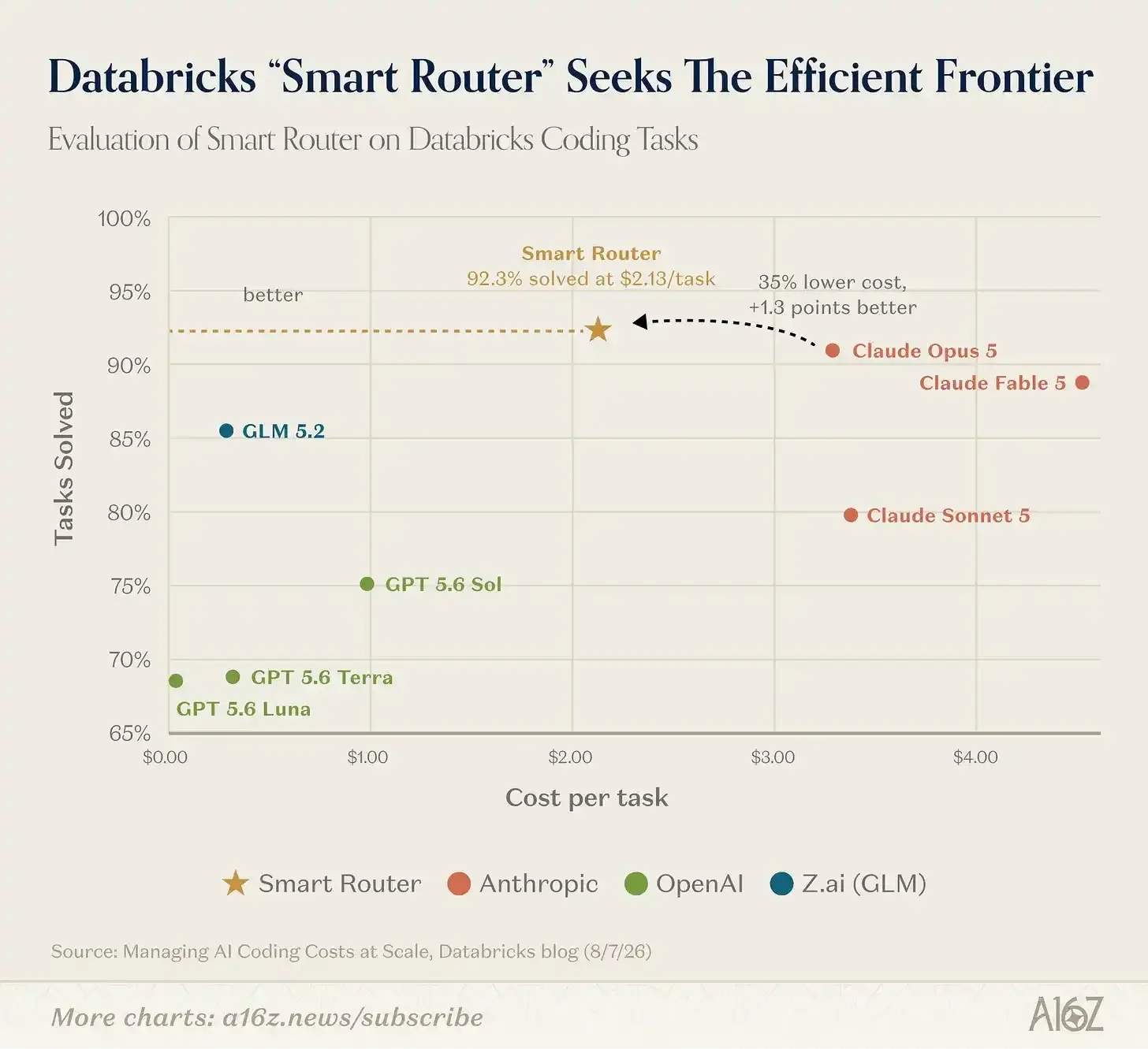
Reportedly, Databricks' router can invoke more powerful, higher-priced models when necessary while using weaker, lower-priced models when conditions allow, thereby "consistently reducing average task costs by over 30%."
Overall, pursuing efficiency at the "token spending frontier" is hard to characterize as anything but a positive development. This means that demand continues to grow, application scenarios are not only evolving at the performance frontier but also spreading to less advanced models. Initially perceived as suboptimal models, these are now thought to be rapidly obsolete.
As we mentioned earlier, improvements in efficiency may expand the coverage of demand, which is precisely the type of dynamic the market wants to see—a phenomenon akin to the Jevons Paradox.
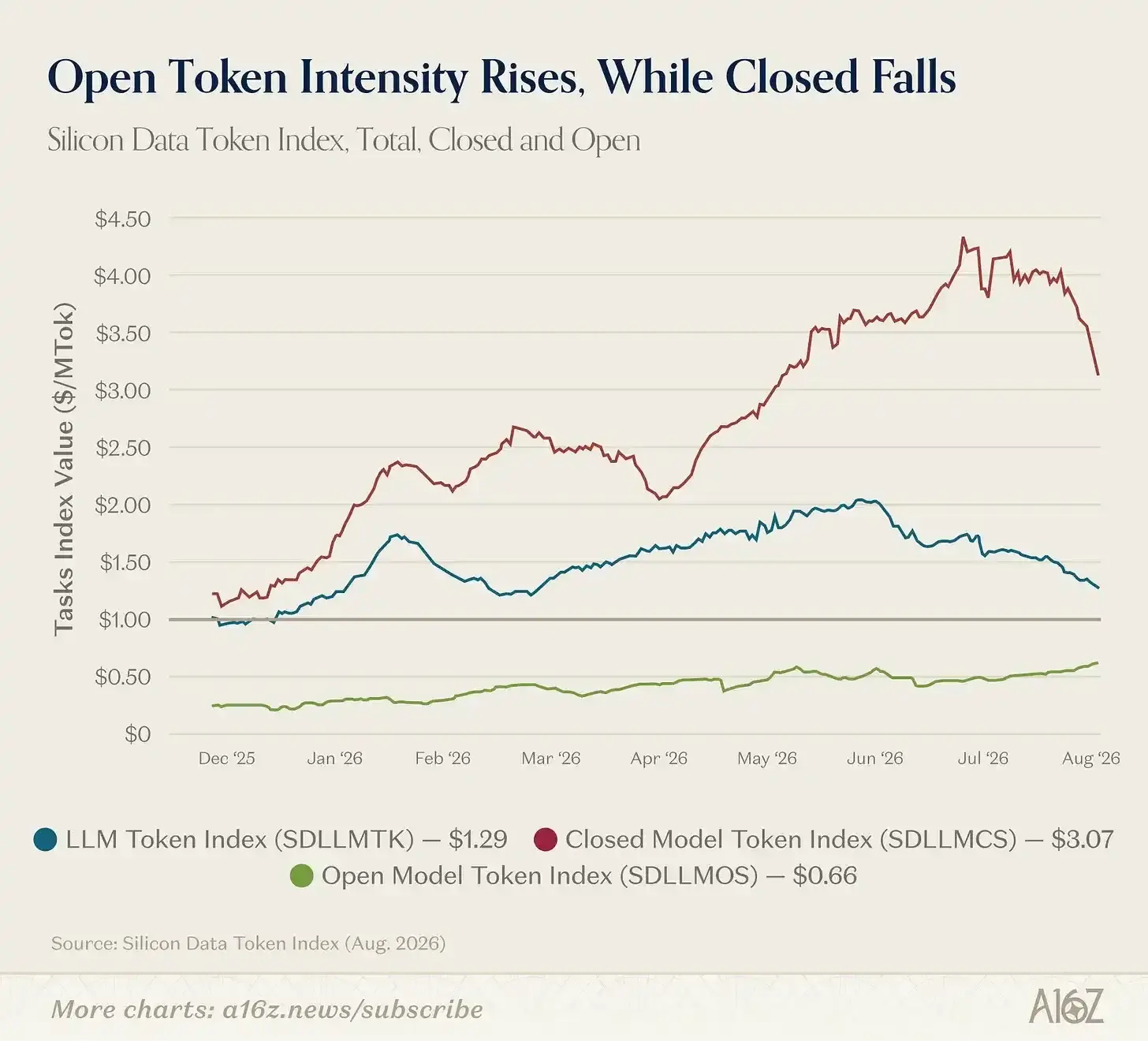
The Token Price Strength Index of Silicon Data shows that overall price strength is declining, especially as lower-priced open models are gaining higher market shares in a continually expanding market.
It is necessary to clarify a commonly misunderstood concept again: these indices measure the cost intensity of token spending rather than absolute dollar amounts. They depend both on the quantity of tokens consumed and the comprehensive cost of tokens. This means that even if the price per token declines, the total consumption and total spending amount for tokens may continue to rise.
What is truly important is that overall demand continues to grow, and pricing and model selection gradually move toward the efficiency frontier, which will only further drive this growth. Particularly noteworthy is that "AI demand" or "AI adoption" is not a single, homogenized concept. There remain significant gaps between heavy users and other users. This clearly indicates that "always using the best model" may suit some enterprises but definitely not all.
Today, the market is rapidly forming more alternative options. Overall, this is a good thing.
According to data from Ramp, an enterprise spending management platform, all businesses are increasing AI spending, but the median spending gap between the top 10% of companies and others, as well as between the top 10% and the top 1%, is extremely wide.
Ramp's data tends to favor tech companies, and this aspect should be considered in the interpretation. However, it shows that companies ranked in the top 10% for spending have per capita AI spending approximately 50 times greater than median companies.
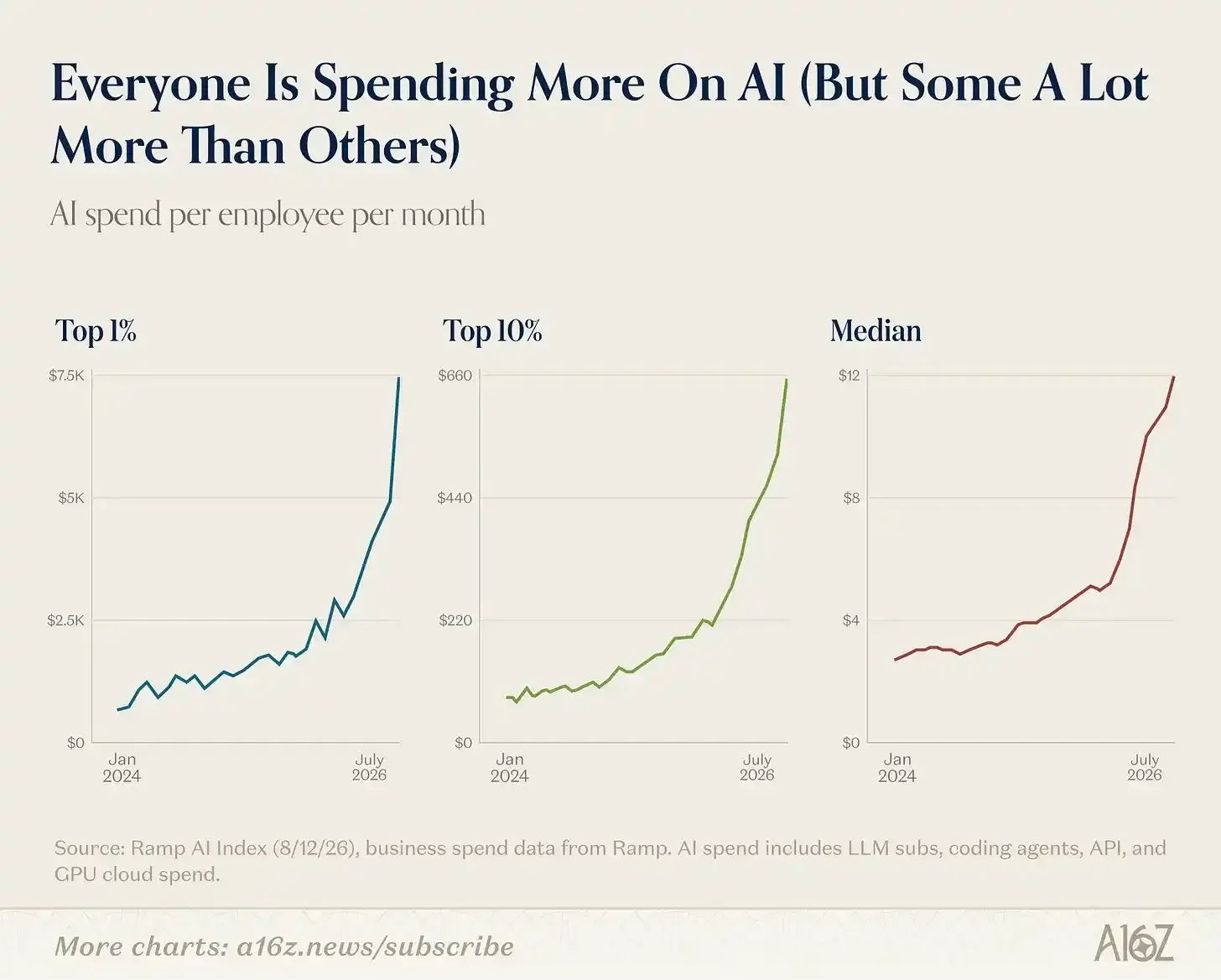
This distribution is likely not coincidental. Companies that can derive more value from AI spending are probably also those investing the most— albeit not every company aligns with this pattern, at least a considerable number do.
Boston Consulting Group's analysis of 107 publicly traded companies revealed that companies in the top two quintiles for Token usage show significantly faster revenue growth than others.
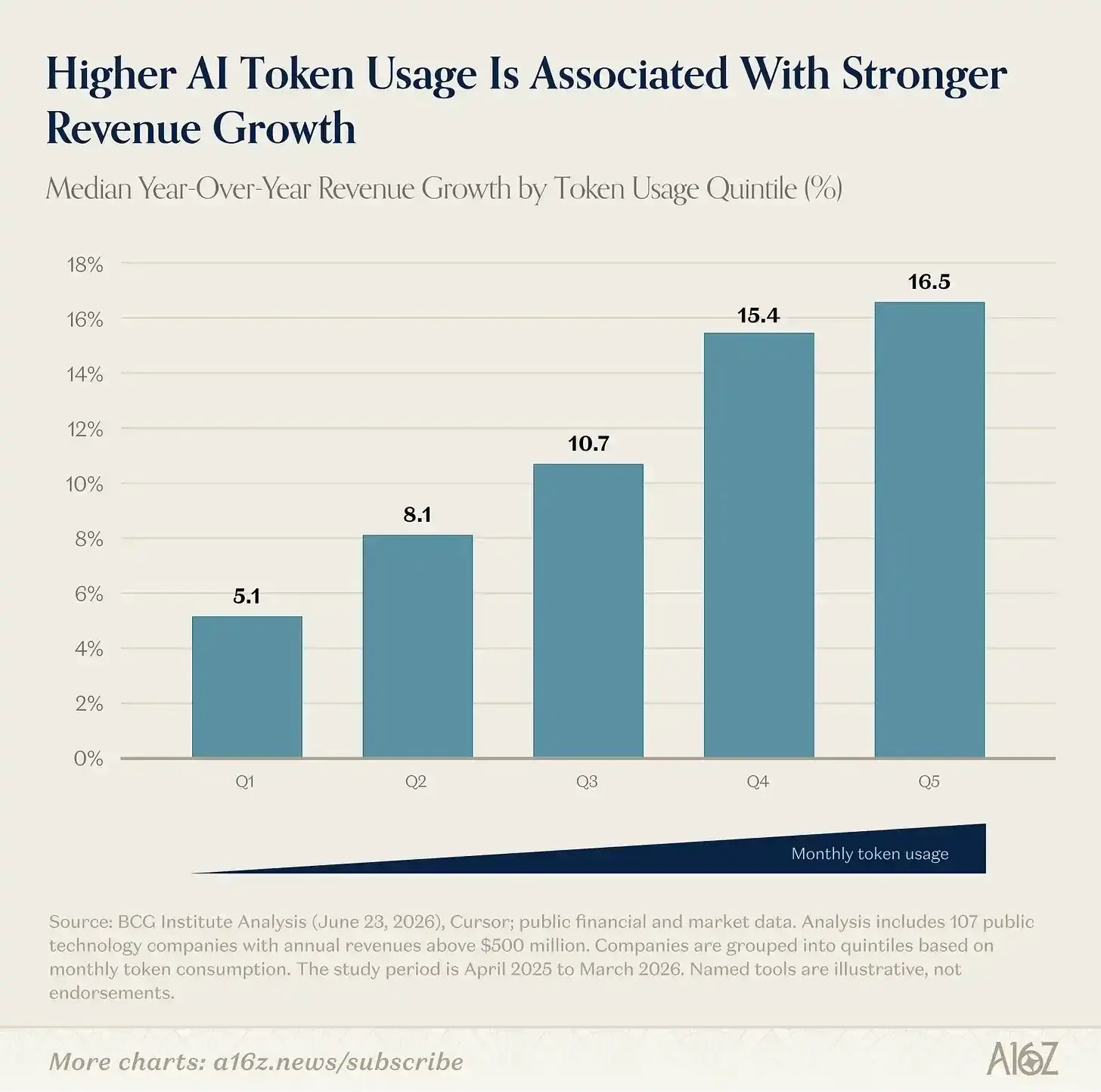
The core point to express here is that token demand and usage efficiency are mutually reinforcing: the more value companies gain, the more tokens they consume.
This process certainly involves a repeated weighing of inputs and returns, and R&D will always include some upfront costs. However, for the vast majority of companies, indiscriminately "stacking tokens" has never been a viable strategy.
Therefore, it's undeniably a positive development that companies are becoming less reliant on such practices in the future.
Talent Competition in Frontier Labs
New Media recently welcomed two outstanding team members to OpenAI, so we conclude with a few intriguing charts regarding talent recruitment in frontier AI labs.
Dario Amodei recently expressed concerns that employees are placing money above mission. From the data of Levels.fyi, this concern may not be unfounded.
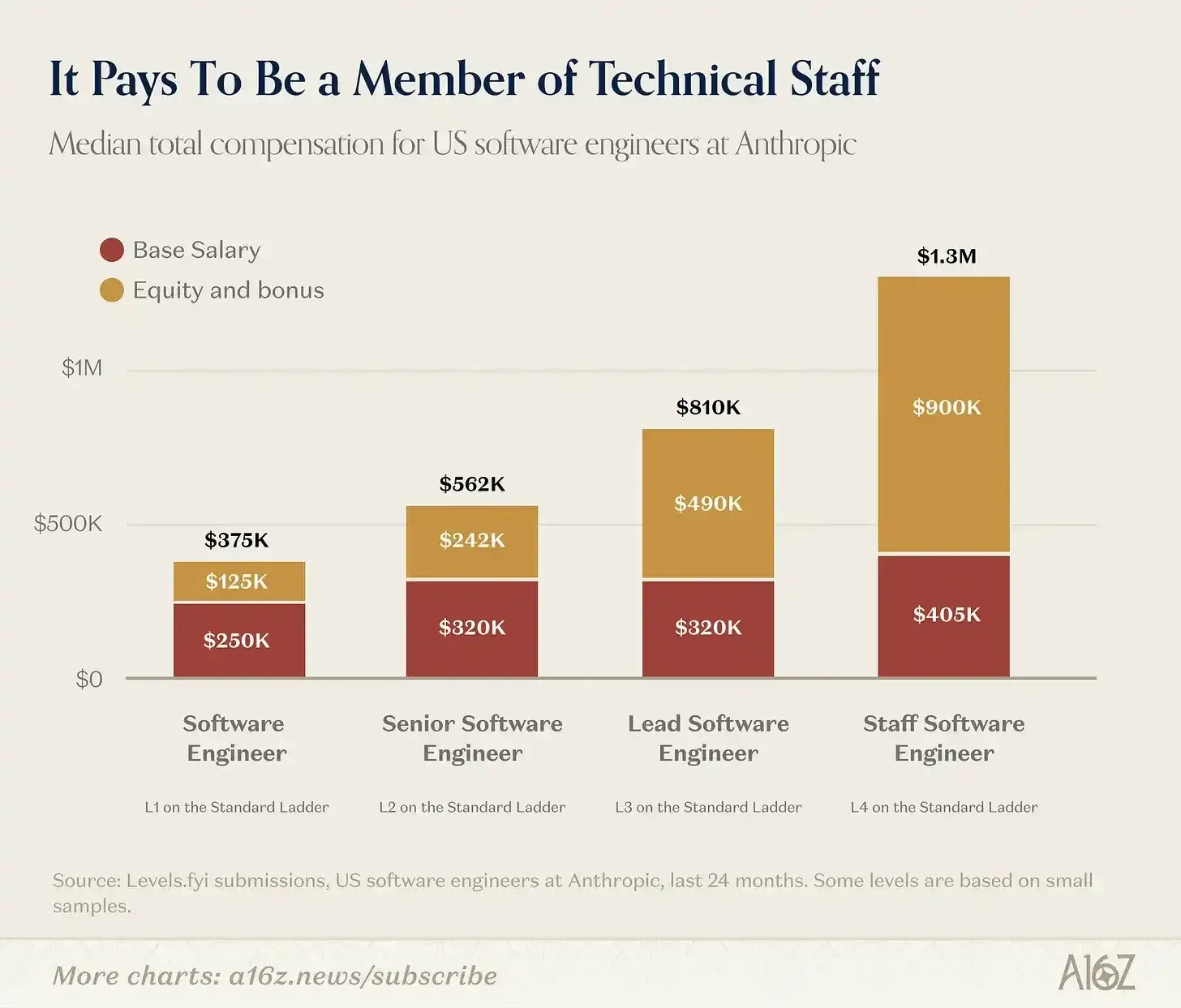
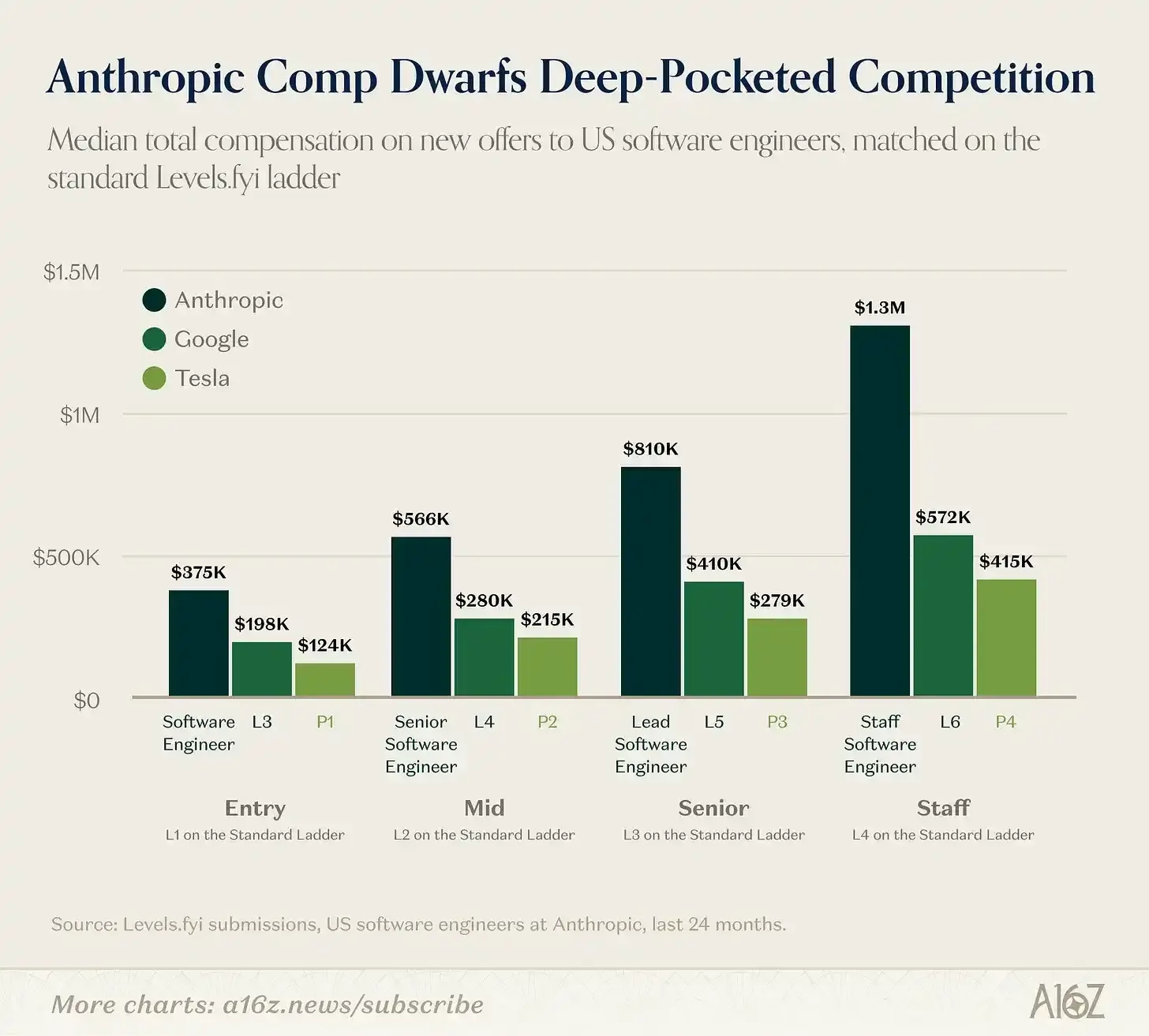
If we simply interpret the data, Anthropic offers its engineers very high salaries, significantly exceeding those of engineers at comparable companies like Google and Tesla.
It seems that being a member of a tech team is indeed a good opportunity.
Additionally, there is another interesting set of data.
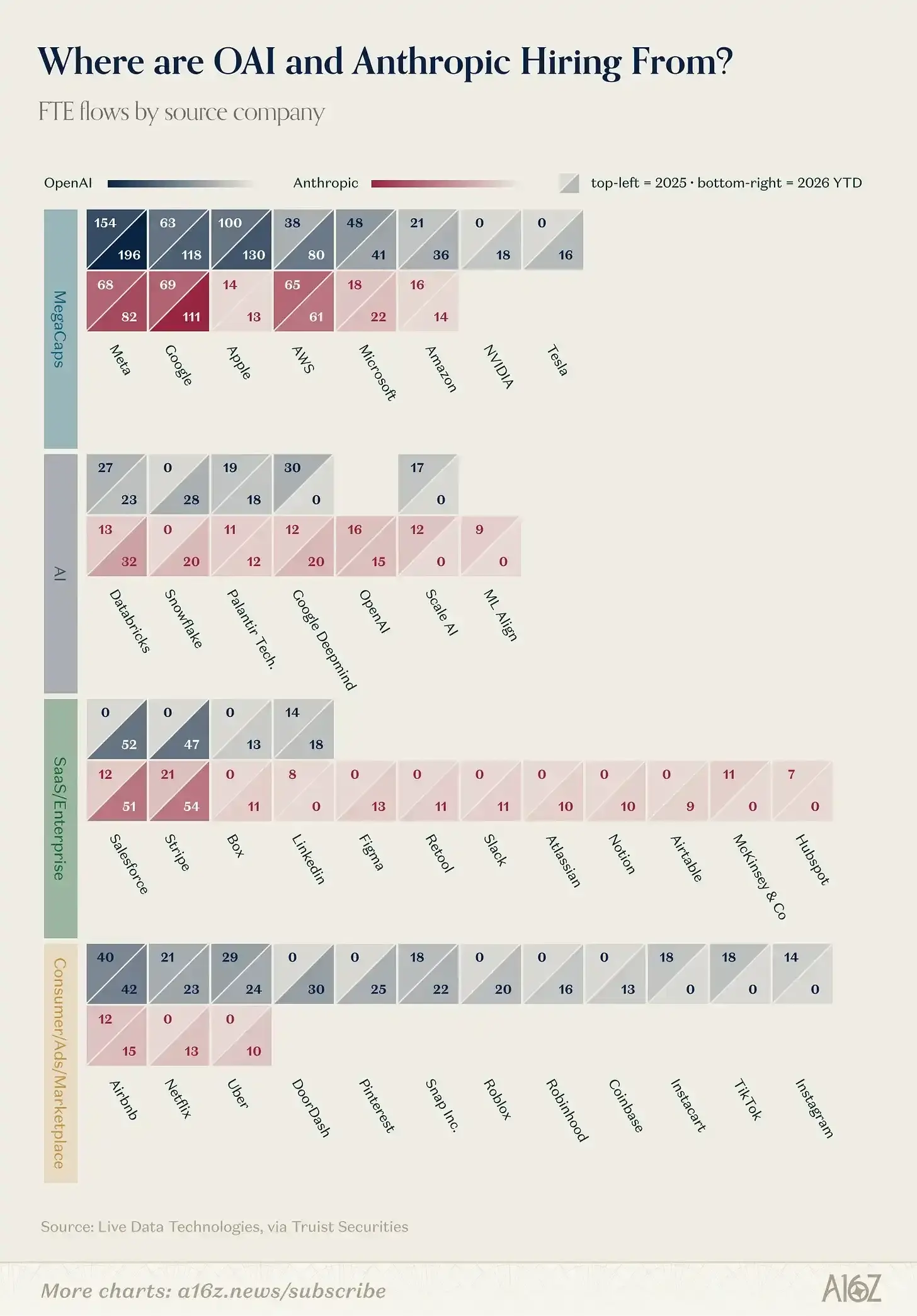
According to data from Live Data Technologies, organized by Truist Securities, there is both significant overlap and clear differences in the sources of talent among various labs:
Both companies have recruited a substantial number of talents from ultra-large tech companies, but only OpenAI has hired from NVIDIA and Tesla, and that occurred in 2026.
Databricks, Snowflake (recently), Palantir, and DeepMind are also shared sources of talent for both companies.
Both labs have also hired a considerable number of employees from Salesforce and Stripe.
But beyond that, the overlap seems to stop here. Anthropic has hired a lot of talent from SaaS companies, whereas OpenAI has not; OpenAI has drawn heavily from consumer internet, platform markets, and ad tech companies, while Anthropic has relatively fewer hires in these areas, except for Airbnb, Netflix, and Uber.
As for what these differences mean, we leave it to the readers to interpret.
免责声明:本文章仅代表作者个人观点,不代表本平台的立场和观点。本文章仅供信息分享,不构成对任何人的任何投资建议。用户与作者之间的任何争议,与本平台无关。如网页中刊载的文章或图片涉及侵权,请提供相关的权利证明和身份证明发送邮件到support@aicoin.com,本平台相关工作人员将会进行核查。


