Public token sale financing has regained a legal path in the United States.
On August 18, the U.S. Securities and Exchange Commission released the draft "Regulation Crypto Assets." According to this draft, startup projects can raise up to $5 million over a period of up to four years, while larger projects can raise $20 million or $75 million within 12 months. Projects do not need to complete a full securities registration to sell tokens to investors, raising funds for network development.
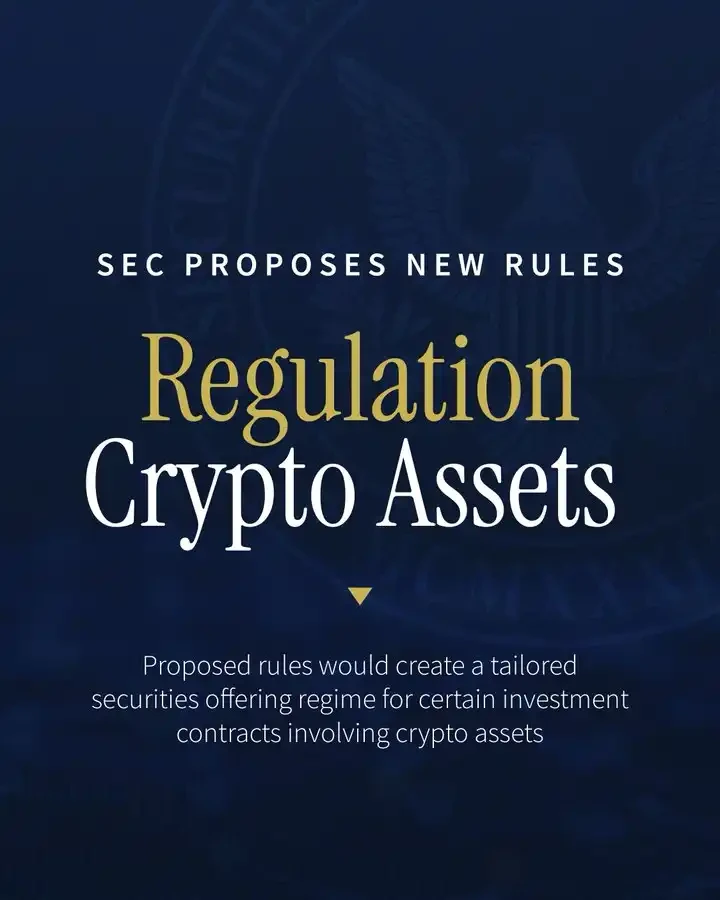
It sounds like ICOs are back.
But the SEC offers much more than just three funding limits. It aims to establish a set of rules for tokens that govern their lifecycle from inception to "graduation": projects can initially raise funds by selling tokens, but must be clear about what they intend to do with that money; if key commitments made by the team are not fulfilled, the tokens will continue to carry the regulatory responsibilities of investment terms; only upon completion of commitments can the tokens exit this relationship.
"Commitment" is the core of the entire draft, developers must "do the work" until the tokens "graduate" in order to "dev sell."
Rules
The draft provides two options for project teams.
The first option is suitable for startup teams. Suppose a project needs $3 million for development; the common choice in the past was to seek venture capital, restrict buyers, and issue tokens outside the U.S., or incur high costs to register securities. The new draft allows it to utilize the "Startup Exemption," raising no more than $5 million within a maximum of four years and filing with the SEC at the start and end of funding.
The second option is suitable for projects with greater funding needs. The first tier allows raising up to $20 million every 12 months, and the second tier allows up to $75 million. Compared to the $5 million Startup Exemption, this path can be reused; however, the rules are stricter.
Projects cannot start selling tokens with just a white paper. Both exemptions require teams to disclose how the network will be governed, how the product will be developed, what security risks exist in the code, the company's financial condition, and who is managing the project. The larger tiers of financing also require financial statements and ongoing updates, with the $75 million tier requiring an audit.
The SEC has not removed the existing safeguards. Issuers and insiders with serious violation records cannot use these exemptions, and anti-fraud and anti-manipulation responsibilities remain in effect. If projects also use other securities exemptions, they must comply with existing rules for combining funding calculations.
How to Define "Graduation"
The most convoluted yet important aspect of the draft is the separate handling of tokens and the investment relationships formed around tokens.
A project sells tokens to raise funds to build a network; at this point, buyers are often acquiring not just a usable digital asset. They are also expecting the team to deliver the product, attract users, increase token demand, and profit from these efforts. This relationship, which depends on the team's future work, is what the SEC refers to as "investment terms."
The tokens themselves may merely be a digital asset, but how the project sells them and what promises it makes to buyers will envelop them in a layer of investment terms. What the SEC truly regulates is this relationship between the issuer and the buyers.
The draft delineates an exit path for tokens. Only after the issuer completes or permanently ceases all key management work for its commitments, makes no new related promises, and submits public certification and analysis to the SEC can the tokens enter the "safe harbor."
Thus, the concept of "graduation" for tokens has emerged.
When a project commits to building the market while financing through token sales, once the project is completed and key work is done, buyers no longer depend on the team to fulfill old promises, allowing the tokens to "graduate" and the project team to exit.
The New Rules Do Not Focus on Whether Tokens Are Securities
In the past, the market often judged when a token was no longer subject to securities laws by frequently questioning whether the network was "sufficiently decentralized." As long as the foundation, development company, or founding team continued to work, many would interpret it as the token still relying on a central entity.
The SEC draft poses a different question: On what commitments did the project initially sell the tokens, and have those commitments now been fulfilled?
For example. Project A tells investors at the time of token sale that the team will develop a mainnet, launch transfer and staking functionalities, and then hand over the network to decentralized validators. Later, the mainnet goes live, and the functionalities work, but the validators are still controlled by the team. Since "decentralizing the network" was also a commitment at the time of funding, the token cannot "graduate" at this time.
Project B, meanwhile, only promised to create a functionally operational network without stating that "the team must disappear" or "the network must achieve a certain degree of decentralization" in its funding commitments. Once the network is live and the product is usable, if the team continues to fix bugs, update versions, fund developers, and promote the product, this routine maintenance does not fall under the "investment terms." The product that investors initially awaited has been delivered, and the token's value increasingly derives from actual use, network operation, and market supply and demand.
The SEC is concerned with whether the market is still waiting for the team to fulfill key promises made during the token sale. The continued existence of the core team is no longer the uniform measure of whether the token can graduate.
The core team may remain. Unfulfilled commitments cannot remain.
Speak Less, Do Less
This way of judging whether a project has "fulfilled its commitments" will greatly influence the project's promotional strategy.
Corporate securities lawyer Gabriel Shapiro suggests that by tying whether tokens can escape investment terms to the public commitments of the project team, there will be incentives for the team to say less and commit less. The fewer the commitments made by the project, the less work needs to be proven before "graduation."
The roadmap is thus no longer merely marketing material. If a project commits to the launch of a mainnet, revenue growth, achieving decentralization, or building certain functionalities, in the future, it must answer the same question: Have these tasks been completed? The more the team builds up its story during funding, the harder it will be to exit after the TGE.
This also hides a new set of contradictions. Buyers need sufficient information to determine whether the project is worth investing in, while the project team has the motive to downplay commitments to enter the "safe harbor" sooner. Too little disclosure leaves investors unable to assess risk; too many commitments make it difficult for the project to graduate.
New Paradigm for Airdrops
This draft will also affect the design of airdrops and point activities.
The first scenario is retrospective airdrops. The project does not commit in advance to issuing tokens but rewards early users afterwards. Recipients do not pay money or provide services for this airdrop, nor do they have to trade or perform tasks after the announcement. This type of non-security crypto asset airdrop can fall within the range already explained by the SEC.
The second scenario is anticipatory point activities. The project informs users in advance that transactions, purchasing a certain asset, buying services, or completing tasks can be exchanged for future tokens. Participants have expended money, services, or actions, making this distribution more likely to form investment terms and count toward the $5 million ICO exemption limit.
Therefore, some people have linked the draft to the Season 3 airdrop of Hyperliquid, which has yet to be publicly confirmed. If the project only rewards past behaviors afterwards, the legal relationship will be much simpler; if it announces point rules in advance and then uses future tokens to attract trading volume, the activities will incur additional regulatory burdens.
Current information cannot prove that Hyperliquid was aware of the SEC's policy direction in advance; this connection remains market speculation. More importantly, the SEC is also soliciting opinions: How should the value of airdropped tokens be calculated, and whether the Startup Exemption needs additional special rules are still unanswered questions.
The current Regulation Crypto Assets is still a draft. All three current SEC commissioners voted in favor, but the rules await public feedback.
The ICO model of "My project is cool, give me money" will not return; in the future, how much the project can raise will be determined by the exemption limits. Whether tokens can "graduate" depends on what the team has communicated to the market and what they have actually completed.
免责声明:本文章仅代表作者个人观点,不代表本平台的立场和观点。本文章仅供信息分享,不构成对任何人的任何投资建议。用户与作者之间的任何争议,与本平台无关。如网页中刊载的文章或图片涉及侵权,请提供相关的权利证明和身份证明发送邮件到support@aicoin.com,本平台相关工作人员将会进行核查。


