First, the conclusion
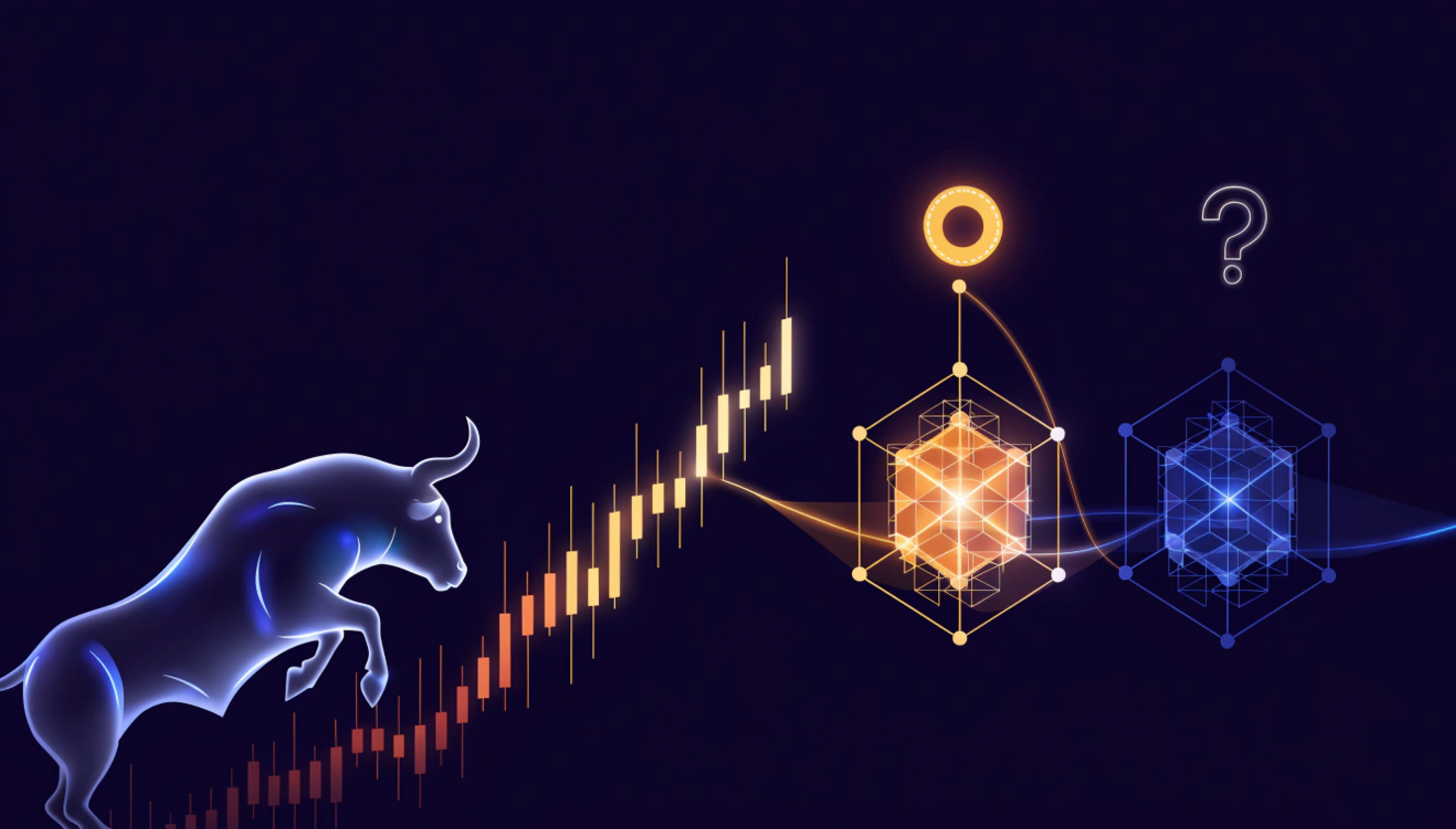
They can rush to issue tokens, but that does not mean they should rush to do so.
The bull market will increase the "visibility" of token issuance windows: exchanges are more willing to list tokens, retail investors are more willing to buy in, and airdrops have more reach. However, within the same window, the supply of tokens is also exploding. The cycle from 2025 to 2026 has repeatedly shown that if a mainnet has not demonstrated real usage yet, issuing tokens at fully diluted valuations (FDV) in the billions or even hundreds of billions of dollars will usually lead to tokens falling below the issue price in the long term after Token Generation Events (TGE).
So for public chains that have not yet issued tokens, the bull market feels more like a pressure test:
Can the product, revenue, and users stand firm first, before deciding whether to issue tokens and how to do it?
As of late August 2026, the market has just rebounded from the on-chain contraction in the first half of the year: Bitcoin surged from around $65,000 to the $77,000-$79,000 range in a week, with Ethereum experiencing even larger gains. The market has begun to re-discuss the "return of the bull" and the altcoin season. Yet this round feels more like a selective market, not the all-encompassing rises of 2021. Institutional funds are prioritizing Bitcoin ETFs, and altcoins need to rely on real revenue, value capture, and relatively clean token structure to capture the overflow of funds.
1. What heavyweight chains are still "without tokens"?
Over the past two years, high-profile public chains like Monad, MegaETH, and Berachain have either completed or are close to completing their token issuances. The ones that are still "holding back" or deliberately not issuing tokens are actually concentrated among chains with large company backgrounds.
They can roughly be divided into three categories:
1. Able to issue, but have consistently not issued
-
Base (Coinbase): The ecosystem has become quite large, yet it has never had an official native token. Market predictions for "issuing tokens before the end of 2026" were once just over 10%, indicating that the market does not believe it must issue tokens to survive.
-
Tempo (Stripe + Paradigm): The mainnet launched in March 2026, specifically for stablecoin payments, with fees paid directly in stablecoins, without a native gas token. This is currently the most extreme counterexample: the chain can first run its business.
2. About to issue or clearly planned for tokens
-
Arc (Circle / USDC): A stablecoin public chain aimed at compliant payments and institutional settlements, planning to issue an ARC token, with its mainnet goal set for 2026.
-
Ink (Kraken), Abstract, Soneium (Sony), Miden, etc. are also still repeatedly discussed in the "without tokens or not fully TGE" list.
3. Application-level giants, high token expectations, slow realization
-
MetaMask (Consensys) and OpenSea have already amassed tens of millions of users, yet token expectations are relatively low in prediction markets—because the parent company may pursue an equity listing rather than issuing governance tokens first.
This reveals an important change: being "without tokens" in 2026 does not necessarily signify being behind; sometimes it is a deliberate choice. Coinbase, Stripe, and Circle are now capable of supporting infrastructure through equity, stablecoin revenue, licenses, and distribution channels, making tokens no longer the only means of growth.
2. Why do public chains need to issue tokens?
Think of a public chain as a public city that requires constant staff, where tokens serve as the electricity bills, salaries, ballots, and land certificates all rolled into one.
1. Pay for network security costs
Public chains do not have a corporate headquarters to support their servers. Someone must package transactions, and someone must validate blocks; compensation is essential.
-
Proof of Work (PoW): Exchanges computing power for new coins, like Bitcoin.
-
Proof of Stake (PoS): Tokens are staked as collateral; honest accounting earns rewards, while misbehavior results in penalties.
The higher the token price and the larger the amount staked, the lower the cost of attacking the network typically becomes. Many PoS chains lack this "internal security budget" without native tokens.
2. Serve as "gas costs"
Coins like ETH, SOL, and AVAX are primarily used to purchase block space. When the network is congested, fees increase, effectively queuing scarce computing resources through pricing. Each time a user transfers, deploys a contract, or mints an asset, they are consuming this "city public service."
However, Tempo has already demonstrated: it is also possible to stipulate "only charging stablecoin fees, then exchanging for validators in the background." Therefore, gas does not necessarily have to be high-volatility altcoins, which is one of the most important design changes to remember in 2026.
3. Cold-start ecology
In the early days of public chains, three things are most needed: validators, developers, and users. Tokens can simultaneously serve as:
-
Salaries for nodes
-
Subsidies and hackathon prizes for developers
-
Airdrops, rewards, and liquidity mining for users
This is why everyone loves to "rush to issue" in a bull market: in a bull market, the same airdrop has better propagation efficiency and exchange resources.
4. Governance rights
Who can change transaction fees, upgrade protocols, and decide how to spend treasury funds is often determined by token voting. Theoretically, this dismantles the company board into a global group of token holders; in practice, teams, foundations, and early institutions often retain the most significant voice.
5. Value capture
This is the most concerning aspect of the market in 2026. If tokens are just "mascots," the profits of the protocol do not return to the token price. Recognized paths for this include:
-
Distributing a portion of fees to stakers
-
Repurchasing and destroying tokens
-
Using protocol revenue to directly buy tokens (Hyperliquid uses the vast majority of its revenue to buy HYPE from the market, which is frequently referenced in this round)
In short:
The technical reason for issuing tokens is security and coordination; the business reason is funding, distribution, and narrative seizing; whether tokens can increase in value depends on whether network revenue flows back to the tokens.
3. Benefits of issuing tokens, for whom?
|
Target |
Benefits |
Hidden Costs |
|
Project Parties |
Rapid fundraising, exit channels for teams and investors, using airdrops to acquire users |
Regulatory risks, unlocking causing price plummets, communities treating token price as a KPI |
|
Validators / Nodes |
Continuous inflation or fee income |
With declining token prices, the security budget also decreases |
|
Ecological Projects |
Obtain incentive budgets, cold-start liquidity |
If incentives stop, TVL may also drop together |
|
Users |
Airdrops, on-chain identities, governance rights |
Most people are receiving circulating supplies after overvaluation |
|
Exchanges |
Token listing fees, trading volume, market-making demand |
Poor-quality tokens damage platform reputation |
For project parties, the biggest short-term benefits of issuing tokens are never about "decentralized ideals," but rather three things:
-
One-time acquisition of developmental funds (public offerings, private placements, ecological funds).
-
Securitizing future growth expectations, allowing the market to price narratives daily.
-
Using tokens as user growth budgets, which align more with the habits of the crypto community than traditional advertising.
This is also why public chains that have not issued tokens feel most tempted during a bull market: once the window opens, issuing a year later may result in missing out on a round of liquidity excitement.
4. Is issuing tokens like going public for financing?
Yes, but only halfway. A more accurate description is: issuing tokens is like "a global public issuance that combines product usage rights, network equity, and futures chips."
Similar to an IPO
-
Both sell future stories to the public to exchange for today's money.
-
Both require pricing, roadshows, market-making, and information disclosure (the crypto side is usually much weaker in this regard).
-
Both provide liquidity for early investors.
-
Both can enhance brand exposure, facilitating future financing or collaborations.
The ICOs of 2017, followed by IEOs/IDOs, are essentially "public offerings of unprofitable networks". Ethereum itself sold ETH before building its chain in 2014, later imitated by countless projects.
Different from an IPO (this is crucial)
1. What you usually buy is not company ownership.
Stocks correspond to net assets, dividends, and the right to sue the board; most tokens are just usage certificates, governance tickets, or incentive mechanisms. A protocol can earn a lot of money without the token receiving any of it—there are already too many such cases.
2. Tokens are also products.
Companies that go public sell stocks, not issue iPhones as stocks. Public chain tokens serve as fundraising tools, as well as gas, collateral, and security tokens, tying demand and speculation together on the same curve.
3. Global, permissionless, 24/7 trading.
IPOs have lock-up periods, pricing inquiries, underwriters, and qualified investor thresholds; tokens can often be bought and sold globally on the day they go live, with rapid and extreme price discovery.
4. Supply release rhythm is more like "a gradual unlocking of founder shares".
Teams, VC, and ecosystem funds unlock monthly, which equates to a continuous insider sell-off lasting for years. Many tokens don't experience sudden declines in fundamentals, but rather, mathematically, someone must sell.
5. Regulatory identities are more ambiguous.
Stocks are securities; tokens might be seen as commodities, utility tokens, securities, or anything else. In 2026, the US SEC was still promoting a framework for crypto asset issuance, discussing exemptions for small-scale offerings, indicating that the rules are still forming and are not equivalent to going public.
Therefore, one can remember a contrast:
An IPO sells claims to a company's residual rights; issuing tokens sells access rights to the network, governance rights, and imaginative space.
The former is protected by corporate law, while the latter relies mainly on code, community consensus, and the project party’s self-awareness.
In 2026, there's another new phenomenon: companies like Circle, Consensys, and Kraken are starting to take equity listings more seriously while other protocols are opening up fee switches and repurchasing tokens. The market is beginning to separate "delisting companies and issuing tokens" from each other. Issuing tokens is no longer automatically equivalent to successful fundraising.
5. What pitfalls can arise from rushing to issue tokens in a bull market?
-
High FDV, low circulation
Only release 5%-15% of the supply, telling the story based on fully diluted valuations. A bull market may keep it afloat for a few days, but once unlocking happens, it turns into a long-term decline. -
Points wars overdraw future users
In a hurry to approach TGE, they first use points to fatten the speculators, so that on the day of the token issuance, this group becomes the sellers. -
Mainnet data has not yet been demonstrated
In 2026, there are high-performance chains with "theoretical TPS in the thousands, but daily fees of only a few thousand dollars." Performance parameters do not equate to token demand. -
Regulatory and listing hurdles become higher
Exchanges are more selective, compliance narratives are more critical, and pure airdrop projects are increasingly struggling to obtain deep liquidity. -
Missing the window means that issuing early may also be useless
The shrinking of on-chain TVL and mainstream L1 market capitalization in the first half of the year indicates that in a poor environment, new coins are similarly hard to command a premium.
A more prudent tempo for public chains that have not issued tokens usually is:
-
The mainnet should first demonstrate real transactions and retention
-
The token must have a clear purpose (staking, gas, fee sharing, at least one of these)
-
The circulating supply and unlocking schedule must be honest to retail investors
-
Then choose a bull market window to perform TGE
Base and Tempo illustrate: if the distribution channel is strong enough (Coinbase, Stripe), not issuing tokens can still grab the market first. Conversely, if there is no distribution and no revenue for new chains, issuing tokens during a bull market will merely advance the selling pressure of the next three years to the first week.
6. Tokens with strong project backgrounds in the crypto market
"Strong background" does not equal "will increase," it simply indicates that the team's, capital's, or institutions' adoption is more substantial. Below is organized by type for easy reference and does not constitute investment advice. Prices and market capitalization can change quickly, and should be checked against current market conditions.
1. Infrastructure Layer: Public Chains and Settlement Networks
|
Token |
Why a strong background |
|
ETH |
Smart contract standard setter, developers, L2, and institutional staking and ETF narratives revolve around it |
|
SOL |
Representative of high-performance single chains, with stablecoins, payments, and tokenized assets continuously migrating towards it in 2026 |
|
BNB |
Settlement asset of the Binance ecosystem, with a clear burn mechanism, and institutional tokenization increasing on BNB Chain |
|
AVAX |
Ava Labs has strong engineering capabilities, suitable subnet/independent L1 for institutional custom chains |
|
SUI / APT |
The team originates from Meta’s Diem/Libra, with a clear route for the Move language, backed by substantial capital |
|
NEAR |
One of the few major public chains that strengthened against the trend in the first half of 2026, betting on AI and intention transactions |
|
MON (Monad) |
Parallel EVM L1, mainnet launching at the end of 2025, supported by top crypto capital, regarded as "the strongest newcomer in the field" |
|
TIA (Celestia) |
Benchmark for modular data availability layers, widely relied upon by many new chains |
2. Ethereum Scaling and Interoperability
|
Token |
Why a strong background |
|
ARB |
Offchain Labs, leading in optimistic rollup technology and ecological volume |
|
OP |
Standard setter for Superchain, with Base, Unichain, Ink, and Soneium all on the same stack |
|
STRK |
StarkWare from academia and engineering; representative project for the ZK route |
|
ZRO |
LayerZero; cross-chain messaging layer with broad integration in exchanges and wallets |
|
MEGA |
MegaETH; real-time EVM L2, expected to complete token introduction in 2026, strong narratives for capital and performance |
3. Data, RWA and Institutional Finance Tracks
|
Token |
Why a strong background |
|
LINK |
Institution-grade oracle, with a large reliance on tokenization of stock, funds, and proof of reserves |
|
ONDO |
One of the leading RWA/tokenized US stocks and Treasury market players, directly tapping into "Wall Street on-chain" |
|
ENA |
Synthetic dollar USDe; partnerships with large platforms in 2026 have renewed its institutional visibility |
|
HYPE |
Hyperliquid supports its token with product revenue, representing "less reliance on VC narrative and more on cash flow" |
4. Applications and Middleware (Strong teams/capitals do not equal public chains)
|
Token |
Why a strong background |
|
UNI |
Early backing from Uniswap Labs and a16z, standard DEX protocol, with the fee switch already on |
|
AAVE |
Leading lending project, multi-chain deployment, strong institutional liquidity pools |
|
MKR / SKY |
One of the earliest teams to successfully navigate on-chain stablecoins and real asset reserves |
|
JUP / JTO |
Transactions and staking infrastructure on Solana, close to "ecosystem utilities" |
5. Yet to issue tokens, but already strong names (watch list)
These are better suited for "next round TGE observation" rather than spot lists:
-
Base: The strongest L2 in distribution capability from Coinbase
-
Tempo: Stripe + Paradigm, a dedicated chain for stablecoin payments
-
Arc: Circle, the settlement layer for the issuer of USDC
-
Ink: The chain from Kraken
-
MetaMask: A wallet with over 30 million monthly active users; its parent company Consensys also has listing expectations
Once they issue tokens, market focus will be high; however, precisely because the parent companies are already strong, tokens may not necessarily receive shares of the company’s profits. This is where issuing tokens and going public are most easily confused.
In conclusion
Issuing tokens for public chains is not about handing in a final exam paper; it is more like issuing currency for a city still under construction.
-
Currency can pay salaries, collect taxes, and keep people to build.
-
But if the city has no shops, no residents, and no tax revenue, no matter how beautifully the currency is printed, it is simply a chip.
A bull market may make "rushing to issue tokens" seem appealing because liquidity is temporarily abundant. The healthier question for 2026 is actually:
Is there anyone willing to pay transaction fees for this chain without token incentives?
If yes, issue again; no matter how good the window, it won’t hurt.
If no, rushing to issue tokens in a bull market mostly just shifts future sell orders to the most optimistic people in this round.
In the crypto market, having a strong background is a plus, not a guarantee. Observing the team and capital is to assess whether they have the capability to finish difficult tasks; observing the tokens, ultimately, should still focus on: who is using it, who is paying, and whether fees are flowing back to the token.
免责声明:本文章仅代表作者个人观点,不代表本平台的立场和观点。本文章仅供信息分享,不构成对任何人的任何投资建议。用户与作者之间的任何争议,与本平台无关。如网页中刊载的文章或图片涉及侵权,请提供相关的权利证明和身份证明发送邮件到support@aicoin.com,本平台相关工作人员将会进行核查。