In the past few rounds of the crypto bull market, what the market has excelled at is one thing: creating new assets.
Public chains issuing tokens, projects releasing tokens, NFT issuance, and Meme launches; as long as the supply is sufficiently new and the narrative is loud enough, funds may quickly flow in. However, as “issuance” becomes increasingly standardized, simply recreating a token has become challenging to generate lasting increments.
Therefore, a recent topic worth attention:
The crypto industry is transitioning from a “issuance bull” to a “distribution bull” after assets are on the chain globally.
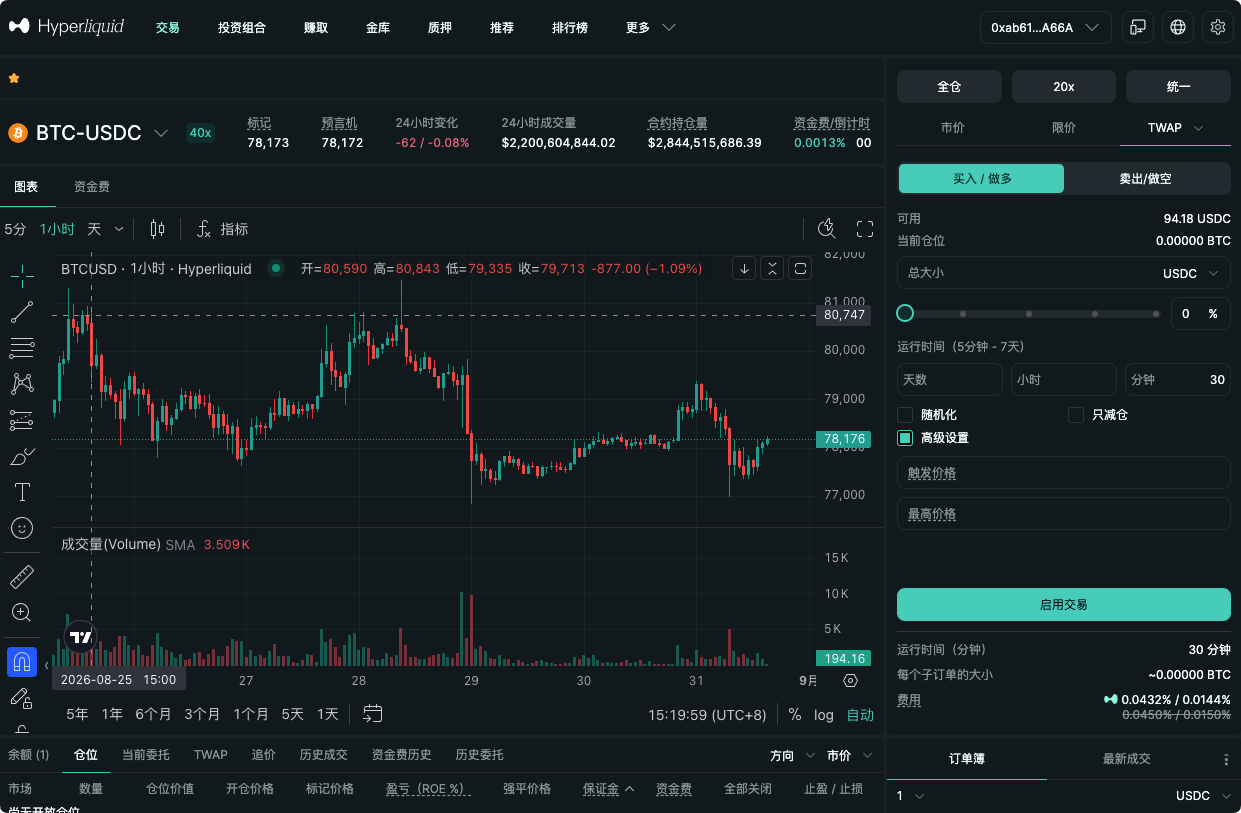
The truly important point of this statement is not predicting when the bull market will arrive but pointing out that the competitive targets for the next phase are changing: the market is no longer just competing over who can put assets on the chain, but rather who can enable these assets to be discovered, priced, traded, and composed by global users.
What exactly has changed from “issuance bull” to “distribution bull”?
Issuance addresses “what is available in the market,” while distribution addresses “who can buy, where to trade, how prices form, and whether the assets can continue to participate in other financial activities.” 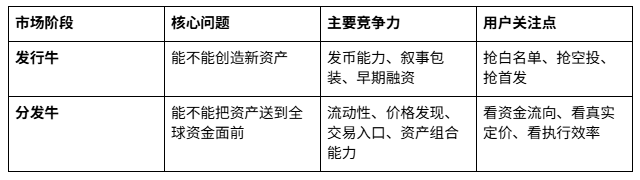
After the infrastructure for stock tokenization gradually enriches, this change will become more evident. Platforms like xStocks, bStocks, Ondo, Robinhood Chain, and Hyperliquid have pushed the stock on-chain from perspectives such as assets, networks, derivatives, and user entries.
But mapping stocks to a token is just the first step.
Once assets truly enter the on-chain environment, they are no longer limited to “buy and wait for the price to rise.” Theoretically, they can participate in lending as collateral, form liquidity pools with stablecoins, derive perpetual contracts, and combine with mechanisms like points, airdrops, and trading taxes. This means that stocks, crypto assets, stablecoins, and derivatives that were initially separated start to be integrated into the same composable financial system.
Stock tokenization represents a change on the supply side; assets being traded, mortgaged, hedged, and repriced is the revolution on the distribution side.
What Hyperliquid is truly competing for is not “listing rights” but “pricing entry”
Looking at Hyperliquid through this logic, its most noteworthy aspect is not just “trading more assets.”
Hyperliquid is turning the on-chain perpetual market into a real-time distribution layer for global assets: after assets enter the market, capital from different regions and time zones continuously engages in long and short battles, forming observable price, position, and funding rate signals.
Many assets in traditional markets are restricted by trading hours, geographic access, and brokerage systems, resulting in price discovery often scattered across different markets. On-chain perpetual contracts offer another possibility: even if the spot market is closed, global capital can continue to trade around events, expectations, and valuation changes.
This also explains why a “distribution bull” may be more suitable for Hyperliquid than an “issuance bull.” It does not need to create all assets itself; it just needs to become one of the trading venues that most quickly forms price consensus, most easily completes risk hedging, and has the highest capital use efficiency after assets enter global liquidity.
In the past, people asked: “Where is the next new coin?”
The more relevant question for the next phase may be: “Where will the next asset to be repriced by global capital first show trading signals?”
The essence of distribution capability is connecting assets, liquidity, and users
The competition around stock assets between different public chains and products may become the catalyst for this narrative; perpetual contracts, points, airdrops, and other incentive mechanisms may play the role of cold start and user distribution.
This means that the future market will not only reward platforms that “create assets” but also reward four types of participants with true distribution efficiency: trading venues that can absorb liquidity, markets that can form credible prices, protocols that can organize asset portfolios, and entry points that can simplify complex on-chain operations for regular users.
Within this framework, Hyperliquid is responsible for providing the market and liquidity, while the AiCoin mobile terminal resembles the operation platform for regular users to enter this distribution network.
As stocks, indices, commodities, and crypto assets rotate within the same on-chain market, what traders lack most is not more information but the ability to convert information into action. AiCoin’s smart money tracking can help users observe where capital is concentrating; professional market data and multidimensional data can be used to verify whether narratives have reflected in prices and positions; rapid order execution helps shorten the distance from discovering opportunities to executing trades. After transactions are completed, users can also manage different assets and positions within the same mobile view, avoiding repeated switching between multiple platforms.
This is not merely “adding another trading entry.” In the distribution era, how information reaches users, how users make decisions, and how orders enter liquidity are all part of the asset distribution chain.
The next opportunity may belong to the “most liquid” assets
The “distribution bull” is still a trend judgment rather than a realized conclusion. The compliance boundaries of stock tokenization, underlying asset custody, liquidity depth, and user access in different regions will still determine how far this path can ultimately go. The relevant policy progress mentioned by Haotian is also more suitable to be seen as a potential catalyst rather than a certainty.
But the direction is already worthy of attention: as the issuance of assets becomes increasingly easy, what will truly become scarce is sustained liquidity, credible price discovery, and low-friction global trading networks.
If the keyword for last round's bull market was “creating assets,” the keyword for the next round may be “making assets liquid.” And what Hyperliquid is competing for is precisely the most critical position in this new cycle—the on-chain pricing and trading distribution layer for global assets.
For ordinary traders, instead of continuing to chase every new term, it would be better to start familiarizing themselves with this new market language: observe on-chain capital, understand price discovery, and complete transactions using sufficiently efficient tools.
Exclusive benefits for AiCoin users
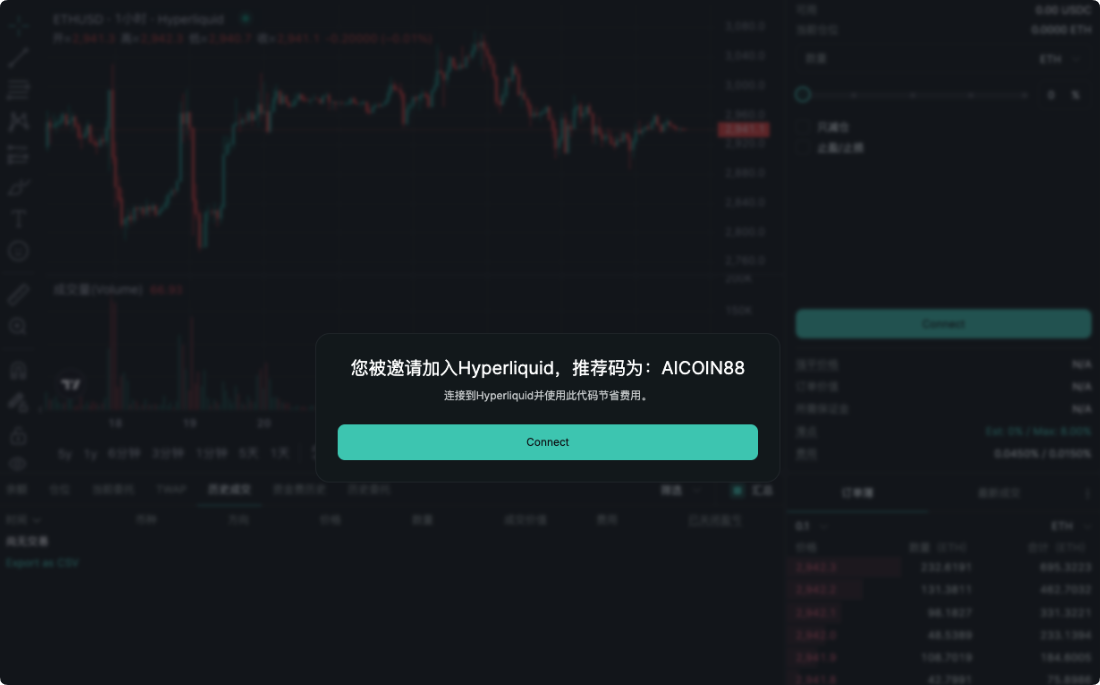
👉 Bind your Hyperliquid account using the invite code AICOIN88 for a 4% transaction fee rebate
🔗 Exclusive registration link:
https://app.hyperliquid.xyz/join/AICOIN88
📖 Beginner's tutorial:
- "AiCoin PC Hyperliquid Authorization Trading Tutorial":
https://www.aicoin.com/zh-Hans/article/514197
- "AiCoin Mobile Hyperliquid Authorization Trading Tutorial":
https://www.aicoin.com/zh-Hans/article/541383
- "Zero-based Introduction! Hyperliquid First Trading Detailed Illustrated Tutorial":
https://www.aicoin.com/zh-Hans/article/510225
📖 Community Communication:
- Telegram:
https://t.me/AiCoinWhaleData
- Discord:
https://discord.gg/5XSXjXSpz
- AiCoin Group Chat:
https://www.aicoin.com/link/chat?cid=N6OVMor5g
The content of this article reflects the author's personal opinion and does not represent the platform's position. The views, conclusions, and suggestions in the article are for investors' reference only and do not constitute any investment advice related to the platform. Investing in U.S. stocks still requires self-assessment of market risks, regulatory risks, and compliance risks of local laws and regulations (especially foreign exchange controls, overseas investment declarations, etc.).
免责声明:本文章仅代表作者个人观点,不代表本平台的立场和观点。本文章仅供信息分享,不构成对任何人的任何投资建议。用户与作者之间的任何争议,与本平台无关。如网页中刊载的文章或图片涉及侵权,请提供相关的权利证明和身份证明发送邮件到support@aicoin.com,本平台相关工作人员将会进行核查。