From the end of March this year, when LIT hit a historic low of $0.7794, to today, five months later, LIT has surged nearly five times, reaching a peak of $3.79. It has risen 75% in the past 30 days and 24% in the past 7 days.
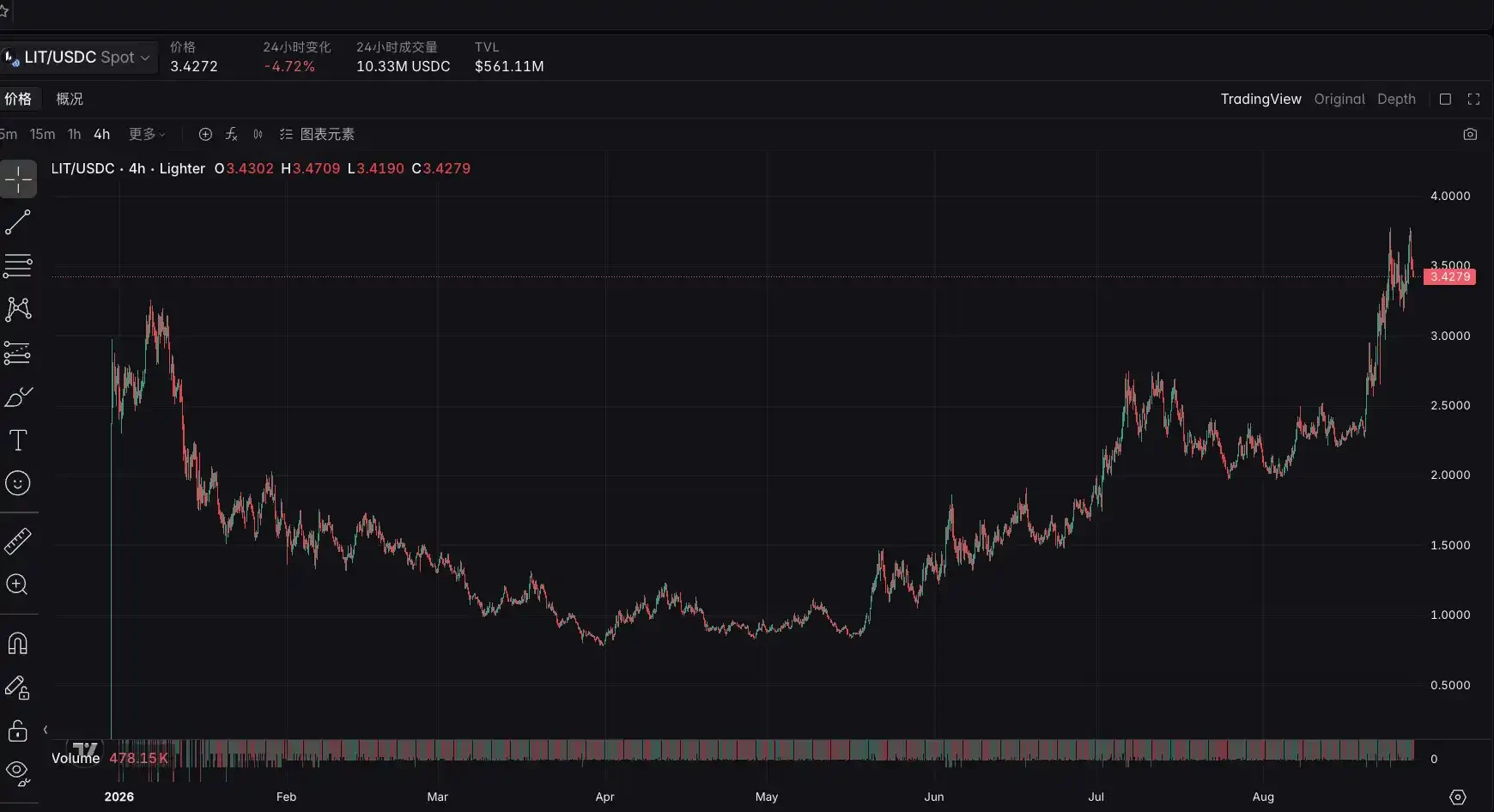
LIT can be said to be one of the strongest performing coins in the crypto market this year; it currently ranks 76th in global crypto market capitalization, with a market cap of $865 million. With Bitcoin and HAPE also in an upward trend, it is natural for altcoins to rise as well, as the tide lifts all boats. But LIT's rise is not solely due to the overall market increase.
Perp Dex has been a core sector in the past two years, with Hyperliquid setting the benchmark, having recently run remarkably smoothly in the United States. Regulations, compliance, and institutional access have not encountered significant hurdles, setting an expectation for the sector: this business can be operated in the U.S. Lighter shares the same track and is naturally also a core project of the past two years.
However, in terms of "U.S. legitimacy," Lighter's position is even more favorable than that of Hyperliquid. After all, it is a domestic project, registered in Delaware, and the tokens are issued directly by a U.S. C-corporation, rather than taking the usual route of going through Cayman or Swiss foundations like the vast majority of projects. Lighter's founder, Vladimir, is an American who immigrated from Russia at a young age. Under the Trump administration's "America First" mantra, this identity is a passport that cannot be bought.
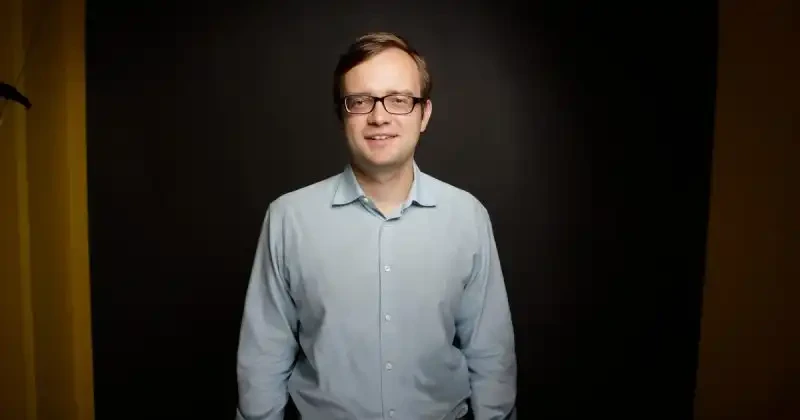
Lighter's founder, Vladimir
Therefore, when the newly established Innovation Advisory Committee of the U.S. Commodity Futures Trading Commission convened for the first time on August 20 to discuss "what a decentralized exchange needs to look like to operate legally in the United States," Lighter's founder and CEO Vladimir was sitting at the table to provide input.
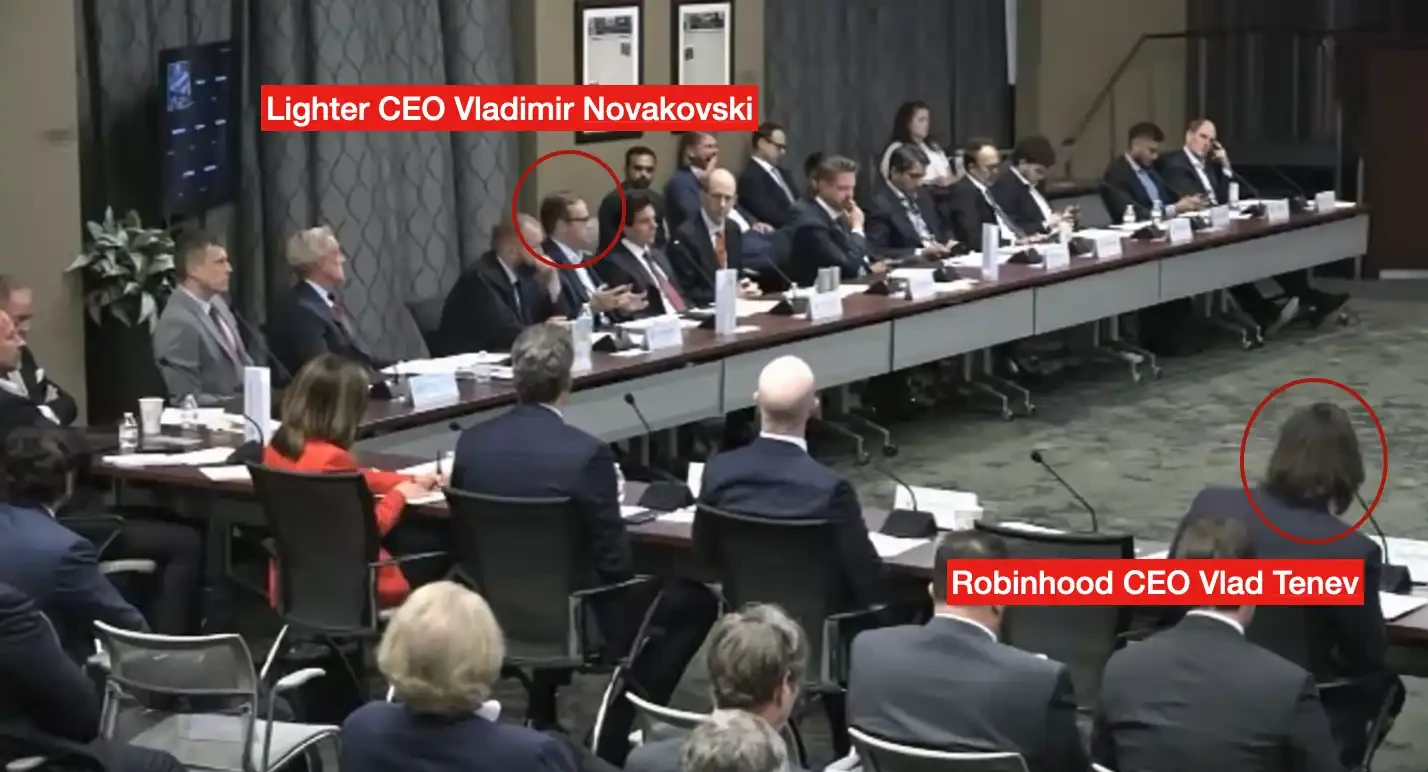
First meeting of the CFTC Innovation Advisory Committee on August 20
Lighter's business itself is also in an expansion phase. In April of this year, the Telegram wallet launched perpetual contracts, exclusively supplied by Lighter, covering 150 million registered users. On July 1, Robinhood launched its own chain, with its perpetual contract engine also powered by Lighter, splitting revenues 50/50. Lighter currently charges zero fees for retail investors, with all 241 market order fees and taker fees being 0. On August 24, South Korea's largest exchange, Upbit, launched a KRW trading pair for LIT, and it rose again by 22% that day.
These reasons combined may explain most of this round of market activity. However, they do not explain one thing: why among all the Perp Dex projects, it is specifically Lighter that has managed to turn Robinhood, the largest retail brokerage in the U.S., into its distribution channel and secure a 50/50 revenue split.
In a podcast hosted by Laura Shin, Lighter's founder and CEO Vladimir shared an anecdote.
He said he had joked with his team about how this collaboration had been brewing for 12 years, and viewed from another angle, one could even say it was 25 years. "Because I and Vlad Tenev, the founder of Robinhood, are high school classmates, we are the only two Vlads in our school."
We are the only two Vlads in high school
Lighter's founder Vladimir and Robinhood's founder Vlad Tenev, are the only two Valds in their high school.
The high school they attended, called Thomas Jefferson High School for Science and Technology, abbreviated as TJ, is one of the most prestigious, famous, and hardest public STEM high schools in the U.S. It gathers the strongest group of STEM students from the Washington metropolitan area, many of whom go on to top universities and enter technology and finance industries, making it an easily recognizable credential in Silicon Valley, quant, and entrepreneurial circles.
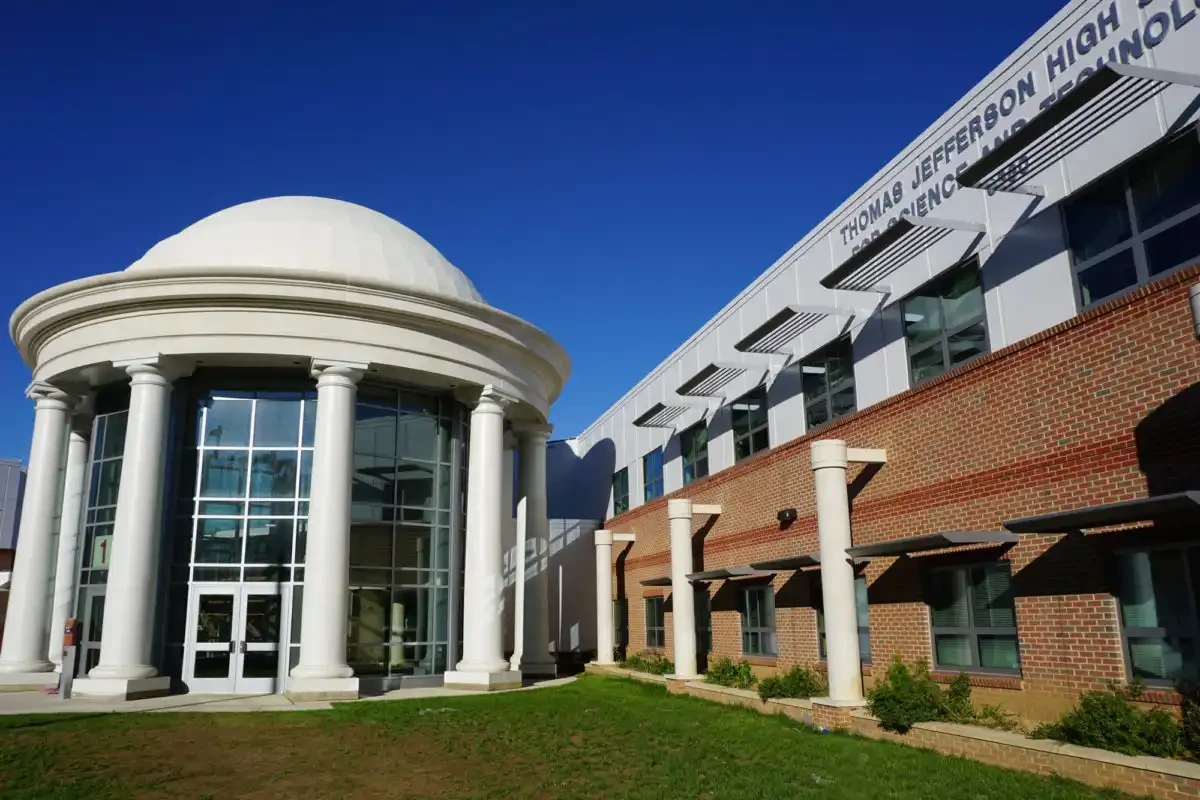
TJ High School
Since Lighter's founder is three grades ahead of Robinhood's founder, for convenience, I will refer to Lighter's founder as "Big Vald" and Robinhood's founder as "Little Vald" in the following text.
Big Vald was one of the most renowned students in his senior year.
That year he won first place in the national Physics Olympiad; afterward, he represented the U.S. at the 32nd International Physics Olympiad held in Antalya, Turkey, where he won a silver medal; after which he entered the nationwide finals of the Intel Science Talent Search with a project called "Optimal Holographic Designs for Optical Neural Computing", with only two students from his entire school reaching the finals. Most of the others were aged between 16 and 18, while Big Vald was only 15.
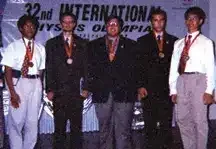
2001 Physics Olympiad participant, Big Vald is second from the left
Big Vald later recalled that time on Quora; he said he still remembers his first day going to math team practice just two weeks after entering the school, and he wasn't sure how long he could stay in that training group given his abilities. So, to improve his competitive skills, he and a few classmates started organizing additional meetings after school, focusing on math team, computer team, and Olympiad training. That culture of after-school training has continued to this day.
Little Vald's first impression of Big Vald when he first entered high school was that of a senior organizing after-school competition training, and because of this after-school training, the two Valds became familiar with each other.
Big Vald was an early advisor for Robinhood
Soon, at the age of 16, Big Vald graduated from high school and entered Harvard, where he graduated early after only two years of study, personally recruited by Ken Griffin, founder of the renowned hedge fund Citadel.
This was Big Vald's first job, conducting quantitative research, with the task of building a high-frequency trading system for the foreign exchange market. Afterwards, he went to Graham Capital, a global macro and trend-following fund managing over $10 billion, where he became a portfolio manager and director, staying for seven years.
The headquarters of Big Vald's work was conveniently commutable to New York City, where Little Vald was at that time.
That was two years after the Lehman crisis, when Little Vald started a company called Celeris, which did not succeed. In January 2011, he pivoted to Chronos Research, selling low-latency trading software to banks and hedge funds, achieving modest success and generating several million dollars in revenue within a year.
Big Vald as a portfolio manager of a billion-dollar quantitative fund, and Little Vald promoting his low-latency trading software to the fund. Funds like Graham, with this scale, are precisely the typical target customers for Chronos's products.
In public documents, there is no clear source confirming that they collaborated at that time, but I believe that the quant industry was not very large back then, and after the flash crash in U.S. stocks in 2010, the entire Wall Street arms race hinged on latency; the two Vlads, one being a buyer and the other a seller, probably had close communications.
Because in the following year of 2013, Little Vald began a new venture, and Big Vald became Little Vald's early advisor, providing substantial help for his early entrepreneurial career, and Little Vald's venture was what today, all Americans know as Robinhood.
The original name of Robinhood was actually Cash Cat. (Yes, this is the origin of the largest meme coin on Robinhood Chain.)
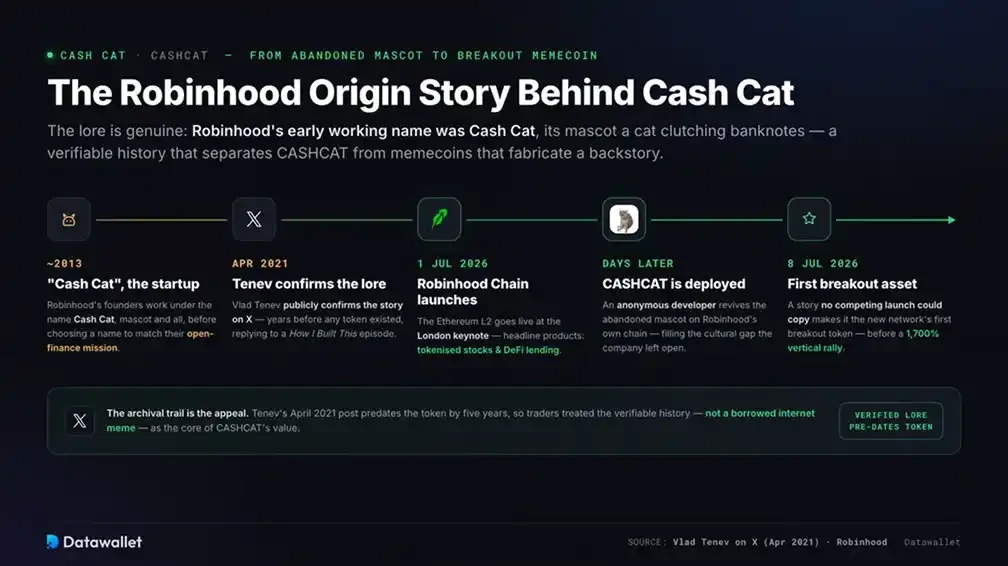
Little Vald felt that the original low-latency trading software business was not cool; even if he continued the business for another 30 to 40 years to achieve the ultimate version, he wouldn't want to tell his grandchildren about it. He wanted to create a mobile app for commission-free stock trading.
In the podcast, Big Vald recalled this experience from twelve years ago: "I was an early advisor for Robinhood, and at that time, it seemed their company was still called Cash Cat, right? They had just renamed to Robinhood and were doing their waitlist. By then, I already knew their team and participated in some things."
In the following year, Big Vald also changed jobs. He went to Addepar, a company that makes wealth management software, as Vice President of Engineering. Addepar's founder is Joe Lonsdale, co-founder of Palantir, who was mentored by Peter Thiel.
Addepar is based in Mountain View, while Robinhood is in Palo Alto. The two locations are no more than ten kilometers apart, further tightening their relationship.
Senior entrepreneur, junior naturally supports
This is a period when both Vlads' careers were thriving.
Big Vald brought in two interns, one named Scott Wu, who ten years later created an AI programming agent named Devin, with a company valuation of $10.2 billion, and last year acquired Windsurf; the other named Alexandr Wang, who sold Scale AI to Meta this year for $14.3 billion and went to lead Meta's superintelligent laboratory.
The competition circle is a small community.
In November 2017, two years after Big Vald left Addepar, he joined forces with Scott Wu to co-found a company called Lunchclub, an AI social company. The idea was to use machine learning to match people, analyzing users' backgrounds and goals to arrange worthwhile meetings.

Early UI of Lunchclub
In September 2019, Big Vald's Lunchclub completed a $4 million seed round led by a16z, with angel investors including Robinhood's co-founders.
Supporting the senior entrepreneur was a natural course for the junior.
In August 2020, Lunchclub raised another $24.2 million in Series A, led by Lightspeed, with Coatue participating, reaching a valuation of over $100 million. The investors in this round included Hollywood superagent Michael Ovitz, PayPal co-founder Max Levchin, Quora founder Adam D'Angelo, and Little Vald.
That year, Little Vald was on the eve of his life's peak. The pandemic sent millions of American retail investors to mobile trading, causing Robinhood's user base to explode. In April of the following year, Coinbase went public directly on Nasdaq, opening with a valuation of $100 billion; in July, Robinhood went public; in November, Bitcoin surged to a historic high of $69,000.
But soon, several historical events within the crypto industry emerged, directly impact the future directions of both Vlads over the next five years.
In May 2022, Luna dramatically collapsed, erasing over $40 billion. In November, FTX filed for bankruptcy, and the largest centralized trading platform in the industry fell, leaving users unable to withdraw their funds.
Big Vald recognized the business opportunity here. He believed that trading platforms could make the matching process verifiable. By using zero-knowledge proofs, every transaction could be mathematically proven to be fair; no one could jump the queue or misappropriate funds.
He named this concept Lighter.
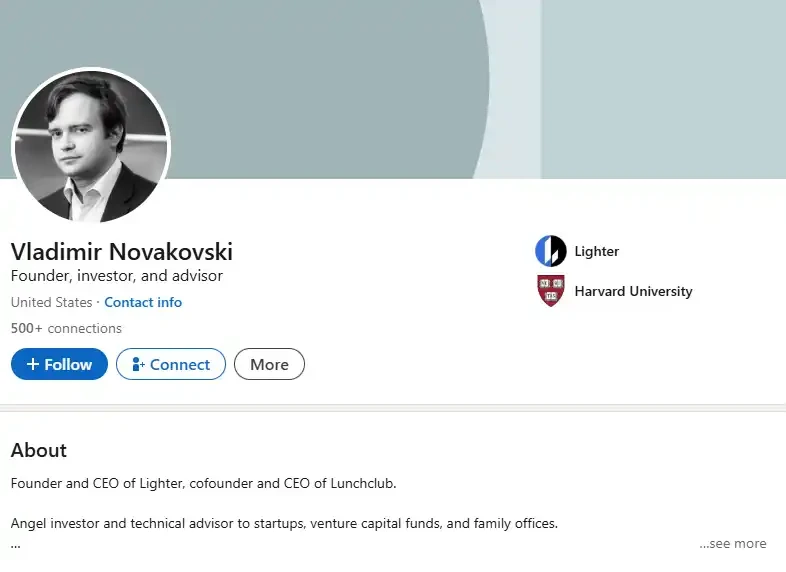
Big Vald later said that when they started working on Lighter, on-chain perpetual contracts only accounted for 1% of the entire perpetual market. At that time, the ceiling for this track was Hyperliquid. By this year, Lighter's on-chain share has risen to between 10% and 20%.
In November 2025, Lighter secured $68 million in funding at a valuation of $1.5 billion, led by Peter Thiel's Founders Fund and established fintech fund Ribbit Capital, with Haun Ventures also participating.
Of course, this included Robinhood Ventures.
Robinhood and Lighter join forces
On July 1, 2026, the Robinhood Chain mainnet went live. This is Robinhood's own Ethereum Layer 2 network built with Arbitrum's technology, with block times of 100 milliseconds, not having its own token, and transaction fees settled in Ethereum.
The perpetual contracts running on the Robinhood Chain are from Lighter.
Lighter did not route Robinhood's orders to its main platform but instead ran a separate market, which they call Lighter Domains. The two markets are independent of each other, but because they are both built on Ethereum, market makers can use the same balance sheet to quote on both sides, with funds moving between the two markets almost instantly. The Robinhood market uses USDG as collateral and pricing assets, while Lighter's main platform uses USDC, sharing income equally.
Big Vald admitted in the podcast that this does create friction for market makers. However, he also explained why market makers are still willing to participate: because they understand that the orders coming from Robinhood have a high proportion of retail orders, "that is precisely the traffic they ultimately want."
However, due to policy reasons, Americans cannot currently use this. Perpetual contracts in the Robinhood wallet exclude users from the U.S., U.K., Canada, Switzerland, the UAE, and Singapore.
But both Vlads are members of the new innovation committee, and Big Vald is pursuing a license for decentralized perpetual contracts from the Commodity Futures Trading Commission.
This license will cover both Lighter's own front end and brokerages like Robinhood coming in. Just like how Robinhood currently operates prediction markets using Kalshi's license.
"However, at present, no one has obtained such a license." Big Vald stated.
免责声明:本文章仅代表作者个人观点,不代表本平台的立场和观点。本文章仅供信息分享,不构成对任何人的任何投资建议。用户与作者之间的任何争议,与本平台无关。如网页中刊载的文章或图片涉及侵权,请提供相关的权利证明和身份证明发送邮件到support@aicoin.com,本平台相关工作人员将会进行核查。


