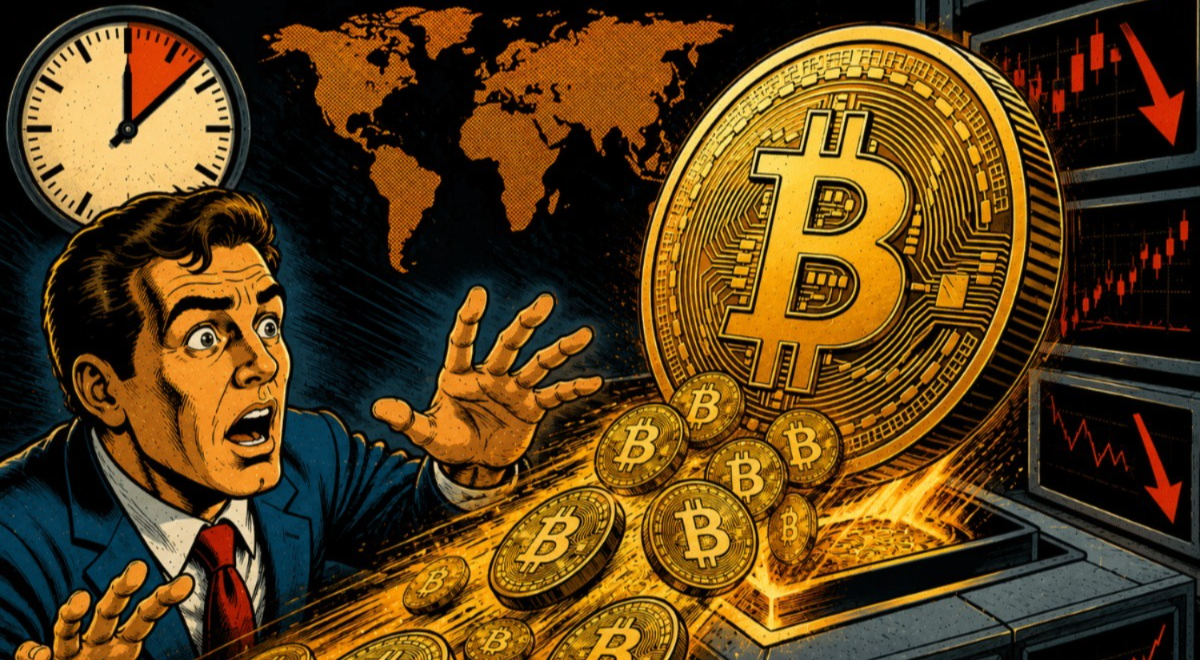
——After the launch of the first spot ZEC ETF in the United States, why is privacy being challenged against BTC again?
One keeps every transaction permanently written on a public bulletin board; the other allows you to seal the amount and payer/receiver in an envelope that only you can open. Recently, some have suggested that the latter will replace the former—first clarifying what the differences between the two are before discussing the possibility of replacement.
Remember a life comparison
You buy groceries with cash, the shopkeeper doesn't know how much is left in your pocket, and the people in line next to you don't know how much you've just spent. With a bank card, almost everyone—the bank and payment companies—knows.
Bitcoin is more like a bank statement visible to the entire world: who sends to whom, how much, and when—all permanently public. Analytic companies can match these statements with the real-name information from exchanges to piece together your financial trail.
Zcash (token symbol ZEC) offers another option: you can publicly transfer like Bitcoin, or you can use "shielded transactions"—the network only confirms "this money is valid, not fake, and not double spent" but does not disclose who sent what to whom. This is its most core feature: optional cryptographic privacy.
Both follow the same monetary rules: a total supply cap of 21 million coins, issuance through mining, and approximately halving every four years. Thus, some refer to Zcash as "Bitcoin with added encryption." This analogy is half correct—the rules are similar, but their uses and fates are different.
How Zcash came about
Around 2013, cryptographers wanted to make Bitcoin "as private as cash," first creating Zerocoin and then a more efficient version, Zerocash. On October 28, 2016, a team led by Zooko Wilcox turned this academic achievement into an independent public chain, launching Zcash.
The key technology it uses is called zk-SNARK (a type of zero-knowledge proof): you can prove to the entire network "I have the right to spend this money, and it wasn't overprinted" while not disclosing specific figures. In the early days, generating these proof parameters required a "trusted setup ceremony," where six people each took a piece and then destroyed it; it was later revealed that Snowden also participated under a pseudonym. This event generated significant controversy. The upgrades after 2022 (Halo 2/Orchard) no longer rely on such ceremonies; the Ironwood upgrade in July 2026 introduced a new shielding fund pool following an electrical circuit vulnerability, applying a “revolving door” rule that limits how much can be withdrawn from the old pool to not exceed what had been verifiably deposited. In simple terms: the team has continually worked on engineering solutions to the problem of whether "invisible money could be secretly printed."
Another point to note: Zcash's privacy is not mandatory. There are two types of addresses—transparent addresses like Bitcoin and shielded addresses that are encrypted. Deposits and withdrawals to and from exchanges, and many on-chain operations still go through transparent channels. Therefore, it is easier to list Zcash than currencies that are “fully anonymous,” and it is also easier to issue financial products, but the level of anonymity depends on how many people actually put money into the shielded pool.
How does it compare to Bitcoin in strengths and weaknesses
Dimension | Bitcoin BTC | Zcash ZEC |
Ledger | All open and permanently traceable | Optional public or shielded |
Visible content in transactions | Address, amount, and time are all visible | Shielded transactions only prove they are valid, without public details |
Currency attribute | More like an auditable "digital gold" | Closer to "encryptable electronic cash" |
Currency "cleanness" | Some coins may be marked as dirty money; deposits might be refused | After entering the shielded pool, old history is severed, making it more interchangeable |
Block time | About 10 minutes | About 75 seconds |
Total supply | 21 million | 21 million |
Regulatory perception | Transparent, institutions are more likely to accept it | Strong privacy, greater friction in listing and custody |
Size of the ecosystem | Market cap around $1.56 trillion, the deepest liquidity | About $14 billion by the end of August 2026, less than 1% of Bitcoin's |
Three points to summarize characteristics:
First, privacy is mathematically guaranteed, not achieved by “mixing things around.” Bitcoin can increase tracking costs through mixing services and the Lightning Network, but the underlying layer remains transparent. Zcash's shielded transactions are encrypted at the protocol level, which is a qualitative difference, not just a difference in degree.
Second, it is more like cash, while Bitcoin is more like a gold bar. Gold bars are kept in vaults, everyone knows the weight of the vault and entries and exits need to be registered; cash stuffed in envelopes cannot be seen by others. Institutions prefer the auditable nature of gold bars; those who do not want to be traced prefer envelopes.
Third, it has left a backdoor for compliance. Users can generate "viewing keys" to show necessary information only to auditors or tax departments, without having to display the entire transaction history on-chain. This is closer to the realities of the world than “complete transparency” or “no one can check it.”
The shortcomings are equally clear: when shielding is not used enough, the anonymous pool becomes smaller, and the transparent transaction flow in and out may still be observed; the cryptography is more complex, and an electrical circuit issue affecting "whether coins could be printed out of thin air" emerged in 2026 (resolved, with no confirmed large-scale minting theft, but it alarmed the market); the EU and other regions have stricter regulations on privacy coins, and Japan, South Korea, and other markets already have substantial restrictions. The emergence of the first spot ZEC ETF in the U.S. in August 2026 opened a pathway but does not equate to a global green light.
Why are people starting to compare it to Bitcoin in 2026
It’s not that the technology was just invented yesterday, but rather three things stacking together:
The amount of coins in the shielded pool has increased. About 29% of ZEC has entered the shielded pool, whereas five years ago it was only a single-digit percentage; about one-third of transactions daily are shielded transactions. The more people use it, the firmer the privacy.
Wall Street has given it a ticket. Grayscale transferred the trust into a U.S. spot ETF, and the product narrative directly states: Bitcoin-like total supply cap + proof of work + financial privacy in the AI era.
Monitoring capabilities are becoming stronger. On-chain analysis has become very robust, and large models will make "reconstructing identities from public transactions" cheaper. Some believe that privacy, which was not urgent at Bitcoin's launch, is becoming a necessity. Institutional research reports have even speculated that if ZEC achieves 2% or 10% of Bitcoin's market cap, the price could reach entirely different levels. That is an assumption, not a promise.
Consequently, a popular saying has emerged: Bitcoin is HTTP, Zcash is HTTPS; the former offers freedom, while the latter protects freedom. This statement is suitable as a title but not as a conclusion.
Will it replace Bitcoin?
The short answer: Almost certainly will not replace it, but may reshape the division of labor.
Bitcoin has already become a "public reserve asset" built on brand, liquidity, ETFs, corporate treasuries, and national narratives. The network effect of 17 years cannot be nullified by a zero-knowledge proof. Litecoin and Bitcoin Cash have both claimed to be better versions of Bitcoin, but neither took the throne.
Zcash is more likely to become another layer:
Bitcoin continues as auditable digital gold—institutions are willing to hold it, regulators understand the flow in and out.
Zcash competes for balances and payments that do not want to be traced—more like an encrypted envelope rather than a vault ledger.
If in the future "on-chain monitoring + AI" becomes a common anxiety, Zcash's relative status will rise; its market cap could increase significantly, still not needing to exceed Bitcoin. What truly deserves attention is not the slogan but whether the proportion of shielding will continue to rise to form a sufficiently large anonymous pool, whether new funding pools can maintain "nobody printing coins secretly" credibility, and how major countries perceive it—as a financial product or as a mixing tool out of which to drive it.
To conclude: Bitcoin makes money verifiable, Zcash makes money hideable. The future is likely not about one eating the other, but rather some put gold bars in a public vault for everyone to count, while others seal equally scarce coins in envelopes that only they can open. Whether the envelope becomes the default option for mainstream wallets is more worth watching than the question of whether there will be a "dynasty change."
免责声明:本文章仅代表作者个人观点,不代表本平台的立场和观点。本文章仅供信息分享,不构成对任何人的任何投资建议。用户与作者之间的任何争议,与本平台无关。如网页中刊载的文章或图片涉及侵权,请提供相关的权利证明和身份证明发送邮件到support@aicoin.com,本平台相关工作人员将会进行核查。