——From stocks, funds to gold, real assets are entering a new financial operating system
Author: AiPlot Research Institute
Observation Period: September 2026
In the past few years, the most important innovation in the cryptocurrency industry has not been the creation of numerous new tokens, but rather the establishment of a brand new set of asset usage habits: users can access markets globally, trade during non-traditional hours, settle with stablecoins, and continue to invest their assets in lending, staking, market making, and derivatives trading.
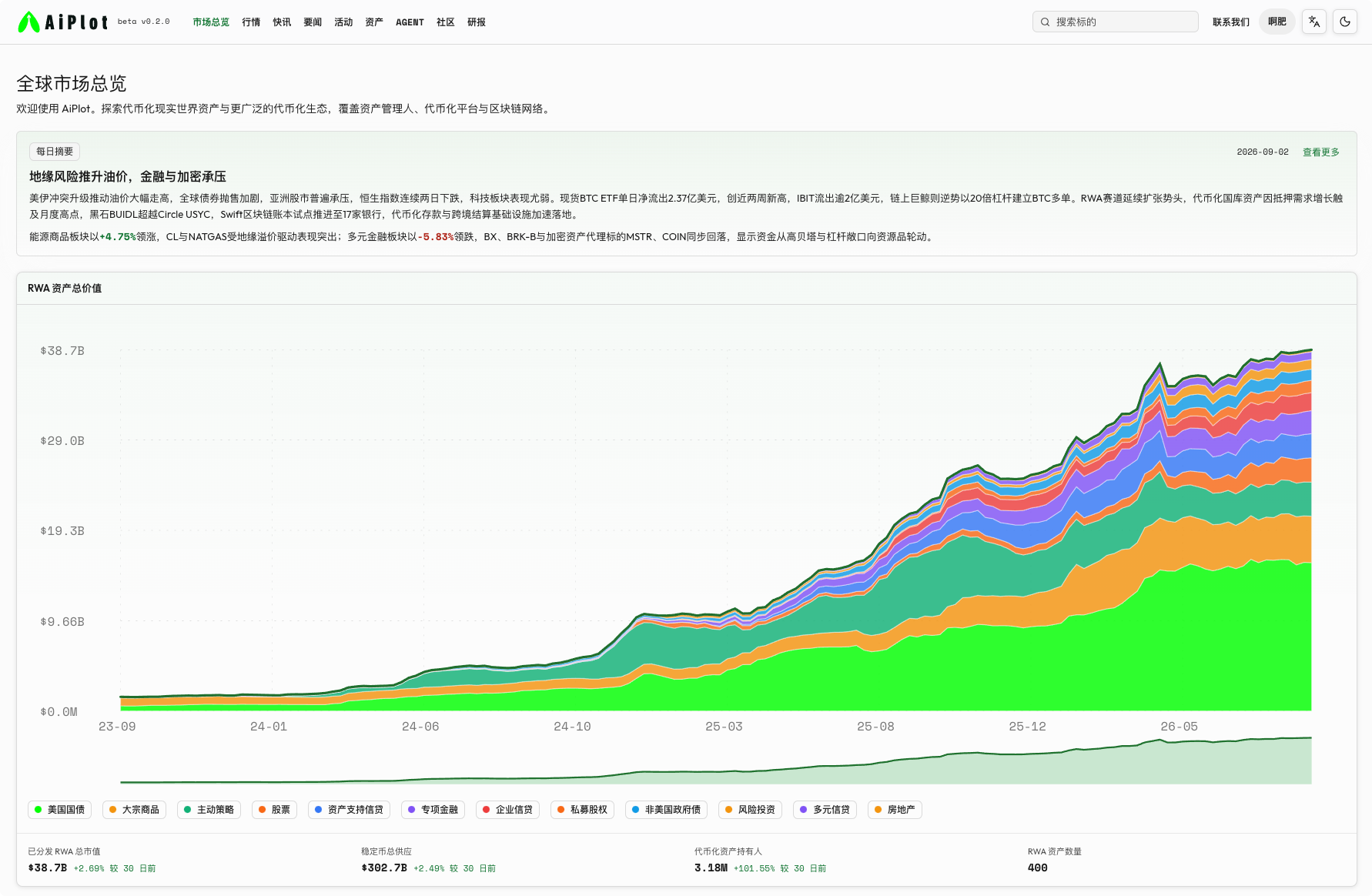
The next significant change worth paying attention to is that these capabilities are starting to extend from crypto-native assets to real-world assets such as stocks, government bonds, funds, gold, commodities, and credit assets.
This is the core value of RWA. It is not simply about "copying" an asset into a token on the chain, but rather attempting to redesign the way assets are accessed, their liquidity structure, and their financial applications.
1. The core of RWA is not tokens, but the migration of financial infrastructure
WallStreetBets recently made an important judgement in discussions about asset tokenization: the cryptocurrency industry has built spot, perpetual contracts, stablecoins, lending, and other market infrastructures over the past decade, while also cultivating user expectations for instant access, global liquidity, and 24/7 markets.
When users are accustomed to putting stablecoins in their wallets, transferring them across different chains, and further using them as trading margins and lending collateral, traditional financial assets remaining in brokerage accounts, bank accounts, and regional markets seem increasingly disjointed.
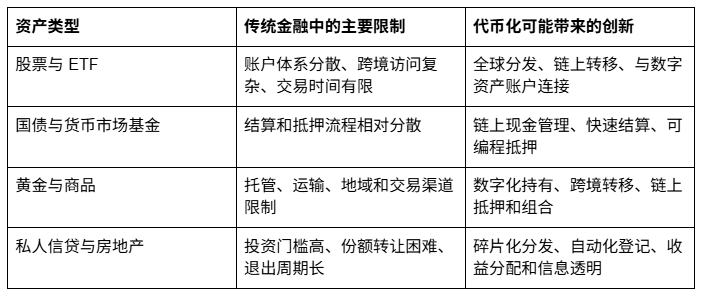
Traditional financial assets are not lacking in value; what they lack is a more efficient method of digital distribution. Stocks need access through brokerage accounts, fund shares rely on fund platforms, government bonds and money market products often require specific investment channels, while gold involves custody, transportation, settlement, and geographical restrictions. What RWA does is connect these assets to the account system, settlement system, and application system provided by blockchain.
Therefore, the key change of RWA is not that "real assets have turned into tokens," but that real assets are starting to possess three capabilities that were difficult to have simultaneously in the past: broader global access, more flexible asset combinations, and higher-frequency financial usage.
2. First Innovation: Transforming assets from "account islands" into globally accessible financial objects
Assets in traditional financial markets are typically locked in specific accounts and jurisdictions. A European investor wanting exposure to US stocks often has to navigate multiple processes, such as account opening, settlement, trading time zones, investor qualifications, and cross-border compliance. The assets themselves may be highly liquid, but the paths to access them are not necessarily efficient.
The first change brought by tokenization is to transform the representation of assets from a single institutional account into digital certificates that can be distributed on-chain under compliance conditions. Investors do not necessarily need to enter every intermediary link of the traditional financial system, but can obtain exposure to stocks, funds, or bonds through compliant digital asset platforms.
This does not mean that traditional brokerages will immediately disappear, nor does it imply that everyone can unconditionally purchase any tokenized asset. RWA still requires investor access, whitelisting, anti-money laundering, and securities regulation. However, once these conditions are met, blockchain can significantly reduce the marginal cost of asset distribution and allow users in different regions to access the same types of assets through a unified digital interface.
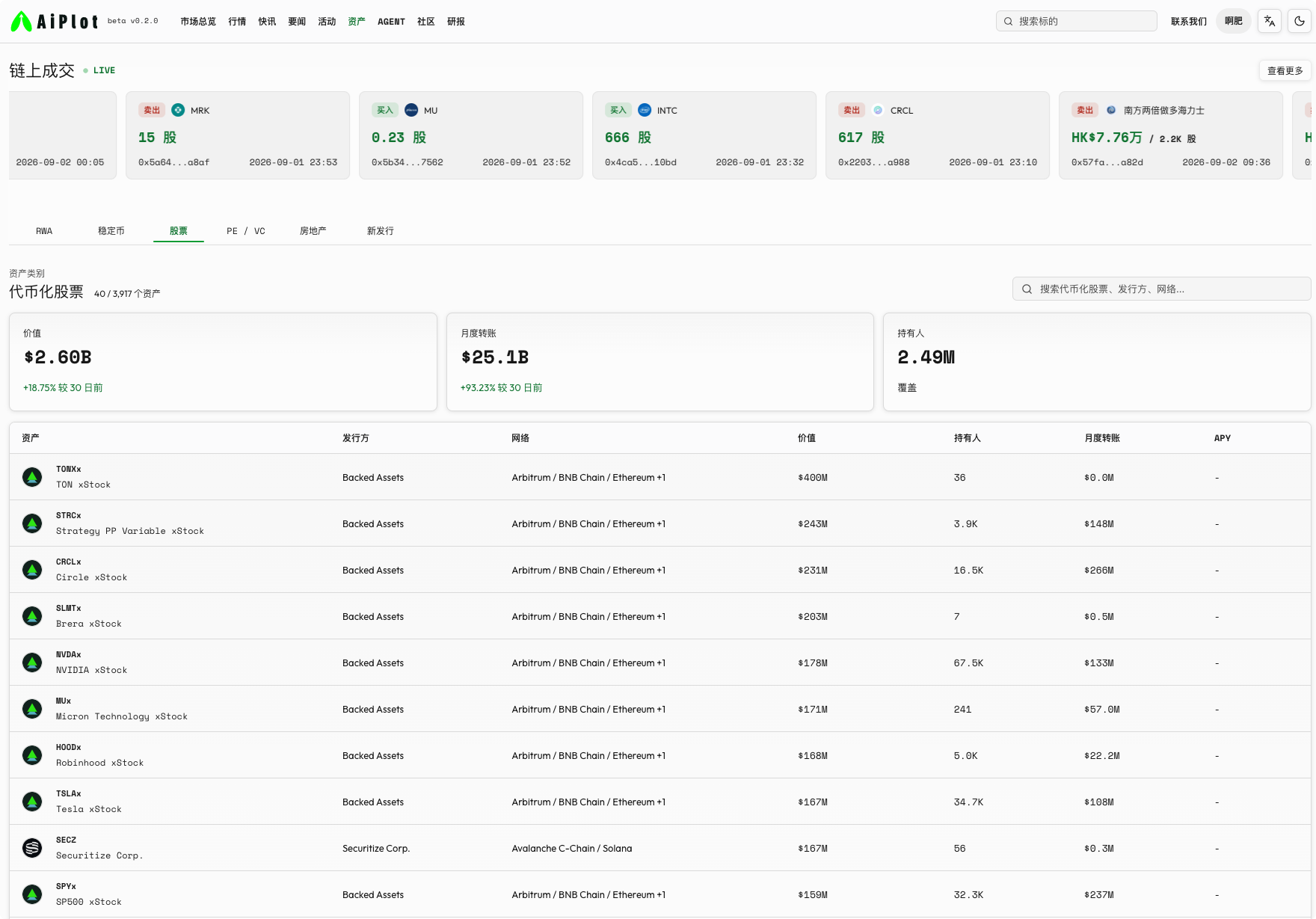
This is also why tokenized stocks and ETFs have easily become early focal points for the market: users are already familiar with Nvidia, Apple, Tesla, and the S&P 500, resulting in relatively low market education costs. The change is not about recreating unfamiliar investment targets for users, but about bringing familiar assets into a new environment for accounts, trading, and settlement.
3. Second Innovation: Extending trading time from "market open" to "continuous pricing"
Stock, bond, and fund markets typically run according to the working hours of exchanges, banks, and fund managers, while the cryptocurrency market has already allowed users to form habits of operating assets 24/7.
Once real assets are tokenized, the market can gradually form more flexible trading arrangements. On-chain markets do not need to completely replicate the opening and closing mechanisms of traditional exchanges; assets can be transferred, quoted, collateralized, and combined over a longer time frame. For investors across time zones, this means that they do not have to wait for a market to open to adjust their exposures; for institutions, it means that collateral and liquidity can move faster between different accounts and different protocols.
It is important to emphasize that 24/7 on-chain transfer does not equate to the underlying market always having equivalent depth of spot liquidity. Therefore, RWA's innovation is not simply about pursuing "never closing" markets, but about extending the time for transferring, settling, and financially using assets through tokenization, while gradually establishing market rules that align with underlying prices, custody, and redemption mechanisms.
From this perspective, it's not surprising that perpetual contracts have become an early form of real assets entering the cryptocurrency market. They can first provide continuous price exposure and risk management tools without needing to completely rebuild all traditional asset custody and settlement processes on day one. As spot tokens, fund shares, and on-chain settlement infrastructure gradually mature, RWA will further develop from merely providing price exposure to real asset ownership and usage.
4. Third Innovation: Allowing acquired assets to continue working
Assets in traditional financial accounts are often merely passively held after purchase. Tokenization provides assets with greater composability: they can serve as collateral in lending agreements, enter yield strategies and fund pools, or combine with stablecoins, derivatives, and other assets to form new financial products.
This will change the economic attributes of the assets. Previously, holding a stock primarily meant benefiting from price appreciation and dividends; in the future, under allowable compliance conditions, it may also be used for margins, collateralized lending, and portfolio management. Previously, gold was mainly a store of value; after tokenization, it can be transferred across global wallets, and may also become cross-chain collateral or a new settlement asset.
The BUIDL, BENJI, tokenized stocks, and tokenized gold mentioned by WallStreetBets represent different types of product explorations. The commonality among these products is not that they all adopted the same blockchain, but that they are all trying to answer one question: What can an asset do once it enters the chain, beyond being held?
This is also where RWA differs from traditional electronic financial products. Traditional financial assets can certainly be digitally recorded, but they are usually spread across different account systems and institutional frameworks. The potential advantage of on-chain assets lies in their ability to connect with payment, trading, lending, and clearing modules in a unified programmable environment.
The European Central Bank pointed out in its 2026 research that tokens can carry both asset information and applicable rules simultaneously, and achieve automated execution through smart contracts. This means that the conditions for asset transfer, investor qualifications, and compliance requirements have the opportunity to become part of the asset itself, rather than relying entirely on offline manual reviews.
5. Fourth Innovation: Expanding the liquidity boundaries of assets, rather than creating liquidity out of thin air
RWA is often described as "enhancing liquidity," but a more accurate description is that it may expand the range of asset participants and trading scenarios.
Real estate, private credit, and certain fund shares inherently have liquidity limitations. Tokenization cannot create buyers out of thin air, nor can it guarantee that assets can be redeemed at par at any time. However, it can reduce the costs of segmenting, distributing, registering, and transferring assets, allowing more investors to obtain corresponding exposures with smaller amounts, and making it easier for assets to enter new trading and collateral scenarios.
For publicly traded stocks, the significance of tokenization may not lie in solving the "nobody buys" problem, but rather in addressing the question of "where assets are placed and how they are used." For private credit and real estate, tokenization may improve the efficiency of share registration, investor management, and profit distribution. For government bonds and money market funds, tokenization can further enhance their functions as on-chain cash management tools and settlement assets.
Therefore, to determine whether a piece of RWA has genuine innovative value, one cannot only look at whether it claims to "enhance liquidity," but should observe whether it brings about actual participants, trading scenarios, and asset uses.
6. The endgame of RWA is not "more tokens," but a new asset network
Early RWA projects often emphasize issuance scale, but issuance is just the starting point. For an asset to truly enter the on-chain financial system, it needs to go through a complete process from issuance to distribution, from trading to collateralization, and from price discovery to risk management.
The future RWA market may present a networked structure. The same underlying assets may be issued by different institutions, deployed on multiple blockchains, circulated through various trading venues, and used by different lending protocols and asset management strategies. The value of the asset will no longer depend solely on the underlying price, but also on its accessibility to more compliant users, its usability in more financial modules, and whether interoperability exists between different markets.
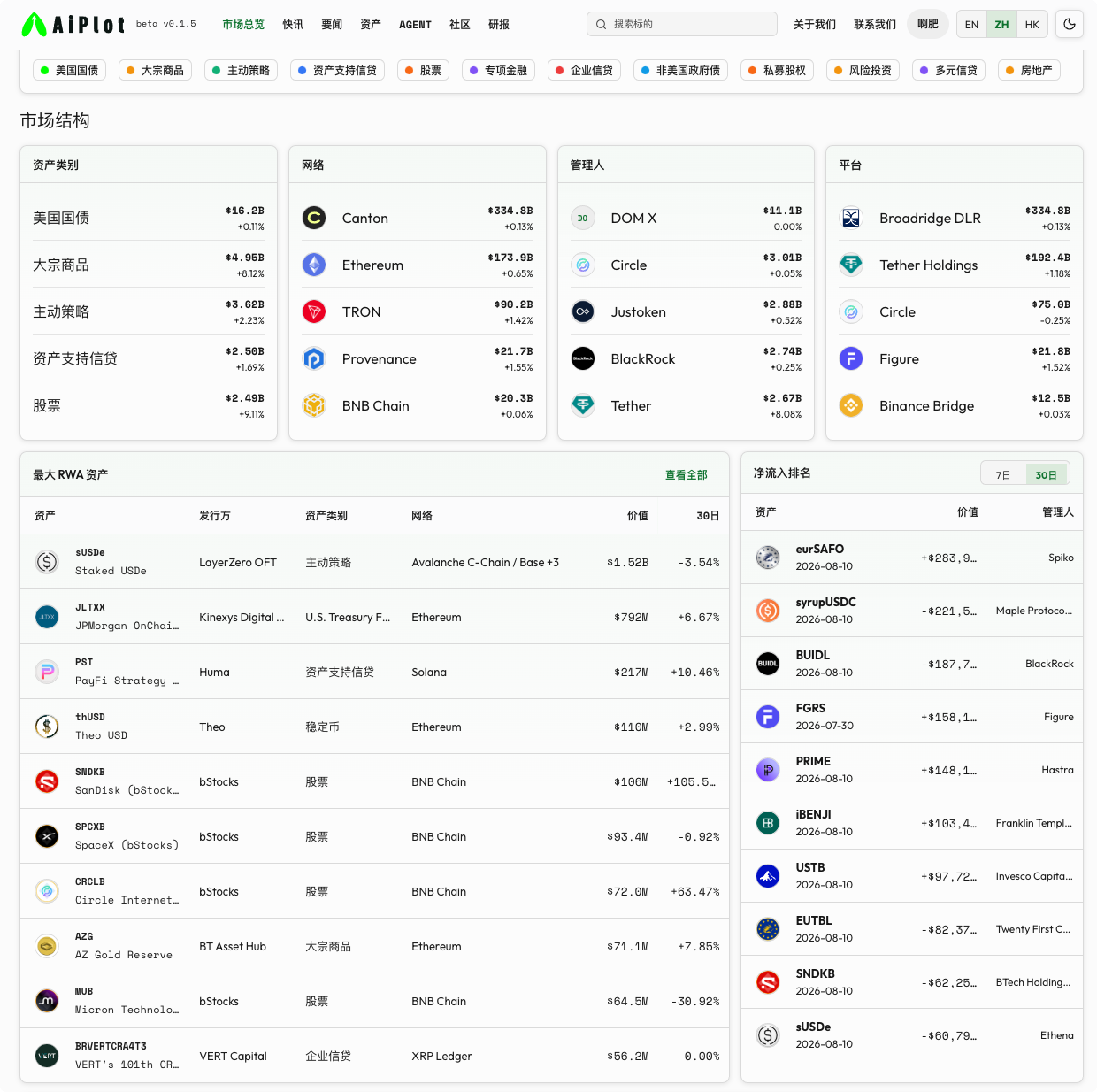
This will bring about new market analysis demands. Investors will need to simultaneously understand the issuer of the asset, the legal structure, the underlying assets, on-chain supply, holder distribution, transfer activity, cross-chain deployment, trading markets, and DeFi usage. Evaluating price or market cap alone makes it difficult to determine whether an RWA product has real demand or is merely the result of short-term issuance and incentive activities.
This is also AiPlot's entry point. AiPlot should not merely be a catalog displaying asset names, but can become a market intelligence hub for observing this new asset network: consolidating traditional company asset information, token issuance parties, on-chain data, related markets, and industry events into one research interface, helping users understand what changes occur when a real asset enters the chain.
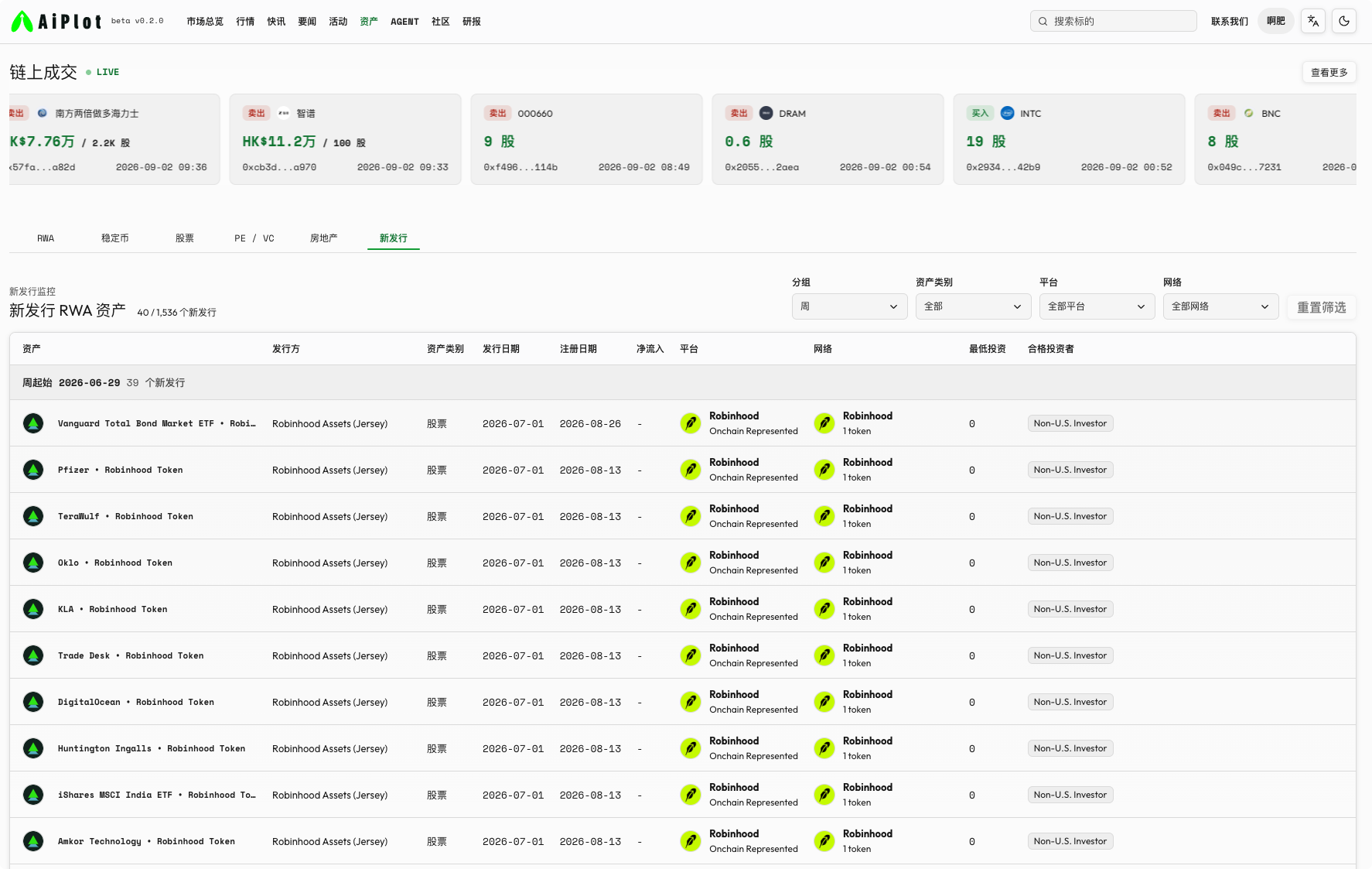
When users study a tokenized stock, the truly valuable questions include: what are the corresponding legal rights? Who issues and custodies it? On which networks is it deployed? How many holders are there? Is the transfer volume sustained? Has it entered lending or derivatives markets? Is liquidity consistent across different chains? These questions together constitute the "fundamentals" of RWA.
7. Conclusion: RWA is the second digitalization of financial assets
The first financial digitalization mainly transformed paper certificates, manual registrations, and offline transactions into electronic accounts and systems. The second digitalization, however, further introduces blockchain, smart contracts, and composable financial modules, allowing assets not only to be recorded but also to be programmed, combined, and executed automatically.
This is where RWA's long-term imagination lies. It may allow stocks, government bonds, funds, gold, and credit assets to have broader distribution ranges, more flexible trading methods, and more diverse financial purposes. It may also enable stablecoins to serve as a common settlement layer between real assets, gradually making on-chain accounts the unified gateway connecting traditional finance with digital finance.
In the next decade, what is truly worth observing in the market is not "how many assets have not been tokenized," but rather which assets can gain real users, real liquidity, and real usage scenarios on a compliant basis. Only when tokenized assets are no longer just held, but can be traded, collateralized, combined, and settled, can RWA be said to have successfully completed the leap from concept to infrastructure.
The core innovation of RWA is not just giving real assets a blockchain address, but providing them with a more open, efficient, and composable way of financial usage.
For more data and analysis, please follow AiPlot:
📖 Community communication:
-Telegram:
https://t.me/+IIYMcJigBAo4Mjg1
The content of this article only represents the author's personal views and does not represent the stance of this platform. The views, conclusions, and suggestions in the text are for investors' reference only and do not constitute any investment advice related to this platform. The market involves risks, and investment should be approached with caution.
免责声明:本文章仅代表作者个人观点,不代表本平台的立场和观点。本文章仅供信息分享,不构成对任何人的任何投资建议。用户与作者之间的任何争议,与本平台无关。如网页中刊载的文章或图片涉及侵权,请提供相关的权利证明和身份证明发送邮件到support@aicoin.com,本平台相关工作人员将会进行核查。