
In the previous article, I shared my views on Jackson Hole. I believe that if everyone thinks that he needs a hawkish signal, but he remains neutral, it would still be a dovish stance.
Today, Warsh did not maintain neutrality; his speech actually appeared very hawkish in my eyes. It's just that people often don't believe it. But I am not so stubborn; I think the next FOMC meeting is in 15 days. There are only two data points in between, and today’s Payroll Revision is not significant. This morning, I asked myself: if Warsh does not want to raise interest rates at the September meeting, why would he say this today?
He could say that inflation is above the target, but the trend is good; he could say that inflation is supply-side driven; more importantly, he did not need to mention that financial conditions are not restrictive; he also did not need to say that short-term rates are the primary tool.
This is how I understand the issue: there are two points, based on two principles from the Fed's FOMC. The first is that when the Fed Chair focuses more on inflation, he is inherently more likely to be hawkish; the second is that the Fed generally does not act suddenly and prefers to give the market a warning.
1. If the same words were spoken by Yellen or Bernanke, or even Powell in 2022, you would immediately recognize it as a hawkish statement; a Fed Chair clearly states that he believes unemployment is not an issue, inflation is the main concern, and then tells you he wants PCE at 2%. In any previous era, that would be considered iron-clad hawkishness. My article title would even be "This is a very hawkish statement."
But the market initially doesn’t believe it, and I understand two points:
- Warsh was hawkish in June, dovish in July, and his communication skills in the first two instances were not strong, leading people to feel uncertain.
- Trump, Baison, and others do not hide their desire for lower interest rates.
But I also feel these two points are not so solid; the first is that most Fed Chairs actually have a period of being a newcomer at the beginning. Warsh's communication this time was much better than before. But just like the boy who cried wolf, you don't believe it. The second is that I think there are many calls within the Fed for independence.
If I were to summarize his speech, I feel that before today, the market's basic assumption was:
- As long as inflation does not exceed expectations, I will not raise interest rates.
But after today, I’m not sure, but my view is that the market's basic assumption will change to:
- As long as inflation does not decrease, he will raise interest rates, at least once to express a stance.
2. I think today's speech can be interpreted as opening the door for a rate hike in September. If the data in the next two weeks is not good, today’s speech, along with the framework he disclosed, actually leans toward raising rates.
He mentioned seven principles, or disciplines, which serve as a reaction function for the market, telling it how to interpret economic data when the Fed no longer provides forward guidance.
This is meaningful because if the Fed does not provide guidance and also does not provide its reaction function, the market has no way to interpret economic data. For example, as last time, the market helped the Fed raise rates, and the Fed did not have to raise rates—what is this if not a funhouse mirror effect? This is precisely what Warsh does not want to happen. Therefore, the last communication was indeed a disaster. But with these disciplines, at least the market has an anchor point to think about what the Fed will do next in the current economic environment.
The seven principles:
- Trends matter
- Demand is observable; supply is uncertain
- PCE returning to 2% is the goal
- Maximum employment is also a principle, but inflation will impact maximum employment
- Short-term interest rates are the primary tool
- Currency is important
- Reduce communication, deliver results instead of reasons
I think the PCE2% target being as important as currency is a very hawkish statement. The first point is self-evident, and the second point is that in 2026 and 2027, when the growth rate of U.S. credit and corporate capex remains high, there may be significant debt in technology, and interest rates are not entirely the only influencing factor of inflation. I believe this is self-evident. When looking only at interest rates, interest rate-sensitive sectors are struggling.
We can integrate these seven principles into Warsh’s own observations about the economy:
- Corporate capital expenditure is increasing rapidly, corresponding to the principle that currency is important
- Banks indicate that loan growth is rapid, corresponding to the principle that currency is important
- Some sectors are under pressure, but financial conditions are not restrictive
- Full employment corresponds to the maximum employment principle
- Inflation is high, but long-term expectations are stable; the trend is good, but the responsibility for 65 months of inflation being above the target lies with the central bank
You will feel that there isn’t much dovishness in this.
I think the best explanation combining the first two points is:
- If the data in the next two weeks is not good, Warsh's remarks today equate to a precautionary measure for a rate hike
- Previously, everyone assumed that as long as the data is not bad, there won’t be a rate hike, but today my feeling is that if the data is bad, he will not remain idle.
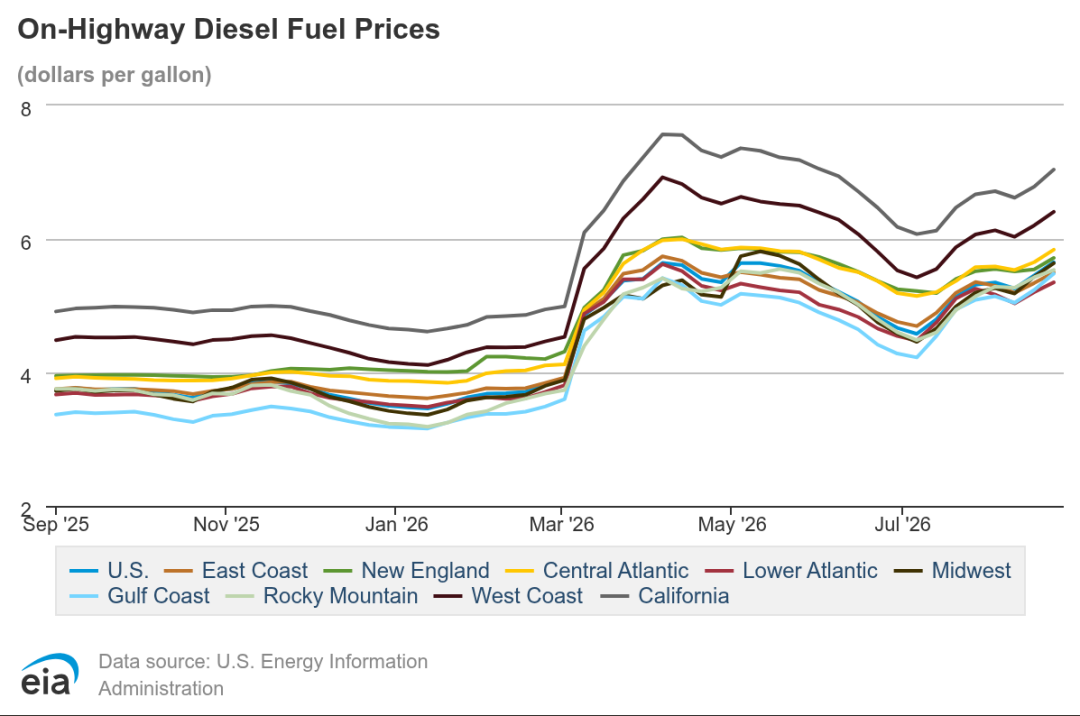
Of course, it is possible to say that this U.S. government controls the data, so in the next two weeks, we will see a decline in inflation. Then it's a happy ending for everyone. But I personally believe this is risky; many commodity prices have not decreased.
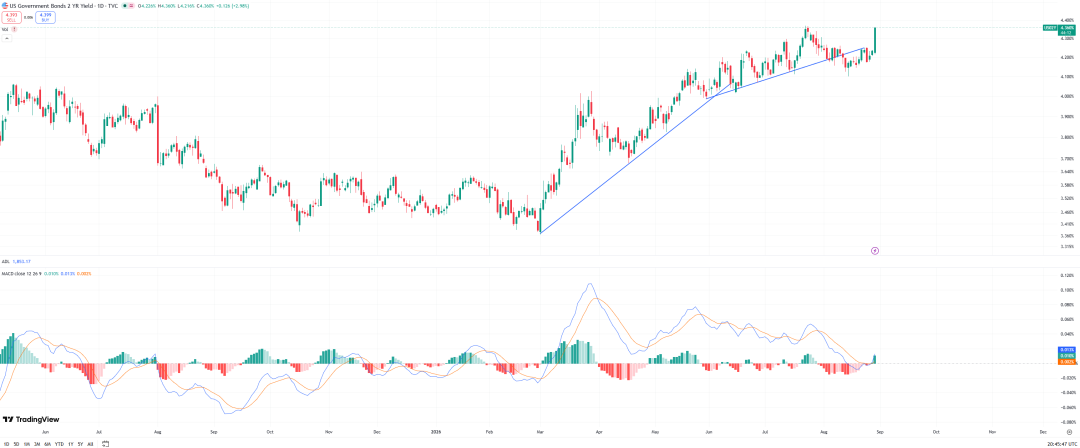
Market reactions were similar.
After an hour of confusion at the beginning, short-term interest rates began to rise continuously.
Before tonight, China actually introduced new real estate policies. Initially, I thought that as long as Warsh continues to downplay, commodity prices would likely break through.
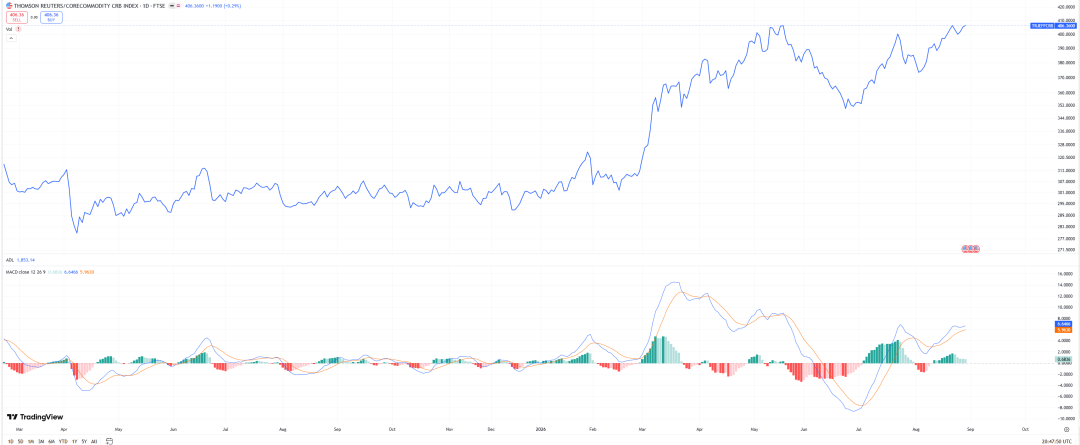
Of course, this also explains why if Warsh still cares about inflation, he cannot be dovish.
Previously, we shared that the current U.S. economy is in a good position; as long as the Fed does not tighten, both stocks and commodities can be bought on dips. Therefore, the Fed's stance is crucial. In fact, before Warsh's speech, China’s real estate policy was intensified, which might push global recovery forward further.
I am also looking forward to a scenario where the Fed is neutral, China stimulates, and then the U.S. expansion slows down naturally. But if the Fed is hawkish or raises rates in September, it will change everything's logic. This may not be our preferred scenario, but I feel the probability of it happening has increased.
Of course, if you see inflation data falling short of expectations in the next two weeks, we might experience a pause. But I think Warsh’s statement today resembles a Conditional Offer; as long as the inflation data is not good, based on his own logic, he is more likely to vote for a rate hike.
Or just like many people doubt today, if the inflation data is not good in the next two weeks and Warsh still votes to pause, it would completely contradict the principles he stated today, leading to greater chaos and distrust of him.
This goes back to the question I asked myself this morning: if he does not want to raise rates in September, he actually did not need to say much of what he said today.
This is my initial thought; it may not be correct, and I think China's real estate policy is indeed worth discussing. So we can wait until Sunday to reassess today’s viewpoints.
免责声明:本文章仅代表作者个人观点,不代表本平台的立场和观点。本文章仅供信息分享,不构成对任何人的任何投资建议。用户与作者之间的任何争议,与本平台无关。如网页中刊载的文章或图片涉及侵权,请提供相关的权利证明和身份证明发送邮件到support@aicoin.com,本平台相关工作人员将会进行核查。


