On one side, a giant whale is transferring HYPE to the exchange, while on the other side, ZEC short positions are experiencing expanding losses.
Recently, there has been a noticeable increase in on-chain capital movements.
Galaxy Digital has transferred about $8.11 million equivalent HYPE to the exchange in a short period; meanwhile, a short whale on Hyperliquid is facing tens of millions of dollars in unrealized losses, with open interest remaining high.
On the surface, this appears to be two different markets.
However, from the perspective of capital behavior, the market is entering a phase:
Price increases are no longer driven solely by spot buying; leverage, liquidations, and whale repositioning are collectively amplifying volatility. In short
Recently, Galaxy Digital transferred about $8.11 million HYPE to the exchange, and we need to observe whether it continues to transfer out in the future.
In the ZEC market, there has been a substantial unrealized short loss, with a single address experiencing an unrealized loss of about $25.7 million.
The rise in ZEC prices combined with high open interest has created positive feedback between long and short liquidations.
The Liquid Network event has also led to significant BTC on-chain transfers, with some funds subsequently returned.
The current market liquidation scale remains at hundreds of millions of dollars, with leveraged funds amplifying the volatility of hot assets.
Key areas to focus on next: Will whales continue to transfer coins to exchanges, and can funding in the privacy sector and RWA trading continue to grow?
HYPE: $8.11 million transferred to the exchange, is it offloading or reallocating?
Recent on-chain data shows that Galaxy Digital transferred about $8.11 million HYPE to the exchange in a short period.
This behavior can typically have two interpretations:
Preparing to sell or reallocating positions.
A single transfer cannot directly indicate bearish sentiment from the whale.
What truly matters is the subsequent actions:
If HYPE continues to concentrate on the exchange and there is a significant selling pressure on the price, then it is closer to profit-taking;
However, if the funds then flow back to other addresses, DeFi protocols, or cold wallets, it may simply be position adjustment.
Therefore, for whales, one transfer is not a signal; continuous capital flows are the signal.
ZEC: The real intense competition is happening in the leveraged market
ZEC is a different scenario.
Recently, while ZEC prices have risen, open interest (OI) on Hyperliquid has remained high.
Some short whales are already experiencing substantial unrealized losses, with a single address's unrealized loss reaching approximately $25.7 million.
This indicates that the market has exhibited a typical:
Price increases → Short losses → Short liquidations → Increased buying → Further price increases
positive feedback loop.
If longs continue to dominate, short liquidations might itself become a new buying force.
This is also why ZEC's volatility has significantly amplified recently.
Conversely, the same principle applies:
High OI means leverage is also accumulating.
Once prices reverse, longs may also become liquidation targets.
So what truly deserves attention in ZEC right now is not just the price but:
Price + OI + liquidation volume.
BTC: Behind large transfers, the market is also reassessing custody risks
Recently, there was a large transfer of approximately 4,000 BTC on the Liquid Network, with some funds later returned.
Although this incident is different from regular whale repositioning, it again reminds the market:
Large on-chain capital movements do not inherently equate to bullish or bearish sentiment.
Especially between exchanges, custody wallets, and bridge addresses, fund transfers may correspond to a variety of actions like trading, repositioning, or risk management.
Therefore, rather than fixating on a single “large transfer,” it is better to observe:
Where did the funds ultimately go?
What whales truly deserve to be tracked is the "cost zone"
For the current market, simply tracking "who bought how much" is no longer sufficient.
What is more important is to assess:
Where is the whale's cost?
If a certain address consistently builds a position before a hot launch and the price subsequently breaks above its average cost zone, then it may enter a holding phase;
If a significant capital influx occurs into the exchange when the price nears the cost zone, it is necessary to be cautious of profit-taking.
Combining ETF capital flows, net inflow/outflow from exchanges, OI, and changes in on-chain addresses can bring us closer to the true intentions of the funds.
Next, two areas deserve special attention
One is the privacy sector.
If privacy assets continue to receive capital inflows while related ETFs or institutional funds continue to accumulate, the rise of assets like ZEC may further attract leveraged capital.
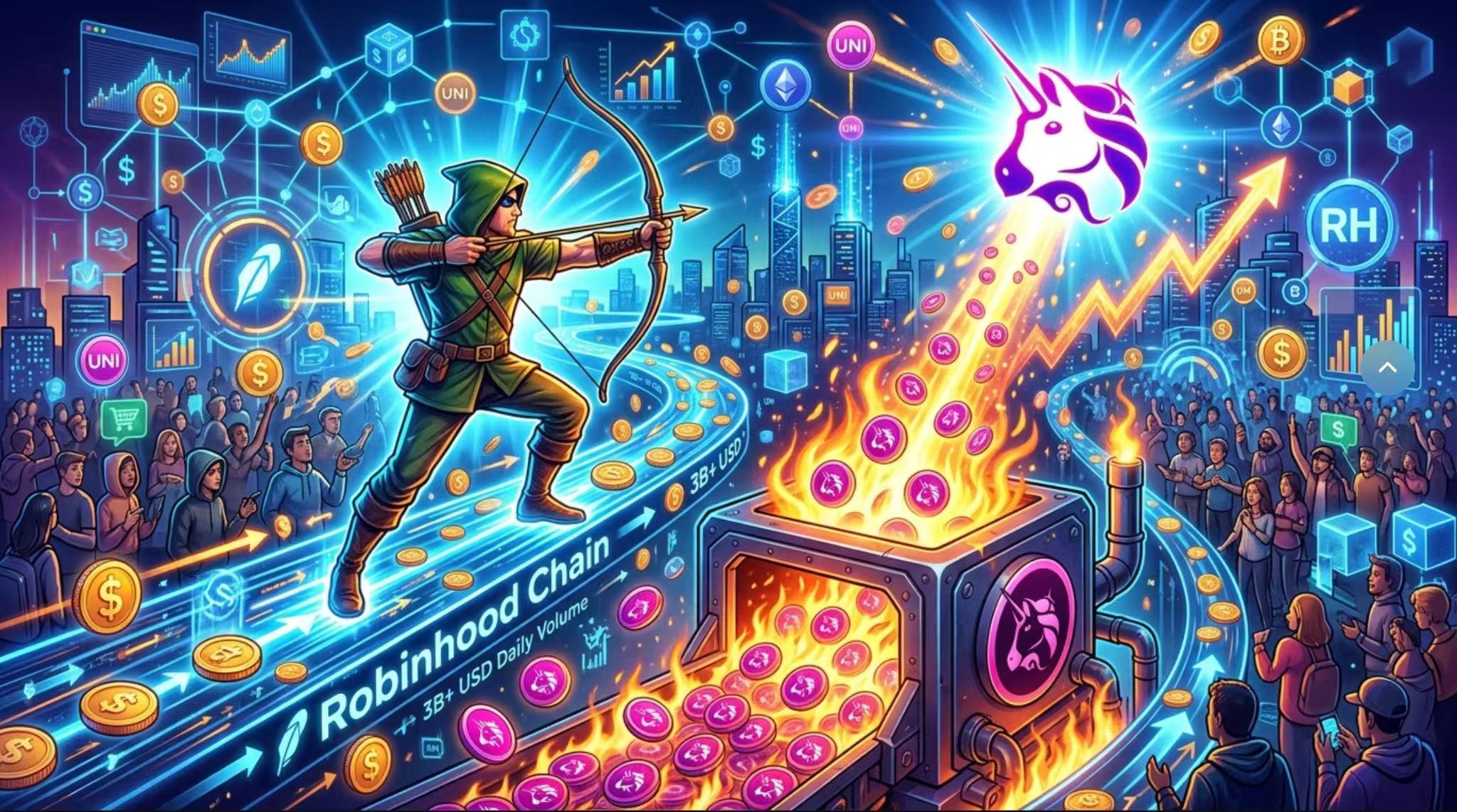
The other is the Robinhood Chain ecosystem.
If its daily trading volume continues to hit new highs, the fees from RWA trading and the UNI Burn may form a new narrative for capital.
Both directions could become regions for concentrated trading in the next round of capital.
Conclusion
The core change in the market now is not “what are whales buying.”
But rather:
How are whales, spot funds, and leveraged capital forming resonances.
What needs to be observed for HYPE is whether the transfers to exchanges are sustained;
For ZEC, it needs to be observed how long short positions can hold under high OI;
For BTC, it needs to be focused on whether large funds are adjusting positions or transferring risk.
For ordinary traders, instead of chasing every whale transfer, it is better to look at a few indicators together:
On-chain capital flows + net inflow from exchanges + OI + liquidations + ETF capital.
What is truly worth being cautious or attentive to is often not a single whale transaction.
But rather when multiple data points point in the same direction, the market's breakout point may be drawing nearer.
If you are also paying attention to the Crypto market and want to participate in trading or asset allocation, you can register through the following exclusive channels and enjoy discounts:
Binance: Register through the exclusive link and enter the invitation code aicoin668 to enjoy a 10% rebate.
Registration link: https://jump.do/zh-Hans/xlink-proxy?id=3
Benefits group: https://www.aicoin.com/link/chat?cid=gmLgwvKD1
OKX: Register through the AiCoin exclusive link to enjoy a permanent 20% rebate.
Registration link: https://jump.do/zh-Hans/xlink?checkProxy=true&proxyId=2
Benefits group: https://aicoin.com/link/chat?cid=l61eM4owQ
Bitget: Register through AiCoin's exclusive channel to enjoy a 10% trading fee rebate
Registration link: https://jump.do/zh-Hans/xlink-proxy?id=6
Benefits group: https://aicoin.com/link/chat?cid=N63yYYKQ
We also welcome you to join AiCoin-related communities to get more information on new coins from exchanges and profit opportunities:
Official Telegram community: https://t.me/aicoincn
AiCoin Chinese Twitter: https://x.com/AiCoinzh
This article represents the author's personal views and does not reflect the position of this platform. The views, conclusions, and suggestions in the text are for reference only and do not constitute any investment advice related to this platform. The market has risks, and investments should be cautious.
免责声明:本文章仅代表作者个人观点,不代表本平台的立场和观点。本文章仅供信息分享,不构成对任何人的任何投资建议。用户与作者之间的任何争议,与本平台无关。如网页中刊载的文章或图片涉及侵权,请提供相关的权利证明和身份证明发送邮件到support@aicoin.com,本平台相关工作人员将会进行核查。