Author: Zen, PANews
“Master, what work do you do?” This soul-searching question no longer belongs only to humans, but is also starting to belong to robots.
In the past two years, the most intuitive progress of humanoid robots has largely been reflected in their physical mobility. From dancing and running to doing somersaults, various difficult actions that once attracted crowds are gradually becoming the "basic moves" in company demonstrations. As robots become more agile, the questions of public interest are changing as well. People are starting to discuss what work robots can actually take on, and who is willing to pay for it?
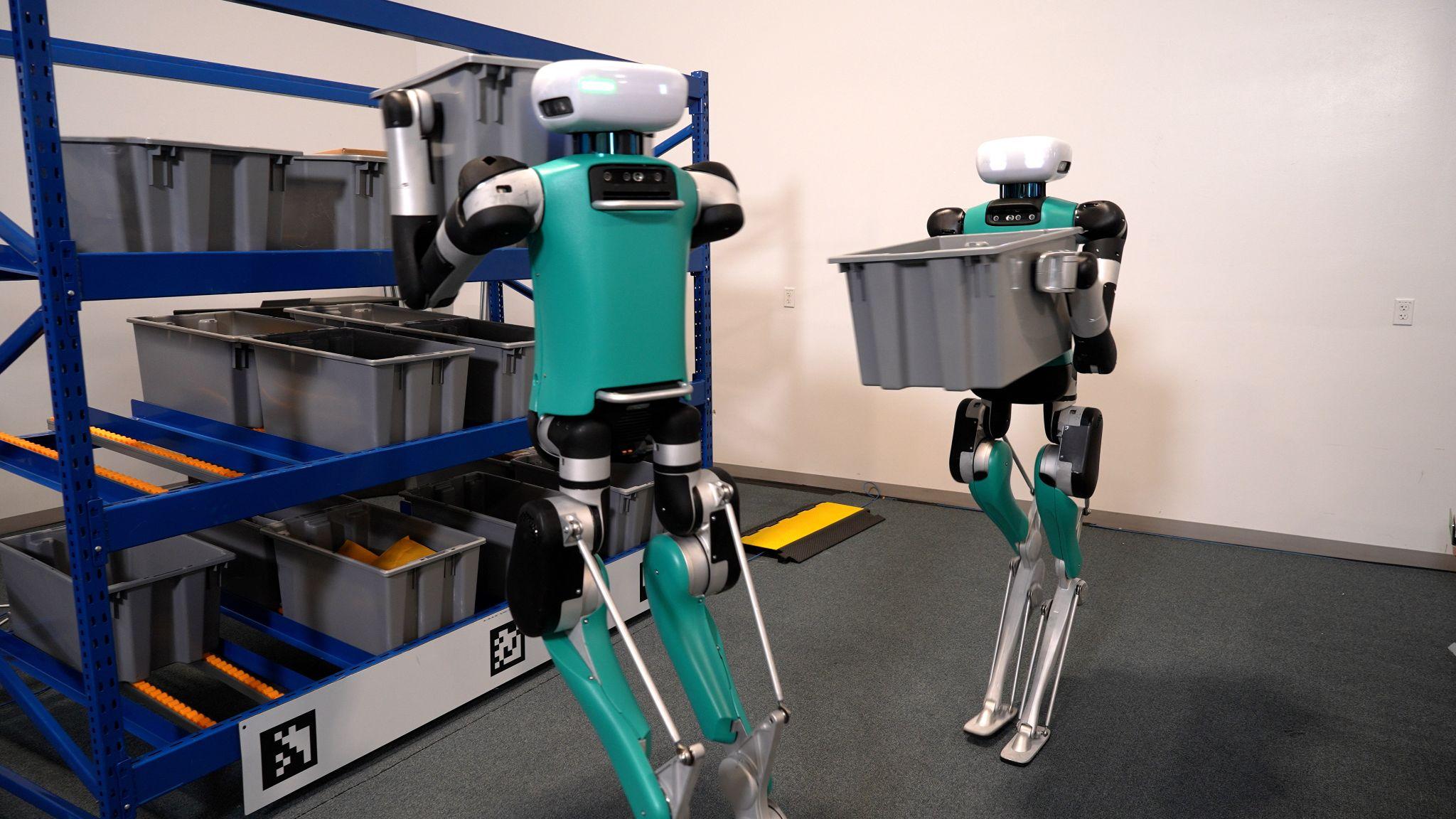
Agility Robotics provided its answer early on. Unlike peers who are keen on showcasing complex actions, Agility's Digit has long been repeatedly performing a task that appears very boring—transporting turnover boxes in warehouses and factories.
This somewhat plain product line has earned Agility a rare label. While humanoid robot companies still generally rely on demonstration videos to depict the future, it has entered real production environments relatively early, attempting to create revenue through robot deployment and services, becoming one of the closest companies to commercialization.
Now, Agility is also trying to bring this path into the capital market. In June of this year, Agility announced it would go public through a merger with special purpose acquisition company Churchill Capital Corp XI, with a pre-investment valuation of about $2.5 billion. Subsequently, an analyst known as the “White-Haired Stock God,” Serenity, publicly stated that within the robotics sector, Agility Robotics would be his favorite target.
However, the S-4 registration document submitted to the U.S. Securities and Exchange Commission on September 4 first revealed the balance sheet of this “closest to commercialization” humanoid robot company to the public: in 2025, net sales are expected to be about $1.78 million, with a net loss of about $138 million. At the same time, the company claims to have already secured over $300 million in long-term orders for Digit v5.
Digit, already in factories, is still waiting for bulk orders
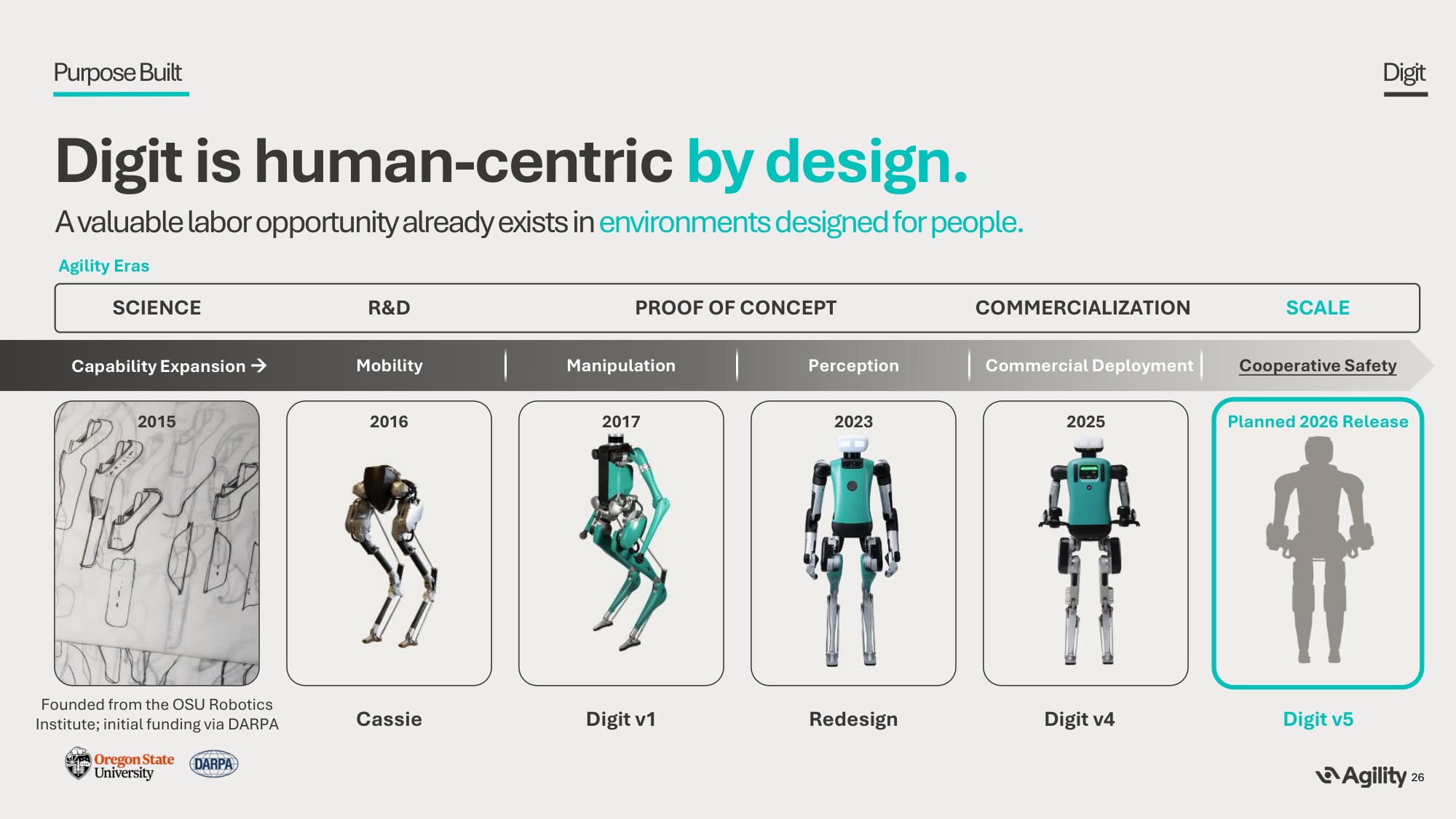
Agility was founded in 2015, emerging from the Dynamic Robotics Laboratory at Oregon State University. The company's founder, Jonathan Hurst, has long researched the motion control of bipedal robots; the early product Cassie had only two legs, with no torso or arms. The later Digit added an upper body and mechanical arms to this bipedal platform, gradually acquiring the ability to handle turnover boxes and perform tasks like loading and unloading machine tools.
Digit does not pursue an appearance that is indistinguishably close to humans; its legs use bird-like reverse joints, and its hand structure is closer to an industrial gripper, which also shapes Agility’s distinction from many humanoid robot companies. Agility aims first to solve the clear process and repetitive tasks in warehouses and factories that are not easily accomplished with fixed robotic arms.
This clear technical route has brought Agility numerous clients from large manufacturing and logistics companies. American logistics giant GXO has deployed Digit in the logistics center serving women's apparel brand Spanx; German industrial component manufacturer Schaeffler and Japanese automaker Toyota have introduced it into manufacturing environments, along with early deployment customers such as Latin American e-commerce platform Mercado Libre.
Agility claims that Digit has accumulated over 65,000 hours of real operating data, which can be further used to train the robot's perception and action systems. In the projects with GXO and Schaeffler, Digit's work accuracy is about 98%, having handled over 100,000 and 25,000 turnover boxes respectively.
However, entering factories for testing and technical validation is still quite far from the robots being bulk purchased by clients.
In the robotics industry, compared to bulk purchasing, the budget and decision-making threshold for pilot projects are typically much lower. Large companies are willing to set aside a warehouse, a few production lines, and a small budget to validate new technologies, but expanding from tests of fewer than ten units to hundreds of deployments requires reassessing production efficiency, safety responsibilities, system compatibility, and long-term maintenance costs.
Amazon invested in Agility back in 2022 and has conducted multiple rounds of tests with Digit in its warehouses. As of June 2026, Amazon has not been listed as an active commercial deployment client of Agility, as their previous pilot has concluded. Agility stated that it hopes to continue cooperation with Amazon after launching the next-generation Digit v5 by the end of this year.
Agility's business model: buyout or robots as a service?
Agility’s most important commercialization data right now is the over $300 million multi-year order for Digit v5. However, the S-4 document shows that this order corresponds to a client whose identity has not been disclosed, a three-year RaaS contract, and about 1,000 units of Digit v5, not from distributed purchases by multiple clients. The contract also includes warrants, which will gradually vest as the robots are deployed.
This means that the deployment arrangement of this single client will largely determine Agility's revenue capacity for the coming years. The order must meet agreed product functions, technical specifications, and other contract milestones, ensuring that the $300 million can only be realized progressively as the robots are produced, accepted, and put into operation. In addition to this order, Agility states it is in commercial negotiations with over 30 potential clients, but has not disclosed how many have signed binding purchase or deployment contracts.
In terms of business models, Agility has designed two sales modes for Digit v5: direct purchase of the robot by the client and robots-as-a-service (RaaS).
According to the calculation model provided by Agility, in the direct purchase mode, clients pay about $200,000 to purchase the robot, followed by approximately $20,000 deployment fee, and $36,000 per year for Arc software and maintenance. The $200,000 hardware revenue is generally recognized once the robot completes acceptance and control is transferred to the client; deployment fees, software, and maintenance revenues are recognized as the corresponding services are completed. Based on a five-year lifespan calculation, one Digit can bring Agility about $400,000 in cumulative revenue.
According to the S-4 document, Agility is expected to achieve net sales of $1.782 million in 2025, with $1.55 million coming from robot sales, contributing approximately 87% of that year’s revenue. The remaining $213,000 comes from deployment and professional services, with maintenance revenue around $14,000. Notably, a client who is also an Agility shareholder purchased five units of Digit for a total contract price of $1.05 million, averaging about $210,000 per unit.
The RaaS model reduces the client's initial investment, but has a longer revenue recognition cycle. In this model, Agility retains ownership of Digit, with clients paying a monthly subscription fee of $8,500 to access the robot, Arc software, and maintenance services, alongside an additional one-time deployment fee of about $25,000. Thus, the annual subscription cost for one Digit would be $102,000, and with the deployment fee, the first-year client expenditure would amount to about $127,000; if it continues to operate for five years, the cumulative amount would be approximately $535,000.
Charge Items | Robots as a Service (RaaS) | Direct Purchase of Robot |
|---|---|---|
Robot Ownership | Held by Agility | Held by Client |
Hardware Purchase Cost | None | About $200,000 |
Subscription Fee | $8,500 per month | None |
Software and Maintenance Fees | Included in Monthly Fee | $36,000 per year |
One-time Deployment Fee | About $25,000 | About $20,000 |
First Year Client Expenditure | About $127,000 | About $256,000 |
Cumulative Expenditure Over Five Years | About $535,000 | About $400,000 |
Agility expects that RaaS will play an increasingly important role in its long-term commercialization model, and this pricing model also explains the composition of the so-called $300 million order. Calculating at $8,500 per month per robot, the subscription fees for 1,000 robots operating continuously for three years would amount to around $306 million, which aligns closely with the order value disclosed by Agility.
It is worth noting that this order for 1,000 units corresponds to the Digit v5, which has yet to be formally commercially released. Agility has produced prototypes and plans to launch the product by the end of 2026, but still needs to complete production preparations, customer acceptance, and large-scale deployments. Thus, this order directly depends on the development and mass production progress of the next-generation product. The production, acceptance, and deployment speed of Digit v5 will directly determine when and to what extent the order can be converted into revenue.
Heading to the capital market requires crossing from orders to delivery
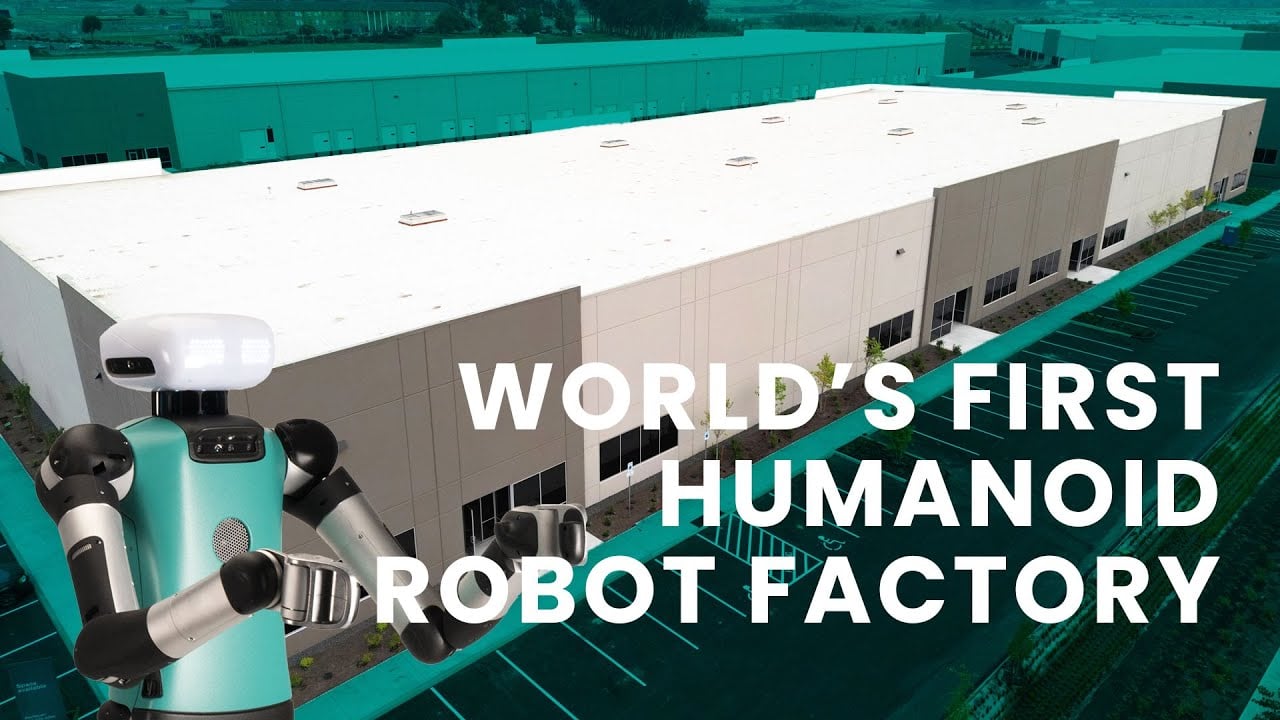
In September 2023, Agility officially announced the opening of its 70,000 square-foot factory RoboFab in Salem, Oregon, stating that it would be operational within the year, thereafter starting to move Digit's production there. The company initially estimated it would only be able to produce a few hundred robots in its first year, while the designed annual production capacity when running at full capacity exceeds 10,000 units.
Agility sees RoboFab as a domestic manufacturing asset, stating that currently about 75% of Digit’s components come from American suppliers, with high-value hardware parts such as actuators, end effectors, machine control, and safety systems also developed in-house. This supply chain helps Agility control product quality and delivery processes, reducing cross-border supply risks, but also makes it difficult to fully take advantage of the established clusters of motors, reducers, batteries, and structural components in China.
Moreover, the domestic components, labor, and small-batch production in the United States may also contribute to Digit’s currently high costs. Agility expects the material cost for Digit v5 during the initial commercial release phase to be around $150,000 per unit. For reference, the original flagship H1 from Unitree, another full-size biped robot, is priced at under $90,000. The material cost of Digit v5 is about 67% higher than the publicly listed total price of the Unitree H1, and the eventual buyout price exceeds that of the latter by more than double.
Of course, this price difference cannot be directly used to judge the performance or manufacturing efficiency of the two robots, but it clearly shows that the supply chain environments and production stages of the two companies are quite different. Unitree can leverage China's relatively centralized robot component supply system, while Agility is building a system focused on domestic production, industrial safety, and client deployment, incurring higher per-unit manufacturing costs at this stage.
Agility hopes to solve this issue by increasing production. According to the calculations submitted by the company, once the annual output of Digit v5 reaches 1,000 units, the material cost per unit is expected to decrease from $150,000 to $75,000; when the annual output reaches 10,000 units, the cost will further drop to $30,000. Additionally, each robot also requires about $15,000 in one-time deployment costs, along with roughly $15,000 per year for software, maintenance, and on-site service costs.
From primarily servicing small-scale pilot programs and early commercial deployments to scaling up production to hundreds or even thousands of units annually, Agility needs to simultaneously increase its capabilities for parts procurement, assembly, quality control, and client on-site services. The continuously increasing initial investments have already reflected in the financial statements.
Compared to the future cost reduction model, Agility's current operating results are much more severe. In 2025, while achieving net sales of $1.782 million, direct expenses incurred from robot production, deployment, and services will reach about $4.5 million. Additionally, during the same period, research and development expenses are around $91.6 million, and sales and management expenses are approximately $45.8 million, resulting in a net loss of $138.1 million.
This is also the direct background for Agility to choose to enter the capital market at this time. According to the transaction plan, assuming SPAC shareholders do not redeem, approximately $420 million in trust funds combined with about $200 million from PIPE could provide over $620 million in funding. Agility plans to use this for fulfilling existing orders, expanding commercial deployments, increasing Digit v5 production, and continuing investments in robot hardware, physical AI, enterprise software, and safety system research and development. This funding is also the manufacturing and operational foundation needed for Digit v5 to move from commercial release to mass delivery.
The $2.5 billion valuation is not based on Agility's current income, but rather on Digit v5's potential to transition from pilot to bulk deployment. What the capital market will have to bear is accompanying Agility across this unfinished risk.
免责声明:本文章仅代表作者个人观点,不代表本平台的立场和观点。本文章仅供信息分享,不构成对任何人的任何投资建议。用户与作者之间的任何争议,与本平台无关。如网页中刊载的文章或图片涉及侵权,请提供相关的权利证明和身份证明发送邮件到support@aicoin.com,本平台相关工作人员将会进行核查。


