The evolution of mobile communication technology is the history of humanity expanding physical boundaries, and it is currently entering a new chapter.
Over the past few decades, humanity has developed ground mobile communication to its extreme, with densely built base stations and undersea fiber optics connecting billions of people through a vast network. The emergence of low Earth orbit satellite networks has extended signal connections from the Earth's surface into space.
The essence of low Earth orbit satellite networks is to fill the signal blind spots that ground base stations cannot cover due to geographical and construction cost reasons, such as deep oceans, high mountains and canyons, and desert areas. By establishing an integrated connection between the sky and the earth, it serves a wider range of people's production and living needs.
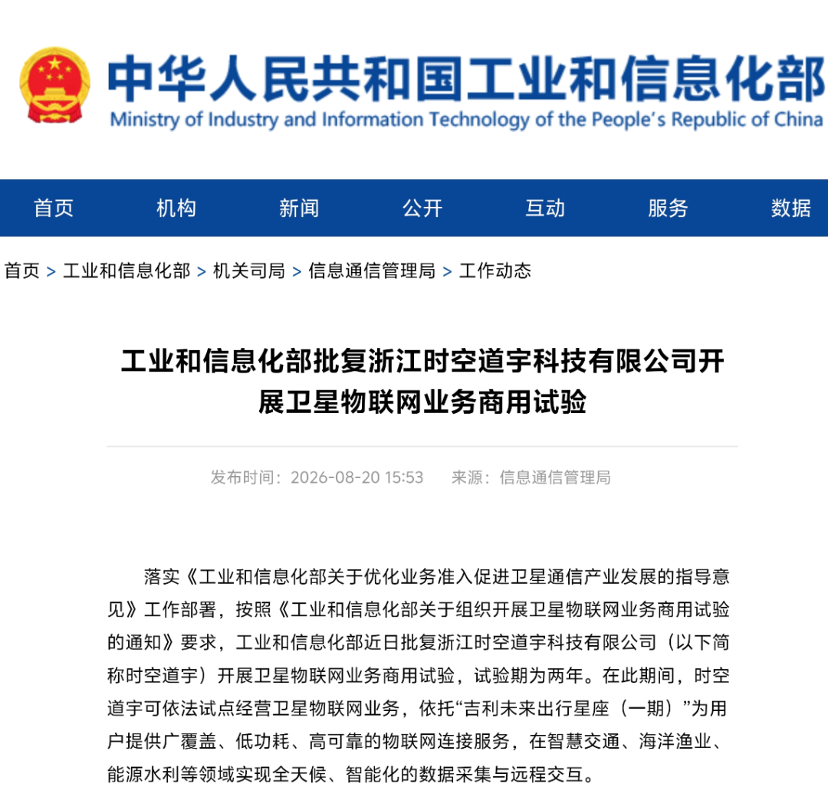
This year, the Ministry of Industry and Information Technology of China granted commercial trial permits for satellite IoT to commercial aerospace companies, marking the exit of domestic low Earth orbit satellite IoT from laboratories and testing grounds to enter the commercialization jungle armed and ready.
Corresponding to this is a subtle shift in the attitude of the capital market, which no longer cheers for purely grand narratives, but instead examines the true return on investment in the industry.
In this context, Space Time Path, as a recently licensed private enterprise, has naturally become an observation sample of attention from capital and the industry.
The Difficulty of "Ascending to the Heavens"
A satellite network is about sending satellites into orbit and weaving them into a highly available network, which can be considered a super system project of ceiling-level difficulty in the modern industrial system.
The so-called "difficulty of ascending to the heavens" involves not only countering Earth's gravity but also multiple extremes in the harsh environment of space, such as ultra-high communication reliability, consistency in orbit, and ultimate cost control.
In the 1990s, the "Iridium Project," led by Motorola, was the starting point for human exploration of satellite networks, but the first generation of Iridium satellites faced bankruptcy and reorganization just eight months after commercial launch due to huge losses, stemming from a severe mismatch in design and engineering capabilities:
On one hand, due to the adoption of an experimental small-batch customization model, the cost of each satellite reached 5.6 million US dollars, leading to a terrifying total cost for deploying 66 operational satellites; on the other hand, ground terminals weighing nearly a kilogram had high power consumption and poor heat dissipation, making them nearly unusable in indoor or mobile scenarios.
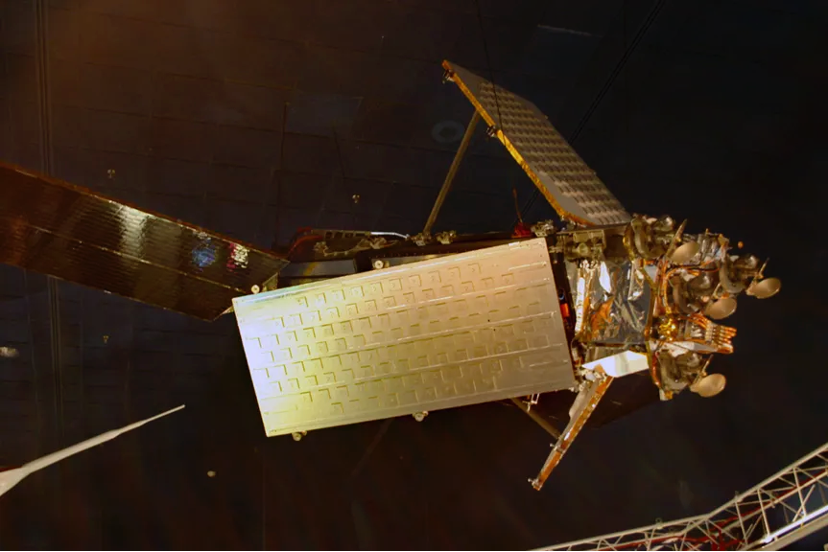
The first generation LM-700 satellite of Iridium; Image source: Flickr
Motorola bought an expensive lesson for its peers and set a high entry barrier for satellite networks.
Today, the engineering challenges faced by satellite networks are even more complex than thirty years ago.
For example, high-frequency signals are fragile, and a single heavy rain can disrupt connections; orbits are becoming increasingly crowded, with frequent electromagnetic interference; vehicle-mounted and industrial scenarios also present extremely low power consumption, shock resistance, and extreme temperature tolerance requirements for terminals. Each of these factors raises the entry threshold, gradually narrowing the entrance to the track.
Most participants are "national teams" with scientific research achievements in one hand and substantial funding in the other, while a small number of private companies often turn to national capital after experiencing significant burning pain. Those who can stand firm on their own are rare and must have solid self-research and engineering capabilities, and Space Time Path is one of them.
Founded in 2018, Wang Yang, the founder, is one of the earliest domestic entrepreneurs engaged in commercial aerospace.
As the first private enterprise in China to achieve scaled commercial application of low Earth orbit satellite IoT constellation, Wang Yang had already independently developed and launched China's first private IoT communication satellite "Jiading No. 1" before establishing Space Time Path, and then completely departed from the official system for a second startup.
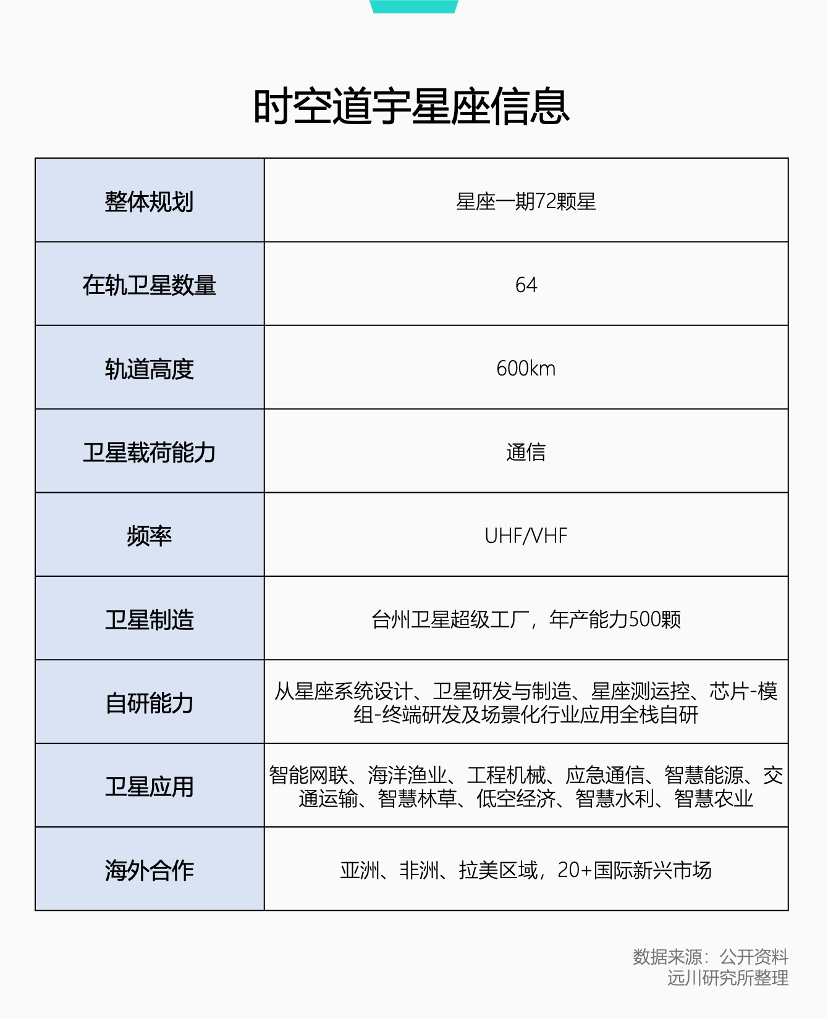
In his second startup, Wang Yang first solved the problem of satellite mass production, building a satellite super factory in Taizhou and achieving front-end application of vehicle-mounted satellite communication in 2023, thus forming a full-chain self-research capability from satellite R&D and manufacturing to constellation operation control and ground terminal.
This hybrid gene of having both aerospace foundation and modern industrial system is also reflected in Space Time Path's strategy when tackling underlying technologies.
Facing the pain points of traditional aerospace "high cost, long cycle," through modular design and automated production processes, the production cycle of a single satellite was compressed to 28 days, and the cost per satellite was reduced by about 45%, with an annual production capacity of 500 satellites.
In terms of communication links, they did not blindly pursue large bandwidth but focused on "high reliability connections," avoiding high frequency bands that are easily disturbed by adverse weather, opting for UHF/VHF frequency bands that have strong diffraction capability, good penetration, and excellent rain fade characteristics, ensuring that radio signals are not easily interrupted.
On the terminal side, they developed different types of products for different industries, forming a product matrix that is highly reliable and low in power consumption.
This solid technical capability has allowed Space Time Path to avoid the lack of follow-up that plagues most private enterprises and instead accelerate its pace.
However, this only addresses the issue of "making satellites well and connecting links." If the space network cannot be deeply integrated with specific industries, it will ultimately be just an empty skyscraper.
How to transform the network capabilities in space into standardized hardware that can be bought and used on the ground has become a hurdle that all commercial aerospace companies, including Space Time Path, must overcome.
The Last Mile to Get On Board
In 1912, the Titanic sank after hitting an iceberg, marking a turning point for early wireless maritime rescue and spurring the establishment of maritime satellite systems.
In 1979, the International Maritime Satellite Organization was established, and satellite communication was first introduced into the offshore search and rescue system, playing a crucial role in subsequent rescue efforts during the Gulf War and polar scientific expeditions.
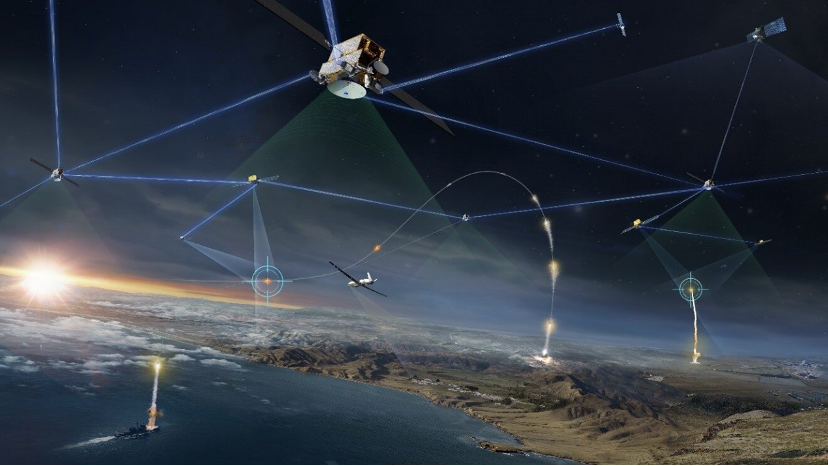
Rescue implemented via satellite communication; Image source: breakingdefense
However, this irreplaceable importance was hardly perceived by the general public for a long time. Distress telegrams from deep-sea freighters, professional portable terminals at disaster sites, and emergency calls from special scientific teams, while critical, had extremely low demand frequency and a very narrow audience.
For low Earth orbit satellite constellations, which often cost billions and have extremely high technical difficulties, merely meeting these low-frequency niche emergency needs represents a massive idling and waste of engineering resources.
To escape the embarrassment of "putting a large resource to minimal use," one must seek real-world scenarios that have massive terminal scales and possess rigid pain points for "all-weather connectivity." The rapidly growing networked and intelligent automotive industry becomes the most ideal testing ground and breakthrough point.
On August 28, just days after the Ministry of Industry and Information Technology officially announced the commercial trial license, the Geely Galaxy Battleship 700 was officially launched, marking Space Time Path’s first achievement in mass production of vehicle-mounted systems based on its own low Earth orbit satellite IoT constellation, becoming another representative breakthrough of the domestic low Earth orbit satellite network.
Successfully integrating the satellite network into a passenger car that ordinary consumers can drive is actually much more challenging than the outside world imagines.
In the past, the industry was generally stuck at three engineering bottlenecks:
First, hardware form, traditional satellite antennas are bulky, and when installed on rooftops, they not only disrupt aerodynamic shapes but also increase wind resistance and noise;
Second, automotive weather resistance, automotive front-end environments require chips and modules to maintain extremely low heat generation and low power consumption under jolts, extreme cold, and heat; traditional high-power solutions, often at dozens of watts, simply fail automotive regulations;
Third, soft-hardware disconnection, the structural differences between aerospace companies and automakers are vast, and the cost of cross-border customization is prohibitively high, deterring automakers.
The strategy of Space Time Path is not to make equipment into expensive modified packages but to directly reconstruct products based on the logic of automotive parts.
They have not only independently developed a vehicle-grade chip module that is only the size of a coin and has a running power consumption of less than 1.3 watts but also invisibly embedded the antenna into the vehicle’s structural components, while at the foundational level, directly linked the communication protocol stack with the electronic electrical architecture of the entire vehicle and the intelligent cockpit, making satellite communication into a native bottom-level interface within the vehicle's system.
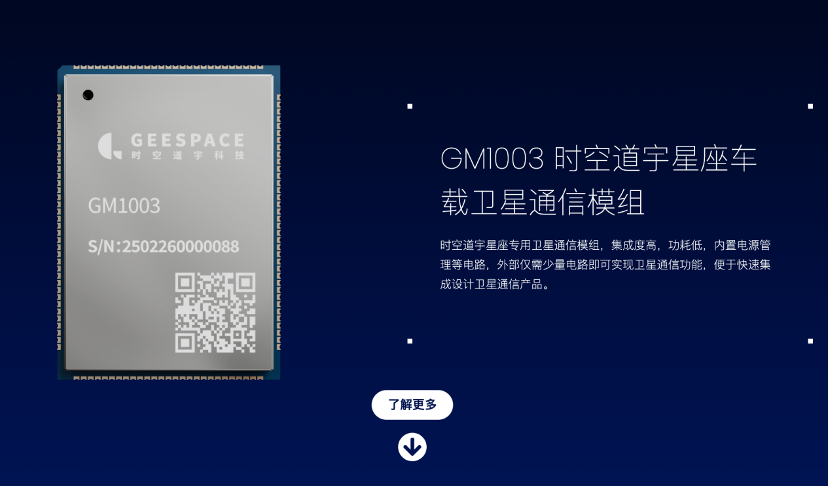
Space Time Path vehicle-mounted satellite communication module; Screenshot from Space Time Path official website
This means that once the vehicle enters an uninhabited area or encounters a sudden accident, it does not need to manually tune to find satellites; the vehicle itself can automatically invoke the low Earth orbit satellite link to complete emergency reporting and trajectory return.
From 2023’s initial trial of mass commercialization of passenger vehicles based on high orbit satellites to now achieving the world’s first low Earth orbit pre-installed mass production relying on its own commercial low Earth constellation, Space Time Path has demonstrated to the industry that satellite communication can be pre-installed in consumer products at an extremely low cost and in a standardized way.
For other private commercial aerospace companies anxiously waiting for commercial returns, Space Time Path’s successful scale delivery of vehicle-mounted pre-installation has shown them a certain path for satellite networks to generate sustainable cash flow, a survival ledger that can be replicated and imitated.
The Survival Ledger
The approval of the commercial trial permit by the Ministry of Industry and Information Technology is the industry's maturity ceremony, marking a transition from merely competing on technical metrics to a real market trial.
As the first private player to obtain a commercial trial permit, Space Time Path naturally becomes a comparative example for many private aerospace companies still struggling with R&D and losses.
For private enterprises in market competition without fiscal backing, the only survival rule is the commercial closed-loop and rapid cash flow generation. The corresponding "ledger" of Space Time Path is building the full-stack closed-loop capability of "network operation base + terminal hardware and software architecture":
Upwards, with the Ministry of Industry and Information Technology license, they possess low Earth constellation design, mass manufacturing, and in-orbit operation capabilities, allowing them to charge long-term service subscription fees; downwards, extending technology to ground-level chips, modules, front-end terminals, and industry application scenarios.
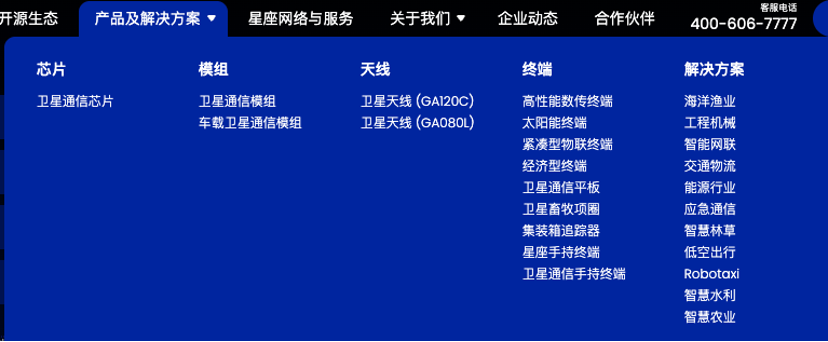
Full-stack product structure of Space Time Path; Screenshot from Space Time Path official website
This model of "controlling the network from above and controlling the terminal from below" allows it to break free from a purely hardware-selling model and turn to scenarios with greater certainty, where it can more directly realize the value of its technology.
In addition to successfully running large-scale delivery in passenger vehicles, Space Time Path has also demonstrated strong penetration in many complex scenarios concerning national economy and people's livelihood as well as high-value asset export.
In outdoor operations and disaster prevention emergencies, they have collaborated with China National Petroleum Corporation to build a joint laboratory promoting the oil and gas full industry chain, achieving over 99% communication success rate during flood prevention drills, filling the blank of data return in harsh environments;
For high-value asset export, they have partnered with industry giants like Zoomlion to promote equipment exports in engineering machinery, landing offshore fishing monitoring in Oman, and relying on the networks of operators in over 20 countries in Asia, Africa, and Latin America to pave the "Space Silk Road." Their low Earth terminals have been installed on Zhejiang Maritime Law Enforcement boats and offshore luminous buoys in Eastern Guangdong, eliminating blind spots in supervision of distant seas;
For advanced mobility and industrial ecology, they have collaborated with Cao Cao Mobility to complete nearly 100,000 kilometers of vehicle dispatch testing in weak signal and blind spots for Robotaxis and released a full-stack open-source ecosystem at the MWC exhibition, rapidly securing over 200 ecological partners and intention orders exceeding 100 million.
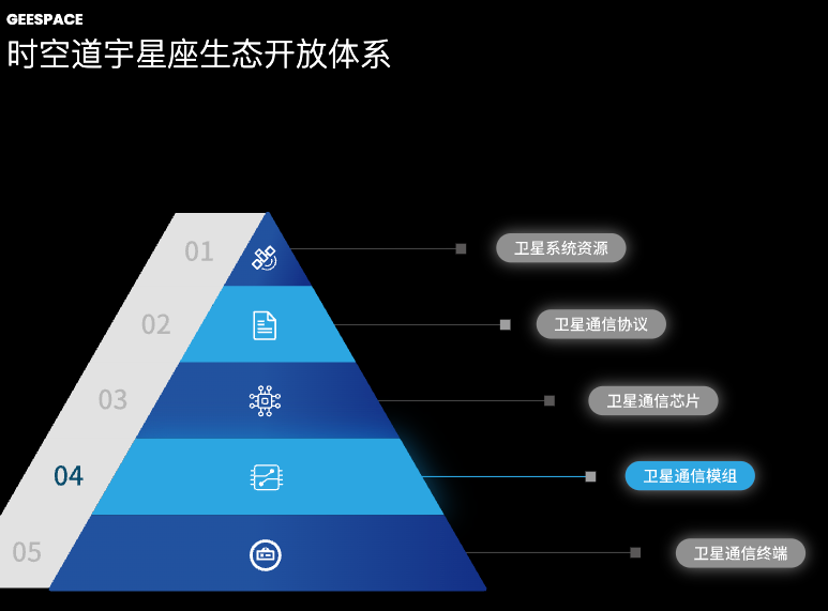
Space Time Path constellation ecosystem open system; Screenshot from Space Time Path official website
Behind this is an industry logic that is easily overlooked: the true value of satellite communication has never been to replace ground base stations or provide faster speeds, but to fill the connectivity gaps in areas where ground network coverage is absent.
From laboratory research to engineering breakthroughs, and to the running of multi-scenario commercial closed loops, the rapid breakthrough of Space Time Path not only signifies its self-generating survival but also sets a benchmark effect, revealing a principle validated countless times in the history of human technological development—
Any scientific technology needs effective turnover from private mechanisms and deep participation from market forces to burst forth with vitality.
State-owned enterprises have built the foundation of national strategic infrastructure, while private enterprises like Space Time Path dive into real industrial scenarios with keen market sensitivity, using efficiency, cost, and landing speed to carve out a commercialization path.
Only by relying on real orders to make money and run positive cash flow can private enterprises continue to attract investments, enabling the upstream and downstream of the industrial chain to form a scaled division of labor, and allowing advanced space technology to truly settle as a social infrastructure accessible to the public.
In this sense, the greatest value of Space Time Path is not only to provide an operationally valuable problem-solving approach to peers who are already struggling on the track but also to inject certainty and courage for those in the industry chain and capital waiting hesitantly outside the track to dive in.
As the gears of commerce begin to engage and operate, a Chinese commercial aerospace industry ecosystem supported by multiple forces is accelerating to break ground.
Epilogue
Looking back at the evolution of China's communication industry, China has completed the transition from a follower to a definitor in twenty years. But as antennas extend into deep space and the realm of communication stretches from the earth's surface to space, the rules of the game are changing.
In the past few decades, the deciding factors for China's position in each communication era have been telecom operators and communication equipment giants. The densely woven base stations and optical fibers support half of China's digital economy. But as we enter the era of integrated connectivity between the sky and the earth, the baton has been historic handed to commercial aerospace manufacturers.
From frequency resource positioning, restructuring communication architecture, to minimizing costs in space industrial manufacturing, new technologies and new stakes will rely on the new generation of commercial aerospace companies to break them down one by one. Their speed will determine whether China can maintain its lead in the global all-domain connectivity industry.
This is not a sprint but a marathon; it is not merely about instantaneous drive but rather the ability to continue to iterate and generate cash flow throughout a long investment cycle, as well as the ability to grasp and judge the direction of technology and commercial rhythm.
This is the ultimate question left for all participants in this super leap from the surface to the stars.
免责声明:本文章仅代表作者个人观点,不代表本平台的立场和观点。本文章仅供信息分享,不构成对任何人的任何投资建议。用户与作者之间的任何争议,与本平台无关。如网页中刊载的文章或图片涉及侵权,请提供相关的权利证明和身份证明发送邮件到support@aicoin.com,本平台相关工作人员将会进行核查。


