Venice AI's token VVV reached a new high today, briefly breaking $25. The trigger for this surge was a mathematical research controversy that made many people aware of the importance of "privacy inference."
New York University mathematician Tristan Buckmaster wrote in a public statement that he and his collaborators had input the entire draft of their project into Codex. After learning that OpenAI's internal team had made relevant progress, he asked if their model had accessed this conversation or had been trained on it. The response he received was that the model had not consulted user data, but there was no reply to his follow-up about the training part.
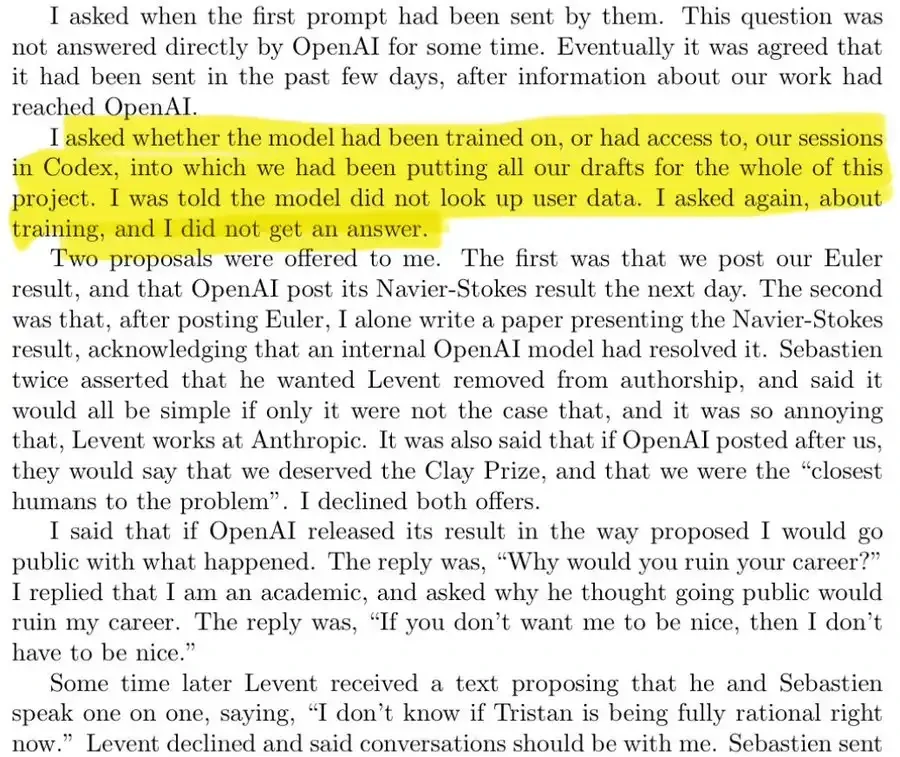
OpenAI's response denied that researchers or agents had accessed specific user data to solve the issue, while acknowledging that it was unlikely, but could not rule out that de-identified data from private conversations with Codex had helped improve the model.
The community began to question whether these labs could see all of your work and rush to produce results when the stakes are high enough?
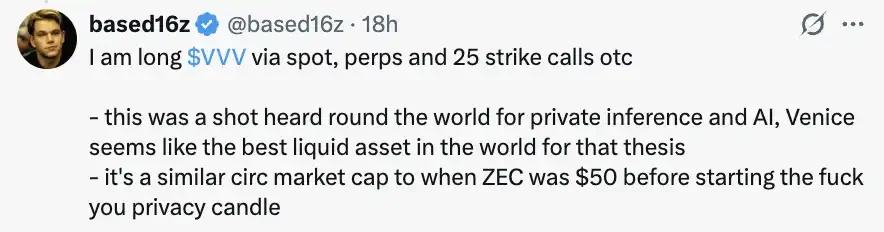
Trader based16z has expressed his trading position. He disclosed that he has gone long on VVV through spot, perpetual contracts, and out-of-the-money call options with a strike price of $25. In his view, this incident has raised widespread awareness of the importance of privacy inference, with Venice being the most suitable liquidity asset to carry this narrative. He also compared the circulating market cap of VVV to ZEC when it was at $50. This is his judgment on the re-evaluation of privacy value.
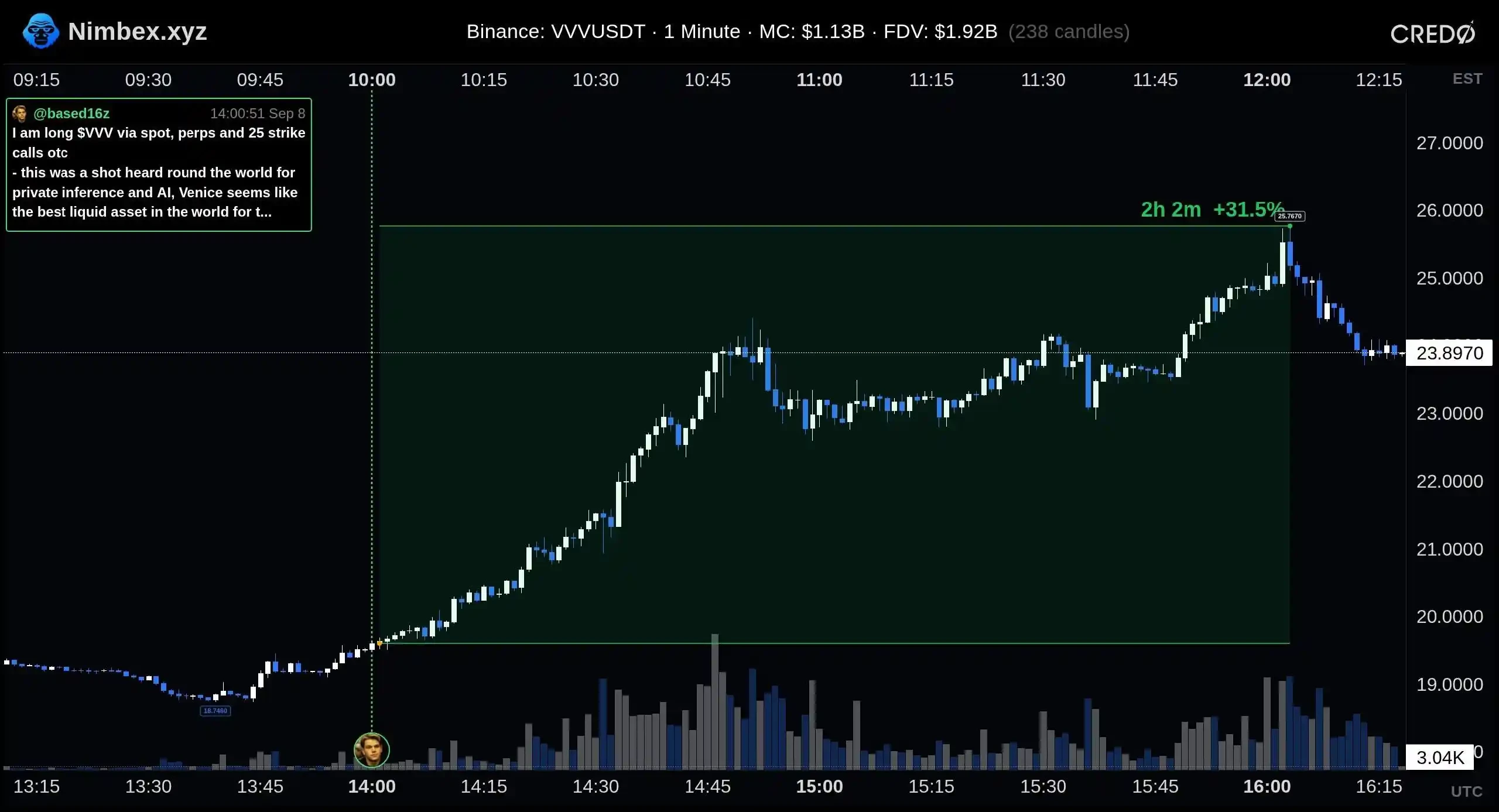
As AI transitions from answering common sense questions to participating in research papers, code, product development, and trading strategies, the content that users enter into the box has also become more valuable.
Who can allow individuals to retain control over work content and execution processes while using AI? Three Web3 projects have provided their answers.
VVV: Turning Privacy into a Business
Founded by Erik Voorhees, Venice AI provides a chat application for consumers and an API for developers to call models. It aggregates different models, differentiating itself with privacy and fewer restrictions.
Venice AI's privacy is divided into three levels. Venice’s "anonymous mode" hides user identities while the upstream model can still see the request content. The "zero retention mode" relies on service providers to fulfill their promises. The "TEE mode" puts inference into a protected hardware environment; the "end-to-end encrypted mode" encrypts data starting from the user’s device until it is decrypted in the protected environment.
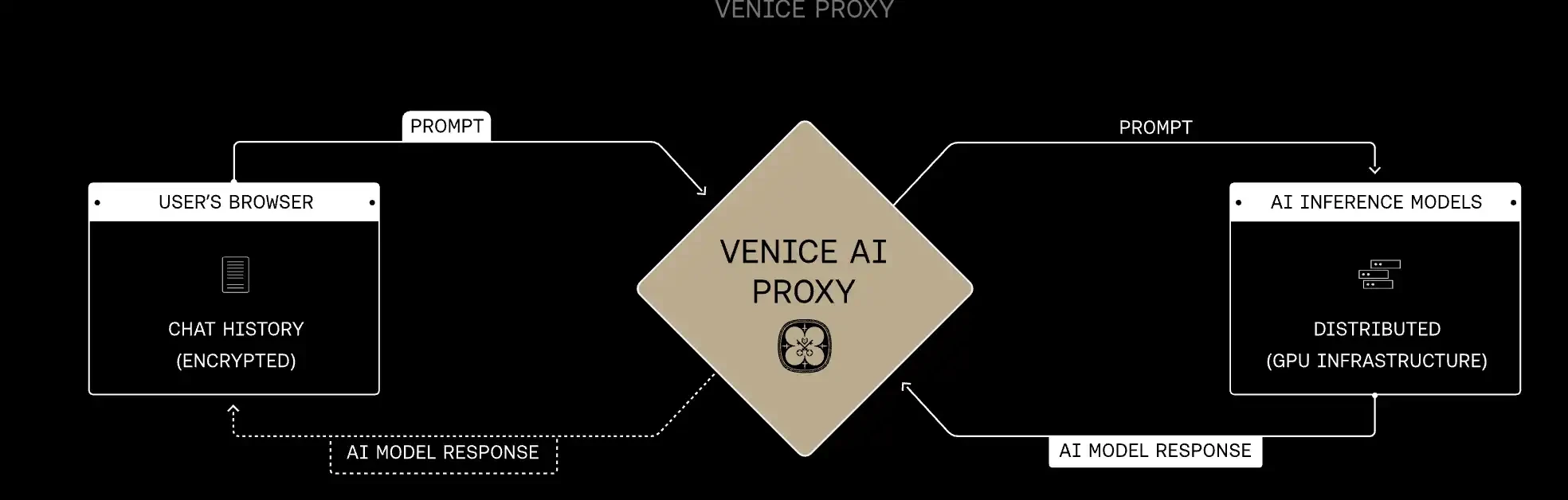
This business has already taken shape. Participating investors Banyan disclosed that Venice's annualized revenue increased from $14 million in January to over $100 million in August.
VVV is the token issued by Venice on Base, where for every $100 purchased in Venice API credits, $5 is used to buy and burn VVV. On the supply side, the new issuance of VVV tokens is also decreasing, with the annual issuance being reduced from 3 million coins on September 1 to 2.5 million coins, and planned to further drop to 2 million coins by October 1.
Another source of demand for VVV is DIEM. Holders can lock up their staked VVV to mint DIEM, and by staking 1 DIEM, they receive an updated $1 API quota daily. Thus, developers and agents can hold an asset that continuously generates usage quotas, preparing for future model calls.
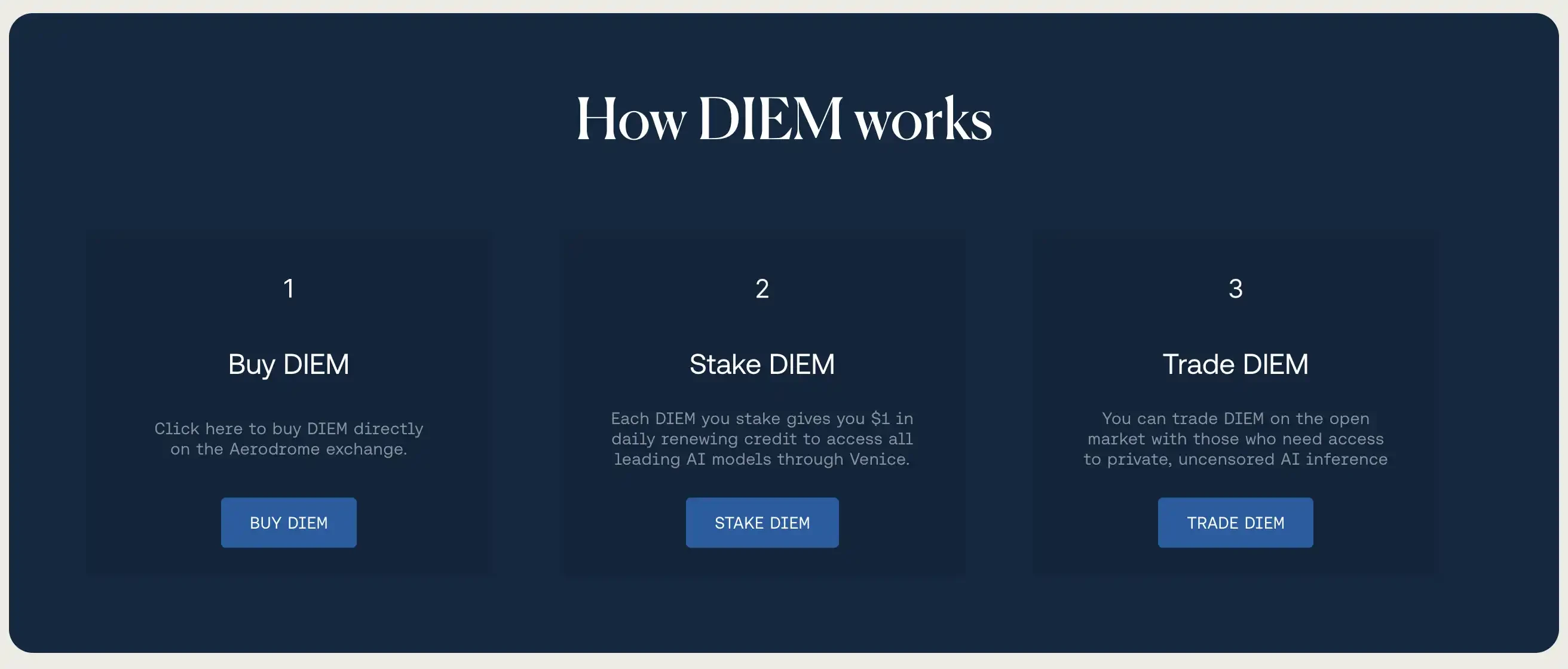
On September 14, the target supply of DIEM will complete a phased escalation from 38,000 to 40,000 to provide space for new minting. This move also indicates the Venice team’s optimistic attitude toward user expansion.
The bullish logic for VVV is very clear; under the privacy threats of AI, Venice has found its market position, more people are paying to use Venice, leading to more buybacks; more people need continuous inference quotas, leading to locking demand.
NEAR: Verifiable Privacy Inference
Following the lead of Venice AI, we also find a familiar figure, NEAR. This public chain is expanding the utility of NEAR tokens through confidential computing and agent services.
In March this year, Venice announced integration with NEAR AI, allowing users to choose the verifiable privacy inference services provided by NEAR AI. Consumers send requests via Venice, and the underlying privacy computing capabilities are provided by NEAR AI and other service providers.
The core capability of NEAR AI Cloud is to run models within TEE, which is a trusted execution environment isolated by hardware. According to its design, plaintext during computation is restricted to the protected area, and infrastructure operators cannot directly read it; users can verify hardware proofs to confirm that requests have entered the corresponding environment. This provides cloud computing options for teams wishing to protect research and commercial data.
Open-weight models can be deployed in this environment. When calling closed-source models like Claude, GPT, and Gemini through a gateway, requests will still be sent to upstream service providers, as NEAR's confidential computing guarantees cannot cover the other party's servers. NEAR's value along this route comes from its ability to protect the computing processes and organize model services.
This capability has now been linked to the NEAR token. The staking payment launched on July 30 allows token holders to convert NEAR's staking rewards into inference quotas, with the quotas varying according to the amount staked, token price, and yield. Users retain ownership of the underlying tokens and can unstake at any time. For teams with long-term model calls, this adds another utility for holding NEAR.
Another opportunity for NEAR lies in payments. AI Agents need to purchase data, pay for services, and mobilize assets across different chains to complete tasks, in addition to calling models. The intent execution method provided by NEAR Intents allows users to submit desired outcomes, which are then fulfilled by solvers competing to perform exchanges and executions. This infrastructure can connect complex cross-chain operations to the task processes of AI Agents.
According to statistics from DeFillama, NEAR Intents generated approximately $9.32 million in total fees in the second quarter of this year, of which the protocol retained about $1.5 million; the retained revenue is used for market buybacks of NEAR.
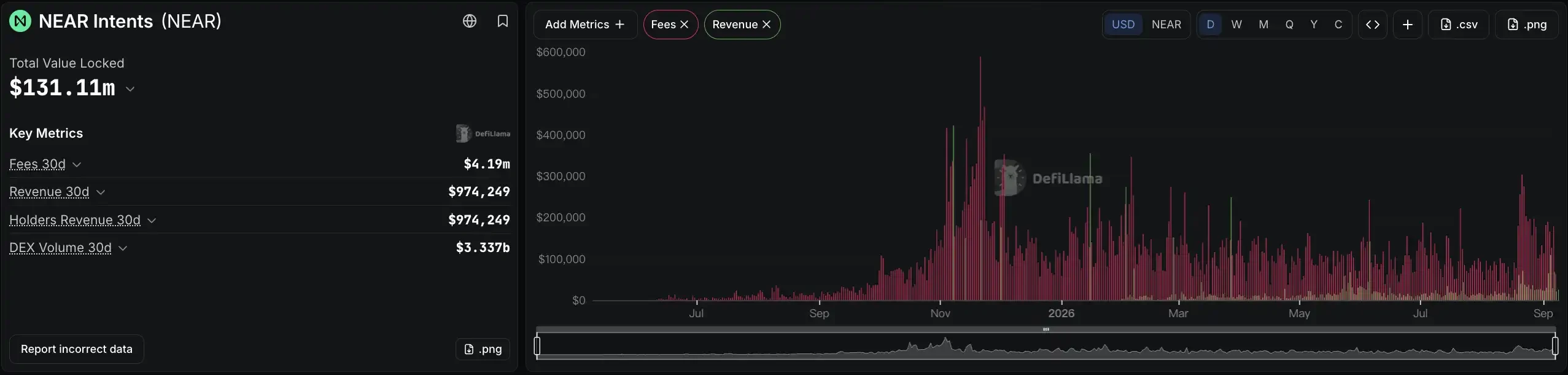
Thus, NEAR's bullish narrative is supported by two business areas: providing computing for sensitive tasks and offering execution and payment for cross-chain tasks. The former can reach users alongside applications like Venice, while the latter has the opportunity to develop alongside AI Agents.
TAO: Supply Open AI Models
Bittensor has been one of the most notable AI projects in crypto. TAO is the native token of the Bittensor network.
Bittensor organizes different tasks into independent subnetworks, where miners provide inference, storage, prediction, and other services, while validators evaluate service quality, and the network allocates rewards based on rules. A team can organize competition around a specific need, while the entire network accommodates multiple such markets.
As the demand for AI expands, applications require more interchangeable suppliers, and small teams need to find clients, computing resources, and funding. Bittensor attempts to organize this part of the supply through a public incentive market, allowing different teams to compete on specific tasks.
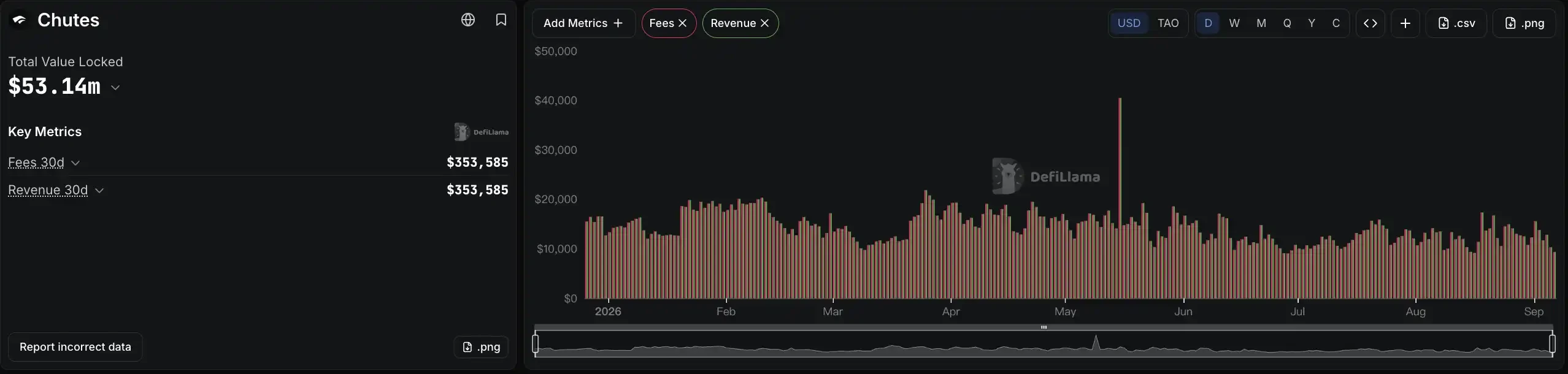
Some subnetworks have already begun to gain external revenue. For instance, Chutes, which provides model inference services, generated approximately $1.37 million in revenue in the second quarter of this year, sourced from subscriptions, usage, and instance services.
How does TAO capture this growth? Each subnetwork has its own alpha tokens, paired with TAO to form trading pools. Staking TAO to a specific subnetwork essentially converts it into the corresponding alpha tokens; thus, TAO plays the role of a foundational asset for fund allocation among subnetworks. If more competitive services emerge in the network, the demand participating in these markets has the opportunity to expand.
On the supply side, TAO retains a familiar scarcity design from the crypto market. The total supply of TAO is capped at 21 million tokens, with the first halving completed in December 2025, and its current issuance is 0.5 per block, approximately 3,600 daily.
The surge of VVV provides us with a window for observation. As models become more powerful, the sensitive information people entrust to them also increases, and "crypto/privacy AI" naturally finds its PMF.
免责声明:本文章仅代表作者个人观点,不代表本平台的立场和观点。本文章仅供信息分享,不构成对任何人的任何投资建议。用户与作者之间的任何争议,与本平台无关。如网页中刊载的文章或图片涉及侵权,请提供相关的权利证明和身份证明发送邮件到support@aicoin.com,本平台相关工作人员将会进行核查。


