Questions for Coinbase CEO Brian Armstrong @brian_armstrong
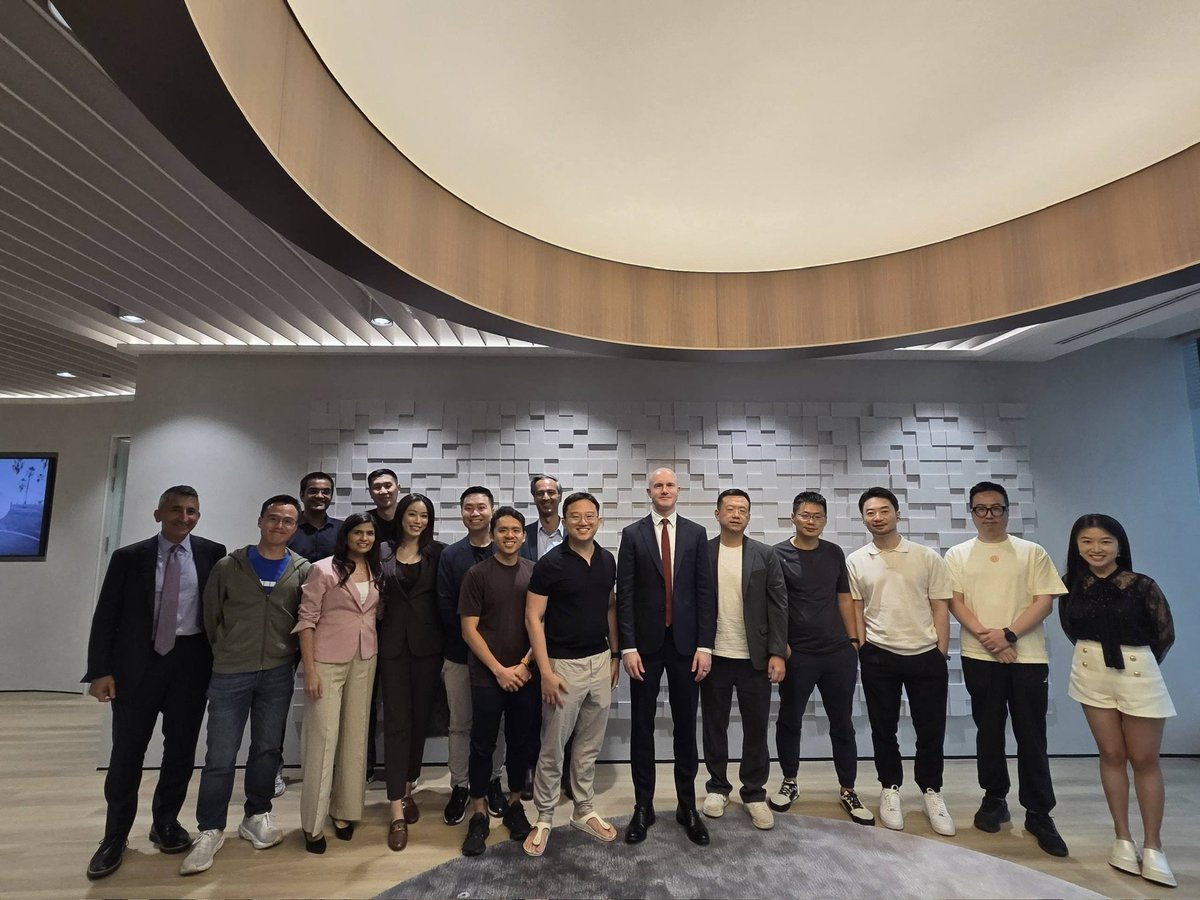
Today Brian arrived at the Coinbase SG office, and I had the honor of participating as one of the interviewees in a small seminar where everyone could ask Brian questions.
I am quite bold, so I asked three questions, and with the permission of Coinbase SG, I can share all three with everyone, including the question about the structural bill that many are most concerned about.
The three questions were:
1. The CRS issue for users from Asia, especially China, after registering with Coinbase.
2. Many have raised concerns about Coinbase freezing accounts.
3. Brian's personal stance on the current structural bill (Clarity Act) and why he voted against it.
First, the first question:
Many may not understand why I would ask such a foolish question, as everyone knows there is no CRS in the U.S., so Chinese or Asian users registering for Coinbase wouldn't have CRS.
But this thinking is incorrect; the largest compliance for Coinbase in Asia is in Singapore. If users from Asia register, they basically go through the Coinbase SG site. This means that even if Chinese users register for Coinbase, they are doing so through Coinbase SG, not directly registering with Coinbase U.S.
Singapore is a member country of CRS, which is why I asked if there would be a CRS issue if the registration relationship is with Coinbase SG.
The answer is no, but this answer might be different from what everyone thinks. This question was answered by the CEO of Coinbase SG, who confirmed that Coinbase SG has not yet exchanged CRS with mainland China, because mainland China has not signed the CRS 2.0 agreement, so there is no need for exchange. However, Hong Kong will exchange.
This answer is similar to CARF: it’s not that there is no exchange, but rather that mainland China has not joined yet. If China joins, then there will indeed be a possibility for exchange.
Next, the second question:
He specifically mentioned the issue of small transactions on HTX. Currently, Coinbase has a very mature system, and if a personal account is frozen due to a small attack, it can be recovered through appeals.
He also mentioned that some of the folks on X say their accounts are often blocked by Coinbase and some are still unresolved. Brian responded that Coinbase's compliance requirements are high, because any issues could lead to lawsuits in the U.S., so indeed, accounts from certain countries were previously a bit more sensitive.
But that is no longer the case; in the last six months, compared to before, the probability of user accounts being blocked has decreased by 90%, and even accounts that were blocked previously have a good chance of being released after an appeal.
Regarding the small transaction incident on HTX, Coinbase takes it very seriously and has made some optimizations; accounts will no longer be frozen because of this issue. Brian even said that if a Chinese user's account is blocked and cannot be unlocked, they can directly call him (which was certainly a joke). Coinbase will also increase customer service, especially the number of Chinese-speaking representatives to meet user needs.
Currently, a single request will have customer service or a customer manager respond in less than 15 minutes.
Finally, the third question:
I asked directly why Brian would oppose the passing of the structural bill (Clarity Act), whether it was due to USDC's interests, and whether he knew that the market currently believes that the passing of the structural bill would significantly boost industry sentiment and capital.
Brian's answer was also direct; he often receives abusive phone calls because he voted against it, not to mention the numerous insults online and on X. However, he said the reason he voted against it was primarily to advocate for better terms.
For instance, everyone knows that the provision for stablecoins to earn interest is something Brian mainly opposes; he believes it is wrong for stablecoins not to earn interest, and only through struggle can better terms be achieved. He also mentioned that due to his efforts, better terms have already been negotiated; previously, stablecoins could not earn interest under any circumstances.
But now they have managed to secure that if there has been at least one transaction or transfer in the last 90 days, it can be deemed an active account, and active accounts can earn direct interest on stablecoins. Of course, even this provision has not yet passed, but it is evident that progress is being made.
From the voting situation, Brian feels that the current terms are already good, and he is willing to vote in support of the passing of this bill.
I'll stop writing here for now; this is already quite a lot, and I will share more when I have the time.
@Gate Crypto, U.S. stocks, Hong Kong stocks, Korean stocks, gold, CFD, predictions market one-stop trading
免责声明:本文章仅代表作者个人观点,不代表本平台的立场和观点。本文章仅供信息分享,不构成对任何人的任何投资建议。用户与作者之间的任何争议,与本平台无关。如网页中刊载的文章或图片涉及侵权,请提供相关的权利证明和身份证明发送邮件到support@aicoin.com,本平台相关工作人员将会进行核查。


