The yield on U.S. long-term Treasury bonds rises, and U.S. stocks fall.
Written by: Yang Chen, Wall Street News
The U.S. Treasury Department has tripled the upper limit for long-term Treasury bond repurchases to $6 billion, which is the latest effort by Secretary Yellen to curb rising long-term borrowing costs. However, the market reacted contrary to expectations, indicating that investors anticipated a larger scale of this operation.
The current operation scale is three times the initial plan of $2 billion communicated to investors previously. Yellen publicly stated earlier this week that the repurchase scale is expected to exceed $4 billion, which boosted some traders' expectations.
On Tuesday, Yellen reiterated that although she cannot change the "equilibrium" price of Treasury bonds, her goal is to slow the pace of rising yields and prevent a destructive narrative in the world's largest bond market.
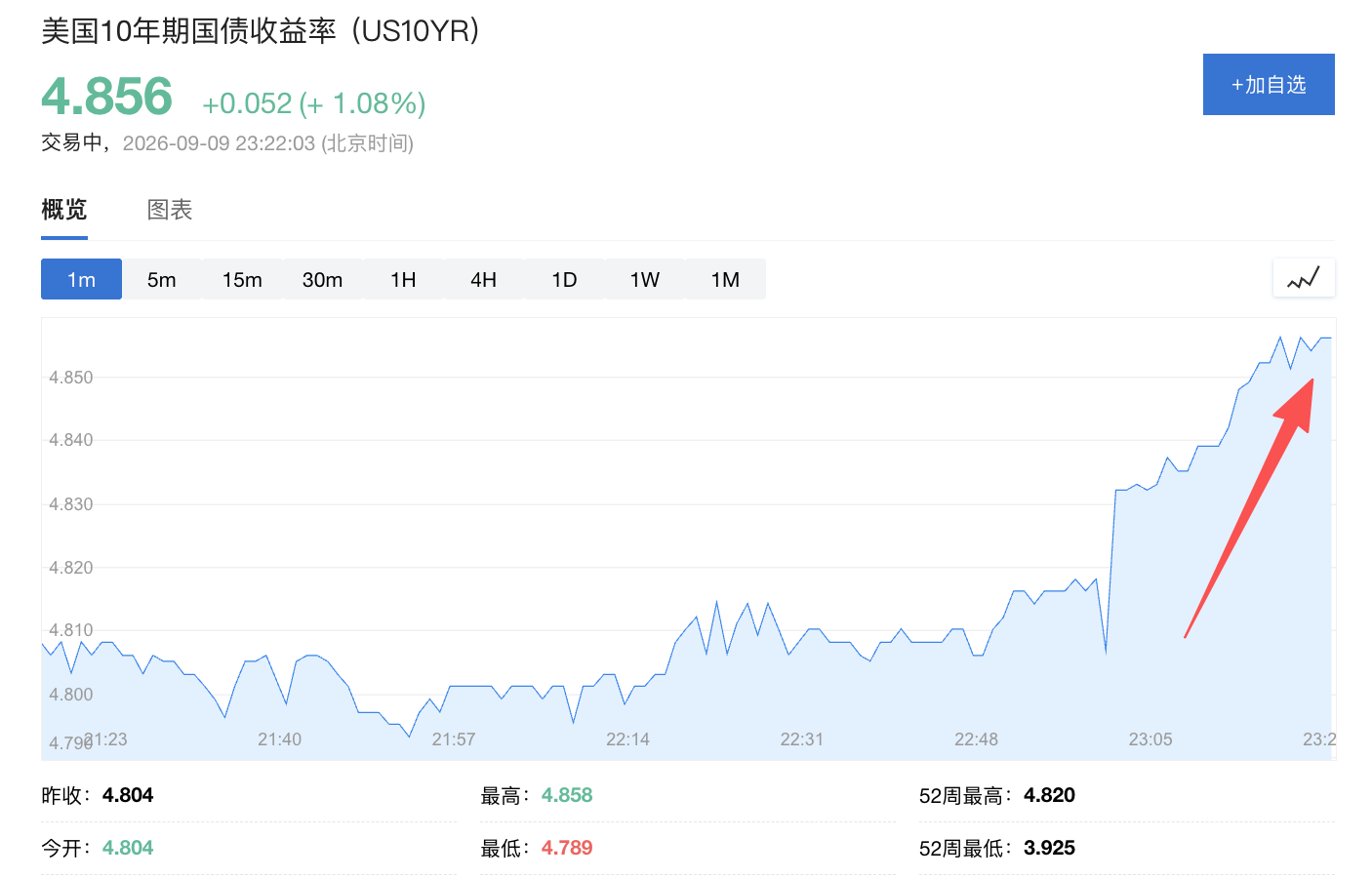
After the announcement, the Treasury bond market continued its previous decline. As of the time of writing, the yield on the 10-year Treasury bond rose about 6 basis points from the previous day to 4.85%, and U.S. stocks fell.
Guneet Dhingra, head of U.S. rates strategy at BNP Paribas, stated before the announcement that the repurchase scale must reach $7 billion to exceed market expectations; anything below this level might trigger selling pressure.
Expanding Repurchases: Yellen's "Bond Market Stabilization" Logic
Last month, when Yellen announced the expansion of the long-term Treasury bond repurchase plan, it took the market by surprise since this announcement did not follow the Treasury's usual quarterly announcement schedule, sparking discussions about a shift towards a "more proactive" approach in U.S. debt management, contrasting sharply with the Treasury's long-held principle of "orderly and predictable."
Yellen described this action as a "Treasury Twist," echoing the Federal Reserve's historical "Operation Twist" aimed at lowering long-term borrowing costs. In an interview with Newsmax, she stated, "I am ensuring that no major adverse outcomes occur."
Yellen attributed one of the reasons for expanding repurchases to enhancing market liquidity.
She mentioned last week that this would allow banks and other institutions to offload less liquid securities, thereby strengthening their ability to participate in new debt auctions. She also attributed the 30-year Treasury bond yield reaching the highest point since 2007 in August to market concerns about the "U.S. inability to meet its debt obligations," and remarked at an event in Texas that such worries were "absurdly ridiculous, yet they once became the dominant narrative."
Effectiveness of the Operation Is Doubtful, Outlook Remains Unclear
It remains uncertain whether this expansion of repurchases will continue to be effective. After the plan was announced last month, yields initially declined but quickly reversed. Last week, the yield on the benchmark 10-year Treasury bond reached its highest level since 2023.
Krishna Guha, head of economic research at Evercore ISI, stated before the announcement on Wednesday, "Scott has fully adopted a very proactive Treasury Secretary model; he is tactically quite adept at when and how to surprise, and has achieved some short-term effects." Guha, who previously worked at the New York Federal Reserve, also pointed out, "The challenge always lies in whether the effects of such interventions can be sustained without greater fundamental changes."
In terms of operational conventions, a $6 billion upper limit does not necessarily mean the Treasury Department will purchase that full amount. However, since the plan was restarted in 2024, in 52 repurchase operations aimed at long-term nominal bonds, the Treasury has only not purchased the full upper limit twice, generally tending to fulfill the entire amount.
Market Interpretation: Stabilization Intent Clearly Aimed, Struggling to Reverse Trends
Cameron Crise, a Bloomberg market commentator, bluntly stated that the $6 billion repurchase announcement disappointed the market, as the scale was entirely at the lower end of expectations, aligning with the operational logic of "smoothing rather than reversing" price trends, and at present, even that effect has not been realized. Following the announcement, long-term Treasury bond yields immediately jumped.
Investors and analysts generally view this additional commitment to repurchase as a reflection of the Trump administration's unease regarding rising long-term borrowing costs—just weeks before the congressional elections in November, the continued rise in Treasury yields has pushed U.S. mortgage rates to their highest level in over a year.
免责声明:本文章仅代表作者个人观点,不代表本平台的立场和观点。本文章仅供信息分享,不构成对任何人的任何投资建议。用户与作者之间的任何争议,与本平台无关。如网页中刊载的文章或图片涉及侵权,请提供相关的权利证明和身份证明发送邮件到support@aicoin.com,本平台相关工作人员将会进行核查。


