The Chicago Mercantile Exchange (CME) and the native crypto forces are in direct conflict over the regulatory jurisdiction of the "perpetual futures," the most core derivative in crypto: CME filed a lawsuit against the U.S. Commodity Futures Trading Commission (CFTC) in June this year, attempting to overturn the latter's decision made in May to approve the listing of Bitcoin perpetual contracts by Kalshi; on September 9, Hyperliquid's policy center submitted an amicus brief, unusually siding with the regulator CFTC, requesting the court to dismiss CME's lawsuit.
Essentially, this is not a legal procedural struggle, but a defensive strike by traditional futures giants against the "legitimization of crypto perpetual products"—CME's core demand is not "I also want to do perpetuals," but rather "no one else should do it." If CME wins the lawsuit, it means that any crypto innovation product approved under the CFTC framework could be indefinitely delayed by the incumbent holders of vested interests through litigation, effectively halting the innovation mechanism in the U.S. derivatives market.
For investors, this directly determines the boundary of "whether U.S. retail investors can legally trade crypto perpetual contracts within a regulated framework," and also decides how much market share new players like Kalshi, Hyperliquid, and Robinhood can snatch from CME. 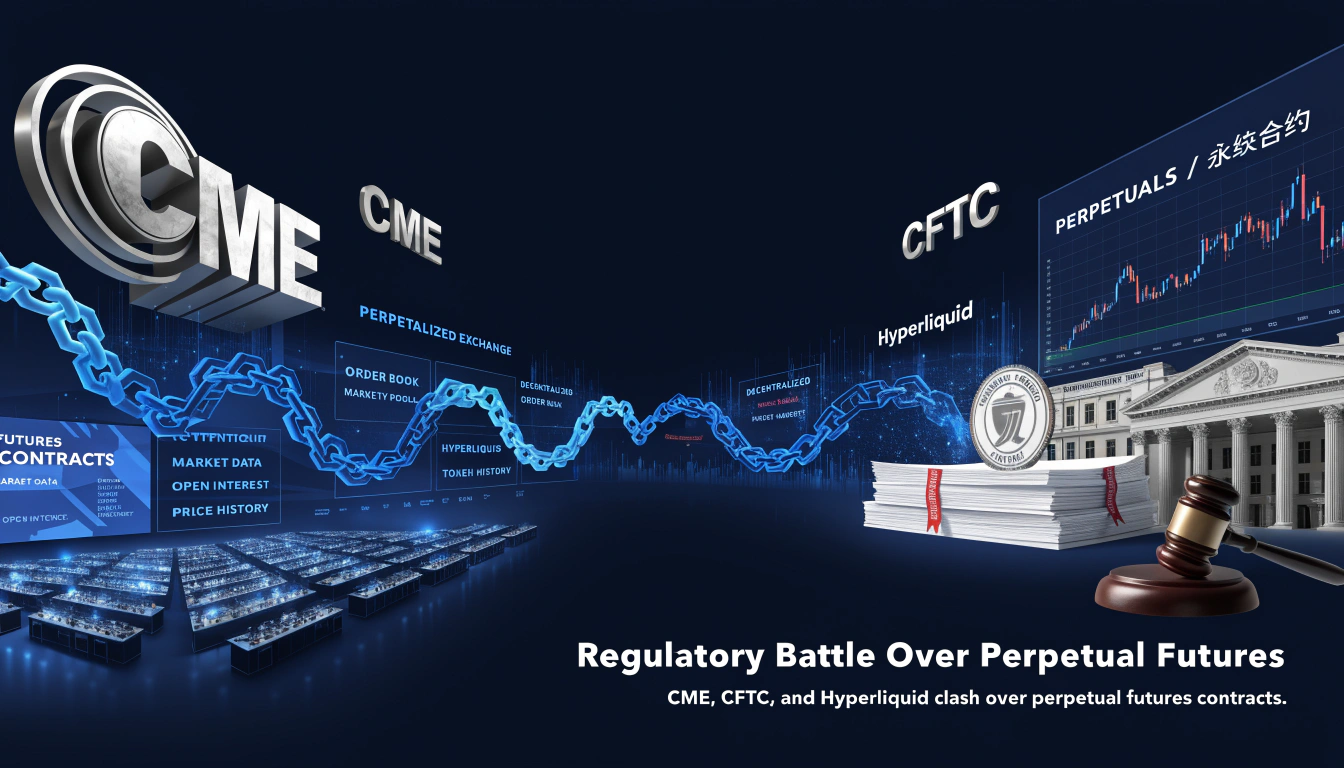
Event Context
• May 29: CFTC approves Kalshi’s Bitcoin perpetual contract BTCPERP—cash-settled, no expiration date, using funding rates, tracking spot prices. This is the first crypto perpetual product approved under the U.S. regulatory framework, marking a significant breakthrough.
• June: CME sues CFTC, claiming "contracts without a delivery date and continuous funding fee payments belong to swaps, not futures," demanding the revocation of the approval decision. CME's logic is: if this is a swap, it should fall under SEC jurisdiction, thus asserting that CFTC has exceeded its authority.
• September 2: CFTC and Chairman Michael S. Selig file a motion in the U.S. District Court for the District of Columbia, requesting the dismissal of CME’s lawsuit. The CFTC's response is quite straightforward—calling the issue "overblown" and pointing out key facts: CME could also list similar products, and the trading volumes of CME Bitcoin futures in June and August exceeded that of May, making the claim of "being harmed" untenable.
• September 7: The rejection of CFTC's motion continues to escalate, and CME is required to submit a response by October 2.
• September 9: Hyperliquid Policy Center submits an amicus brief, represented by former Deputy Attorney General Elizabeth Prelogar from the Biden administration, clearly supporting the CFTC's dismissal of the lawsuit. HPC’s two core arguments are: first, CME is unable to prove actual harm and lacks standing as required by Article III of the Constitution; second, "preventing competitors from launching innovative products" is not an interest protected under the Commodity Exchange Act.
• Concurrently in the shadows: On September 8, Robinhood announces the acquisition of minority stakes in Crypto.com and OG.com, launching event contracts; on September 10, Citadel Securities writes to regulators suggesting that "contracts linked to listed company KPIs" should fall under SEC jurisdiction rather than CFTC. The same battle for regulatory jurisdiction is unfolding simultaneously on the two battlefields of perpetual futures and prediction markets.
In-depth Attribution
1. Policy Dimension: CFTC proactively "expands power," opening a systemic door for crypto perpetuals.
The approval of Kalshi's perpetual contract by the CFTC represents a regulatory shift led by Chairman Selig—no longer treating "perpetual contracts" as offshore products in a gray area, but rather attempting to incorporate them into the regulated on-exchange system in the U.S. This directly disrupts CME's business model: CME's Bitcoin futures operate on a "expiration delivery + cash settlement" traditional structure, while the high leverage, funding rate, and no expiration date design of perpetual contracts are precisely the core tools that crypto exchanges (Binance, OKX, Hyperliquid) have used to overwhelm CME over the years. CFTC essentially issued a "legal competition" ticket to the crypto native forces.
2. Market Sentiment Dimension: Crypto perpetuals are the juiciest part of the crypto industry, losing it equates to losing the future.
Perpetual contracts contribute to the vast majority of derivative trading volumes in the crypto market and are also the main revenue source for crypto exchanges. CME's weekly report shows its BTC holdings at 19,697 contracts, a decrease of 11.33% month-over-month, indicating that traditional institutions are reducing their futures exposure at CME, while funds are flowing towards more flexible and cheaper on-chain/offshore perpetual markets. CME opting to sue rather than compete highlights its anxiety over being outperformed in product form—rather than compete with Hyperliquid on fees, it seeks to legally block the competitor.
3. Capital Flow Dimension: Hyperliquid's participation is a collective counterattack from the "community of interests."
Why is Hyperliquid willing to spend heavily to have a former deputy attorney general write an opinion for CFTC? Because it stands to benefit as a proponent of HIP-4 prediction markets + perpetual contracts "unifying global trading experiences." If CFTC is dragged down by CME, Hyperliquid's pathway into the U.S. regulated market would also be blocked. HPC’s statement "If CME prevails, every product that the CFTC approves will invite litigation" strikes at the heart of the matter—this is no longer a case of CME vs Kalshi, but a systemic confrontation of "incumbents vs innovators."
Ultimately, regulation discusses "who will manage" but traders are more concerned with "where the money is."
CME, Kalshi, and Hyperliquid are competing over products and regulatory frameworks; at the market level, it ultimately depends on how transaction volumes, order books, liquidation events, whale positions, and other data change.
If you want to monitor the on-chain perpetual market yourself, AiCoin has opened its data API, which already supports Hyperliquid's order book long/short positions, liquidation history, whale positions/long-short ratios, etc., which can be directly integrated into your analysis tools:
https://www.aicoin.com/zh-Hans/opendata
Potential Impact
Short-term: CME's response by October 2 is a crucial turning point. If the court leans towards dismissing the lawsuit, Kalshi’s BTCPERP will continue to operate, and event contracts accessed through the CFTC framework by Robinhood, Crypto.com, etc., will see accelerated volume growth, with tokens like HYPE likely to receive a sentiment premium. If the court believes that CME has standing and advances the substantive hearing, then the entire process of legalizing crypto perpetuals will enter a lengthy legal tug-of-war, putting pressure on market risk appetite.
Long-term: The conclusion of this lawsuit will reshape the global regulatory landscape for crypto derivatives. If CFTC wins, the stance that "perpetual contracts belong to futures and are regulated by CFTC" will solidify, opening a regulatory pathway for markets in the U.S. and other markets that follow its regulatory framework, allowing both on-chain settlement (Hyperliquid model) and regulated perpetuals (Kalshi model) to coexist and compete. If CME wins, crypto perpetuals will continue to linger in the offshore gray area, potentially reinforcing the existing advantages of offshore exchanges like Binance and OKX—CME may achieve "keeping competitors out of the U.S.," but it cannot stop the flow of global funds towards offshore markets.
Risk Alert
1. The qualitative dispute of "swaps vs futures" is more lethal than it appears. CME's argument is not entirely unfounded: the structure of no expiration date and continuous funding fee payments indeed aligns more closely with "swaps" under the traditional Commodity Exchange Act framework. If the court procedurally dismisses CME's claims but the SEC seizes on this to reassert that "perpetual contracts are securities-like swaps," then crypto perpetuals may shift from being "regulated by CFTC" to "regulated by SEC," revealing the true long-term uncertainty of jurisdictional tug-of-war between regulators, which the market currently underprices.
2. The regulatory arbitrage risks of event contracts are underestimated. The current frenzy in prediction markets (Robinhood acquiring OG.com, Tema launching prediction market ETFs, DoubleZero integrating Kalshi electoral data) essentially involves packaging "gambling" as "financial products" for regulatory arbitrage. Citadel has already sniffed out this risk—actively suggesting that KPI-related contracts should be classified under SEC. If regulatory tightening occurs faster than expected, this wave of prediction market valuations may face a bubble burst, and Robinhood's high-priced acquisition of Crypto.com/OG equity could become a classic case of buying at a high.
免责声明:本文章仅代表作者个人观点,不代表本平台的立场和观点。本文章仅供信息分享,不构成对任何人的任何投资建议。用户与作者之间的任何争议,与本平台无关。如网页中刊载的文章或图片涉及侵权,请提供相关的权利证明和身份证明发送邮件到support@aicoin.com,本平台相关工作人员将会进行核查。