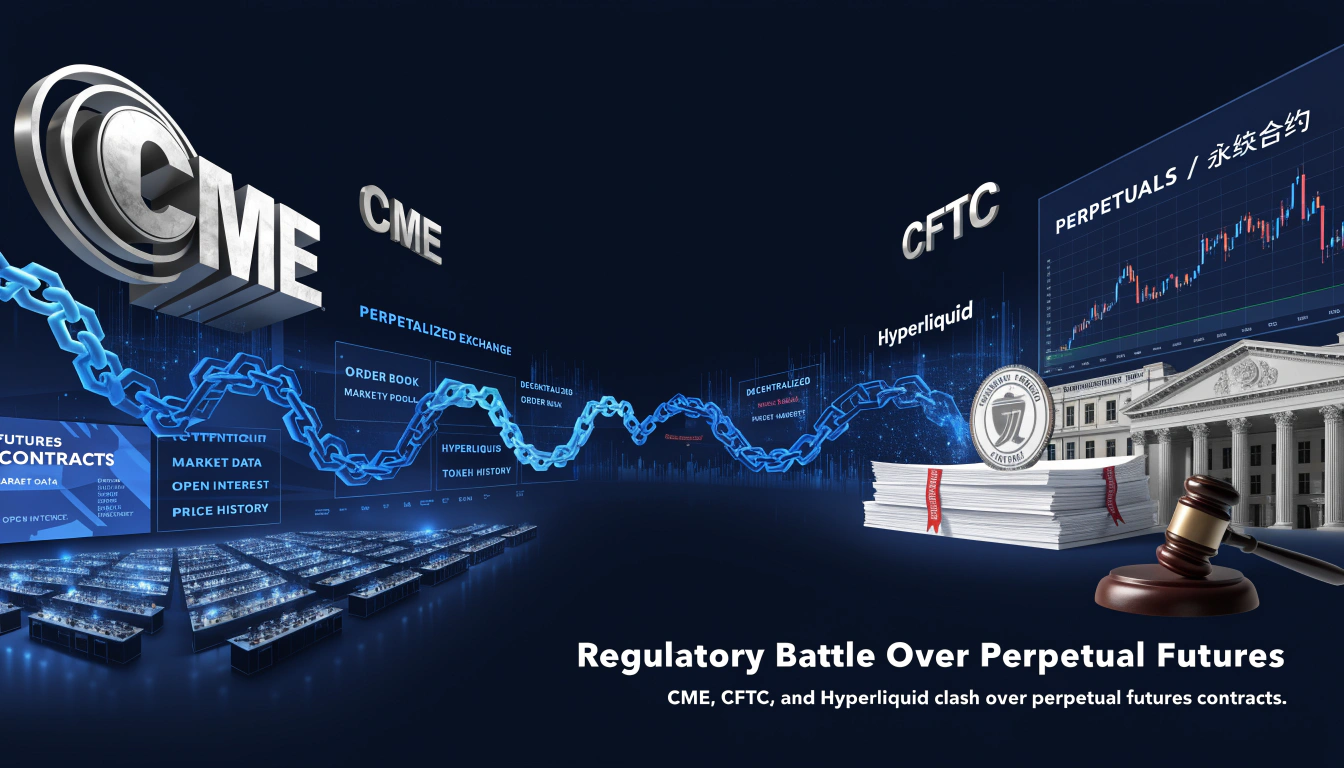
The U.S. regulatory story this time begins across the straits. Recently, the CFTC formally "released" the Singapore Exchange SGX under Regulation 48.10, allowing U.S. institutional investors to access its Bitcoin and Ethereum perpetual futures within a compliance framework—this set of contracts launched in November 2025, and as of August this year, has accumulated a trading volume of about $5.8 billion, approximately 400,000 contracts, which was originally more of a game for funds in the Asian region. Almost concurrently, South Korea's Upbit saw its 24-hour trading volume surge to about $1.254 billion on September 10, an increase of approximately 194.55% compared to the previous day, with the IOST/KRW trading pair alone accounting for about 7.58%, starkly contrasting the speculative enthusiasm of retail investors with institutional derivatives. Regulatory authorization and trading volume fluctuations are juxtaposed on the same Asian map, and as KC Lam said, "connecting traditional U.S. financial trading institutions with Asian crypto liquidity pools" begins to take shape: American capital is no longer just watching from a distance, but is attempting to extend Wall Street positions into Singapore's clearing system through CFTC-approved derivatives channels, indirectly connecting to high-frequency trading and speculative liquidity in places like South Korea.
CFTC Opens the Gate for U.S. Capital Entry Based on 48.10
The recent release for SGX is essentially a regulatory authorization of "opening the floodgate according to terms," rather than tacitly allowing U.S. capital to find gray liquidity in Asia. The CFTC issued a permission to SGX based on Regulation 48.10, formally confirming that U.S. institutions can trade SGX's Bitcoin and Ethereum perpetual futures within a compliance framework—compliance officers no longer need to hedge against risks concerning the term "overseas exchanges," but can instead include related positions within existing regulatory reporting and internal limit systems. In other words, 48.10 transforms the Asian crypto derivatives sector, which was originally on the edge of regulatory oversight, partially into a "permissible market" that U.S. institutions can officially reach, pulling cross-border trading from gray areas back into regulatory norms and risk management issues.
However, the opening of regulatory gates does not mean that capital will rush in immediately. According to SGX’s expectations, U.S. institutional clients typically need 2 to 4 weeks from signing to compliance review and technical access, and after authorization is implemented, they must go through system debugging and internal approval, meaning that actual trading services could only begin about 1 to 2 months later. More importantly, this time the CFTC has only granted "spot" authorization for Bitcoin and Ethereum perpetual futures, while SGX's plans already aim at launching futures and options products and gradually expanding to other mainstream crypto assets, indicating that there is an expectation of expansion in the scope of regulatory approval at the product level. Whether U.S. capital can achieve clear access in subsequent batches will be a key observation point in assessing whether the cross-border authorization boundaries of 48.10 continue to extend.
SGX Margin Rules and Clearing Member Buffer
Beyond product line planning, SGX's system "shell" for Bitcoin and Ethereum perpetual futures is also aimed at U.S. regulators and traditional institutions. It does not adopt the model where some crypto-native platforms directly gamble with end-users and rewrite margin requirements according to contract rules at any time but rather almost completely transplant traditional futures market's margin call and additional collateral rules: clients access through clearing members, calculating initial margin and maintenance margin based on established parameters, and once volatility triggers thresholds, the clearing member issues a margin call notice to the client. Risks are absorbed and dispersed at the clearing member level first, with the platform primarily responsible for rule formulation and centralized clearing functions, rather than standing opposite clients during severe asset price fluctuations. This structure is inherently close to the contract clearing framework familiar to the CFTC, allowing U.S. institutions to use existing risk models to directly assess position exposure on SGX.
More crucially, in the choice of margin collateral, SGX has explicitly set boundaries with the crypto-native world, stating it does not accept any margin existing in the form of on-chain accounting tokens, only recognizing collateral from the traditional financial system. This may seem like a technical detail, but it directly addresses the long-term concerns of U.S. regulators regarding the traceability of on-chain collateral, cross-border settlement, and compliance with sanctions: when U.S. institutions gain access through Regulation 48.10, their margin and risk buffer still reside within familiar banking and custodial systems, rather than being forced into on-chain asset pools with ambiguous regulatory attitudes. The operational premise of KC Lam's emphasis on "connecting traditional U.S. financial trading institutions with Asian crypto liquidity pools" is designed in this way—while the trading targets can be Bitcoin and Ethereum and the liquidity can come from Asia, the margin rules, clearing member buffers, and collateral standards must remain within the confines of what traditional finance can accept.
U.S. Institutions Circumventing Pressure on Domestic Trades Through Asia
After the CFTC’s release of SGX under Regulation 48.10, U.S. institutions can trade foreign Bitcoin and Ethereum perpetual futures for the first time within a "compliance comfort zone": the product form is their familiar perpetual contract, margin calls and additional collateral follow traditional rules, with risk buffering borne by clearing members, without needing to deal with ambiguously regulated on-chain collateral. Coupled with Singapore's time zone advantage for Asian spot and derivatives, and SGX’s liquidity dominance since its launch in November 2025, with around $5.8 billion traded, including a commanding presence in Bitcoin contracts in open interest and trading, Regulation 48.10 effectively provides U.S. capital with a ready-made pathway that is both compliant and accessible to Asian trading. For domestic exchanges in the U.S., this circumvention-style participation will create substantial competitive pressure: U.S. exchanges that only offer traditional expiration contracts and face numerous constraints in expanding their crypto product lines struggle to prevent institutions from relocating parts of their risk exposure and fee income to overseas clearing pools like SGX.
More subtly, regulatory boundary misalignments are emerging. The original intent of Regulation 48.10 was to allow U.S. institutions to access foreign contracts within a regulatory framework, not to exempt them from regulation. U.S. institutions still need to report related positions and earnings within their compliance and tax systems and integrate them into their internal risk control models. However, once positions are cleared in Singapore, margin and performance risks primarily fall within SGX's risk control radius, and U.S. regulatory agencies' control over specific positions, stress tests, and disposal plans increasingly relies on institutions' disclosures and cross-border information sharing. This cross-border compliance channel realistically pressures the U.S. to incorporate "participation in foreign contracts" into licensing conditions and capital requirements for domestic crypto derivatives brands in the future, distinguish onshore from offshore clearing income in tax statements, and propose additional disclosure and stress testing requirements regarding exposures to non-U.S. clearing systems in risk supervision. Otherwise, the more compliantly U.S. capital flows towards SGX, the more evident the relative weakness of domestic exchanges in terms of liquidity and regulatory efficacy will become.
Upbit's Surging Trading Volume, Emotional Peaks Beyond Regulation
Almost concurrently with the CFTC paving a compliance path for U.S. capital to SGX, the Korean local market presents a starkly different picture. According to CoinGecko data, Upbit's 24-hour trading volume skyrocketed to about $1.254 billion on September 10, an increase of approximately 194.55% from the previous day. This exchange, primarily servicing local retail investors, is restricted by domestic regulatory guidelines on token listings and leverage, but current public information does not indicate that this surge is directly related to any new rules or policies, nor has any clear driving event been disclosed. In other words, this appears more like a surge of trades purely driven by emotion and speculative preferences, occurring outside the compliance narrative, but it will genuinely affect regional markets in terms of liquidity and price expectations.
A closer look at the structure shows that during the same period, the IOST/KRW trading pair accounted for about 7.58% of Upbit’s total trading volume, with a transaction value of around $97.67 million. This is a token that does not occupy the mainstream narrative globally but has managed to capture nearly 10% of total transactions in the local market in a short period, highlighting retail investors' concentrated bets on high-volatility varieties. This stands in stark contrast to the institutional derivatives represented by SGX’s Bitcoin and Ethereum perpetual futures: on one side, positions are managed under constraints imposed by U.S. authorization, clearing members, and additional collateral rules, while on the other side, there are high-frequency emotional trades centered around spot markets and non-mainstream tokens. Regulatory focuses in markets like South Korea are more on compliance for token listings and leverage constraints, whereas U.S. regulators concentrate on cross-border derivatives and capital requirements. This misalignment of focus allows institutional funds to adjust their exposures within SGX’s rule barriers, while regional retail emotions continue to manifest in independent peaks primarily in local spot markets like Upbit.
The Compliance Uncertainties After the Emergence of Dual Markets in the U.S. and Asia
On one end is SGX, released by the CFTC based on Regulation 48.10: having launched Bitcoin and Ethereum perpetual futures in November 2025 and accumulated about $5.8 billion in transactions, now with authorization backing, it can provide compliant derivative services to U.S. institutions, while also planning to launch futures and options to expand tradable assets and position management tools; on the other end is the surge in trading volume represented by IOST/KRW on platforms like Upbit, with a single-day 24-hour transaction soaring to about $1.254 billion, yet this did not accompany any new public regulatory actions, representing a speculative peak for retail investors. These two distinctly different funding pathways together form a "dual-track" pattern woven between U.S. capital and Asian markets. The real suspense lies in whether this institutional track will be reshaped in the future by further licensing arrangements for U.S. crypto derivatives, whether cross-border risks will be required to be more finely penetrated into exchanges and clearing layers in regulatory coordination, and whether Asian regulators will begin systematically tightening the speculative space for retail investors after successive unusual fluctuations in spot and token trading volumes. For platforms and project parties, as capital and liquidity accelerate cross-border transfers under regulatory permissions, who can effectively accommodate institutional funds is no longer determined solely by depth and rates, but rather by whether their compliance structure can integrate into these emerging regulatory channels and whether product designs can accommodate complex derivative exposures within prudent boundaries.
Join our community, let's discuss and become stronger together!
Exclusive Hyperliquid benefits for AiCoin: https://app.hyperliquid.xyz/join/AICOIN88
Exclusive Aster benefits for AiCoin: https://www.asterdex.com/zh-CN/referral/9C50e2
On-chain Telegram community: https://t.me/AiCoinWhaleData
On-chain community: https://www.aicoin.com/link/chat?cid=N6OVMor5g
AiCoin on-chain Twitter: https://x.com/aicoinwhaledata
免责声明:本文章仅代表作者个人观点,不代表本平台的立场和观点。本文章仅供信息分享,不构成对任何人的任何投资建议。用户与作者之间的任何争议,与本平台无关。如网页中刊载的文章或图片涉及侵权,请提供相关的权利证明和身份证明发送邮件到support@aicoin.com,本平台相关工作人员将会进行核查。