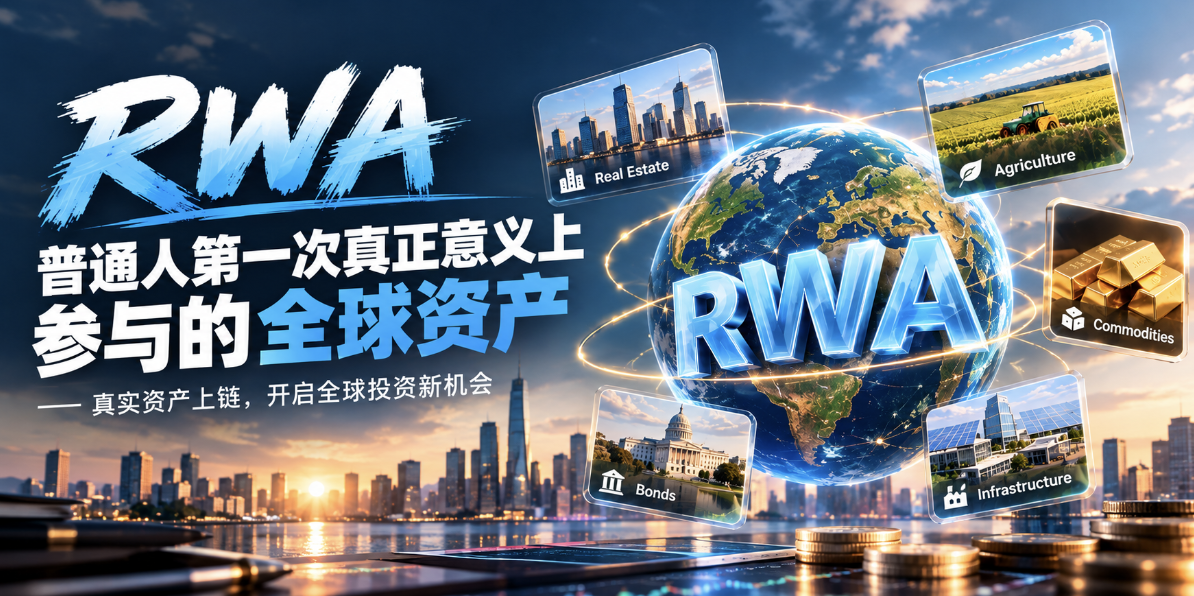
Since 2022, under the impact of high interest rates, global bond markets have seen long-term yields rise steadily, with countries facing increased fiscal interest burdens and refinancing pressures simultaneously. In this increasingly uncertain backdrop, China and the UK responded almost simultaneously but in radically different ways to the same issue. Recently, the Jiangsu Securities Regulatory Bureau issued a risk warning regarding the speculation on RWA (Real World Assets) concept, directly bringing this new domestic narrative under high-pressure regulatory scrutiny: the document clearly stated that any financing activities carried out within the country under the name of RWA in any form are considered illegal financial activities, with no ambiguity in the regulatory stance. It also reminded investors to be wary of marketing phrases like "guaranteed principal and high returns" and "no risk of loss", which are familiar yet dangerous, advising them to retain evidence when encountering suspicious clues and report to authorities or police in a timely manner. Almost simultaneously, a report from a single source in the British Daily Telegraph indicated that London was trying to "stop the bleeding" from the debt costs accumulated over the past few years - the Bank of England plans to stop selling 20-year and 30-year UK government bonds it holds. Economists estimate that since 2022, selling these long-term debts has cost UK taxpayers about £22 billion, while the continuous surge in borrowing costs is also putting additional pressure on the newly appointed Chancellor of the Exchequer and the first budget to be announced on October 28. In this global context of high interest rates and bond market fluctuations, China has chosen to draw a clear line on the illegal nature of financing narratives like RWA, while the UK has sought to buffer the manifested and potential fiscal costs by adjusting the pace of exiting long-term government bonds. Although the paths of the two countries differ, they both reflect a common reality: in periods of rising costs and spillover risks, whoever can first tighten the reins on narrative financing and debt operations can better regain control over the vulnerabilities of their financial systems.
RWA Distortion: The Guaranteed Principal and High Return Trap
In recent years, the tokenization of RWA (Real World Assets) has gained immense popularity in the global crypto sphere, packaged as an almost perfect story: on-chain technology handles "slicing" and circulation, while offline real estate, receivables, commodities, and other actual assets provide "endorsement"; marketing rhetoric describes it as a new type of asset combining technological appeal with security. As long as it carries labels like "real assets" and "stable returns", risks seem locked away in the distance, and tokens are molded into a cutting-edge, more efficient tool than traditional wealth management. Many even view it as a low-volatility, high-return new entry point, deliberately ignoring the most critical question - where these so-called real assets actually exist, who owns them, and in what order they are pledged and distributed.
In such an emotional environment, some domestic institutions and individuals quickly learned to tell stories under the name of RWA. Roadshow materials have been turned into "some property + a certain type of receivables packaged on-chain," with WeChat groups shouting "guaranteed principal and high returns" and "no risk of loss." High-risk products are packaged as quasi-financial products, and token issuance has morphed into financing tools similar to "asset income rights." The Jiangsu Securities Regulatory Bureau directly pointed out in its recent risk warning that "guaranteed principal and high returns" and "no risk of loss" are typical misleading advertisements and further clarified that any financing activities conducted within the country under the name of RWA in any form are illegal financial activities. Under the long-standing high-pressure, zero-tolerance framework for various token issuances and related fundraising targeting the public, this type of RWA promotional financing essentially attempts to navigate the gray fog of regulatory boundaries, shifting underlying asset risks, which should be shouldered and identified by professional institutions, onto ordinary investors through information asymmetry. Given the difficulty in verifying whether "assets exist or are already pledged multiple times," every individual persuaded by "guaranteed principal" and "high returns" unknowingly stands on the line that is more likely to trigger risks.
Jiangsu Draws a Sword: All RWA Financing is Illegal
This time, the Jiangsu Securities Regulatory Bureau did not stop at general warnings but stated it in the most absolute terms - any financing activities carried out within the country under the name of RWA in any form are all classified as illegal financial activities. The three qualifications of "any form," "within the country," and "under the name of RWA" combine to encompass almost all so-called RWA platforms, token issuances, and income products targeting the domestic public at this stage: regardless of whether they are packaged as "real-world asset income rights," "RWA pledged mining," or masked under "overseas projects + English terms," as long as they are in essence fundraising from domestic individuals with promised returns, they no longer fall under gray innovation but directly enter the realm of illegal financing. For those project parties attempting to create a "regulatory void" by hosting web servers abroad and using English template contracts, this document essentially declares: being connected to overseas entities and telling stories in English does not change your essence of raising capital from the public domestically.
Under this clear mandate, the regulatory document's reminder to investors has also become more actionable: any RWA financing that claims "guaranteed principal and high returns" or "no risk of loss" should be treated as high-risk psychologically and even prepare for evidence collection behaviorally. The Jiangsu Securities Regulatory Bureau clearly suggests that once suspicious clues are discovered, efforts should be made to preserve key information such as contract texts, subscription records, group chat and private chat records, transfer vouchers, etc. These seemingly trivial screenshots and transaction records are often the only means to report the situation to competent authorities or police and seek case filing and responsibility. For ordinary people, as financing activities under the RWA narrative are designated as illegal financial activities, the self-protection logic is clear: avoid participation whenever possible, and those already involved should quickly transition from "silent observation" to "evidence in hand, timely reporting," allowing every fund coerced by high-return rhetoric to be visible and questioned through legal channels.
UK Long-term Debt Loss of £22 Billion: Central Bank Hits the Brakes
If China’s regulation is about trying to stifle risks at the embryonic stage, the UK's situation resembles paying for past decisions. During the financial crisis, the Bank of England bought a large amount of long-term UK government bonds as part of its quantitative easing program, accumulating 20-year and 30-year varieties on its balance sheet. By the time the global bond prices came under pressure and long-term yields began to rise from 2022, the central bank's sale of these long bonds quickly translated into real financial losses. Economists estimate that since 2022, these sales operations have already cost UK taxpayers around £22 billion, a figure that itself is enough to make "who pays for quantitative easing" a political issue.
In this interest-rate environment and fiscal atmosphere, according to a single source report from the British Daily Telegraph, the Bank of England plans to stop selling its held 20-year and 30-year UK government bonds. The reasoning cited in the report is straightforward: globally high interest rates have raised the difficulty of refinancing for countries, and the surge in domestic borrowing costs has already put pressure on the Chancellor of the Exchequer. Continuing to sell long-term bonds would only push long-term rates and government financing costs higher, forcing taxpayers and the Treasury to jointly bear the "second payment" for past easing. In this media narrative, this "sharp brake" seems more like making room for the first budget proposed by the new Chancellor, Jeremy Hunt, on October 28 – stabilizing long-term rates first and then discussing subsequent fiscal arrangements. Of course, it must be emphasized that the details regarding stopping the sale, the £22 billion loss, and budget connections currently stem from a single media report, not official announcements. However, even at the rumor level, this shift from large purchases to cautious exits already highlights a clear judgment: in the present environment of high rates and bond market fluctuations, the primary consideration for the central bank's long bond operations is no longer paper profits, but how to find a balance between taxpayer costs, fiscal pressures, and market stability.
Budget Looming: Chancellor Plays the Market Game
With October 28 marking the submission of Hunt’s first budget since taking office, there remains a clear time window. According to British media reports, the decision to suspend the sale of 20-year and 30-year long-term government bonds on the eve of this date is seen as "clearing the field" for the budget: under the constraints of globally high interest rates and long-term yields rising after 2022, if long-term sales continue, the further surge in borrowing costs would directly raise the difficulty of fiscal refinancing, effectively locking the new Chancellor into a harsher starting line. The central bank's decision to hit the brakes on exiting quantitative easing and the Treasury's efforts to catch a breath while compiling the budget highlight that the relationship between the two is no longer a textbook "independence and division of labor" but rather resembles a temporary alliance around the same balance sheet.
However, this alliance must be formed under the shadow of public opinion generated by taxpayers already having sustained a loss of around £22 billion. Reports indicate that this figure is spurring debates within the UK about the cost of exiting quantitative easing and the attribution of policy responsibility: who pays for the massive purchases of the past and the current losses, and how will future budgets be explained to the public? While planning the budget, Hunt must not only balance revenue and expenditure but also "tell a good story" in collaboration with the central bank - transforming the cessation of long-term government bond sales into rational management of financing costs and market stability, rather than a passive cover-up of existing losses. In stark contrast, Chinese regulators have directly declared in the latest risk warning from the Jiangsu Securities Regulatory Bureau that any financing activities conducted within the country under the name of RWA are illegal, putting risk on the front line as a hard boundary instead of freeing up fiscal room through balance sheet maneuvers afterward. One seeks to finely adjust in the bond market, trying to gain flexibility for growth and budgets under high-interest constraints; the other uses a zero-tolerance approach to lock down the gray areas public funds might touch. This exactly illustrates the starkly different policy narratives of the two countries between risk and growth at present.
From Jiangsu to London: Choices Under Regulatory Shadow
From Jiangsu Securities Regulatory Bureau's zero tolerance to reports from British media about the Bank of England hitting the brakes on long-term bonds, these seemingly unrelated decisions share a clear commonality: in an environment of high interest rates and pressured bond markets, the primary task for policymakers is to uphold systemic risk bottom lines rather than endorse the prosperity of a single track. China has chosen to qualify RWA with a risk warning - fundraising from the public under the flag of RWA is universally regarded as illegal financial activity, shutting potential risks out of institutional bounds; the UK, on the other hand, after a large number of purchases of 20-year and 30-year government bonds during the financial crisis and estimating a cost of around £22 billion after commencing sales in 2022, is correcting its prior path by pausing long bond sales and adjusting the pace and deadlines, using its balance sheet to buffer the costs that have already been exposed. For crypto and RWA participants, this difference is not a technical detail but a matter of life and death: the most realistic choice within China is to completely avoid any project that raises funds from the public under the RWA concept, as even if packaged as "compliant," it cannot escape regulatory red lines; globally, in facing narratives of "real asset endorsement" and "stable yield," there is also a need to interpret high yields linked to off-chain assets as risk signals rather than safety nets. For a long time to come, macro environments and regulatory paths will maintain a high degree of uncertainty, and RWA can only grow into a holdable long-term asset when clearly integrated into compliance frameworks of various countries, subjected to thorough reviews and investor protection constraints, rather than being treated as a one-off harvesting tool in the next round of high interest rates or policy shifts.
Join our community to discuss and grow stronger together!
AiCoin Exclusive Hyperliquid Benefits: https://app.hyperliquid.xyz/join/AICOIN88
AiCoin Exclusive Aster Benefits: https://www.asterdex.com/zh-CN/referral/9C50e2
On-chain Telegram Community: https://t.me/AiCoinWhaleData
On-chain Community: https://www.aicoin.com/link/chat?cid=N6OVMor5g
AiCoin On-chain Twitter: https://x.com/aicoinwhaledata
免责声明:本文章仅代表作者个人观点,不代表本平台的立场和观点。本文章仅供信息分享,不构成对任何人的任何投资建议。用户与作者之间的任何争议,与本平台无关。如网页中刊载的文章或图片涉及侵权,请提供相关的权利证明和身份证明发送邮件到support@aicoin.com,本平台相关工作人员将会进行核查。