Author: AiPlot Research Institute
Focus: RWA / Digital Assets / In-depth Analysis of Financial Infrastructure
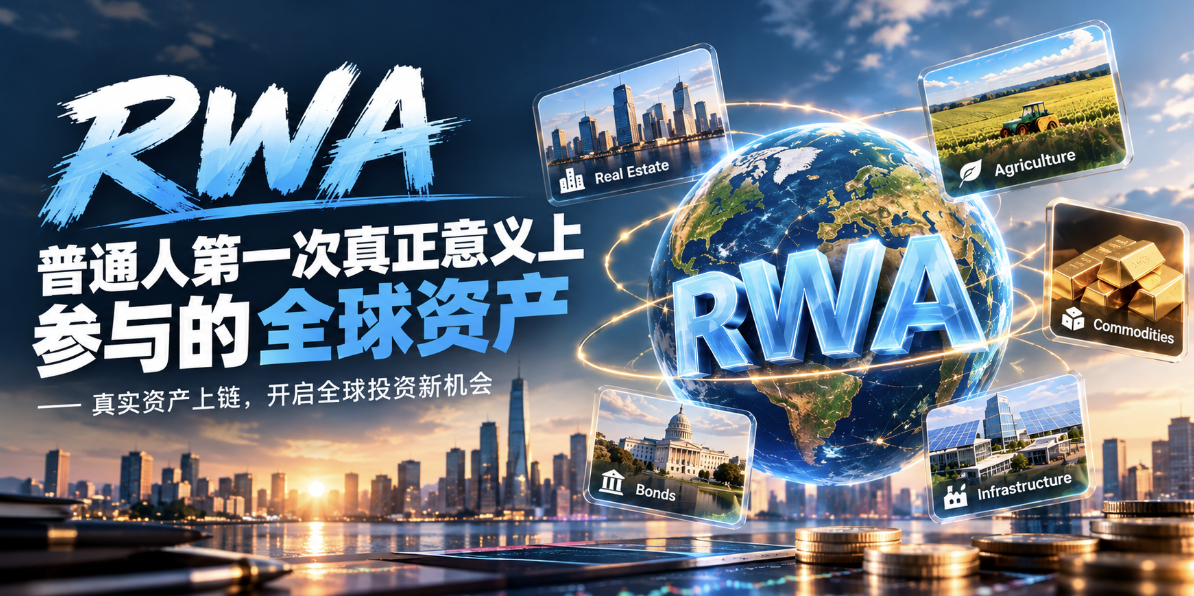
If you only regard RWA as just another crypto narrative, you might be missing the most significant financial infrastructure transformation of the past decade.
An analyst with over a decade of experience in both traditional asset management and crypto investment once said:
RWA is not as simple as “putting real estate stocks on the chain.” It addresses the most expensive and hidden pain points in the global financial system—asset packaging and liquidity friction. Once this is operational, it's not just about the market value of a few projects; it determines whether ordinary people can hold U.S. stocks, gold, treasury bonds, and private credit—assets they could only indirectly touch before—at low cost, low barriers, and around the clock.
1. Why Has RWA Suddenly Become Important?
In the past, if you wanted to buy U.S. stocks, you had to open an overseas account, exchange currency, pay high commissions, and deal with time zone differences.
If you wanted to allocate gold or treasury bonds, you had to either buy paper gold at a reduced spread or buy funds that charge management fees.
Converting your money safely into dollar assets was even more troublesome.
Now, stablecoins have made “holding dollars” simple. The next step is to use these stablecoins to directly buy tokenized U.S. stocks, gold, treasury bonds, and commodities. This is the most practical line for RWA.
There has always been a genuine demand from retail investors:
- Want to hold U.S. assets at low cost with stablecoins;
- Want their money to benefit from the rise of U.S. stocks, gold hedging, and treasury bond yields;
- Want to allocate globally instead of being restricted to a single market.
The U.S. government is also pleased to see this— the larger stablecoins become, the stronger the dollar's hegemony; tokenizing U.S. stocks equates to directly exporting dollar assets globally. This is not a conspiracy theory, but a high degree of aligned interests.
2. A Deeper Level: The Financial Industry Has Wasted Huge Costs on "Packaging"
Aleks Larsen (Partner at Blockchain Capital) made an incisive analogy that clarified the essence:
The role of tokens in capital markets is like that of containers in global trade.
Previously, goods were handled in sacks, wooden boxes, cotton bales, and oil drums; each item was processed differently, loading and unloading relied entirely on manual labor, and ships spent more time docked than in transit, leading to repeated handling, loss, and damage. After containers were introduced in 1956, the whole supply chain was reorganized around “standard boxes,” transportation costs plummeted, and global trade exploded in the following decades.
The financial industry is currently in the “pre-container state.”
Mortgages consist of piles of contracts + PDFs + databases;
Private equity is a subscription agreement + a line in an electronic spreadsheet;
Stocks are scattered across layers of records in brokerages, custodians, and depositary institutions.
There are nearly $18 trillion in assets on the global balance sheet, but a large amount of capital is stuck between institutions. To transfer, it needs to be disassembled, verified, and repackaged. The friction is enormous, and capital allocation efficiency is low.
Tokenization provides each asset with a unified “standard interface” that machines can directly understand. Once this interface exists, exchanges, lending protocols, custody, wallets, and software can directly call it without needing to re-establish connections each time. Capital movement will become as smooth as container transport.
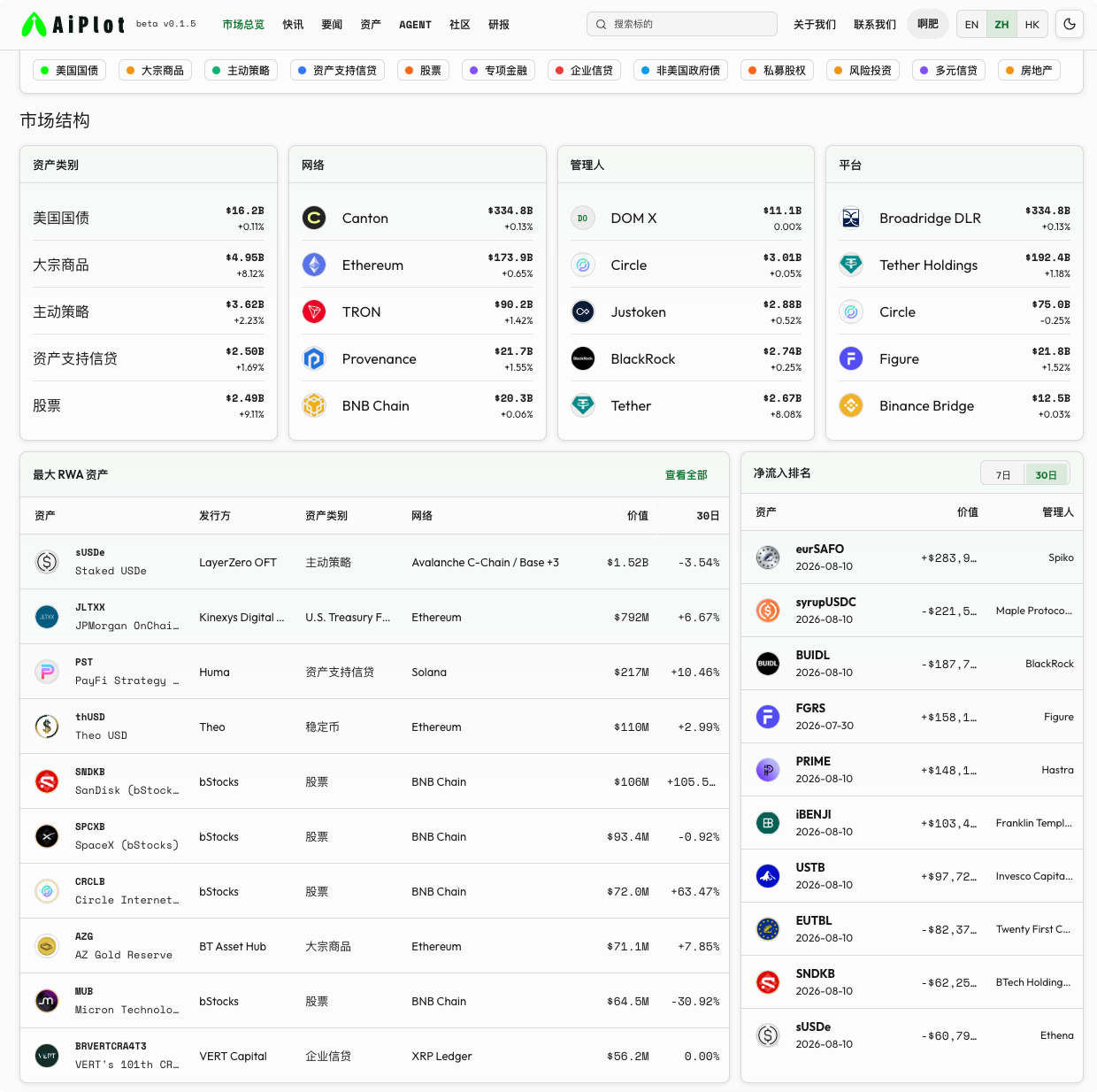
Stablecoins have already validated this: scaling from hundreds of millions to $300 billion, their transaction speed and cost far exceed traditional bank wire transfers, attracting nearly $40 billion in assets on-chain including treasury bonds, money market funds, commodities, and private credit, with an approximately tenfold increase over two years, and it is still accelerating.
This isn't just a concept; it's an infrastructure upgrade happening now.
3. Why Is Stock Tokenization Viable? Issuers Cannot Block It
Robinhood founder Vlad Tenev’s recent viewpoint is crucial:
As long as the tokenized product is an independent financial instrument, backed 1:1 by underlying stocks, and does not alter the rights of the company’s shareholder register and shares, the issuer has no veto power.
The logic is clear:
The stocks of a public company are personal property of the investors and can be freely transferred.
The company controls the “rights attached to the shares themselves,” not each product that others design using those shares (just like options and ADRs have existed for a long time).
It’s technology-neutral—whether or not to use blockchain does not change this boundary.
This means that tokenizing U.S. stocks can be promoted on a large scale without needing approval from any single company. For the first time, global investors have the opportunity to gain direct exposure to the U.S. stock economy in an on-chain manner, which can be combined with DeFi lending, liquidity pools, and other mechanisms.
For retail investors, this means:
Assets that could only be indirectly held through brokerages may become tokenized, combinable, collateralizable, and available for trading around the clock in the future.
This is not just “another trading asset,” but an upgrade in how assets can be utilized.
4. Why Must We Take This Seriously Now? The Timing Is in the Window Period
After containers were introduced, those who were early to see and lay out ports, ships, and logistics enjoyed decades of dividends.
Stablecoins took just a few years to move from the margins to the mainstream.
RWA is in a similar phase:
The infrastructure (stablecoins, compliant custody, on-chain settlement) has taken initial shape;
Regulatory and legal boundaries are being clarified (discussions around issuer consent rights are signals);
Real demand (retail allocation of U.S. assets, institutions seeking cost reduction and efficiency) is already on the table.
Those who missed stablecoins later pursued them at higher costs;
Those who missed early U.S. stocks and tech stocks could only watch others benefit from compound interest.
RWA addresses the question of “Can capital flow more efficiently to truly valuable places?” When the global balance sheet begins to go on-chain and capital flows based on value rather than “who controls the pipeline,” those who laid the groundwork early and understood it will find themselves in a more advantageous position.
This is not just speculation; it's a structural change.
Retail investors finally have the opportunity to participate in the allocation and movement of the world's premium assets at costs close to those of institutions.
The advanced aspect is: it’s not simply about “trading coins,” but rather an upgrade of the financial operating system.
The significant aspect is: once this accelerates, the gap in asset acquisition between ordinary people and institutions will be greatly reduced.
Understanding RWA now is not about chasing trends, but about not standing on the sidelines again in the next round of real capital reconstruction.
For more data and analysis, please follow Aiplot:
https://aiplot.com/
📖 Community Discussion:
Telegram:
https://t.me/+IIYMcJigBAo4Mjg1
免责声明:本文章仅代表作者个人观点,不代表本平台的立场和观点。本文章仅供信息分享,不构成对任何人的任何投资建议。用户与作者之间的任何争议,与本平台无关。如网页中刊载的文章或图片涉及侵权,请提供相关的权利证明和身份证明发送邮件到support@aicoin.com,本平台相关工作人员将会进行核查。