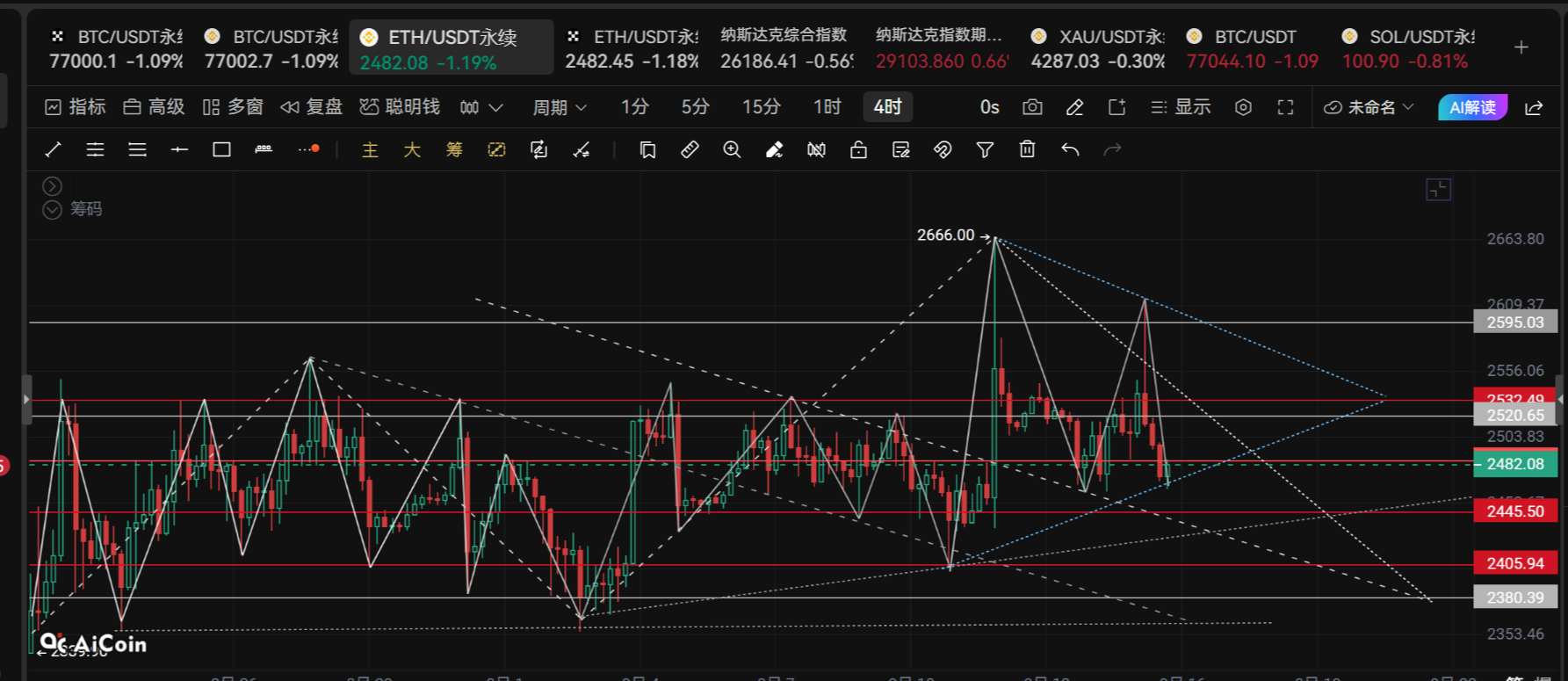
On September 15, 2026, the narrative before the Federal Reserve’s interest rate decision was thoroughly rewritten by two individuals: former New York Fed President Bill Dudley declared within a week that "a rate hike this week is almost a certainty," further clarifying that this "will not be a one-off but the beginning of a series of rate hikes," citing the continuous inflation above the 2% target, a core CPI increase of about 0.3% month-on-month in August, and an extremely low unemployment rate as “rarely clear” reasons for the hike. He publicly criticized Chairman Waller for continuing to "outsource" monetary policy to the financial markets, calling it an extremely poor practice and demanding that the central bank take control of the interest rate path. On the same day, White House National Economic Council Director Kevin Hassett sent out another signal: President Trump and he himself respect Waller’s decisions regarding monetary policy the next day, with several media outlets summarizing this stance as "respect, no interference," providing political backing for the Fed’s hawkish shift in form. At this moment when these two voices overlapped, market expectations rapidly shifted from "a symbolic hike this week" to a "rewrite of the interest rate path entering a continuous tightening cycle," embedding assumptions of high rates and tighter liquidity into asset pricing models, forcing BTC, ETH, and other assets viewed as high-risk to recalibrate their discount rates and risk premiums: on-chain and off-chain funds chose between paths of "short-term hike" and "continuous hikes," effectively preemptively reshaping the pricing anchor of crypto assets ahead of the tightening cycle to come.
Dudley Sparks: Expectations for Continuous Tightening Pressure the Market
The person who truly tore up the script of "a symbolic hike" is former New York Fed President Dudley. He publicly stated this week: under the current combination of inflation above the 2% target and a labor market that remains stable despite extremely low unemployment rates, a rate hike this week is "almost a certainty," and it is not a one-time action but the starting point of a continuous tightening cycle. Dudley deliberately emphasized that the reasons for tightening monetary policy are "rarely clear," even specifically naming the approximately 0.3% month-on-month rise in the core CPI in August as evidence of price pressure, upgrading the narrative from "short-term measures against inflation" to a "new normal of accepting higher rates in the long term." When he also criticized Waller for continuing to "outsource" monetary policy to the financial markets, suggesting that the future interest rate path must be proactively led by the Fed, the market read this not as an academic debate but as a declaration of expectation management: rates must be higher, for longer, and under the central bank’s firm control.
The impact of this statement lies in its direct push of the baseline for the interest rate path from "wait for the market response and then adjust slightly" to "lead with policy and let the market follow," effectively raising the center of the risk-free rate in asset pricing models ahead of time. For BTC and ETH, regarded as high-risk assets, this means a layering of two pressures: first, a long-term rising discount rate, systematically lowering the present value of future cash flows and narrative premiums; second, an overall downward shift in the risk appetite curve, forcing on-chain and off-chain funds to adjust their weighting between US dollar-denominated assets and high-volatility positions. Dudley’s hawkish rhetoric thus rewritten from a macro level the interest rate expectations and pressed into the coin market along the path of “rate → liquidity → risk preference,” compelling crypto traders to reconstruct the pricing framework for risk assets like BTC and ETH under the new scenario baseline of "continuous tightening" even before the result on September 16 was revealed.
White House Lets Go: Waller Pushed into the Interest Rate Hike Spotlight
The day after Dudley effectively said "continuous tightening" was nailed down, Hassett stepped in front of the cameras on September 15, intentionally shifting the spotlight back to Waller. He repeatedly emphasized that President Trump and he respect any decision the Federal Reserve Chairman makes regarding monetary policy the next day, with several Chinese financial and crypto media outlets almost verbatim relaying this statement: respect, the Fed decides for itself, no interference. More critically, there is currently no reliable information indicating any pressure or open opposition from the White House to the Fed, and this "conscious absence" itself is a signal — at the moment of rising interest rate expectations, the executive authority chooses to stand on the side of independence instead of drawing political red lines on rates.
For macro traders and the crypto market, this posture directly affects not the interest rates themselves but the probability of the interest rate path being interrupted by politics. When the White House publicly signals non-interference, the market's confidence in Waller's ability to "act according to the model" in the face of inflation above the 2% target and the 0.3% month-on-month core CPI data is strengthened; rate hikes are no longer viewed as a one-off "political compromise," but more like a trajectory that can be sustained. This will raise the expectation of sustainability for future discount rates, recalibrating the risk premiums for high-risk assets like BTC and ETH: on-chain capital finds it more difficult to bet on an early turn of "political intervention to save the market," and is instead forced to reduce risk exposure between US dollar-denominated assets and high-volatility positions, preemptively reserving discount space for a longer, politically less-interfered path of rate hikes before the September 16 interest rate decision is announced.
The Shadow of Rising Rates: BTC and ETH Risk Premium Adjustment
From "whether to hike this week" to "tightening for the foreseeable future," the market mindset has completed the switch. Dudley describes this action as the start of a "continuous tightening cycle" rather than an isolated event. Against the backdrop of persistent inflation above the 2% target, continued core CPI rises, and a tight labor market, the risk-free rate denominated in dollars is perceived as not a short-term fluctuation, but rather, as a "new normal" that will operate on a higher platform. This means that the discount rates for all risk assets are being systematically raised: whether for future cash flows, network utility values, or pure safe-haven narratives, all must be reassessed under more expensive time values.
In this framework, the pressures facing BTC and ETH are not the same. BTC, viewed as "digital gold," has its main narrative rooted in combating fiat currency depreciation and monetary overissuance; when the interest rate path is expected to remain tight for a longer duration, offering higher certainty yields on US dollar assets, the original hedging demand against "monetary easing and fiat currency depreciation" is weakened, and BTC needs a higher risk premium to convince funds to stay. In contrast, ETH, seen as a technological growth asset, resembles a high-duration growth stock: future earnings from the network and narratives of application expansion must be discounted back to present value using higher rates, directly bearing the brunt of valuation compression. The path reflected on-chain is often: high-leverage longs first reduce leverage, implied volatility in options rises around the interest rate decision, the threshold for future returns shifts upward, and only structures that can consistently provide excess return expectations over the higher risk-free rate deserve to remain in portfolios. Before the interest rate decision is revealed, the risk premiums for BTC and ETH can only be passively adjusted downward under the expected interest rate trajectory until a new discount framework is reaccepted by the market.
The Dollar Becomes More Expensive: On-Chain Capital Wavers Between Hedging and Arbitrage
When Dudley describes the tightening rationale as "rarely clear" and positions this week's rate hike as the starting point of a continuous tightening, the core variable in asset pricing has quietly shifted — the time value of the US dollar. The rise in US dollar rates means that holding dollars themselves begins to "become more expensive," liquidity is no longer a free position but rather needs to be compared to higher risk-free returns. For on-chain ecosystems reliant on US dollar inflows, this directly reshapes the balances of funds between "cash-like" US dollar assets and high-beta positions: some funds originally chasing volatility on-chain begin to return to more cash-like forms such as US dollar-denominated tokens, short-term staking certificates, and low-volatility large-cap positions, trying to compress the duration of their portfolios and exposure to interest rate paths within predictable ranges.
Meanwhile, rising US dollar rates heighten the appeal of traditional dollar-denominated yield assets, with on-chain lending and staking strategies no longer being rare "coupons" in a low-rate world but rather competing with higher risk-free rates. Some funds may choose to participate in on-chain with less leverage, locking in more certain dollar yields offline, shrinking on-chain positions to tools for hedging or arbitrage rather than primary profit sources. In this window before the September 16 interest rate results fall, the micro-adjustment of holding structures is particularly evident: duration is shortened, leverage declines, and BTC and ETH are more embedded in cross-market arbitrage, spread trading, and hedging portfolios, acting as unstable chips to counter interest rate risk rather than being the "main dish" for long-term exposure. Whether they can continuously prove themselves to generate excess returns over the new, higher rate threshold will be a key observation point for whether on-chain funds will expand their risk positions again.
The Eve of the Interest Rate Meeting: Traders Bet on Volatility and Direction
By the close of trading on September 15, the market knew only two things: first, Dudley has placed "a rate hike this week is almost a certainty, and it may open a continuous tightening cycle" on the table; second, Hassett, representing the White House, put forth a stance of "respect for any decision," without bringing the market even a hint of dovish endorsement. The result is that the interest rate direction is roughly locked in, but how much to hike, how long to go, and how to coordinate subsequent statements remains completely undecided. As a result, pricing in the crypto space can only revolve around the "certain tightening direction" and the "extremely uncertain rhythm path," with trading shifting from betting on the result itself to betting on the differential expectations and the volatility of the path.
In this high-uncertainty, high-attention eve of the interest rate meeting, the three common trading structures in the crypto market are naturally magnified: first, volatility bets, where BTC and ETH options positions tend to buy both ends to capture the directional explosion of the decision moment and subsequent revaluation of expectations; second, directional hedging, original highly leveraged longs reduce positions, buy protective put options or allocate more dollar-denominated assets to hedge against unexpectedly hawkish tail risks; third, event-driven strategies, where price differences between spot and perpetual contracts, across currencies and interest-sensitive assets are finely dissected, attempting to capture short-term misalignments in a rhythm of "first killing valuations, then repairing expectations." After the interest rate meeting tomorrow, traders will closely monitor three groups of variables: whether BTC and ETH's first response to high-rate news reflects further contraction of risk appetite or an unexpected "bad news is the end of bad news"; whether on-chain and off-chain funds flow toward dollar-denominated assets or flow back into high-risk positions; and whether the overall leverage level in the contract market continues to de-leverage or ramps back up, as what truly determines whether this tightening is a fleeting panic in the coin market or a new starting point for repricing risk premiums will be the common direction of these three trajectories after the interest rate decision lands.
Join our community, let's discuss and get stronger together!
AiCoin Exclusive Hyperliquid Benefits: https://app.hyperliquid.xyz/join/AICOIN88
AiCoin Exclusive Aster Benefits: https://www.asterdex.com/zh-CN/referral/9C50e2
On-chain Telegram Community: https://t.me/AiCoinWhaleData
On-chain Community: https://www.aicoin.com/link/chat?cid=N6OVMor5g
AiCoin On-chain Twitter: https://x.com/aicoinwhaledata
免责声明:本文章仅代表作者个人观点,不代表本平台的立场和观点。本文章仅供信息分享,不构成对任何人的任何投资建议。用户与作者之间的任何争议,与本平台无关。如网页中刊载的文章或图片涉及侵权,请提供相关的权利证明和身份证明发送邮件到support@aicoin.com,本平台相关工作人员将会进行核查。