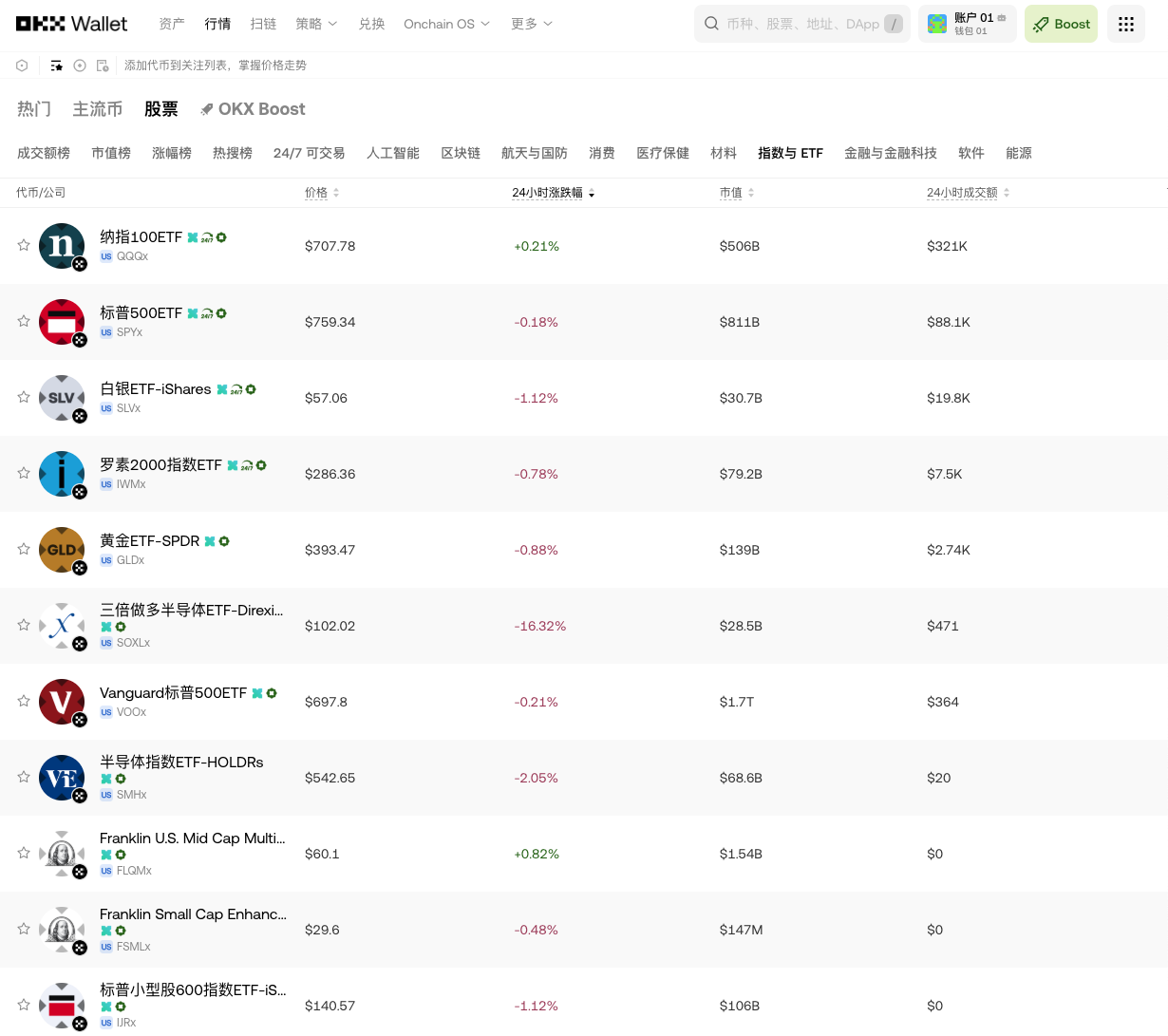
Hyperliquid is undergoing a key transformation from a “high-performance crypto perpetual contract DEX” to “on-chain global asset pricing and liquidity infrastructure.” Two recent important observations—one focusing on the case of Robinhood employees allegedly using insider information to position themselves in token perpetual contracts on Hyperliquid ahead of time, and the other analyzing how TradeXYZ (xyz market) is driving significant user acquisition and ecological growth through RWA perpetual contracts for stocks, commodities, indices, etc.—together reveal that this platform is reshaping the asset pricing order, user acquisition logic, and market governance boundaries.
1. The Reconstruction of Price Discovery: CEX Listing is No Longer the Starting Point
In the past, the primary liquidity and centralized pricing power of new assets were highly dependent on centralized exchanges (like Binance, OKX, etc.). The sequence of events—exchanges announcing listings → users flooding in to trade → markets repricing—became almost the default order.
Now, the situation is changing. Even before a spot token is listed on mainstream CEXs, traders can already establish positions early through Hyperliquid's perpetual contracts. The U.S. Department of Justice recently charged two Robinhood engineers (Hefu Chai and Huaisong “Jerry” Xiang) with using their work advantages to gain early knowledge of the tokens and timelines that Robinhood Crypto would soon launch during the years 2025–2026. They then bought related perpetual contracts on Hyperliquid, profiting in over $50,000 each by closing positions after the announcement when prices rose. The case is still in the charge stage and has not yet been convicted by the court, but on-chain wallet behavior (such as addresses ending in acf9 opening long positions on the day of the listing and quickly closing them) aligns closely with the charge descriptions.
The essential significance of this event lies not in the case itself but in the fact that Hyperliquid has effectively become an early price discovery layer for new assets, new information, and market expectations. CEX listing announcements can still significantly impact prices, but they are no longer necessarily the starting point for price discovery. Traders can price in a more timely, transparent manner on-chain derivatives markets without having to wait for traditional listing processes.
What Hyperliquid challenges is not only the perpetual contract trading volume of CEXs but also their control over liquidity and pricing power for new varieties. CEXs have fiat on-ramps, compliant account systems, and a large user base; Hyperliquid, on the other hand, offers on-chain settlement, self-custody, public order books, and a derivatives market that does not require waiting for the complete listing procedure. With the entrance of HIP-3 and more external assets, this advantage is expanding from crypto-native assets to stocks, commodities, indices, and broader risk exposure.
2. HIP-3 and TradeXYZ: RWA Perpetuals Become the Core Engine for User Acquisition and Ecological Expansion
HIP-3 allows anyone to deploy perpetual markets by staking HYPE (without needing to individually verify votes), while matching, margin, and settlement are still centrally managed by HyperCore. As of mid-September 2026, HIP-3 had around 140 active markets (with about 145 delisted), generating approximately $2.89 billion in trading volume over the past 24 hours and holding about $3.97 billion in positions. TradeXYZ (xyz) dominates, contributing the vast majority of trading volume and open positions.
According to market analysis (based on data since the launch of TradeXYZ on October 13, 2025):
- Approximately 357,000 wallets have traded on the xyz market, of which about 174,000 are new Hyperliquid users.
- Among these new users, around 28.1% (about 49,000 individuals) later traded native crypto perpetuals (with BTC being the highest at around 52%, followed by ETH, HYPE, etc.), and a significant proportion completed cross trading within a day or a week.
- New users collectively paid about $40.8 million in fees, with half coming from outside of the xyz market.
- Weekend trading is a significant driver for user acquisition: around 70,000 first-time xyz traders arrived on Saturday or Sunday, with more than half having never traded on Hyperliquid before.
- Third-party Builder integrations significantly accelerate distribution: in August 2026, wallets that first traded in the xyz market through third-party apps accounted for 84% (up from 39% in December).
- User retention is better than pure crypto users: about 39% of new xyz users continued trading after 30 days, slightly higher than crypto-native users.
- Net user contributions are significant: the xyz group brings net positive growth, while the rest of the platform shows net losses in most months. xyz has become Hyperliquid's largest single user acquisition channel, increasing the platform's daily active users from around 43,000 to about 64,000 (in August 2026).
The trading volume characteristics also reflect real demand: peaks around the time of U.S. stock market opening; about 58% of trading in stocks and indices occurs during U.S. market hours, with crude oil being more active in London morning sessions, while metals and semiconductors dominate during Asian hours. This proves that these markets are not merely “crypto speculation” but genuinely accommodate global traders' demand for 24/7 risk exposure.
Currently, Hyperliquid L1's DeFi TVL is approximately $1.27 billion, with cross-chain assets around $8.88 billion, stablecoin scale at about $6.88–6.9 billion, and the number of protocols within its ecosystem has reached hundreds. Over the past 24 hours, on-chain DEX trading volume was about $280–340 million (only reflecting part of the ecosystem, far less than the massive scale of HyperCore perpetual contracts). Overall perpetual trading volume remains at daily levels of tens of billions, with cumulative scale reaching into trillions of dollars.
3. Structural Advantages but Governance Challenges
Advantages are clear:
- On-chain public order books + self-custody reduce centralized custody risks.
- Offering derivative exposure without waiting for CEX complete listing procedures.
- HIP-3 lowers listing barriers, quickly covering stocks (NVDA, TSLA, SP500, etc.), commodities (gold, crude oil), indices, foreign exchange, and even pre-IPO assets.
- Third-party integrations and the Builder ecosystem create network effects, embedding Hyperliquid infrastructure into more products.
Challenges are equally real:
On-chain transparency does not equate to trading legality. The Robinhood case clearly demonstrates that insider trading, market manipulation, unusual account monitoring, and institutional compliance issues do not disappear just because trading takes place on decentralized platforms. The closer Hyperliquid moves to global financial infrastructure, the more it must confront the market governance pressures historically handled by CEXs, brokers, and traditional exchanges. The high staking threshold of HIP-3 (about 500,000 HYPE, corresponding to tens of millions of dollars) creates a certain moat, but it also limits the number of competitors. Currently, only a few Builders remain active, and the dominance of TradeXYZ is both an advantage and a concentration risk.
Additionally, the quality of oracle data, liquidity depth during extreme market conditions, regulatory characterization of RWA perpetuals, and how to introduce more mature compliance tools while maintaining decentralization will all be long-term issues.
4. Conclusion: The Critical Point from Crypto Platforms to Financial Infrastructure
Hyperliquid is no longer just “another high-performance crypto perpetual exchange.” Through HIP-3 and Builders like TradeXYZ, it has successfully introduced 24/7 perpetual exposure of traditional assets such as stocks, commodities, and indices on-chain, thereby massively acquiring new users, improving retention, and driving native crypto trading. At the same time, it poses a substantive challenge to CEX in the asset pricing order—news and expectations can be priced on-chain much earlier.
The Robinhood case reminds us: the cost of success is that we must seriously address market integrity and compliance pressures. Public, transparent on-chain systems can accelerate price discovery but do not automatically solve the abuse problems arising from information asymmetry.
If the current momentum continues, Hyperliquid has the opportunity to become a key liquidity and price discovery layer connecting crypto and traditional financial risk exposure. What it provides is not just a simple “decentralized alternative,” but a suite of parallel, around-the-clock, self-custodial global asset trading structures. The key variable for the future will be whether it can maturely respond to governance and regulatory challenges while maintaining technological and product leadership.
Exclusive benefits for AiCoin users
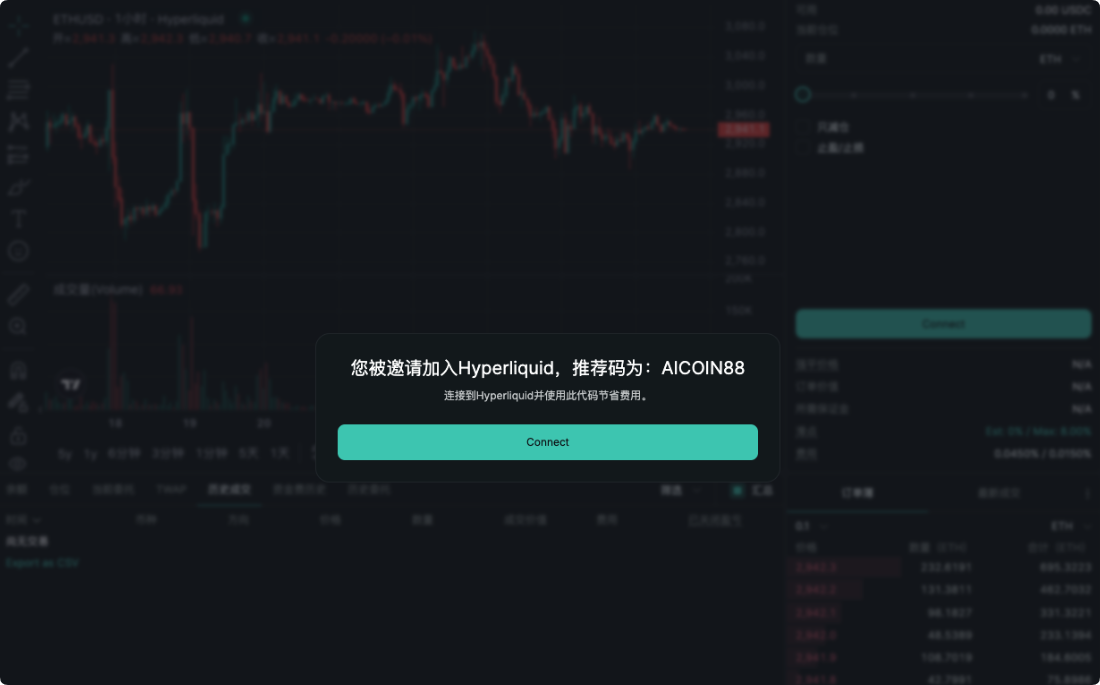
👉 Enter invitation code AICOIN88 when binding your Hyperliquid account to enjoy a 4% fee rebate
🔗 Exclusive registration link:
https://app.hyperliquid.xyz/join/AICOIN88
📖 Beginner's Tutorial:
“AiCoin PC Hyperliquid Authorization Trading Tutorial”:
https://www.aicoin.com/zh-Hans/article/514197
“AiCoin Mobile Hyperliquid Authorization Trading Tutorial”:
https://www.aicoin.com/zh-Hans/article/541383
“Zero-basis Intro! Hyperliquid First Trading Ultra Detailed Illustrated Guide”:
https://www.aicoin.com/zh-Hans/article/510225
📖 Community Interaction:
Telegram:
https://t.me/AiCoinWhaleData
Discord:
https://discord.gg/D7UjAcFrah
AiCoin-Group Chat:
https://www.aicoin.com/link/chat?cid=N6OVMor5g
The content of this article solely reflects the author's personal opinions and does not represent the platform's stance. The opinions, conclusions, and suggestions herein are for investors' reference only and do not constitute any investment advice related to this platform. Investing in U.S. stocks still requires personal responsibility for market risks, regulatory risks, and compliance with local laws and regulations (especially foreign exchange controls, overseas investment declarations, etc.).
免责声明:本文章仅代表作者个人观点,不代表本平台的立场和观点。本文章仅供信息分享,不构成对任何人的任何投资建议。用户与作者之间的任何争议,与本平台无关。如网页中刊载的文章或图片涉及侵权,请提供相关的权利证明和身份证明发送邮件到support@aicoin.com,本平台相关工作人员将会进行核查。