Author: AiPlot Research Institute
Focus: RWA / Digital Assets / In-Depth Analysis of Financial Infrastructure
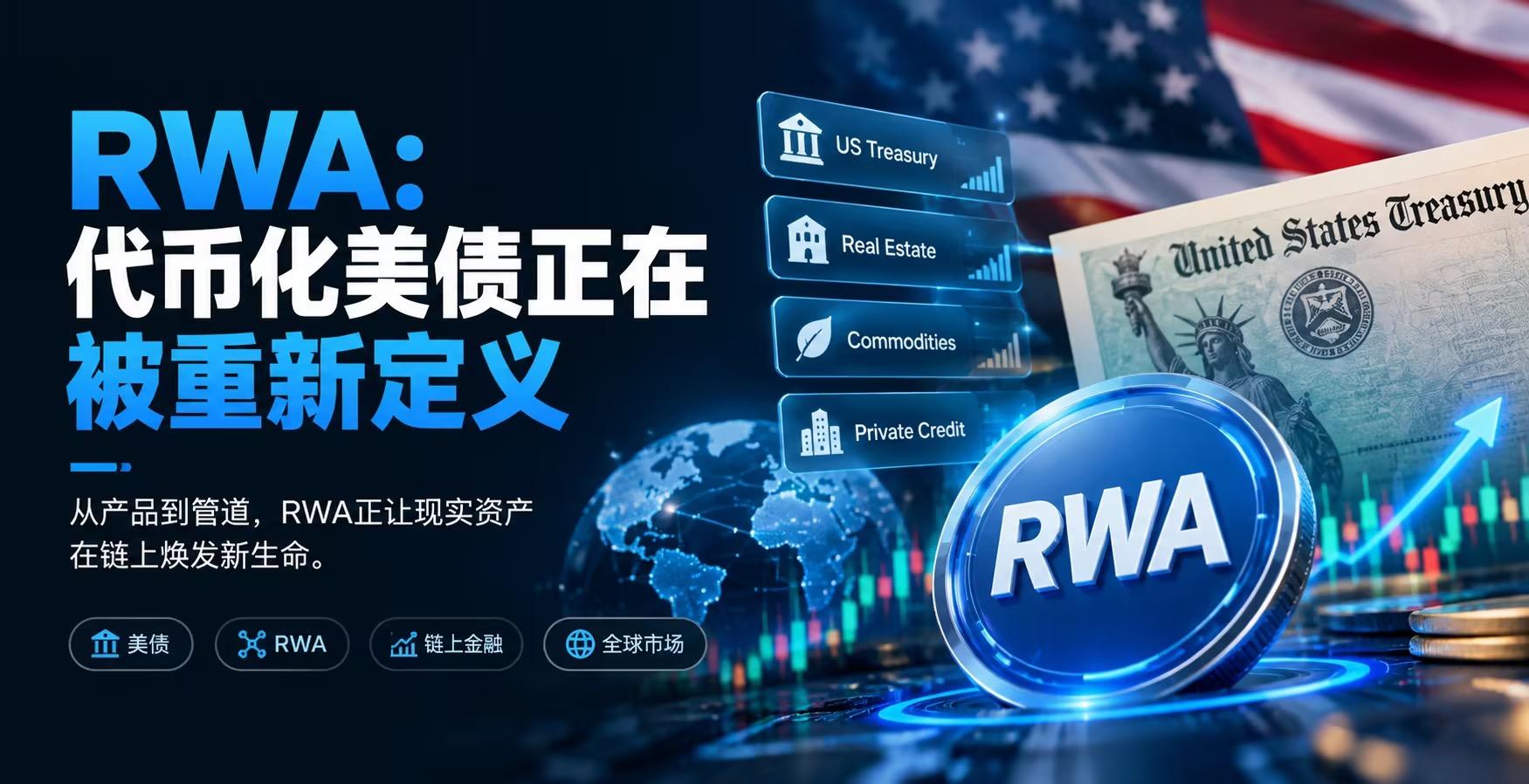
This week’s events are no longer just the usual updates of "a few more tokenized government bonds." The four lines of distribution, credit, settlement, and data have almost simultaneously been connected, making it the first time RWA has the conditions to become a true market infrastructure. US Treasuries, as the largest and most standardized underlying asset, are being redefined.
1. This Week’s Real Breakthrough: From Product to Pipeline
Ondo has officially connected with DTCC Fund/SERV through Oasis Pro Markets. This is not just another cooperation announcement. Fund/SERV handles over 85% of the mutual fund trading volume in the United States. In the past, tokenized funds had to interface individually with each wealth platform, but now a single standard interface can complete transaction confirmations, reconciliations, distributions, and reports. Tokenized products have finally truly entered the accounting system of traditional wealth management.
Meanwhile, Aave is advancing the RWA Hub on Avalanche, aiming to allow institutions to use tokenized government bonds, funds, and even private credit as collateral to obtain liquidity without having to sell positions. Tether's USAT has been listed as one of the first borrowable assets. The direction is very clear: upgrading tokenized US Treasuries from “interest-bearing instruments” to “reusable high-quality collateral.”
The launch of Circle's Arc mainnet completes the settlement layer. BlackRock BUIDL, Aave, Morpho, and Uniswap are in place, with validators including DTCC, Visa, Mastercard, ICE, and Standard Chartered. When the three pipelines of settlement, lending, and distribution are simultaneously connected, tokenized US Treasuries will have the foundation for truly scalable operation.
Kaiko has completed a $110 million financing led by S&P Global, with participation from Nasdaq, Coinbase, BNP, and other institutions in the construction of data standards, further confirming this judgment. Without a credible on-chain pricing and data framework, institutional funds cannot truly scale.
2. The Real Picture of the Current Market
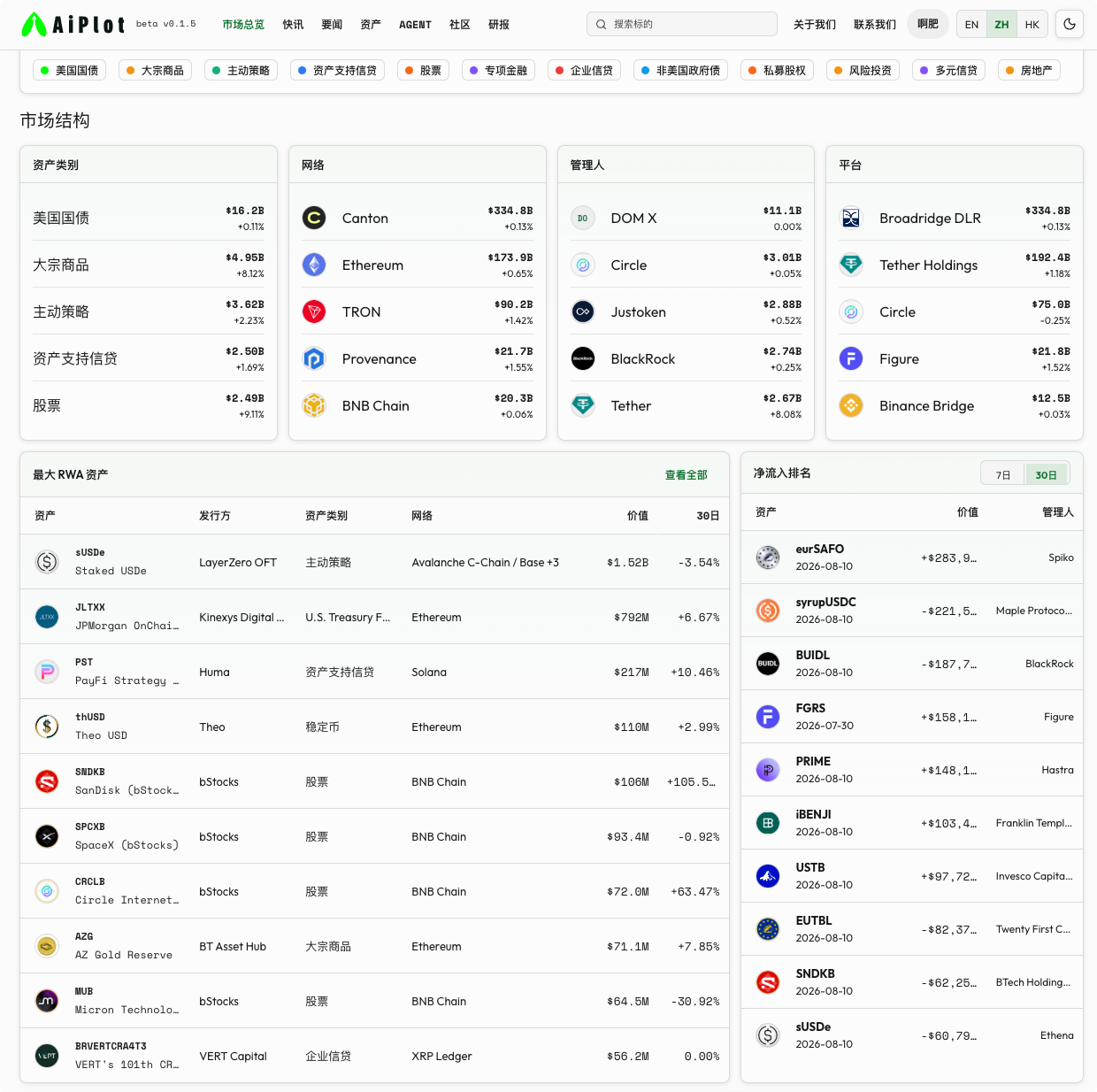
The on-chain RWA scale is roughly in the range of $38.5 billion to $46 billion (different statistical standards vary), with US Treasury-related products still occupying an absolute core, around $15 billion to $16 billion. The number of holder addresses has seen significant expansion in the past month, indicating that incremental demand is spreading from pure institutions to a broader range of participants.
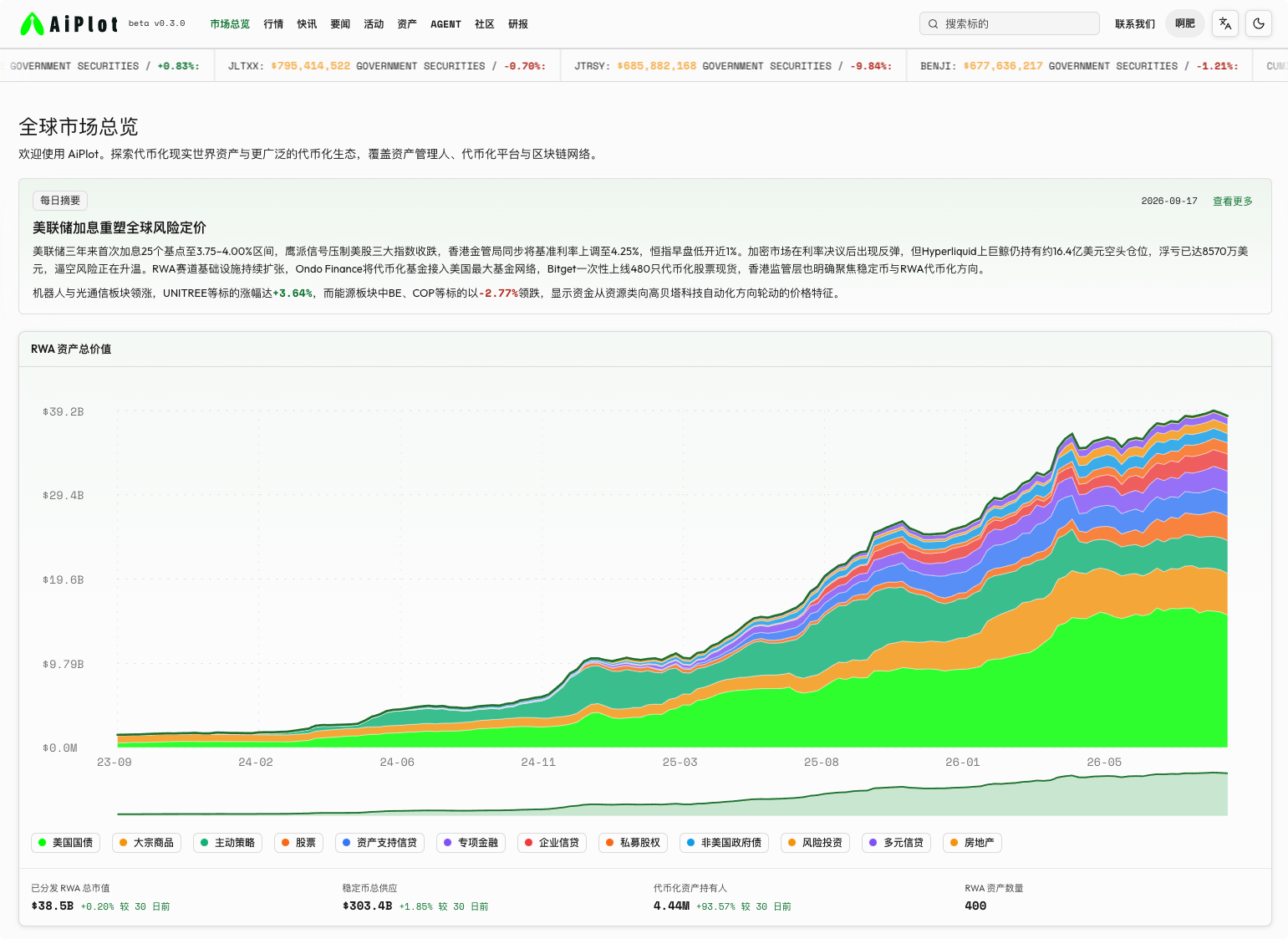
Ethereum still remains the main host, but Avalanche, Solana, and BNB Chain are performing more prominently in terms of incremental growth. Top products have a high concentration, with BUIDL, USYC, and USDY forming a clear tier. Institutional products are relatively abundant, but there are still obvious gaps in accessible channels for the general public that can directly allocate US Treasuries with stablecoins. This is the most important gap for the next phase.
3. Structural Impact on the Future of US Treasuries
The current yield on 10-year US Treasuries is around 4.98%, recently hitting a multi-year high. Fiscal supply pressures and the "higher for longer" pricing still dominate price trends.
Tokenization cannot change the fundamentals of US Treasuries, but it is changing three things:
Demand Structure. Tokenization significantly lowers the cross-border and access thresholds. Institutions can embed US Treasuries more efficiently into on-chain liquidity pools and collateral systems; once the retail channel for stablecoin allocation matures, previously inaccessible global liquidity will be introduced. US Treasuries are evolving from being "core domestic US assets" to "the basic collateral of the global digital dollar system."
Usage Efficiency. The settlement and re-collateralization costs of traditional US Treasuries are relatively high. Tokenization greatly enhances real-time settlement and combinability, significantly improving its turnover efficiency as collateral. This will change the positioning of US Treasuries on institutional balance sheets and in on-chain liquidity pools—from merely low-risk assets to quickly accessible liquidity tools. In the long run, this helps support higher holding demand and provides some buffering against term premiums.
Holder and Secondary Market Structure. As the on-chain shadow market gradually forms scale, the pricing efficiency, global allocation attributes, and holder structure of US Treasuries will change. This will not replace primary issuance, but it will reshape the operation of the secondary market.
4. Constraints That Still Need to Be Acknowledged
The uniformity of legal ownership records, the synchronization of redemption mechanisms under stress scenarios, and the lack of a complete regulatory framework at the federal level remain core constraints. Administrative paths can promote the registration, custody, and some financing arrangements for security-style RWAs, but a complete spot market structure still relies on legislation. Most current products are still at the packaging layer; truly native, deeply combinable use cases are just beginning.
5. The Variables Worth Watching Next
This week’s qualitative change fundamentally signifies that RWA has begun to acquire distribution, settlement, and data infrastructure on par with traditional fund industries. US Treasuries are the most direct beneficiaries of this transformation.
Short-term prices are still determined by macro factors and supply. The medium to long-term slope, however, depends on whether these infrastructures can convert into sustained capital inflows and genuine utility.
The points of observation are clear:
- The actual trading volume and distribution speed on Fund/SERV
- The scale and utilization rate of RWA as collateral in lending
- The real deployment of institutional products and capital flow on Arc
- The progress of retail channels directly allocating US Treasuries with stablecoins
These variables will determine whether from the second half of 2026 to 2027, tokenized US Treasuries remain in the "institutional testing ground" or truly become a core infrastructure asset of the global digital dollar system.
For more data and analysis, please follow Aiplot:
https://aiplot.com/
📖 Community Communication:
Telegram:
https://t.me/+IIYMcJigBAo4Mjg1
The content of this article only represents the author's personal views and does not reflect the position of this platform. The opinions, conclusions, and suggestions in the article are for investor reference only and do not constitute any investment advice related to this platform. The market carries risks, and investment should be cautious.
免责声明:本文章仅代表作者个人观点,不代表本平台的立场和观点。本文章仅供信息分享,不构成对任何人的任何投资建议。用户与作者之间的任何争议,与本平台无关。如网页中刊载的文章或图片涉及侵权,请提供相关的权利证明和身份证明发送邮件到support@aicoin.com,本平台相关工作人员将会进行核查。