Author: Zen, PANews
At the beginning of September, the leading blockchain game developer Parallel Studios officially launched "Colony: Survival."
If you only look at the current product description, it is difficult to connect it with the past game "Colony," which attracted much attention from the cryptocurrency industry over the past few years.
This free 4X strategy game emphasizes AI from start to finish, while the highly "on-chain" game economy disclosed in the early white paper has vanished without a trace.
After three years, the cryptocurrency industry welcomed the "de-chain" Colony
Parallel was one of the most关注的 blockchain game developers in the last wave of Web3 gaming, with total financing exceeding 85 million USD. Its first core product "Parallel TCG," although far smaller in player scale compared to mainstream games like "Hearthstone" and "Magic: The Gathering," boasted noteworthy sci-fi art, card design, and overall completion, currently holding a game rating of 4.6 on the Epic platform.
Based on this, its next work "Colony" was expected to be a significant step for both Parallel and the entire cryptocurrency industry. In 2023, game designs related to "Colony" began to be showcased, and in March 2024, Parallel released a dedicated white paper.
At that time, Parallel's vision had a sense of "AI Agent + Crypto": players do not directly control characters but cooperate with AI Avatars that possess independent personalities. These characters can make their own decisions, have their own wallets, hold digital assets, and engage in economic activities with other characters.
Moreover, the reward systems for PRIMI tokens, NFT Avatars, and on-chain assets were deeply integrated into the game, forming important parts of the original design. Following the release of the white paper, the team anticipated launching a Public Alpha from the fourth quarter of 2024 to the first quarter of 2025.
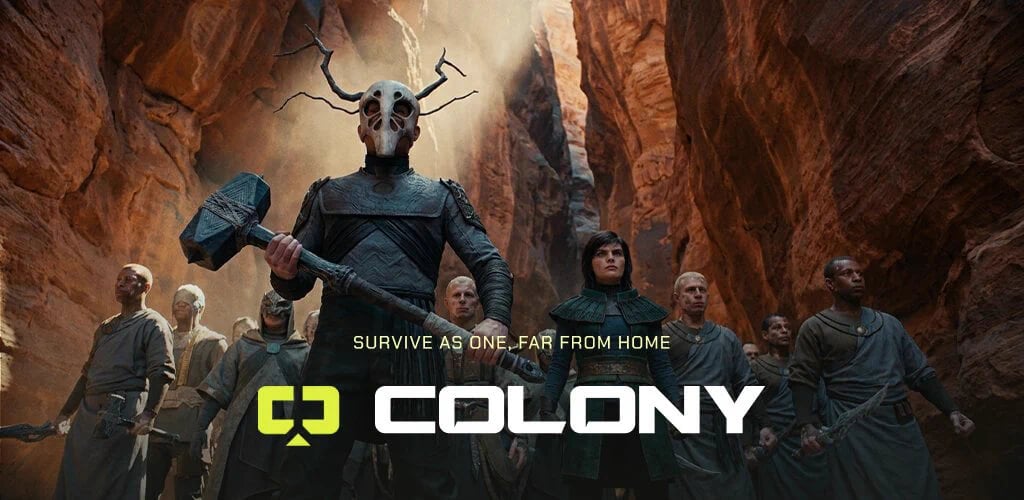
Then came the lengthy waits and delays. In September 2024, Parallel founder Kohji Nagata pushed the timeline to early 2025 for closed testing; by August 2025, "Colony" was still in Closed Alpha, with the public version expected to be released by the end of that year. Finally, in September 2026, this product, which had been repeatedly teased, tested, and postponed for years, was officially released.
During these years, as numerous blockchain game projects went bankrupt, the cryptocurrency industry had already replaced an entire set of narratives and buzzwords, and "Colony" had also undergone rebranding and adjusted its direction.
Now if you open the official website of Parallel's "Colony: Survival," the most prominent label has become "AI-based sci-fi colony building strategy game." The entire product page centers around AI Colonists, generative events, and AI-generated 3D equipment, while the once crucial terms like PRIMI, NFTs, blockchain, and crypto wallets have quietly vanished from the product homepage.
However, the company Parallel itself has not drifted away from Web3; its Avatar page still emphasizes NFT Avatars, the PRIMI yield bonus, and the overall Parallel ecosystem, even continuing to place Colony within future application scenarios of Avatars. The real change is what it chooses to place at the forefront that players see first.
In fact, this kind of shift is not unique to Parallel. Around the same time, several representative companies from the last wave of Web3 gaming also began to reposition AI and blockchain within their products.
From The Sandbox to Axie, blockchain games have collectively fallen in love with AI
The Sandbox, which focuses on the metaverse and virtual land, stands out as a typical project among this change.
In the last bull market, The Sandbox's "metaverse real estate" built around the scarcity of land was once pushed to be the most关注的位置 in both the Web3 gaming and NFT market. However, as narratives collapsed, players and users began to consistently dwindle. By 2026, the company's most important new product had transformed into The Sandbox Studio.
Now if you open the Studio website, the first thing you see is the phrase "From concept to launch in just hours - an AI game engine built for the new generation of creators." The Sandbox CEO Robby Yung stated in an interview this year that the company had developed this set of AI tools for nearly three years, planning to target professionals familiar with Unity and Unreal first.
A very practical reason is that The Sandbox's previous focus on low-barrier Game Maker allowed ordinary people to create content more easily but, being too simple, it restricted the complexity of games that professional developers could produce.
This also reflects a typical issue from the previous Web3 games, where simplicity and lack of playability ultimately rendered the scarcity of assets and ownership into an empty shell that couldn't bear actual value. The Sandbox's renewed focus on game-making tools is an attempt to remedy this shortcoming.
In this venture, MapleStory Universe has gone further. In June of this year, NEXPACE and Verse8 launched the first season of MapleStory Vibe Camp. Users can directly utilize characters, monsters, backgrounds, music, and effects accumulated over twenty years of MapleStory, describe the game they want to make in natural language, and then have AI assist in the development.
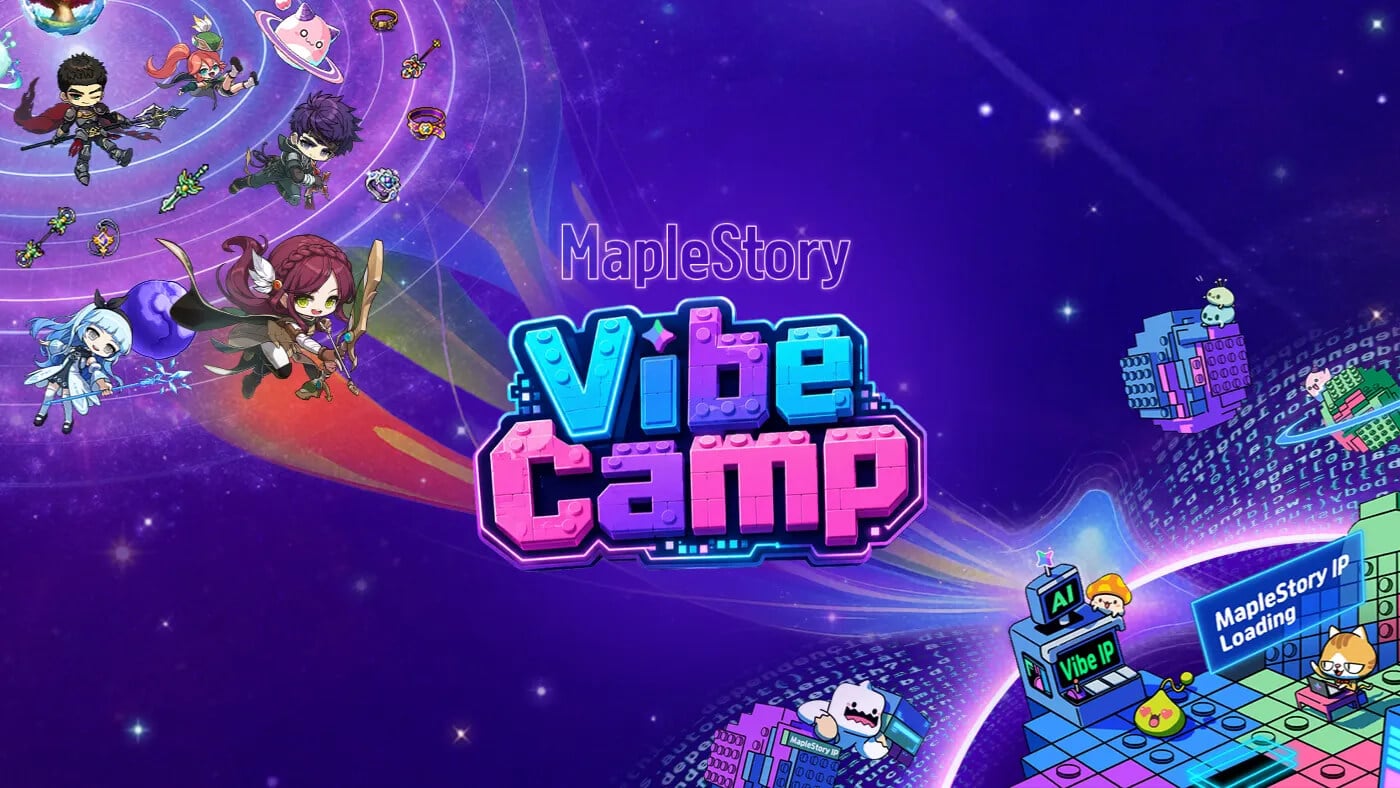
In the three-week period, participants submitted a total of 693 games, of which 435 passed the review and went live; the entire process generated over 213,000 AI build commands. Subsequently, these games collectively received over 88,000 plays, covering 29,000 players. Interestingly, follow-up surveys revealed that a significant number of participants previously had no traditional game development experience.
Once nearly defining Play-to-Earn, Axie Infinity also held its own Axie Vibeathon this year. Participants could create new Axie games using AI tools, with the official providing character assets, engines, and related API resources, with a total prize pool of 20,000 bAXS. In the event introduction, Axie stated that previously transforming an idea into a game might take months and require an engineering team, but AI coding tools are changing this process.
However, rather than saying that the aforementioned game developers are completely shifting from blockchain to AI, it's more accurate to say that their more realistic motivation is that the gaming industry is entering an AI cycle, and a batch of Web3 companies that have branded themselves with "cutting-edge technology" cannot afford to miss this round of technological change. These Web3 game companies embracing AI are, in essence, participating in a competition that the entire game industry has already begun.
AI and blockchain, entering games in different ways
However, for Web3 games, this wave of AI enthusiasm does have some unique aspects.
The points of entry for AI and blockchain into games are entirely different.
In recent years, most of the innovations that blockchain has brought to games have concentrated on economic systems, including NFTs solving asset ownership issues, tokens responsible for rewards and payments, on-chain markets handling transactions, DAOs and smart contracts extending to governance and profit distribution. These designs focus more on the ownership of game assets but do not directly address the playability of games.
In contrast, AI is much closer to game design and production. For developers, it can participate in code, prototyping, art assets, and content production. For players, it could delve deeper into NPC dialogues, dynamic quests, character behaviors, and generative content.
Still using "Colony: Survival" as an example, a player would not feel a character’s vibrancy merely because it corresponds to an NFT or possesses an on-chain wallet. Yet, if this character can make rich and distinct decisions through AI based on player input, even generating responses to events that cannot be completely anticipated, this difference can be directly perceived by players.
Similarly, The Sandbox Studio primarily tackles development efficiency issues, while MapleStory Universe and Axie's Vibe Coding focus more on testing whether AI can lower the production costs of community content. Transforming ordinary players into developers is just one very marginal outcome; what's truly significant is that the contents that game companies originally required to invest a lot of time and workforce to produce now have the opportunity to be created faster and more cheaply.
This is why, for Web3 game companies, the deep application of AI cannot merely be reduced to a new narrative and selling point.
From a marketing perspective, they may indeed be chasing trends. But compared to some purely conceptual packaging, AI can at least find a place to be directly embedded in game development and game experiences, making it more easily understood by ordinary players than many previous Crypto narratives.
For those surviving blockchain game companies that have experienced the last round of bubbles, this could also be an opportunity to revisit and answer the question of "what issues should technology really solve for games."
免责声明:本文章仅代表作者个人观点,不代表本平台的立场和观点。本文章仅供信息分享,不构成对任何人的任何投资建议。用户与作者之间的任何争议,与本平台无关。如网页中刊载的文章或图片涉及侵权,请提供相关的权利证明和身份证明发送邮件到support@aicoin.com,本平台相关工作人员将会进行核查。


