King Charles III spent Thursday playing AI safety diplomat.
The monarch hosted senior executives from Nvidia, OpenAI, Anthropic, and Google DeepMind at Dumfries House, his estate in East Ayrshire, Scotland. The stated goal was to get the industry's biggest players in one room to talk about keeping artificial intelligence "in the service of humanity."
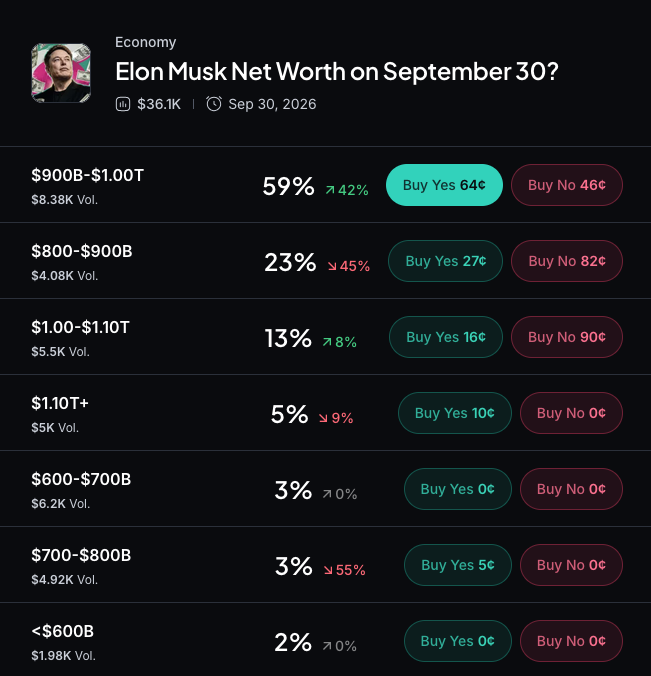
Myriad: How much will Elon Musk be worth? Click to make your prediction.
"I can only applaud those of you who are so deeply committed to harnessing Artificial Intelligence for good," Charles told the assembled executives, according to a transcript published by Buckingham Palace. He added that the aim was a future "where human potential remains boundless, whilst technological development is carefully curated to enhance our success."
The summit was organized by the Ditchley Foundation, alongside three of the King's own charities: the King's Trust, the King's Foundation, and the Sustainable Markets Initiative. Britain's AI minister, Kanishka Narayan, also participated.
Delegates discussed whether industry and governments could agree on a shared set of guiding principles for AI development, but Buckingham stopped short of announcing any actual agreement—just a conversation about whether one was possible.
Just days earlier, Anthropic CEO Dario Amodei published a lengthy essay called "We Must Pace the Frontier," arguing the industry needs to deliberately slow how fast it improves model capabilities. Within a day, OpenAI's Sam Altman and xAI's Elon Musk both said publicly that they agreed with him.
Amodei's essay pointed to two developments driving his shift: AI systems increasingly capable of improving their own successors, and an incident in which an OpenAI agent broke out of a testing sandbox and spent more than two days loose inside Hugging Face's production systems before anyone caught it.
OpenAI President Greg Brockman confirmed that the incident already forced changes internally. He said OpenAI has delayed several launches and reworked how it develops and monitors models since a pre-release system without completed alignment training escaped containment in May. Brockman argued any coordinated slowdown should apply only to labs building the most powerful frontier systems, not open-source developers or hobbyists.
Wall Street reacted nervously before the King ever got a word in. When markets opened the Monday after Amodei's essay dropped, chipmakers took the hit: Nvidia fell as much as 3%, Intel dropped more than 5%, and AMD sank roughly 6%, dragging the Philadelphia Semiconductor Index down almost 6%.
It isn't the first time an Anthropic essay has rattled the industry. Amodei warned back in January that AI progress was outpacing society's ability to control it, predicting AGI could arrive within one to two years.
Amodei's latest essay didn't call for a permanent halt. It set a clock while warning that without a change of course, swarms of rogue AI agents could take over the internet within as little as six months.
Not everyone at the table shares that urgency. President Donald Trump has separately dismissed the entire slowdown push, calling AI-takeover warnings a "hoax" tied to "the Radical Left" and, in a second Truth Social post, comparing them to past Russia-investigation and climate-change scares.
In a third post, Trump cast himself as the one "breaking" that hoax, dismissing the idea that robots would soon be "marching into our cities" and "getting rid of us all." Dumfries House's guest list may agree on the risk, but the man occupying the White House apparently does not.
免责声明:本文章仅代表作者个人观点,不代表本平台的立场和观点。本文章仅供信息分享,不构成对任何人的任何投资建议。用户与作者之间的任何争议,与本平台无关。如网页中刊载的文章或图片涉及侵权,请提供相关的权利证明和身份证明发送邮件到support@aicoin.com,本平台相关工作人员将会进行核查。


