If you are engaging with the Solana Meme Coin ecosystem,Pump.fun and PumpSwap are two platforms that can easily be confused. They are both closely related to the Solana Meme Coin market and introduced by the same ecosystem team, but they actually serve different functions.
In simple terms, Pump.fun focuses more on the creation, launch, and early trading of Meme Coins, while PumpSwap mainly handles trading and liquidity functions after tokens enter a more open market. Therefore, rather than viewing them as competing platforms, it is better to see them as different stages of a Meme Coin's journey from issuance to subsequent trading.
A typical process can be understood as:
Creating Token → Pump.fun Launch Trading → Bonding Curve Operation → Meet Graduation Conditions → Enter PumpSwap → Continuous Trading
This is also why many users have questions when they first encounter Solana Meme Coins: the tokens were clearly created on Pump.fun, so why do they later appear on PumpSwap? In reality, this is exactly the process of a token moving from the early launch phase to the public trading phase.
This article will introduce Pump.fun , PumpSwap , Bonding Curve, Token Graduation, and post-graduation liquidity to help you understand the roles of the two platforms in the entire Solana Meme Coin lifecycle.
What is Pump Fun?
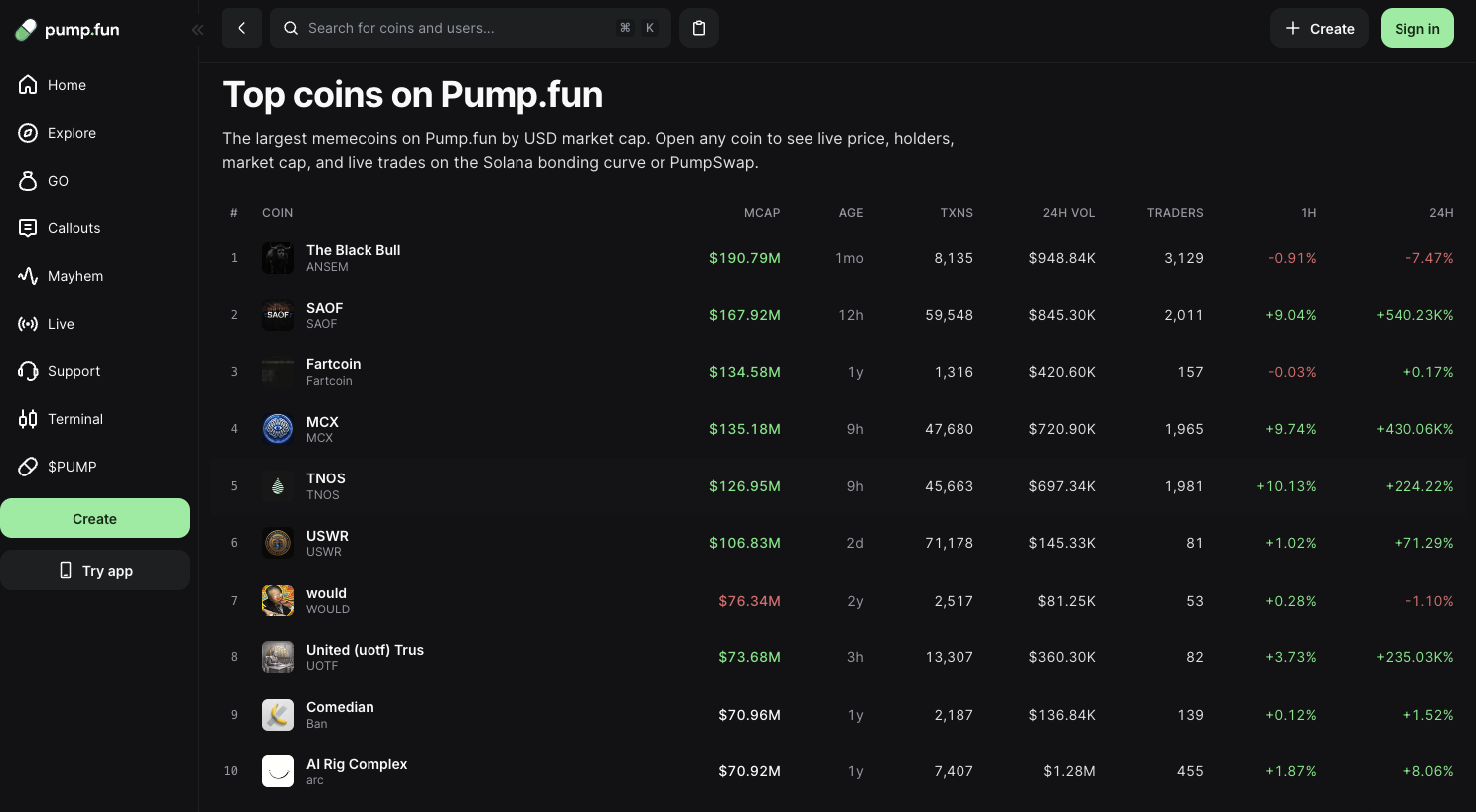
Pump.fun is a very popular Meme Coin Launchpad in the Solana ecosystem. One of its biggest features is that it lowers the technical barriers needed to create and launch a new Token.
Traditionally, if a project team wants to launch a token on Solana, they usually need to complete the Token creation first, then prepare trading pairs, create liquidity pools, and configure related trading environments. For users without development experience, these steps are not only complicated but also require understanding the basic mechanisms of Solana Tokens, DEXs, and liquidity.
Pump.fun simplifies these processes. Users can create Meme Coins through relatively simple operations and directly enter the early trading mechanism provided by the platform. Therefore, many Meme Coin projects can complete the process from idea to market testing in a very short time.
This model is particularly important for Meme Coins because the market cycle for Meme Coins is usually relatively fast. Project teams may first need to validate whether a name, narrative, or community concept can attract market attention, rather than investing a large amount of resources to build a complete trading infrastructure from the beginning.
However, lowering the barriers to issuing coins also means increased competition. Creating a Token is no longer the most difficult thing; the real challenge is getting users to continue paying attention to and trading the Token after it is launched.
Pump.fun's Core Mechanism: Bonding Curve
Pump.fun differs from traditional DEX launch methods in one of the biggest ways: it adopts the Bonding Curve mechanism in the early stages.
In simple terms, a Bonding Curve is a mechanism that influences token price changes through a predefined mathematical curve. As buy and sell actions occur in the market, the Token will adjust along the corresponding price curve, so projects do not need to rely entirely on traditional DEX liquidity pools to initiate trading in the initial stages.
This is a clear difference from ordinary AMM trading pools. In traditional DEXs, trading prices are usually related to asset ratios in the liquidity pool, while Bonding Curves emphasize the price discovery process of Tokens during issuance and early trading phases.
For Meme Coins, the significance of this design is to allow projects to enter the market faster. Users do not need to first deal with complex LP configurations to start observing market reactions to the Token.
However, it should be noted that Bonding Curves primarily address the early market initiation issues of Tokens, not the long-term liquidity issues of projects. A Token may successfully launch, but it does not guarantee it will maintain trading volume and interest in subsequent markets.
Why is Pump.fun so popular?
Pump.fun has been able to quickly gain a large number of users, and one important reason is that it simplifies the Token launch process, which originally required certain technical abilities.
In the past, to create a tradable Meme Coin, project teams often needed to understand concepts like Token creation, liquidity pools, and trading pairs. For users who just want to quickly test a Meme Coin idea, these steps could present significant barriers.
Pump.fun has simplified many complex processes, allowing users to quickly create Tokens and observe market reactions. This low-threshold model also aligns well with the dissemination characteristics of Meme Coins, as Meme Coins often rely on hotspots, communities, and market sentiment, and their project lifecycles may be much shorter than traditional projects.
On the other hand, Pump.fun has also established a very high market activity level. A large number of new Tokens continually enter the market, allowing traders to constantly discover new projects, which further reinforces the platform's role as an entry point for Solana Meme Coins.
However, this model brings another consequence: the competition between projects is intense. Just because a Token gains attention does not mean it can maintain its hype in the long term; therefore, project teams must consider how to create Tokens while also planning for continuing community operations, trading activities, and market liquidity.
Pump.fun has its problems?
Pump.fun's biggest advantage is lowering the barriers for coin issuance, but this also means the number of Tokens in the market will increase rapidly. For project teams, the real challenge shifts from "how to create Tokens" to "how to ensure Tokens maintain market attention."
1. No real market control ability
Pump.fun's standardized mechanism allows projects to quickly enter the market, but correspondingly, project teams' ability to customize the early market structure may be somewhat limited. For example, projects cannot design the initial liquidity and trading environment entirely according to their needs like in traditional DEX launches.
This is not an issue for users who want to quickly validate a Meme Coin narrative, but if a project has begun to form a stable community, it will need to consider the trading environment and liquidity management after graduation more closely.
2. Prone to sniper bots
After new Tokens go live, they often attract a large number of automated trading strategies and short-term traders. Bots can continuously monitor new Tokens, and once they identify projects that meet specific conditions, they may execute trades rapidly.
This could result in extremely volatile price fluctuations for new projects in the early stages. Some early buyers may quickly sell after a price increase, and if subsequent buying cannot keep up, there may be significant selling pressure.
Therefore, for project teams, it is crucial not only to focus on whether the Token is successfully launched, but also to monitor whether the early trading structure is healthy and how to gradually turn genuine community users into market participants.
3. Prone to death after graduation
Many novices may believe that Token Graduation equates to project success, but in reality, graduation is just a node in the market phase change.
In the Pump.fun phase, Tokens primarily rely on the Bonding Curve for early market discovery. After graduation, projects will enter a more open trading environment, at which point they need to face more realistic issues such as liquidity, trading volume, and sustained buying pressure.
If the project has not prepared community, content, and subsequent market strategies in advance, it may lose trading activity quickly due to decreasing attention, even if it successfully graduates.
What is PumpSwap?
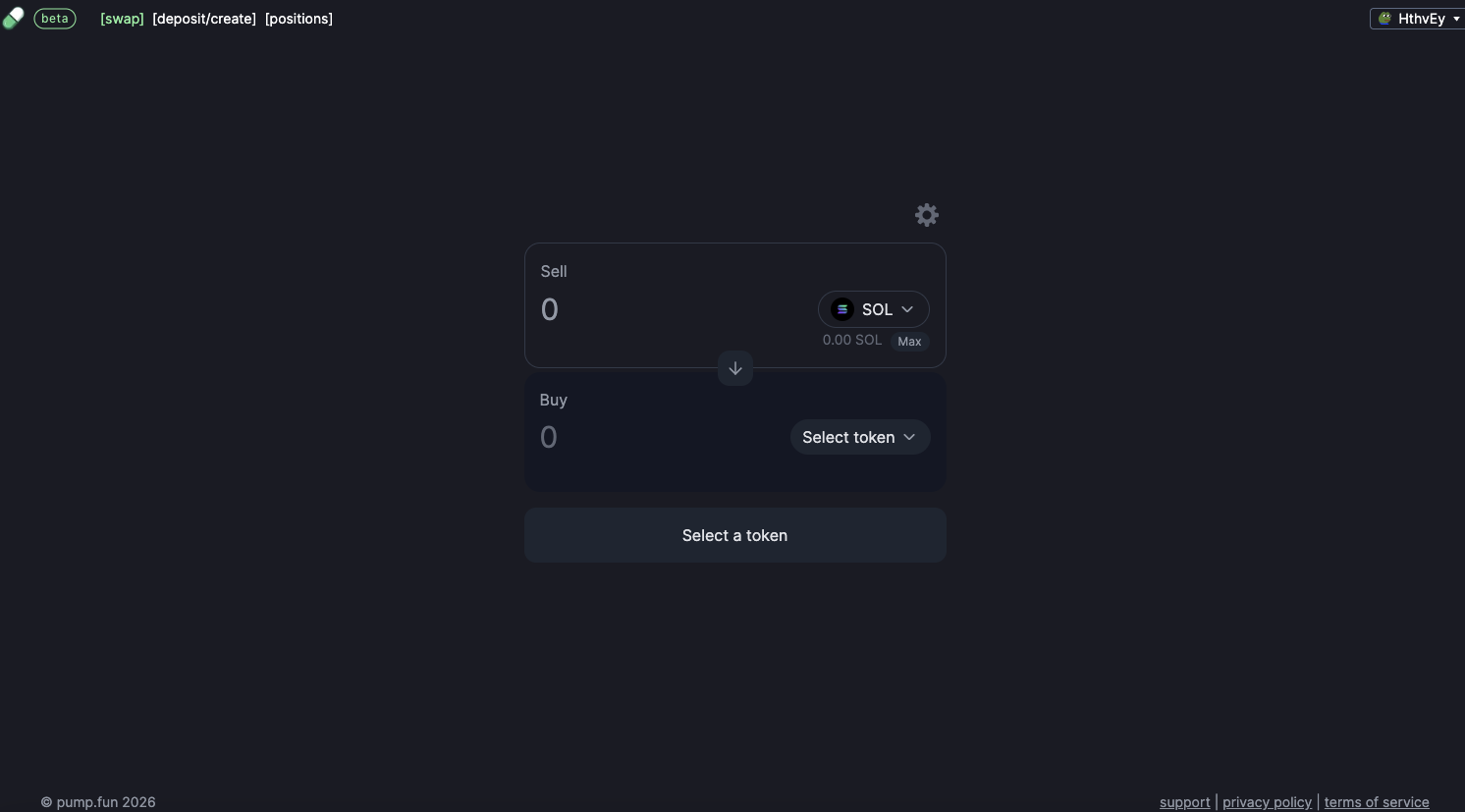
PumpSwap is a decentralized exchange (DEX) within the Pump.fun ecosystem, primarily used to support trading and liquidity markets of Tokens after graduation.
Unlike the Bonding Curve mechanism used by Pump.fun, PumpSwap utilizes the AMM (Automated Market Maker) model. Trades are executed through liquidity pools, and the price of Tokens is influenced more directly by market trading and liquidity conditions.
Therefore, the positioning of PumpSwap and Pump.fun is not entirely the same.Pump.fun is more like an early launching environment for Tokens, while PumpSwap corresponds to the phase after Tokens enter the public trading market.
For project teams, this means that the metrics to focus on after graduation will also change. In the early stage, it may be more important to assess whether the Token can garner enough buying interest and market heat; once it enters PumpSwap, a greater focus on liquidity, trading volume, and sustained trading demand is needed.
Pump.fun and PumpSwap's biggest differences
1. Different pricing mechanisms
Pump.fun uses Bonding Curve as the core pricing mechanism during the early trading phase. As market participants continuously buy or sell, the Token's price will change according to the predefined mechanism, which is more suitable for the early market discovery of new Tokens.
PumpSwap uses AMM. Once Tokens enter the liquidity pool, the trading price is influenced by the asset ratios within the pool and the actual buy-sell activity. Therefore, compared to the Bonding Curve, PumpSwap's structure is closer to traditional DEX market structures.
In simple terms, Pump.fun is more focused on "how Tokens begin to form market prices," while PumpSwap focuses more on "how Tokens can continue trading once they enter the open market."
2. Different methods of issuing tokens
Pump.fun's advantage lies in its simplified token issuance process. Project teams do not need to set up a complete liquidity market according to traditional DEX methods from the start, which makes it very suitable for rapidly creating Meme Coins and testing market reactions.
PumpSwap, on the other hand, leans more toward trading and liquidity environments. Once a project has graduated, the focus shifts from "how to create a Token" to how to ensure the market continues to generate trades.
Therefore, the relationship between the two is not merely a choice of "which one to choose for issuing coins" but corresponds to different stages in the Token lifecycle.
3. Different risks
Pump.fun's primary issues in early markets are competition and short-term trading behaviors. New Tokens are easily influenced by sniper bots, early traders, and market sentiment, which can result in huge price fluctuations in a short period.
Once entering PumpSwap, the core issues facing the project shift more towards liquidity and sustained demand. If trading volumes are inadequate or market depth is low, substantial price fluctuations can occur even if a Token has graduated.
Graduation does not automatically reduce risk; it simply means that the sources of risk have changed.
What is Token Graduation?
Token Graduation can be understood as an important node where a Meme Coin moves from the Pump.fun early market into the next trading environment.
During the Pump.fun phase, Tokens trade and discover markets through Bonding Curves. Once the corresponding graduation conditions are met, Tokens will enter the graduation process and proceed to subsequent trading environments like PumpSwap.
Many people consider Graduation as a "success indicator," but from the project operation perspective, it is more reasonable to understand as:
Graduation marks the completion of a phase, rather than the final success of the project.
Because after graduation, Tokens will face more open market competition. The attention gained from the platform's traffic may need to be sustained through community, content, and trading activities.
Step 1: Creating the Token
The first step is to create a Meme Coin on Pump.fun. The main goal during this stage is to get the Token into the market quickly and verify initial market interest.
The project team needs to consider not only the name and logo but also the Token's narrative, community positioning, and subsequent promotional direction.
Step 2: Bonding Curve Growth
After the Token is created, it enters the Bonding Curve trading stage. As users participate in trading, the Token will change according to the corresponding pricing mechanism.
This phase is usually when Meme Coins attract the most short-term attention, but also when competition is most intense. Projects need to continuously attract real market participants, rather than just relying on short-term price fluctuations.
Step 3: Meeting Graduation Thresholds
When the Token reaches the corresponding conditions set by Pump.fun, it will enter the Graduation stage.
This means the project has completed the early market initiation, but it does not guarantee that subsequent trading will continue. It is advisable for project teams to start planning for post-graduation operational strategies before this stage.
Step 4: Transition to PumpSwap
After graduation, the Token enters a subsequent trading environment and trades through AMM and liquidity pools.
At this point, the project's focus will shift from market growth during the Bonding Curve phase to liquidity, trading volume, community activity, and sustained trading demand.
Why do so many coins crash immediately after graduation?
A noticeable pullback after Token graduation does not necessarily indicate that the platform itself has problems, but rather that the market has entered a new trading phase.
1. Early players start to cash out
Some traders enter the market in the early stages of the Token, holding their positions at lower costs. Once the Token reaches the graduation node, they may choose to realize profits.
If a large number of early holders sell simultaneously, and there is insufficient new buying in the market, significant selling pressure can develop.
2. Lack of community support
If a Meme Coin only has short-term trading heat but lacks a stable community foundation, it is likely to lose market attention after graduation.
Pump.fun phase traffic can help projects gain initial exposure, but long-term market performance ultimately requires the project itself to build a sustainable user and community base.
3. Traffic disappears
Many projects can gain high attention in the early stages of上线, but as new Tokens continue to emerge, user attention can quickly shift.
If a project does not continuously engage in content dissemination, community interaction, or market operations, its original trading volume may gradually decline.
4. Lack of follow-up strategies
Failing to prepare follow-up strategies before graduation is also an issue for many projects.
Projects that truly hope to develop in the long term need to consider community operations, content marketing, market liquidity, and trading activities in advance, rather than waiting until after Token graduation to begin contemplating the next steps.
Pump.fun and PumpSwap, how should one choose?
In fact, Pump.fun and PumpSwap are not a typical either-or choice.
If your goal is to quickly create Meme Coins, test market narratives, and gain early trading, Pump.fun is more suitable for this role.
If the Token has already entered the post-graduation market phase, then the trading and liquidity environment that PumpSwap corresponds to becomes even more important.
Thus, a more reasonable approach is:
Pump.fun is responsible for early launches, while PumpSwap is responsible for subsequent markets.
For project teams, the crucial planning should focus on how the two phases connect rather than wait until graduation to begin preparing.
A more reasonable Solana token issuance strategy
A more complete Solana Meme Coin operational process can be divided into several stages according to the Token lifecycle.
Stage 1: Launch
First, complete the Token Launch quickly through Pump.fun, and observe the market's initial reactions to the project's narrative, brand, and community concepts.
The focus during this stage is not merely to chase price increases but to determine whether there is genuine market interest.
Stage 2: Community Building
If the Token begins to attract market attention, community channels like X, Telegram, etc., need to be established simultaneously so that users participate not just due to short-term prices but gradually understand the project itself.
For Meme Coins, community often determines whether they can continue getting new attention after graduation.
Stage 3: Graduation Operations
As graduation approaches, project teams should prepare for the next phase of operations in advance, including monitoring trading volumes, market sentiment, liquidity, and community activity.
After graduation, the project faces a more open market, so it cannot rely solely on the short-term heat accumulated during the Pump.fun phase.
Stage 4: Long-term Growth
If the project wishes to continue developing, it needs to gradually shift from merely being a Meme Coin launch to incorporating more complete market operations.
This may involve continuous content dissemination, community growth, KOL collaborations, trading activities, and liquidity planning.
For project teams, as the number of wallets and on-chain operations increase, manually handling Token and wallet tasks will become increasingly cumbersome.
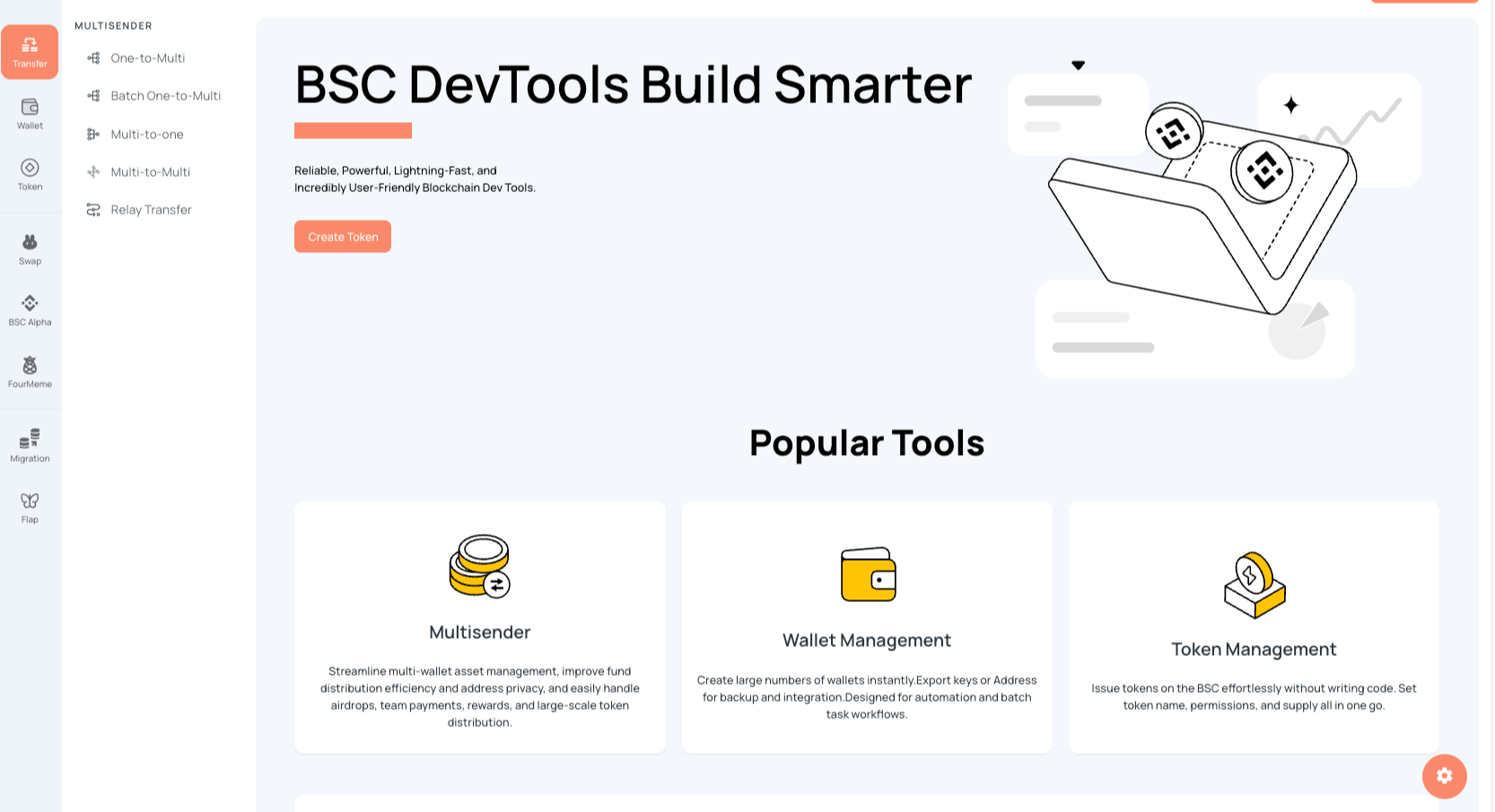
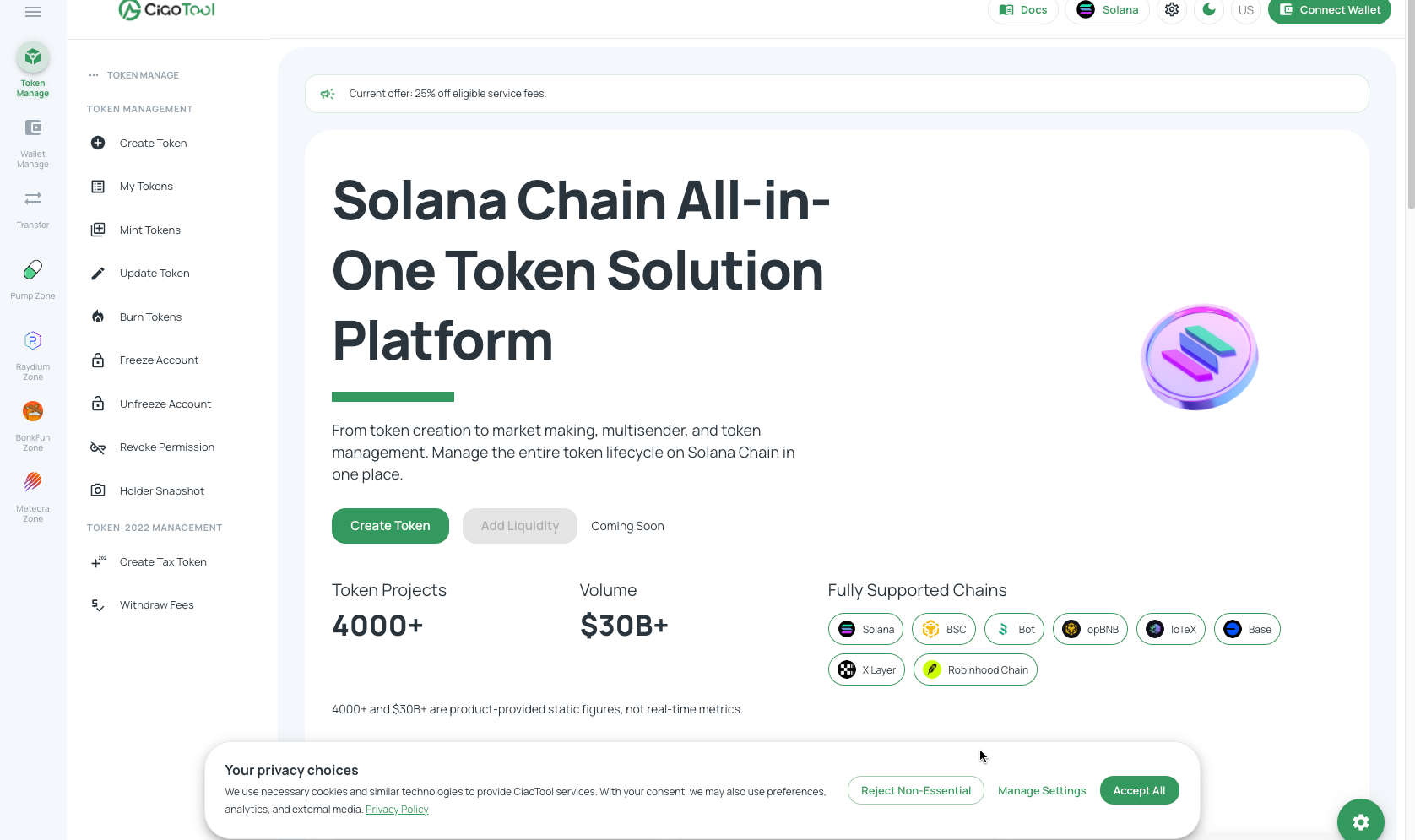
Tools like CiaoTool can assist project teams in completing Token creation, wallet management, multi-wallet operations, and batch on-chain tasks, thus reducing the time costs associated with repetitive operations.
FAQ
Pump.fun and PumpSwap are the same thing?
No.Pump.fun is primarily used for creating Meme Coins and initiating early markets, while PumpSwap is a DEX for trading tokens and managing liquidity. Both belong to the same ecosystem but serve different functions.
Will it definitely go on PumpSwap after graduation?
Once a Token meets the corresponding graduation conditions, it will enter subsequent trading environments. PumpSwap is an important trading platform within the Pump.fun ecosystem for graduated Tokens.
Pump.fun Does issuing tokens require writing code?
Typically not.Pump.fun is one of the core advantages of reducing the technical barriers for creating and launching Meme Coins.
What trading mechanism does PumpSwap use?
PumpSwap utilizes the AMM model, supporting Token trading through liquidity pools, differing from the Bonding Curve mechanism used by Pump.fun in its early stages.
Why might Token prices drop after graduation?
Price drops after graduation may relate to early holders cashing out, insufficient new buying, decreased community activity, and lack of liquidity. Graduation itself does not guarantee the Token's long-term performance.
What can CiaoTool help Solana projects with?
CiaoTool provides no-code Web3 operational tools, which can assist project teams in Token creation, wallet management, multi-wallet operations, and other on-chain tasks, reducing the amount of repetitive manual operations during project operation.
Conclusion
Pump.fun and PumpSwap are not two completely independent Meme Coin platforms, but two important links that serve different roles in the Solana Token lifecycle.
Pump.fun is more suitable for Token creation and early market launches, while PumpSwap is closer to trading and liquidity environments after graduation.
Understanding the true importance of both does not lie in memorizing which platform is responsible for what, but in understanding what changes occur in market structure as a Token moves from Pump.fun to PumpSwap.
For project teams, issuing coins is only the beginning of the entire process. What really needs to be considered in the long term is whether, after acquiring the first batch of users, the Token can continue to receive trading activity, community attention, and market demand.
Therefore, rather than viewing Graduation as the ultimate goal, it should be seen as a new starting point:
Pump.fun enables the Token to start entering the market, while post-graduation operations determine how long this market can be sustained.
免责声明:本文章仅代表作者个人观点,不代表本平台的立场和观点。本文章仅供信息分享,不构成对任何人的任何投资建议。用户与作者之间的任何争议,与本平台无关。如网页中刊载的文章或图片涉及侵权,请提供相关的权利证明和身份证明发送邮件到support@aicoin.com,本平台相关工作人员将会进行核查。