On September 18, 2026, according to a single source, Morgan Stanley significantly upgraded its expectations for cloud-related capital expenditures in its latest research report: it estimates approximately $954 billion in 2026, about $1.41 trillion in 2027, and around $1.54 trillion in 2028, effectively pushing cloud and AI infrastructure investments into the "trillion-dollar era"; almost simultaneously, UBS also provided a similar conclusion, believing global AI capital expenditures will approach $1 trillion in 2026 and about $1.4 trillion in 2027. The numbers from both institutions are highly close in scale and rhythm. In this macro narrative, according to AiCoin data, the trading volume of Backpack tokenized stock DEX has increased by about $193 million in the past 7 days compared to the previous 7 days, ranking first among similar platforms. Meanwhile, the trading volume increase of tokenized stocks on Coinbase and st0x was approximately $106 million and $38.6 million, respectively. Additionally, on-chain, there have been more speculative cases: an anonymous address bought approximately 12.31 million GSTOCK tokens at an average price of about $0.02117 within two days, with a total investment of around $261,000. At the observation point, GSTOCK's daily increase exceeded 170%, and the address had a paper profit of about $51,000 (according to a single source). Currently, it can be seen that the upward revision of AI and cloud capital expenditure expectations and the increase in tokenized stock trading activity have temporal overlap, but existing materials do not provide a direct causal link between the two, with multiple key data points coming from a single source. Any simple binding judgment that links institutional budget expectations with on-chain speculative behavior remains unverified speculation.
Trillion-Dollar Race: Morgan Stanley and UBS Increase AI Spending
From the perspective of macro capital expenditure trajectories, the latest forecasts from Morgan Stanley and UBS almost constitute a "trillion-dollar race." According to a single source, Morgan Stanley has raised its forecast for global cloud capital expenditures to approximately $954 billion in 2026, about $1.41 trillion in 2027, and around $1.54 trillion in 2028; UBS expects global AI capital expenditures to approach $1 trillion in 2026 and about $1.4 trillion in 2027. Both institutions synchronously raised their mid-term budget to the trillion-dollar level within a close time window, indicating that they both assume computational power, storage, and networking facilities will continue to expand on a large scale over the next three years.
When looking more closely at the supply chain, Morgan Stanley's judgment on the growth rate of upstream hardware is also optimistic. According to a single source, Morgan Stanley expects the global semiconductor industry to grow by approximately 118% in 2026 and about 35% in 2027, with the corresponding WFE (wafer fab equipment) market growing by about 31% in 2026 and around 38% in 2027. UBS's calculations focus on memory expenditure: it predicts that memory-related spending will soar from approximately $71 billion in 2025 to about $367 billion in 2026 and around $923 billion in 2027, believing that about 90% of the increase in AI capital expenditures comes from memory costs and configuration investments. It is important to emphasize that these figures come from a single institutional research report, and specific paths of correction and assumption parameters have not been disclosed in the existing materials. Therefore, they are more suitable as reference ranges to observe traditional market optimism regarding AI infrastructure rather than being taken as deterministic results.
Surging Memory Prices Become Main Driver of AI Capital Expenditure
In UBS's calculations, memory has upgraded from being a "component" to the main variable of the entire AI capital expenditure curve. It predicts that global memory-related spending will rise from approximately $71 billion in 2025 to about $367 billion in 2026, and then further climb to around $923 billion in 2027, which is highly synchronized with its forecast of global AI capital expenditures approaching $1 trillion in 2026 and around $1.4 trillion in 2027. In other words, on this steep upward curve, almost all the increment is driven by memory: UBS estimates that around 90% of the global increase in AI capital expenditures comes from rising memory prices and higher memory configuration demand, rather than linear expansions of other hardware or operational projects.
From an industry perspective, this structural change means that cloud providers and upstream hardware suppliers must bear higher upfront investments and greater capacity expansion pressures related to memory. If the cloud side wants to keep pace with the growth of model parameter scales and parallel computing power, it must continually "increase" memory in server configurations, thereby locking more of the budget into this single cost component. This simultaneous increase puts pressure on balance sheets and extends profit cycles. On the hardware side, they need to invest more capital to match this demand curve, expand production lines, optimize yields, and position themselves for next-generation products in advance. However, existing materials have not disclosed the spending distribution among different vendors or specific product types. Hence, all judgments remain at the macro level and can only view this memory expenditure curve as an important observational indicator of the shift in cost dynamics of AI infrastructure.
Tokenized Stocks Heat Up: Backpack's Increment Surpasses Giants
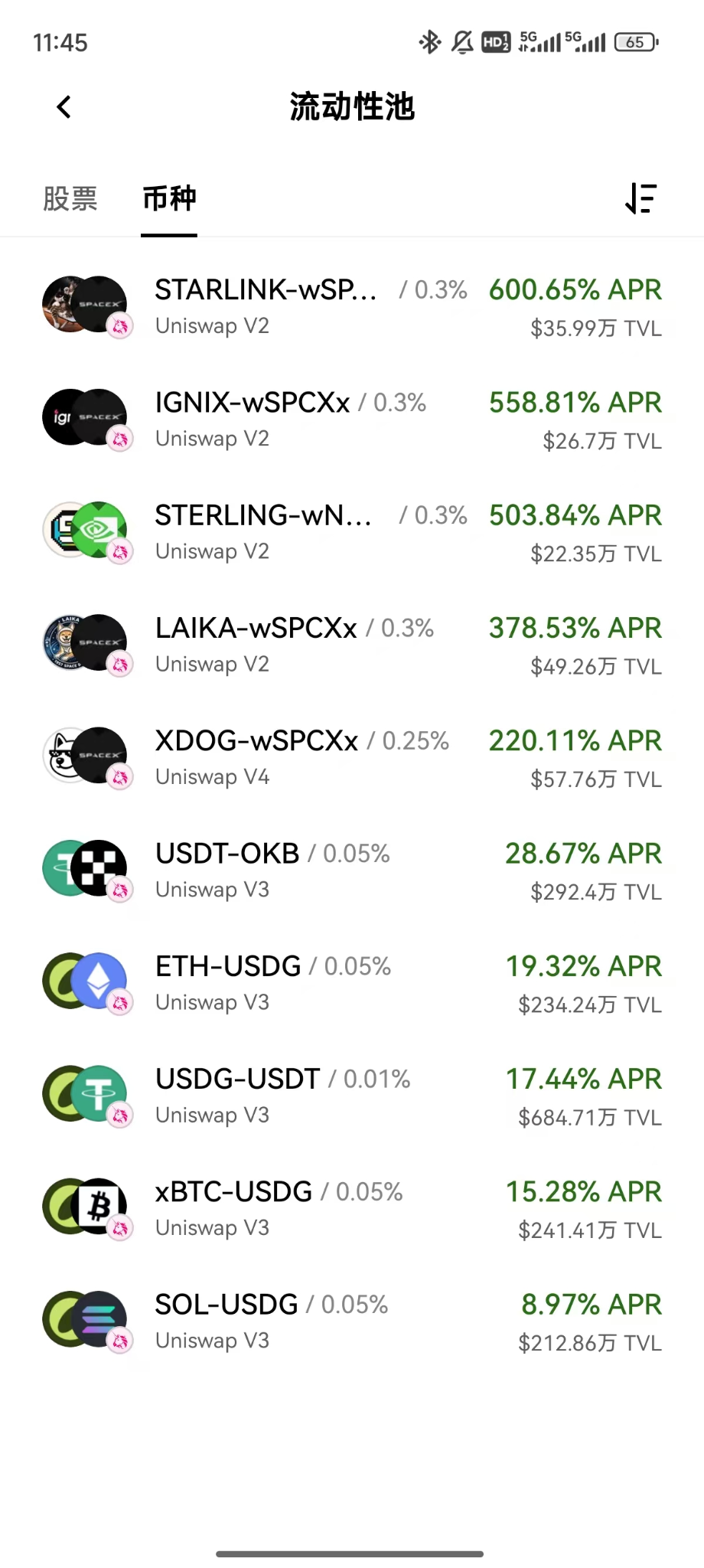
At the same time window when traditional financial AI capital expenditure expectations were significantly revised upwards, according to AiCoin data, a clear increment divergence appeared in the tokenized stock track. The trading volume of Backpack tokenized stock DEX increased by about $193 million in the past 7 days compared to the previous 7 days, ranking first among similar platforms; during the same period, Coinbase's tokenized stock business saw a trading volume increment of about $106 million, while st0x had approximately $38.6 million. Due to the briefing only providing the incremental data for adjacent periods, lacking dimensions such as total trading volume, user numbers, and target distribution, we cannot determine the absolute scale and market share of each platform. However, regarding the question of "who is gaining more new transactions," Backpack's advantage is quite clear.
At the macro level, the focus of institutional discussions has shifted from "whether to increase AI spending" to "how to digest expenditures close to the trillion-dollar level." On-chain, there is also a phenomenon where the trading increments of tokenized stocks are concentrating on a few platforms. Both situations have a temporal overlap, but current materials do not clarify whether Backpack's transaction amplification results from specific new listings, marketing actions, or market-making strategies, nor is there evidence proving a direct causal link between its activities and Morgan Stanley's and UBS's upgraded AI capital expenditure forecasts. The above data all come from a single source, which may still have statistical and sampling biases. Until more on-chain refined metrics are disclosed, this increment difference is more suitable to be viewed as an observational signal of how the market is participating in the AI narrative through tokenized stocks, rather than as a verified causal chain.
GSTOCK Soars 170%: Single Address Concentrates Positioning
According to on-chain monitoring, over the past two days, an anonymous address has continuously added positions in the same asset, purchasing about 12.31 million GSTOCK tokens at an average price of around $0.02117, with a cumulative investment of approximately $261,000 (according to a single source). In terms of pace, this was a concentrated positioning completed in a short time, rather than long-term incremental buying: a single address quickly formed a position of over ten million tokens in a tokenized stock with insufficient liquidity, which itself amplified the price sensitivity to new buying. However, existing materials have not disclosed the identity or funding sources of this address, nor can it be determined whether it is related to the project or a professional market-making institution.
In terms of price, at the observation point, GSTOCK's daily increase exceeded 170%, and the aforementioned address reported a paper profit of about $51,000, corresponding to a short-term return rate of nearly 20% on the invested capital (according to a single source). In a scenario marked by severe information asymmetry, where the fundamentals of the project and the factors triggering the surge are almost entirely blank, the high-leverage bets concentrated on a single address appear to be a localized speculative example within the tokenized stock sector, rather than a universal model that can be extrapolated to the entire sector; in the absence of more addresses and more targets providing systematic samples, this transaction is more appropriately viewed as an isolated on-chain signal reflecting the current emotional stage.
Shifting AI Stakes: Traditional Predictions and On-Chain Sentiment
Overall, with Morgan Stanley and UBS recently revising upward cloud and AI capital expenditure expectations simultaneously, one clue is that trillion-dollar investments are accelerating towards the hardware foundations of computational power, memory, and WFE equipment; another clue is that, according to AiCoin data, the trading volume of tokenized stocks on platforms such as Backpack, Coinbase, and st0x has simultaneously increased over the past week, combined with GSTOCK's surge and the concentrated positioning of a single address, all falling under the macro narrative of "AI infrastructure." It is essential to emphasize that the current materials do not provide direct causal evidence linking the upward revision of institutional capital expenditure expectations and the activity level of tokenized stocks. The forecasts from Morgan Stanley and UBS and on-chain trading data mainly come from single sources, and any linkage judgment should be regarded as hypotheses that remain to be validated rather than confirmed conclusions. Moving forward, more critical variables to observe will be whether large institutions continue to raise AI capital expenditure forecasts for 2026-2027, whether the overall trading activity of tokenized stocks can maintain a high level, and whether extreme behaviors like concentrated positioning by single addresses will recur across more targets.
Join our community for discussions and to grow stronger together!
AiCoin Exclusive Hyperliquid Benefits: https://app.hyperliquid.xyz/join/AICOIN88
AiCoin Exclusive Aster Benefits: https://www.asterdex.com/zh-CN/referral/9C50e2
On-chain Telegram Community: https://t.me/AiCoinWhaleData
On-chain Community: https://www.aicoin.com/link/chat?cid=N6OVMor5g
AiCoin On-chain Twitter: https://x.com/aicoinwhaledata
免责声明:本文章仅代表作者个人观点,不代表本平台的立场和观点。本文章仅供信息分享,不构成对任何人的任何投资建议。用户与作者之间的任何争议,与本平台无关。如网页中刊载的文章或图片涉及侵权,请提供相关的权利证明和身份证明发送邮件到support@aicoin.com,本平台相关工作人员将会进行核查。